DbcultAccessing Vault...
Cult Review
Senior Film Conservator
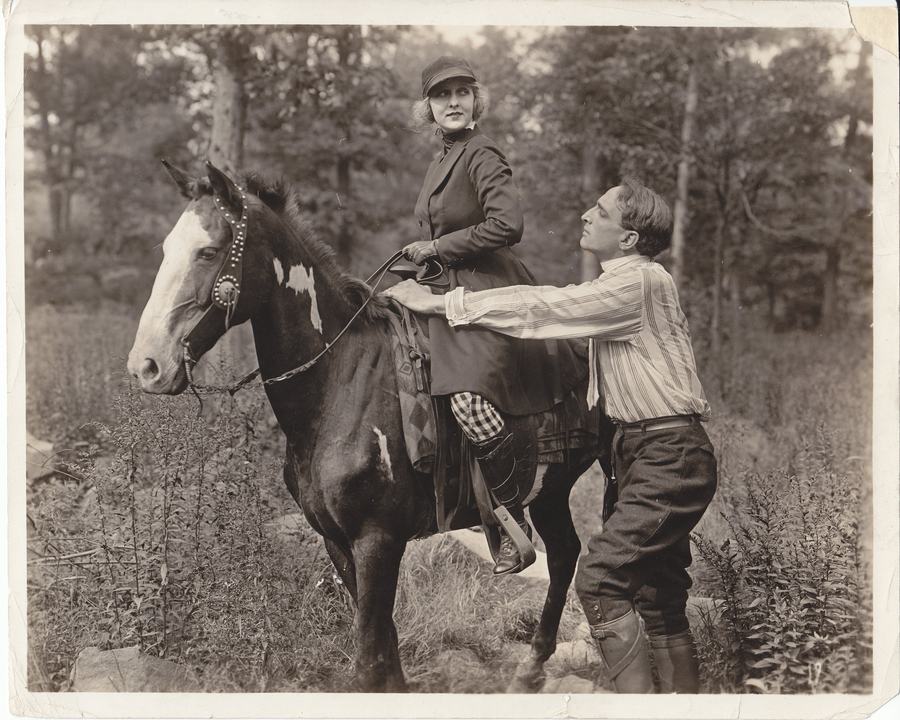
Bertram Bracken’s 1915 one-reel powder keg arrives like a tarnished locket fished from a cesspool: you open it, expecting moth-eaten melodrama, and instead inhale the acrid whiff of America’s foundational sins—land lust, racialized fetish, the alchemy by which affection is minted into equity. Shot on location in the parched arroyos outside San Diego, the picture’s very emulsion seems sun-scorched; shadows pool like blood blots, and every cactus spine throws a accusatory silhouette onto the white settler skin it must one day puncture.
The plot, deceptively gossamer, unspools with the inexorability of a bear trap. Velma Whitman’s society panther—think Mary Pickford dipped in arsenic—saunters through a tribal gathering as if touring an ethnographic diorama. Her gaze lands on Lewis Sealy’s lanky heir, whose cheekbones carry the geology of a continent Bracken’s camera will never let us forget. One dismissive flick of her ostrich plume and we sense the tectonic shift: contempt has recognized its mirror image in entitlement. From here, the film becomes a ledger written in eyelash flutters: every bat of Whitman’s mascara is a column of figures tallying timber rights, copper veins, irrigation futures.
What astounds is the economy of the seduction. Bracken refuses the upholstered nostalgia that pads contemporaries like The Heart of Jennifer. Instead, courtship is rendered as a land survey: the couple’s moonlit stroll is cross-cut with surveyors hammering brass pins into bedrock; a stolen kiss rhymes visually with a notary’s seal ker-chunking onto parchment. The montage is so brutal in its transparency it borders on Brechtian satire—yet 1915 audiences, marinated in Manifest Destiny mythos, reportedly cheered the heroine’s “romantic ingenuity.”
Fritz Leiber—yes, the future fantasist’s father—plays the tribal patriarch with granite stoicism, but Bracken’s lens keeps finding the tremor in his temple, the moment when paternal love and communal survival fork like lightning. In close-up, Leiber’s pupils reflect not the ingénue’s face but the ancestral campfire behind her, as though history itself were judging the transaction about to occur. The film’s most lacerating cut happens here: from his weathered hand hovering over the deed to a medium shot of Whitman’s kid-gloved fingers drumming the carriage door—patience percussed into Morse code for “hurry up and surrender.”
Performance hierarchies invert the moment the treaty is signed. Sealy, erstwhile “object” of the gaze, becomes the film’s moral retina: his breakdown is not histrionic but geological—shoulders that once carried water pails now sag under the weight of patrimonial betrayal. Bracken holds the camera on him for thirty unblinking seconds, an eternity in 1915 syntax, until the viewer feels complicit in every square inch of stolen terra cotta. Meanwhile Whitman’s triumph is immediately hollow; her grin petrifies into a death mask of powder and crushed rose petals, a visual prophecy that ownership of land does not equate to dominion over narrative.
Formally, the picture is a compendium of proto-modernist devices. A whip-pan following a lizard across sandstone rhymes later with the flick of a banker’s fountain pen, equating reptilian instinct with capitalist reflex. Superimpositions layer Whitman’s lace veil over a topographical map, so that cartographic lines become the veins of her future corporeal claim. Even the tinting carries rhetoric: amber dusk for scenes of tribal life, sickly green for the white man’s parlor, and a sulfurous yellow—#EAB308 avant la lettre—when the two spheres collide.
Yet for all its visual radicalism, the film’s intertitles are poisoned by the vernacular of their moment. “Savage heart aflame with civilizing passion,” one card leers, and contemporary reviewers quoted it without a blush. Bracken, himself a vaudeville veteran, knew his box-office depended on both titillation and self-congratulatory racism; the contradiction festers in the celluloid like mold, reminding us that avant-garde form can coexist with retrograde content without canceling either.
Comparative context sharpens the blade. Where Lime Kiln Club Field Day sought to carve space for Black joy untainted by white pathology, and Burning Daylight aestheticized the Klondike as a white masculine crucible, The Primitive Call occupies a more septic middle ground: it exposes the mechanism of erotic conquest while still monetizing the spectacle of interracial desire. The resulting frisson is, depending on your threshold for moral whiplash, either unwatchable or indispensable.
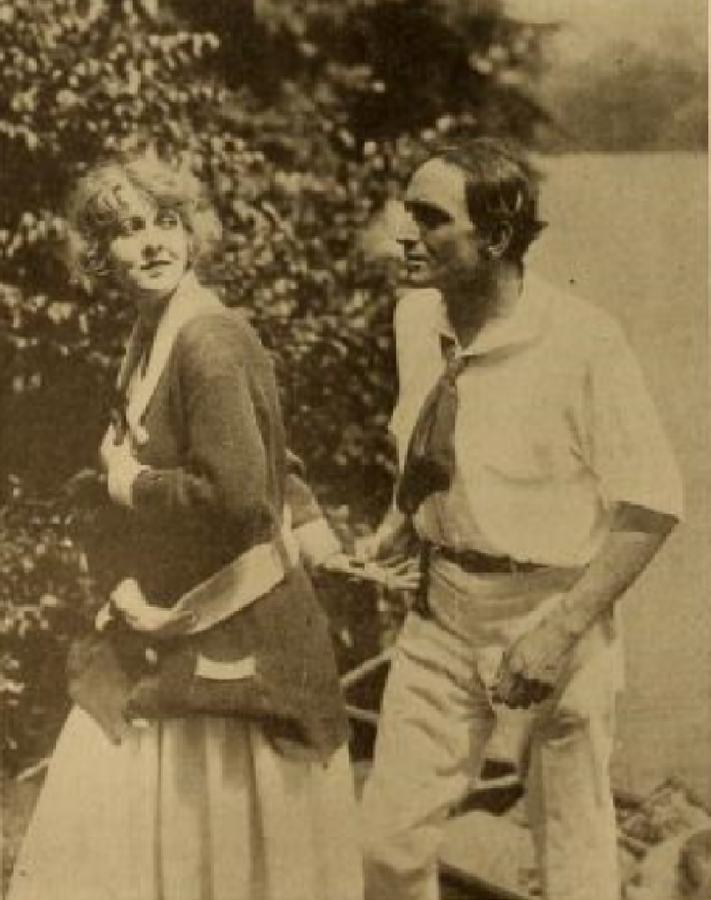
Archival fortune has not smiled; only a 35mm nitrate print at the Cinémathèque française—rescued from a Marseilles flea market in 1987—prevents the film from sliding into the same abyss that swallowed The Corsican. The existing copy is missing its final reel, yet the rupture feels perversely apt: history itself refuses closure. We last see Sealy’s silhouette receding into a dust storm that swallows the horizon, while Whitman’s train steams eastward, her triumph already oxidizing into guilt. The unresolved fade-out invites us to script our own coda—do we imagine retribution, or merely the next iteration of the same swindle?
Musically, the original score—performed live in 1915—was a patchwork of patriotic marches and “Indian” drum pastiche. Modern restorations have commissioned a haunting pizzicato motif that plucks like ligaments snapping, interwoven with archival Lakota chant. The collision of sonic authenticity and cinematic artifice replicates the film’s thematic deadlock: whose lament owns the soundtrack of dispossession? The question lingers, unanswerable, like the echo of a train whistle fading over unceded prairie.
Performance minutiae deserve magnification. Watch Whitman’s left eyebrow during the proposal scene: it arches a millimeter too high, betraying calculation rather than rapture. Sealy, meanwhile, delivers his plea for trust with palms upturned—a gesture borrowed from the reservation’s Presbyterian school, hinting that colonization has already begun its work of cultural ventriloquism. These micro-choices, invisible to Variety’s 1915 stringer, now read as the film’s truest dialogue, a semaphore of power trembling beneath Victorian cliché.
Gender dynamics intersect with capital with a bluntness contemporary viewers might mistake for parody. The heroine’s body is literally mortgaged: her father’s lawyer tallies acreage against potential grandchildren, mapping the womb as an annex to the mineral rights. Yet Bracken complicates the victim narrative—Whitman’s appetite is voracious, not coerced. She engineers her own commodification, proving that patriarchy’s most lethal agents are often those who learn to auction their own chains. In a perverse echo of A Self-Made Widow, the woman becomes both entrepreneur and merchandise, her heart a joint-stock company whose IPO culminates in genocide.
The natural world refuses mere backdrop status. A thunderstorm erupts the instant the treaty is signed—Bracken reportedly waited three weeks for the tempest, bankrupting his production company. Rain lashes Whitman’s veil into a wet shroud while Leiber’s character lifts his face skyward, letting the downpour scrub the ink from his thumb. The metaphor is elemental: nature will wash away paper claims, but only after the immediate violence is done. The sequence anticipates the eco-horror of later decades, suggesting that land itself is an avenging protagonist biding geologic time.
Reception history is a palimpsest of erasures. The New York Dramatic Mirror praised the “virile realism” of the conquest while lamenting the “unnecessary sympathy” shown to the “copper-skinned obstacle.” Indigenous newspapers of the era, where they survived, decried the film as “another libel against the First Nations,” organizing boycotts that forced several Midwestern exhibitors to cancel bookings. Thus the picture became a battleground whose casualties were not only fictional: Native activists, arrested for picketing a Topena theater, carried placards quoting the film’s own intertitles back at its creators.
Contemporary repertory cinemas face an ethical quagary: to screen or to suppress? Some programmers pair the film with Not My Sister as a double bill on white femininity’s complicity, while others advocate for a moratorium until a Native-curated restoration can reframe the context. Both strategies risk commodifying outrage, yet silence feels like another form of erasure. The debate itself testifies to the film’s toxic vitality: it will not behave as a museum relic, preferring to roam the cultural bloodstream like a prion.
Technically, the cinematographer—likely the prolific yet contractually ghosted Jules Cronjager—deploys depth staging with a sophistication that rivals Sjöström’s The Dawn of Freedom. In the climactic signing scene, three planes of action unfold: in the extreme foreground, a fountain pen scratches; mid-ground, Whitman’s eyes glitter with predatory triumph; deep background, a reservation child peers through a doorway, her silhouette bisected by the doorframe like a future amputation. The eye roams, complicit, unable to anchor moral sanctuary in any single plane.
Ultimately, The Primitive Call is neither cautionary tale nor apologia; it is a mirror smeared with arsenic lipstick, reflecting back whatever ideological blemish the viewer brings. To the settler gaze, it offers a frisson of conquest romanticized; to the colonized, a ledger of injuries filmed at 18 frames per second. The film’s greatest horror lies in its refusal to resolve: the treaty is signed, the lovers part, the land changes deed but not memory. One hundred and nine years later, the celluloid itself continues to decompose, each lost frame another acre returned, albeit as dust. Until the final reel surfaces—or until the last projector burns out—Bracken’s toxic valentine will keep whispering that in America, love was always a real-estate transaction wearing perfume.
IMDb —
1929
Community
Log in to comment.