DbcultAccessing Vault...
Cult Review
Senior Film Conservator
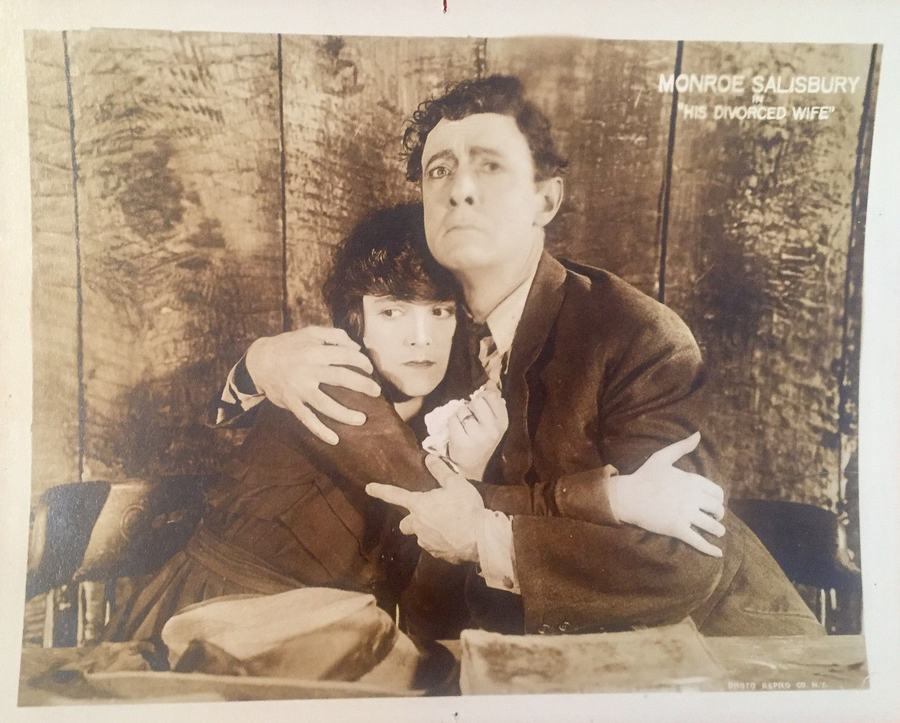
The year 1919 was a transformative epoch for American cinema, a period where the primitive techniques of the early decade were coalescing into a sophisticated visual language. Within this milieu, His Divorced Wife emerges not merely as a relic of the silent era, but as a visceral examination of the socio-economic stratifications that defined rural Appalachia. Directed with a keen eye for atmospheric tension, the film utilizes the rugged topography of Eastern Kentucky as a character in its own right—a silent witness to a drama of Shakespearean proportions.
Monroe Salisbury, an actor whose presence often commanded the screen with a mixture of brute strength and soulful vulnerability, portrays Asa Whipple. Asa is the quintessential 'noble savage' of the silent screen—illiterate, physically imposing, yet possessed of a moral compass far more accurate than those of his 'educated' peers. His marriage to Nance Haws (Alice Claire Elliott) is the catalyst for the film's central conflict. This union is viewed as a transgression by Jethro Haws, a man whose identity is anchored in a vanished aristocratic past. The tension here mirrors the thematic depth found in other contemporary works like Vanity Fair, where social climbing and the preservation of status drive the narrative engine.
Jethro’s preference for Rufus Couch (Charles West) is not born of a concern for Nance’s happiness, but of a desperate desire to regain financial stability. Couch represents the rising professional class—men who use the law not as a shield for the innocent, but as a sword for personal advancement. This dynamic sets the stage for a tragedy that is as much about the corruption of the American Dream as it is about a personal vendetta.
The plot thickens with the introduction of Sandy Orr, played with a frantic energy by Ray Gallagher. Orr, an escaped convict, finds sanctuary in Asa’s forge. When Orr kills Luke Andrews to defend Nance’s honor, the film takes a turn toward the dark moral complexity found in The Finger of Justice. Asa’s decision to take the blame is a moment of profound, perhaps even reckless, self-sacrifice. It is a cinematic trope that Salisbury handles with a stoic grace, emphasizing the character’s belief that his physical strength can endure what his wife’s reputation cannot.
However, the true villainy resides in the legal system. Rufus Couch, now the District Attorney, discovers Orr’s confession. In a moment of sheer Machiavellian malice, he destroys the document. This act of suppression is the film’s most damning indictment of the judicial process. It suggests that in the face of personal gain, the truth is merely a secondary concern. The audience is forced to watch as Asa is led away to prison, a victim of his own illiteracy and the predatory cunning of his rival. This sequence evokes a similar sense of systemic injustice often explored in Intrigue, where the plot hinges on the manipulation of information.
The middle act of the film shifts to the claustrophobic confines of the penitentiary. It is here that the film utilizes a classic silent-era coincidence: the reunion of Asa and Sandy Orr. While modern audiences might find this plot device convenient, in the context of 1919, it served as a manifestation of 'poetic justice.' The two men, bound by a shared secret, work to clear Asa’s name. This segment of the film provides a stark contrast to the open vistas of the Kentucky mountains, emphasizing the psychological toll of Asa’s incarceration.
While Asa languishes behind bars, the narrative focuses on Nance’s plight. The title His Divorced Wife refers to the desperate measures Nance is forced to take. Believing Asa is a murderer and facing the social stigma of being a 'convict's wife,' she is pressured into a divorce. The film portrays this not as an act of betrayal, but as one of survival. To ensure her child’s education and social standing, she agrees to marry the now-wealthy Couch. This subplot highlights the limited agency of women in the early 20th century, a theme that resonates with the domestic struggles depicted in The Marriage of Molly-O.
The final act is a masterclass in tension and kinetic action. Asa returns, his innocence proven, only to find his world dismantled. The confrontation between Asa and Couch is inevitable. The film avoids a standard courtroom resolution, opting instead for a visceral duel. Couch’s cowardice is laid bare when he shoots Asa in the back—a move that signifies his total lack of honor. Yet, the film utilizes the environment for the final judgment. Couch’s horse, spooked or perhaps acting as an agent of fate, throws him down a cliff. This 'natural' justice is a common trope in silent films like Bogatyr dukha, where the landscape itself seems to punish the wicked.
The visual composition of the cliffside sequence is particularly noteworthy. The use of long shots to establish the scale of the drop, interspersed with tight close-ups of Couch’s terror, creates a sense of vertigo that remains effective even today. The cinematography captures the bleak beauty of the Appalachian winter, reflecting the cold, hard reality of the characters' lives. This stylistic choice separates it from the more urban-focused dramas of the time, such as The Dividend.
Monroe Salisbury’s performance is the anchor of the film. Unlike many of his contemporaries who relied on broad, theatrical gestures, Salisbury employed a more restrained, internal style. His eyes convey a profound sense of loss and determination that transcends the need for intertitles. Charles West, as Rufus Couch, provides the perfect foil—his performance is oily and manipulative, making his eventual demise all the more satisfying for the viewer.
The direction by the uncredited but capable hands behind the camera (often attributed to the studio's house style) shows a sophisticated understanding of pacing. The film moves from the pastoral opening to the tense courtroom scenes and finally to the explosive climax without ever losing its momentum. The editing, particularly during the prison break and the final duel, is remarkably modern, using cross-cutting to build suspense in a manner reminiscent of The Seven Sisters.
One of the most intriguing aspects of His Divorced Wife is its focus on Asa’s illiteracy. In the early 20th century, the divide between the literate and the illiterate was a significant barrier to social mobility. Couch’s ability to manipulate documents is a direct exploitation of this divide. The film suggests that knowledge is not just power, but a prerequisite for justice. By making the hero illiterate, the writers Elmore Elliott Peake and F. McGrew Willis tap into a primal fear of the era: being powerless against a system you cannot read or understand. This thematic thread is arguably more relevant today than it was in 1919, as the nature of 'literacy' evolves in the digital age.
Furthermore, the film’s portrayal of the 'ruined aristocrat' Jethro Haws offers a critique of the lingering class structures in the South. Haws’ obsession with his lineage and his disdain for the working-class Asa reflect a society in the midst of a painful transition. This is a recurring motif in the works of the period, often contrasted with the more optimistic, patriotic themes found in films like Hit-the-Trail Holliday or the comedic relief of Good-Bye, Bill.
In conclusion, His Divorced Wife is far more than a simple melodrama. It is a complex tapestry of human emotion, social critique, and cinematic innovation. While it shares some DNA with the sensationalist plots of The Kiss of Hate or the historical gravity of The Life and Works of Verdi, it carves out its own unique space through its grounded, gritty portrayal of Appalachian life.
The film’s ultimate message—that love and truth can survive even the most corrupt systems—is delivered with a sincerity that avoids the saccharine. The reunion of Asa and Nance at the end is not a fairy-tale ending, but a somber acknowledgement of the scars they both carry. They 'start their marriage anew,' but it is a marriage forged in the fires of betrayal and tempered by the cold reality of the mountains. For any serious student of film history or lover of silent drama, this film is an essential viewing experience, offering a window into a world where honor was a physical burden and justice was as steep and dangerous as a Kentucky cliffside.
Technical Note: For those interested in the broader cinematic landscape of 1919, consider comparing the rural realism here with the avant-garde experiments of La revanche or the lighthearted escapism of Right Off the Bat and Hooverizing. Each offers a different perspective on a year that redefined the possibilities of the silver screen.
IMDb 7.1
1930
Community
Log in to comment.