DbcultAccessing Vault...
Cult Review
Senior Film Conservator
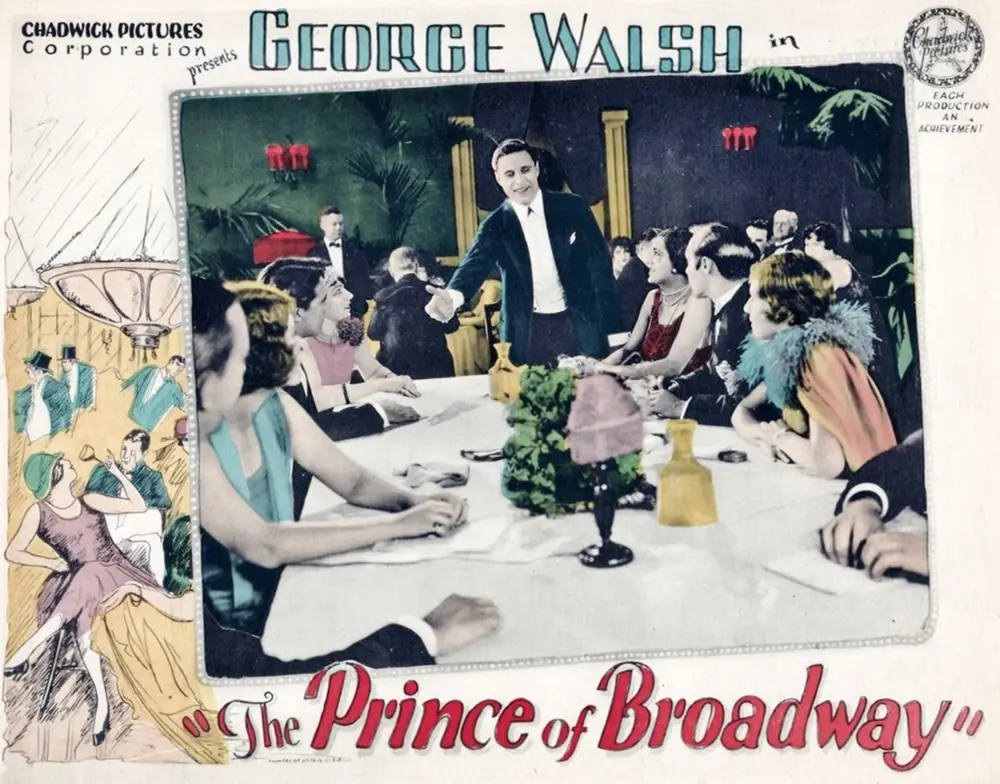
Can a silent film about boxing from a century ago still resonate with modern audiences? Short answer: yes, but with significant caveats. 'The Prince of Broadway' offers a fascinating glimpse into early cinematic storytelling, blending sports drama with a classic redemption arc that, while predictable by today's standards, possesses an undeniable charm.
This film is best suited for aficionados of silent cinema, boxing historians, and those curious about the roots of sports films. It is decidedly NOT for viewers seeking complex psychological narratives, fast-paced action, or modern production values. If you demand nuanced character development and intricate plot twists, you'll likely find its straightforward narrative too simplistic.
Let's cut to the chase for those considering a dive into this historical piece:
At its heart, 'The Prince of Broadway' is a cautionary tale wrapped in a triumphant comeback. George Burke, played by actual heavyweight Ad Wolgast, is introduced as the champion whose moniker is less about regal bearing and more about his nocturnal dominion over the city's nightlife. His training regimen, we are told, consists primarily of drinking and dancing – a truly audacious and unconventional detail for a film about athletic prowess, even in 1923. This immediately sets a tone that is both playful and tragic, hinting at the self-destructive streak that defines Burke’s early career.
The inevitable fall is swift and brutal. A knockout, a torn contract, and Burke finds himself adrift, a champion without a crown or a purpose. It's a classic setup, but what elevates it slightly is the immediate intervention of Nancy Lee (Alma Bennett), his childhood sweetheart. Nancy isn't merely a damsel in distress; she's an active agent in Burke's salvation, leveraging her own success as an actress to provide him refuge. This subversion of typical gender roles, however slight, is a surprising strength, giving the narrative a backbone beyond simple masculine struggle.
The plot then shifts to Wade Turner’s ranch, where the seeds of an external conflict are sown. Turner, portrayed by George Walsh, embodies a jealousy so transparent it's almost comical. His instructions to foreman Buck Marshall (Frank Campeau) to hinder Burke's comeback are less Machiavellian and more petulant. This simplicity in villainy, while perhaps unsatisfying for modern tastes, serves its purpose in a silent film: clear motivations, easily communicated through exaggerated gestures and intertitles.
The most intriguing aspect of this section is the arrival of former champion Jim Jeffries, playing himself. His offer to help Burke regain condition isn't just a plot device; it's a fascinating bridge between the fictional narrative and the very real world of early 20th-century boxing. Jeffries' presence lends an undeniable authenticity, transforming what could be a generic training montage into something more grounded and historically resonant. It’s here that the film truly begins to separate itself from generic melodramas.
Nancy's eventual discovery of Turner's conspiracy feels a little too convenient, a necessary beat to propel the plot toward its inevitable climax. Yet, it underscores her role as the moral compass and ultimate catalyst for Burke's complete redemption. The film culminates in the expected triumph, both in the ring and in love, a satisfying conclusion to a straightforward, albeit well-trodden, path.
“The Prince of Broadway” doesn't reinvent the wheel, but it polishes a familiar narrative to a respectable sheen, proving that even simple stories can captivate when executed with conviction and a dash of genuine sporting spirit. Its true value lies not in groundbreaking originality, but in its earnest portrayal of human frailty and resilience.
The casting of actual boxers in prominent roles is both the film's greatest asset and its most notable limitation. Ad Wolgast, as George Burke, certainly looks the part of a heavyweight champion. His physicality is undeniable, particularly in the fight sequences, which possess a raw, unchoreographed energy that feels genuinely dangerous. When he's in the ring, or depicting the physical toll of his early self-indulgence, Wolgast is entirely convincing.
However, the demands of silent film acting, which often required broad, expressive gestures to convey internal states, sometimes stretch Wolgast's dramatic range. There are moments where his emotional expressions feel less nuanced than those of his more seasoned acting counterparts. This isn't a harsh criticism, but an observation on the challenge of transitioning from one highly specialized performance art to another. His best moments are often those of quiet contemplation or physical exertion, rather than grand declarations of despair or joy.
Alma Bennett, as Nancy Lee, delivers a solid performance that anchors the film's emotional core. She projects a strength and independence that feels progressive for the era. Her frustration with Burke's self-destruction, and her unwavering belief in his potential, are subtly conveyed, often through her eyes and posture rather than overt melodrama. She is, arguably, the more compelling and dynamic character, driving much of the non-boxing plot forward with quiet determination.
The supporting cast, including George Walsh as the jealous Wade Turner and Frank Campeau as Buck Marshall, lean heavily into the theatricality common in silent films. Turner's villainy is almost pantomime, his sneers and conniving glances leaving no doubt as to his intentions. While effective for clear storytelling, it lacks the depth that might make him a truly memorable antagonist. Jim Jeffries, playing himself, adds a gravitas that is hard to fake. His very presence on screen, a legendary figure, enhances the film's realism in unexpected ways, particularly during the training sequences where his advice feels genuinely authentic.
Directed by Frederick Chapin, 'The Prince of Broadway' exhibits many characteristics typical of 1920s filmmaking. The direction is straightforward, prioritizing clear narrative progression over stylistic flourishes. Shot composition tends to be functional, focusing on conveying action and emotion directly. There are fewer of the elaborate camera movements or experimental editing techniques that would emerge more prominently later in the silent era.
The cinematography, while not groundbreaking, effectively captures the atmosphere of both the boxing ring and the ranch. The fight scenes, in particular, are shot with a raw energy that makes them surprisingly engaging. The close-ups on the boxers' faces, showing the impact of blows, are particularly effective. Conversely, the ranch scenes offer a visual contrast, bathed in a more pastoral, idyllic light, emphasizing Burke's escape from the urban grind.
Pacing is where modern viewers might find the film most challenging. Silent films often embraced a more deliberate rhythm, allowing scenes to unfold at a slower pace, with intertitles providing exposition and dialogue. 'The Prince of Broadway' is no exception. While this methodical approach allows moments of quiet character reflection, it can also lead to a sense of drag, particularly during the setup phases of the plot. The training montage, for instance, while historically interesting, might test the patience of
IMDb —
1919
Community
Log in to comment.