DbcultAccessing Vault...
Cult Review
Senior Film Conservator
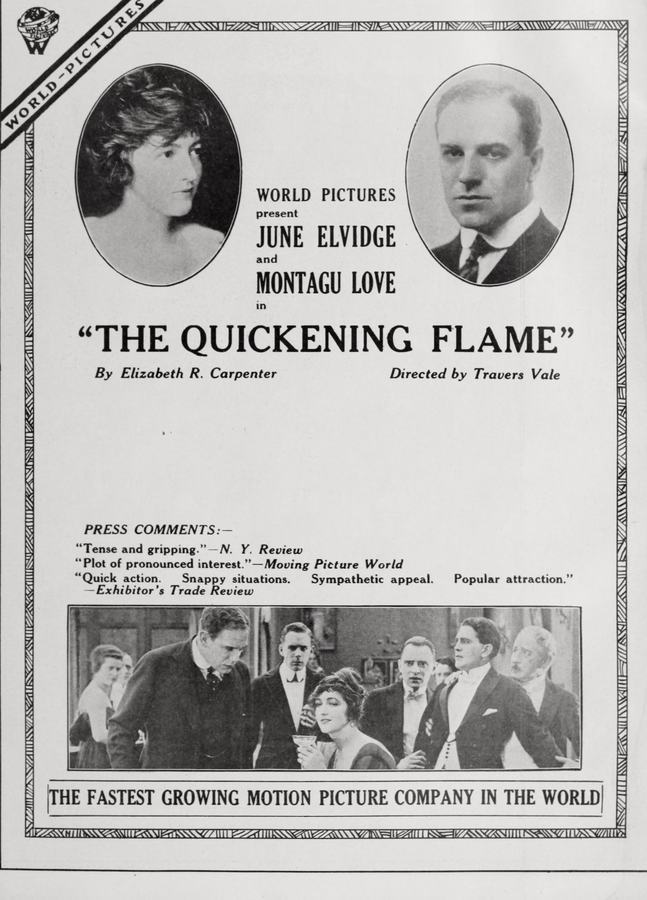
When the silent era birthed a film as baroque as The Quickening Flame, it offered audiences a kaleidoscope of moral ambiguity wrapped in the veneer of melodrama. The narrative, anchored by Bert Leigh’s stoic John Steele, unfurls like a moth‑winged tapestry—each filament a revelation about duty, desire, and the capriciousness of fate.
Leigh imbues Steele with a restrained gravitas, his clipped diction echoing courtroom decorum even as he navigates the raucous world of English burlesque. The contrast between his measured cadence and the flamboyant chaos of Maizie Bell’s stage—embodied by June Elvidge—creates a visual and auditory dissonance that propels the film’s central conflict. Steele’s internal struggle is not merely personal; it mirrors the transatlantic tension between American pragmatism and British eccentricity, a theme explored in contemporary works such as Denny from Ireland.
Elvidge’s Maizie is a study in duality. On one hand, she radiates the incandescent charisma of a vaudeville star; on the other, she conceals a labyrinthine past that only unfurls in the film’s second act. Her performance is suffused with a subtle melancholy—her eyes, often lit by the amber glow of stage lights, betray a yearning for authenticity beneath the glitter. This layered portrayal anticipates later cinematic examinations of the femme fatale, as seen in The Love Thief.
Mabel Ballin’s Hester serves as the narrative’s ethical fulcrum. Her measured poise, underscored by the soft sea‑blue of her wardrobe (a visual cue rendered in the film’s costuming), offers a counterpoint to Maizie’s flamboyance. Hester’s nurturing presence facilitates Steele’s rehabilitation, yet her eventual illness—precipitated by the revelation of his bigamy—underscores the fragile equilibrium between personal redemption and societal expectations. The film’s treatment of her decline evokes the pathos found in The Mother and the Law, where female virtue is both celebrated and victimized.
Rodney McKeever’s Harlon, a crippled blackmailer, is a study in grotesque authority. His physical impairment juxtaposed with his moral corruption creates a visual metaphor for the film’s thematic undercurrents: power that is both limited and insidious. Harlon’s Japanese valet, Yoshida (portrayed by Frank Quong), adds an exotic layer, his stoic silence amplifying the tension. Their partnership reflects a transnational criminality that feels eerily prescient, reminiscent of the geopolitical anxieties explored in The Flying Torpedo.
The screenplay, crafted by Elizabeth R. Carpenter and Giles Warren, adheres to a three‑act structure that feels both classical and daring. The inciting incident—Steele’s impulsive marriage to Maizie—propels the story into a maelstrom of emotional turbulence. The midpoint, marked by the erroneous newspaper report of Maizie’s death, serves as a narrative fulcrum, allowing Steele’s marriage to Hester to bloom. The final act’s revelation of Maizie’s true identity and the ensuing fatal duel on a cliff edge culminate in a cathartic release that aligns with the era’s penchant for melodramatic resolution.
Cinematographer Al Hart employs chiaroscuro lighting to accentuate the film’s moral dichotomies. The burlesque sequences are bathed in a warm, amber hue—mirroring the dark orange #C2410C that dominates the set’s décor—while the domestic scenes with Hester are suffused with cool sea‑blue tones, evoking a sense of calm and order. The climactic cliff confrontation is captured in stark contrast, the sky a bruised yellow #EAB308, underscoring the impending doom. This deliberate palette not only enhances mood but also reinforces thematic contrasts between temptation and fidelity.
The chemistry between Leigh and Elvidge oscillates between electric attraction and palpable tension. Their exchanges, often punctuated by lingering glances, convey unspoken histories. Meanwhile, Ballin’s understated performance offers a grounding force; her quiet resilience is a testament to the era’s evolving portrayal of women as agents of moral clarity rather than mere plot devices. The supporting cast—Montagu Love as Judge Mason, Jack Drumier as the officious solicitor—provides a sturdy narrative scaffolding, each delivering lines with a gravitas befitting silent‑era melodrama.
At its core, The Quickening Flame interrogates the fragility of identity when confronted with societal expectations. Steele’s oscillation between two worlds—law and licentiousness—mirrors the broader cultural tension of the 1920s, a decade marked by rapid modernization and moral reevaluation. The film’s exploration of bigamy, deception, and redemption anticipates later cinematic forays into complex marital dynamics, such as those found in The Spreading Evil.
Although a silent picture, the accompanying orchestral score—performed live in many theatres—underscores emotional beats with a deft blend of brass and strings. The leitmotif associated with Maizie’s performances employs a jaunty, syncopated rhythm, while Hester’s scenes are underscored by a plaintive violin, reinforcing the dichotomy between chaos and order. The climactic duel is accompanied by a crescendo of timpani, amplifying the visceral tension.
When juxtaposed with contemporaneous works like The Disciple, which delves into spiritual conflict, The Quickening Flame opts for a more terrestrial battleground—marital fidelity versus personal ambition. Both films, however, share a preoccupation with the consequences of hidden truths, a motif that resonates across the silent era’s dramatic oeuvre.
Decades after its release, the film’s exploration of identity fragmentation remains pertinent. Modern audiences, accustomed to complex anti‑heroes, can appreciate Steele’s flawed humanity. Moreover, the film’s nuanced portrayal of a strong, compassionate female lead in Hester anticipates the feminist narratives that would later dominate cinema. Its visual style, particularly the strategic use of color symbolism within a monochrome framework, foreshadows the experimental palettes of later auteurs.
In sum, The Quickening Flame stands as a testament to silent‑era storytelling mastery. Its layered characters, meticulous set design, and thematic depth coalesce into a work that rewards repeated viewings. For cinephiles seeking a film that marries melodramatic flair with intellectual rigor, this title offers a compelling, emotionally resonant experience.
IMDb 7.5
1932
Community
Log in to comment.