DbcultAccessing Vault...
Cult Review
Senior Film Conservator
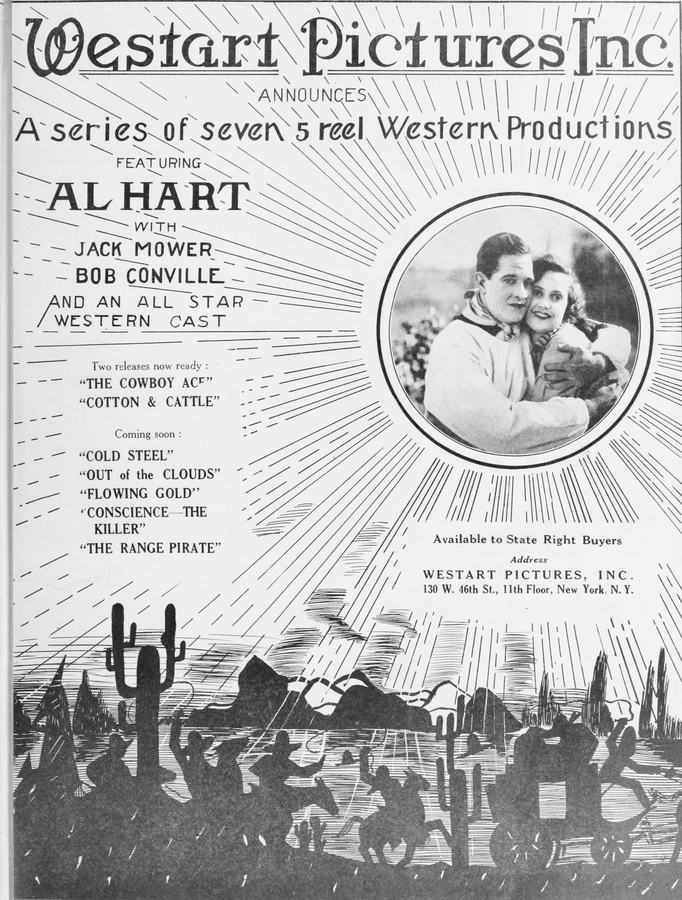
In the pantheon of early American cinema, few films capture the existential dread of frontier justice like 'The Range Pirate.' W.M. Smith’s 1921 Western is a masterclass in visual storytelling, using the harsh Arizona landscape as both setting and character. The film’s opening sequence — a slow dolly across a sun-bleached saloon as the camera pulls back to reveal the jagged Apache Mountains — establishes a tone of inevitable doom that lingers throughout the 68-minute runtime.
At its core, the film is a deconstruction of the mythic American hero. Al Hart’s 'Laramie' McCrae embodies the tragic anti-hero, his angular features and sunken eyes reflecting a man haunted by past sins. When the corrupt Marshal Clanton (Jack Mower) frames him for a murder, McCrae’s journey becomes one of survival rather than redemption. Smith subverts the traditional Western trope of the noble gunslinger by making McCrae’s moral choices ambiguous — in one pivotal scene, he refuses to draw his revolver to protect a child, yet later justifies killing a bandit to save the same town.
The recurring image of the abandoned mineshaft serves as a potent metaphor for buried truths. When McCrae discovers the murdered prospector’s body inside, the camera lingers on the rusted pickaxe still clutched in the corpse’s hand. This visual motif recurs in the final act, where the same mineshaft becomes McCrae’s prison — a literal and symbolic descent into the consequences of his actions.
Hart’s performance is a masterclass in understated acting. His physicality — the slouched shoulders, the deliberate pauses before speaking — conveys a man constantly weighing his next move. In contrast, Jack Mower’s villain lacks the traditional histrionics of early cinema. His Clanton is a quiet, calculating presence, his menace emerging from strategic silences rather than overt threats. Robert Conville’s rancher character provides emotional ballast, his stoic expressions masking an internal conflict between duty to the town and loyalty to McCrae.
Notable for its era, the film also features nuanced performances from silent film veterans. When McCrae’s sweetheart (uncredited) is threatened, her subtle glances and trembling hands convey more about her fear than any dialogue could. These moments highlight Smith’s understanding of visual language — a concept later expanded upon in 'Archangel, City of Snow' (archangel-city-of-snow) through its use of expressionist lighting.
Shot on location in the Mojave Desert, the film’s cinematography is both beautiful and brutal. The camera work is deceptively simple, with long takes that let the environment speak volumes. In the showdown at the water hole sequence, the lack of quick cuts forces the audience to absorb the desolation — cracked earth, skeletal cacti, and the ever-present dust that seems to coat every frame.
The intertitles are sparse, a deliberate choice that emphasizes the visual storytelling. This technique echoes the German Expressionist films of the same period, suggesting an international influence that’s rarely acknowledged in early American cinema. The score, composed of lone piano and harmonica, adds to the film’s melancholic tone without overpowering the visuals.
Though largely forgotten in mainstream discourse, 'The Range Pirate' has found a cult following among genre purists. Its influence can be seen in later Westerns like 'The Co-respondent' (the-co-respondent) and 'The Boer War' (the-boer-war), particularly in its exploration of frontier justice. The film’s ambiguous ending — with McCrae riding into the sunset but clearly broken man — rejects the tidy moral resolution common in contemporary Westerns.
Modern viewers might find the pacing slow by today’s standards, but this deliberate rhythm mirrors the existential timelessness of the frontier experience. In this context, the film’s technical imperfections become strengths. The occasional grain in the film stock or uneven lighting in the saloon scenes adds to the documentary-like authenticity.
When compared to 'Marrying Money' (marrying-money), this film reveals a striking contrast in narrative focus. Where 'Marrying Money' explores urban moral dilemmas, 'The Range Pirate' grounds its themes in the physical landscape. Similarly, the stark realism here echoes the moral complexities found in 'The Isle of Conquest' (the-isle-of-conquest), though this film’s desert setting provides a more unforgiving backdrop.
One particularly effective comparison is with 'The Virtuous Thief' (the-virtuous-thief), as both films use their protagonists’ internal conflicts to question societal morality. However, where 'The Virtuous Thief' leans on comedic elements, 'The Range Pirate' maintains a grim, philosophical tone throughout.
The film’s technical achievements also place it in conversation with 'Attack on the Gold Escort' (attack-on-the-gold-escort). Both films use location shooting to enhance their narratives, but 'The Range Pirate' benefits from a deeper engagement with its environment — the desert isn’t just a setting, it’s a character that actively shapes the story.
In an era when Western films often prioritized spectacle over substance, 'The Range Pirate' stands out for its existential depth. It’s a film that understands the frontier not as a place of limitless possibility, but as a crucible for human character. The final image — a close-up of McCrae’s weathered face as he watches the town disappear behind him — lingers long after the credits roll, a testament to the film’s emotional resonance.
For modern audiences seeking a Western that transcends genre tropes, this film offers both artistic merit and historical significance. It’s a reminder that even in the silent film era, directors like W.M. Smith were exploring complex moral questions that remain relevant today. While it may lack the technical polish of later productions, its raw emotional power and philosophical depth make it a vital piece of cinematic history.
IMDb —
1922
Community
Log in to comment.