DbcultAccessing Vault...
6.2/10
Senior Film Conservator
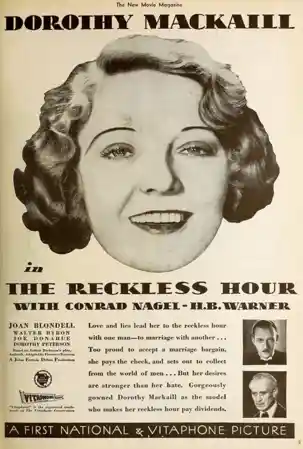
A definitive 6.2/10 rating for a film that redefined the boundaries of cult cinema. The Reckless Hour remains a cornerstone of transgressive art.
You should probably watch The Reckless Hour if you have ever felt like the world was specifically designed to kick you when you are down. It is a solid pick for anyone who enjoys those early 1930s movies where the lighting is a bit harsh and the moral lessons are even harsher.
If you are looking for something upbeat or polished, you will hate this. It is a movie for people who like to see a character get genuinely bitter before they find any kind of peace.
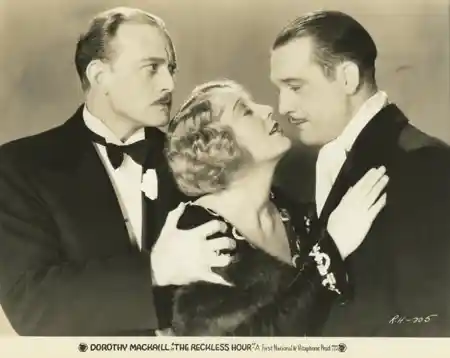
Dorothy Mackaill plays Margaret, a model who gets swept up by this guy Dick, who is basically a walking red flag in a tuxedo. You can tell he is trouble from the way he leans against things, but Margaret is all in.
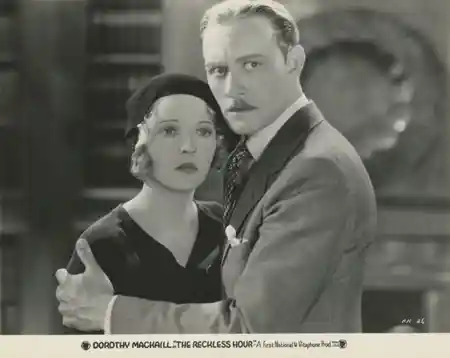
There is a scene early on where they are in a car, and the way she looks at him is almost painful to watch. You know she is making a mistake, and the movie knows it too.
When she finds out she is pregnant, the movie doesn't dance around it as much as you'd think for 1931. Dick basically vanishes into the upholstery, and Margaret is left to deal with the fallout alone.
I noticed a small detail in the apartment scene right after the breakup. There is a cracked mirror in the background that feels like it was put there on purpose, or maybe the set was just cheap.
Either way, it works. Margaret's father, played by H.B. Warner, is actually the most interesting part of the middle act.
Usually, in these old movies, the dad is just there to yell or be disappointed. Here, he feels like a real guy who is just trying to keep his head above water while his daughter’s life falls apart.
Mackaill is great at looking exhausted. Not movie-star exhausted, but real 'I haven't slept in three days' exhausted.
She becomes this very cold, very angry version of herself. It is a bit like the tonal shifts you see in Pursued, though obviously that is a western and this is a city drama.
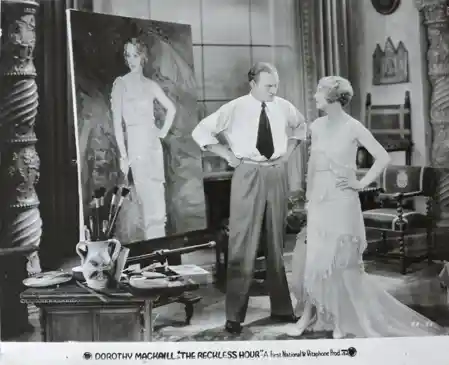
Then Conrad Nagel shows up as the artist. He is supposed to be the 'good guy,' but he comes off a little bit like a golden retriever in a suit.
He wants to help her, but Margaret is so done with men that she basically bites his head off. It is actually funny in a dark way because he is trying so hard to be sensitive.
There is one shot where he is painting her and the silence goes on way too long. It starts to feel awkward rather than romantic.
I kept thinking about Disraeli while watching this, mostly because of how different the acting styles were back then. In this movie, people actually move like they have bodies, not just like they are reciting a play.
The ending feels a little bit rushed. Like they realized they only had ten minutes of film left and needed to wrap up the whole 'pregnancy and bitterness' thing real fast.
It is not as chaotic as something like The Extraordinary Adventures of Mr. West in the Land of the Bolsheviks, but it has that same 'let's just finish this' energy at the end.
I didn't love the final speech. It felt like the movie was trying to convince me that everything was okay now, when it clearly wasn't.
But the stuff before that? The part where she is just wandering around being mad at the world? That felt real.
You can almost feel the movie trying to be a 'message film' but then giving up because it's more fun to watch Dorothy Mackaill be cynical. I respect that.
One more thing—the sound quality on some of these prints is terrible. You have to really squint with your ears to hear what the father is saying sometimes.
Anyway, it is a decent watch. It is messy and the grammar of the film is a bit broken, but it has a pulse.
If you like 1930s New York vibes, give it a go. Just don't expect a masterpiece. 🎞️

IMDb 7
1921
Community
Log in to comment.