DbcultAccessing Vault...
Cult Review
Senior Film Conservator
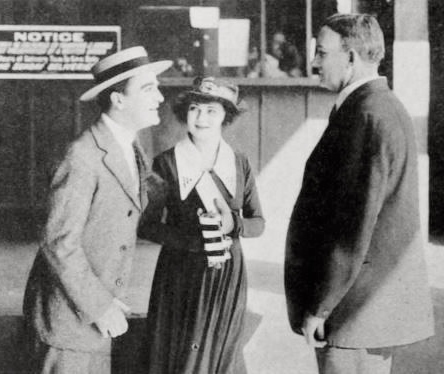
In the annals of early cinema, where the grand narratives often hinged on stark moral contrasts and the silent eloquence of human emotion, An Honest Man emerges as a particularly poignant exemplar. Released in 1918, amidst the tumultuous backdrop of the Great War's final throes, this film, directed with a sure hand and featuring the compelling presence of William Desmond, offered audiences a much-needed narrative of integrity, perseverance, and the ultimate triumph of good character. It's a story that, despite its century-old vintage, retains a surprising resonance, speaking to universal human experiences that transcend the limitations of its medium and era. The film doesn't merely present a plot; it unfurls a tapestry of human nature, exploring the internal battles and external challenges that define a man's worth, irrespective of his station in life.
The brilliance of An Honest Man lies not in intricate plot twists or groundbreaking visual effects—which were, of course, nascent at the time—but in its unwavering focus on the moral compass of its protagonist, Benny Boggs. William Desmond, a prominent figure of the silent screen, imbues Benny with a guileless charm and an underlying strength that makes his journey utterly captivating. Benny, initially presented as a 'good-natured hobo,' is a man adrift, lacking direction but not decency. His initial rejection by the U.S. Army, a rejection that would likely sting any man of his era, serves as the catalyst for his transformation. It's a pivotal moment, pushing him from a state of passive existence to one of active engagement, compelling him to overcome his 'aversion to work'—a societal expectation that weighed heavily on individuals in post-industrial America. This rejection isn't merely a plot device; it's a symbolic stripping away of one potential path, forcing Benny to forge another, more personal one.
Benny’s subsequent encounter with Old Man Cushing, portrayed with a poignant vulnerability by Graham Pettie, sets the central moral dilemma into motion. Cushing, a solitary farmer, represents a fading agrarian ideal, a man whose life is inextricably linked to the land. When illness strikes him down, believing himself to be on the precipice of death, he places an immense trust in Benny: the delivery of a package containing $50,000 to his estranged daughter, Ruby, who has ventured to the city in pursuit of an acting career. This sum, a colossal fortune in 1918, presents Benny with an almost unbearable temptation. For a man of his meager means, who has known only the transient existence of a hobo, $50,000 represents not just wealth, but an entirely new life, a complete escape from his past. Yet, the narrative meticulously builds Benny's resolve to honor Cushing's trust, demonstrating an innate honesty that transcends his immediate circumstances. This internal conflict, conveyed primarily through Desmond's expressions and subtle body language, is the beating heart of the film. It's a testament to the power of silent acting, where the absence of dialogue amplifies the weight of unspoken decisions.
The journey to the city, a classic cinematic trope, further tests Benny's character. The urban environment, a stark contrast to the rural simplicity of Cushing's farm, introduces new challenges and complexities. Here, Benny's innate goodness is once again highlighted when he intervenes to rescue Beatrice Burnett from an attacker. This act of spontaneous heroism, unprompted by self-interest, solidifies his character as truly noble. Mary Warren, playing Beatrice, brings a vivacity and warmth that makes her an immediate and sympathetic ally to Benny. Their burgeoning friendship is not merely a convenient plot device; it serves to ground Benny in an unfamiliar world, providing him with a connection that will ultimately guide him towards his objective, albeit through an unforeseen detour. The script, credited to Henry Payson Dowst and George Elwood Jenks, skillfully navigates these narrative currents, ensuring that each development, however coincidental it may seem, serves to reinforce the central themes of integrity and destiny.
The narrative takes a compelling turn when Beatrice introduces Benny to her ailing friend, who, to Benny's astonishment, identifies herself as Cushing's long-lost daughter, Ruby. This moment of mistaken identity, a common yet effective device in silent melodramas, adds another layer of ethical complexity. Ann Forrest, likely portraying this 'other' Ruby, would have had the delicate task of eliciting audience sympathy without fully revealing the deception. Benny, driven by his commitment to Cushing's dying wish, delivers the substantial sum to this woman, believing he has fulfilled his sacred trust. This scene is critical, as it underscores Benny's unwavering honesty, even when faced with circumstances that could easily lead to an honest mistake with significant personal gain. His actions here are not contingent on external validation but stem from an internal moral imperative. It's a powerful statement on the nature of true virtue, which operates independently of immediate reward or even accurate information.
The eventual unveiling of the true Ruby, and the subsequent journey back to the farm, is handled with a warmth and sincerity that is characteristic of the film's overall tone. The reunion with a recovered Old Man Cushing, who has miraculously defied death, provides a cathartic and emotionally resonant conclusion to the central conflict. The genuine joy and relief on Cushing's face, presumably portrayed by Graham Pettie, would have been a profoundly satisfying moment for contemporary audiences. It's a testament to the power of human connection and the enduring hope for reconciliation, themes that were particularly resonant in a post-war society grappling with loss and separation. The film suggests that true wealth lies not in monetary fortune, but in the bonds of family and the integrity of one's character. This narrative arc, while perhaps appearing straightforward by today's standards, was incredibly effective in conveying powerful moral lessons to a broad audience.
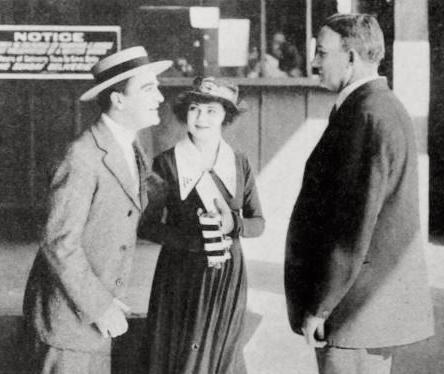
In terms of its cinematic peers, An Honest Man stands as a fine example of the moralistic dramas prevalent in the silent era. Films like Her Soul's Inspiration or The Locked Heart often explored similar themes of personal redemption and the unveiling of inner goodness, but An Honest Man distinguishes itself through its clear, uncomplicated portrayal of integrity as its own reward. The narrative's focus on a character's journey from aimlessness to purpose, driven by an unwavering moral code, finds parallels in other contemporary works. The depiction of rural life versus urban complexities, a common binary in films of this period, is handled here with a degree of nuance, showing both the dangers and the opportunities of the city. While it might lack the grand spectacle of something like Atop of the World in Motion, its intimate character study provides a different kind of cinematic satisfaction.
The film's resolution, with Benny finally accepted into the army and Ruby's promise of marriage, ties a neat bow on the narrative, offering a deeply satisfying conclusion for audiences of the time. This ending not only rewards Benny's honesty but also integrates him fully into society, transforming him from a 'hobo' to a respected soldier and a future husband. It reflects a societal desire for order and reward for virtue, particularly potent in a nation gearing up for peacetime after a devastating war. The story, as crafted by Henry Payson Dowst and George Elwood Jenks, understands the emotional landscape of its audience, offering both escapism and a reaffirmation of cherished values. The simplicity of the plot allows the powerful performances, particularly William Desmond's, to shine through, conveying complex emotions without the aid of spoken dialogue. This reliance on visual storytelling and the expressive capabilities of the actors is where silent cinema truly excelled, and An Honest Man is a prime example of this artistry.
One could argue that the film's straightforward morality might seem quaint to a modern sensibility accustomed to more ambiguous narratives. However, it is precisely this clarity of purpose and character that gives An Honest Man its enduring charm. It's a refreshing reminder that stories of fundamental human decency can be profoundly moving. The film avoids cynical subversion, instead embracing a heartfelt belief in the power of an individual to do right, even when faced with overwhelming temptation. This unwavering optimism, while perhaps a product of its time, still holds a certain allure today, offering a comforting antidote to the complexities of contemporary life.
The performances, even without the benefit of sound, convey a remarkable depth. William Desmond's Benny Boggs is a character easy to root for, his journey from a reluctant worker to a man of honor feeling earned and authentic. Mary Warren as Beatrice/Ruby brings a necessary effervescence, while Graham Pettie's portrayal of Old Man Cushing grounds the narrative in a believable, if melodramatic, predicament. Ann Forrest’s role, though smaller, is crucial in creating the narrative’s central deception. The success of such a film hinged entirely on the ability of its cast to communicate emotion and intent through gesture, facial expression, and physical presence, and in this, An Honest Man largely succeeds. Its legacy, though perhaps not as widely celebrated as some of the era's blockbusters, lies in its steadfast portrayal of a universal human virtue.
Moreover, the film's structure, moving from the pastoral to the urban and back again, creates a satisfying cyclical narrative. Benny's initial rejection by the army is mirrored by his eventual acceptance, symbolizing his full integration into a productive and honorable life. His transformation is not merely external; it's a deep-seated evolution of character, spurred by the trust placed in him and his commitment to upholding that trust. This kind of character development, while perhaps less psychologically complex than modern narratives, is nonetheless effective and emotionally resonant. It's a story that believes in the inherent goodness of people, and in the idea that hard work and honesty will, eventually, be rewarded. In a world still grappling with the aftermath of conflict and the uncertainties of a new century, An Honest Man delivered a message of hope and moral clarity, a beacon of virtue in an ever-changing landscape.
Ultimately, An Honest Man, while a product of its time, transcends its historical context through its earnest exploration of timeless themes. It reminds us that integrity is a choice, often a difficult one, but always one that leads to genuine fulfillment. For silent film enthusiasts and those interested in the evolution of cinematic storytelling, this film offers a valuable glimpse into the moral and narrative sensibilities of a bygone era, proving that sometimes, the simplest stories are the most profound. It's a cinematic relic that continues to speak to the better angels of our nature, urging us, even a century later, to consider what it truly means to be an honest person.
IMDb 2.9
1921
Community
Log in to comment.