DbcultAccessing Vault...
5.5/10
Senior Film Conservator
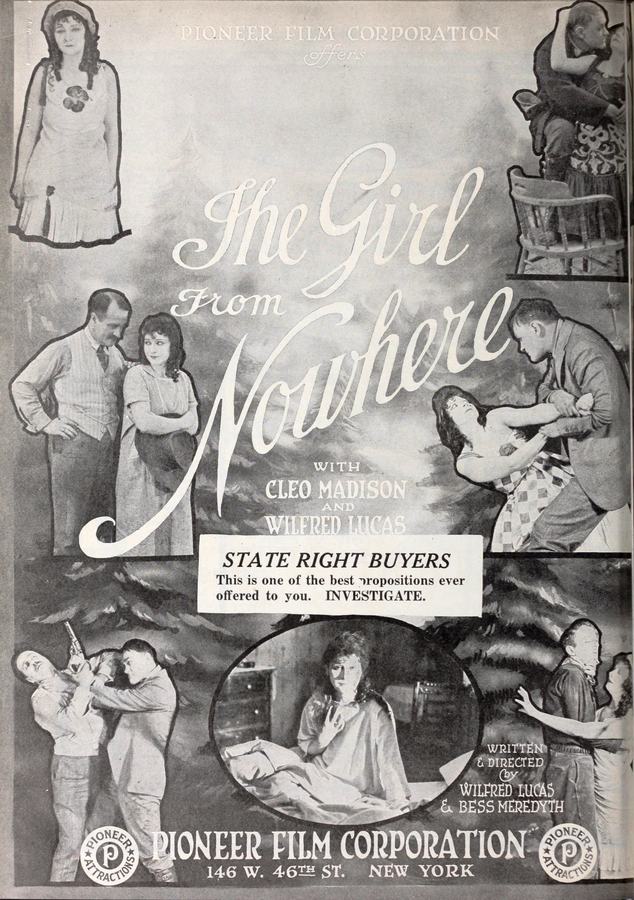
A definitive 5.5/10 rating for a film that redefined the boundaries of cult cinema. The Girl from Nowhere remains a cornerstone of transgressive art.
In the nascent years of the cinematic medium, specifically the year 1914, the silver screen was often a site of radical experimentation disguised as populist entertainment. The Girl from Nowhere stands as a quintessential example of this phenomenon. It is not merely a story of a lost woman; it is a profound meditation on the fragility of the human persona when stripped of its history. Directed by Wilfred Lucas and written by the legendary Bess Meredyth, the film utilizes the sprawling, untamed wilderness of the Northwest as a psychological mirror for its protagonist’s fractured psyche. Cleo Madison, an actress of remarkable expressive depth, portrays the titular girl not as a caricature of distress, but as a visceral entity grappling with the terrifying void of her own memory.
The setting—a logging camp—is crucial. Unlike the stylized urbanity found in The Voice in the Fog, where mystery is obscured by man-made structures, the camp here is an atavistic space. It is a place where nature is being violently commodified, and the men who perform this labor are themselves reduced to their most primal states. Into this crucible of sweat and sawdust steps the girl, a figure of pure innocence—or perhaps, more accurately, a figure of pure absence. Her amnesia is the ultimate vulnerability, a thematic thread that resonates through the ages and finds different expressions in films like The Awakening of Ruth, though the latter deals more with spiritual rebirth than the existential terror of a blank slate.
Bess Meredyth’s screenplay is a marvel of early narrative economy. She understands that in a silent medium, the environment must speak as loudly as the intertitles. The lawlessness of the frontier is not just a plot point; it is the oxygen the characters breathe. This creates a palpable sense of dread that is far more effective than the overt histrionics found in many of the film's contemporaries. While Captain Alvarez sought to capture the grandiosity of revolution, The Girl from Nowhere focuses on the claustrophobic tension of a small community where everyone knows more than they are willing to reveal.
Wilfred Lucas, who also stars in the film, directs with a keen eye for the spatial dynamics of the camp. He utilizes the towering trees to dwarf the human figures, suggesting a cosmic indifference to the girl’s plight. This visual language elevates the film from a standard 'damsel in distress' narrative into something approaching Greek tragedy. The loggers, including the rugged Val Paul and the menacing Frank Brownlee, are not just antagonists; they are the personification of a world that views anything soft or unknown as something to be conquered or broken. The film's portrayal of these men is remarkably unvarnished, avoiding the sentimentalized 'noble savage' tropes that occasionally plagued films like Scarlet Days.
When examining the moral landscape of The Girl from Nowhere, one cannot help but draw parallels to Where Bonds Are Loosed. Both films explore the disintegration of societal norms in isolated environments. However, while the latter focuses on the heat of an island setting, Lucas’s film utilizes the damp, oppressive chill of the Northwest to signify a different kind of rot. In this film, the threat is not just physical violence, but the psychological manipulation of a woman who cannot even defend herself with her own name. This theme of identity theft—both literal and metaphorical—is a precursor to the more sophisticated noir sensibilities that would emerge decades later.
The film also touches upon the class and gender politics of the era. The 'gentleman' who might come to her aid is a figure of intense scrutiny. Is his desire to help born of genuine altruism, or is it a more refined version of the loggers' possessiveness? This ambiguity is what makes the film so enduring. It lacks the simplistic moral clarity of Tom Sawyer, opting instead for the murky ethical waters found in One Touch of Sin or the cynical world-weariness of Aftermath. The girl is a prize to be won, a secret to be kept, and a victim to be exploited, all at once.
Technically, the film is a masterclass in using light and shadow to articulate internal states. The cinematography captures the dappled sunlight filtering through the canopy, creating a dreamlike—or rather, nightmarish—quality that mirrors the girl’s confused state of mind. Unlike the vibrant, almost cartoonish energy of Feet and Defeat, the pacing here is deliberate, almost lugubrious, allowing the tension to simmer until it inevitably boils over into violence. The use of location shooting gives the film a grit that is often missing from the studio-bound productions of the mid-1910s.
The supporting cast, featuring John Cook and Mae Talbot, provides a texture of realism that anchors the film’s more melodramatic impulses. They represent the 'silent majority' of the frontier—those who see the injustices being committed but are too weary or too compromised to intervene. This social apathy is a recurring motif in Meredyth’s work, also seen in the exploration of societal failures in Hypocrisy. It suggests that the 'nowhere' the girl comes from is not just a geographical location, but a state of being in a world that has forgotten how to care for its most vulnerable.
Madison’s performance is the undeniable heart of the film. In an era where acting was often characterized by broad gestures, she employs a nuanced physicality. Her eyes, wide with the terror of the unknown, anchor every scene. She manages to convey a complex history without saying a word—or even knowing that history herself. This performance prefigures the psychological depth seen in later silent masterpieces like Body and Soul or the existential dread of Professor Nissens seltsamer Tod. She is not merely a victim; she is a mirror reflecting the ugliness of the men around her.
The film’s climax, while adhering to some of the structural requirements of the time, remains haunting. It doesn't offer the easy catharsis one might expect. Instead, it leaves the viewer with a sense of lingering unease. The resolution of the girl’s identity is almost secondary to the revelation of the camp's collective depravity. In this way, the film shares a spiritual kinship with Syndig Kærlighed, where the focus is shifted from the individual sin to the systemic corruption that allows such sins to flourish.
Revisiting The Girl from Nowhere in the modern era reveals how much of our current cinematic language was already being formulated in 1914. The film’s exploration of amnesia as a narrative device, the frontier as a moral vacuum, and the gaze as an act of violence are all themes that continue to resonate in contemporary cinema. It avoids the whimsical artifice of It Happened in Paris, opting instead for a somber, almost documentarian look at life on the edge of the world. The logging camp is not just a setting; it is a character in its own right—indifferent, brutal, and ultimately, unyielding.
The film also serves as a reminder of the power of female screenwriters like Bess Meredyth. Her ability to infuse a standard genre piece with such psychological complexity is a testament to her genius. While the film may be over a century old, its central question remains relevant: in a world where we are defined by our past, what happens to those who have none? Are they truly free, or are they simply the ultimate prey? The Girl from Nowhere doesn’t just ask these questions; it forces the audience to inhabit the silence of the answer. It is a stark, beautiful, and deeply unsettling piece of film history that deserves a prominent place in the canon of silent cinema. It captures a moment in time when the frontier was closing, and the shadows were beginning to lengthen over the American soul, much like the jealousy depicted in The Green-Eyed Monster, but with a far more expansive and chilling scope.
In the final analysis, the film is a triumph of atmosphere over artifice. It avoids the pitfalls of early cinema by grounding its drama in the tangible realities of the northwest wilderness and the intangible mysteries of the human mind. It is a journey into the heart of darkness, led by a girl who doesn't even know she is lost. And in her wandering, we find a reflection of our own collective uncertainty in an increasingly lawless world.

IMDb 4.5
1918
Community
Log in to comment.