DbcultAccessing Vault...
6.7/10
Senior Film Conservator

A definitive 6.7/10 rating for a film that redefined the boundaries of cult cinema. Turkish Delight remains a cornerstone of transgressive art.
Is Turkish Delight a forgotten comedic gem from the silent era? Short answer: No, it is a bizarre cultural artifact that is worth watching only for its sheer eccentricity and historical awkwardness.
This film is for dedicated silent cinema historians and those who enjoy deconstructing the 'Orientalism' of the 1920s. It is absolutely NOT for anyone looking for a politically correct experience or a tightly paced narrative.
1) This film works because it leans into the total absurdity of its premise without trying to be a serious drama, unlike the heavy-handed Anna Karenina (1920).
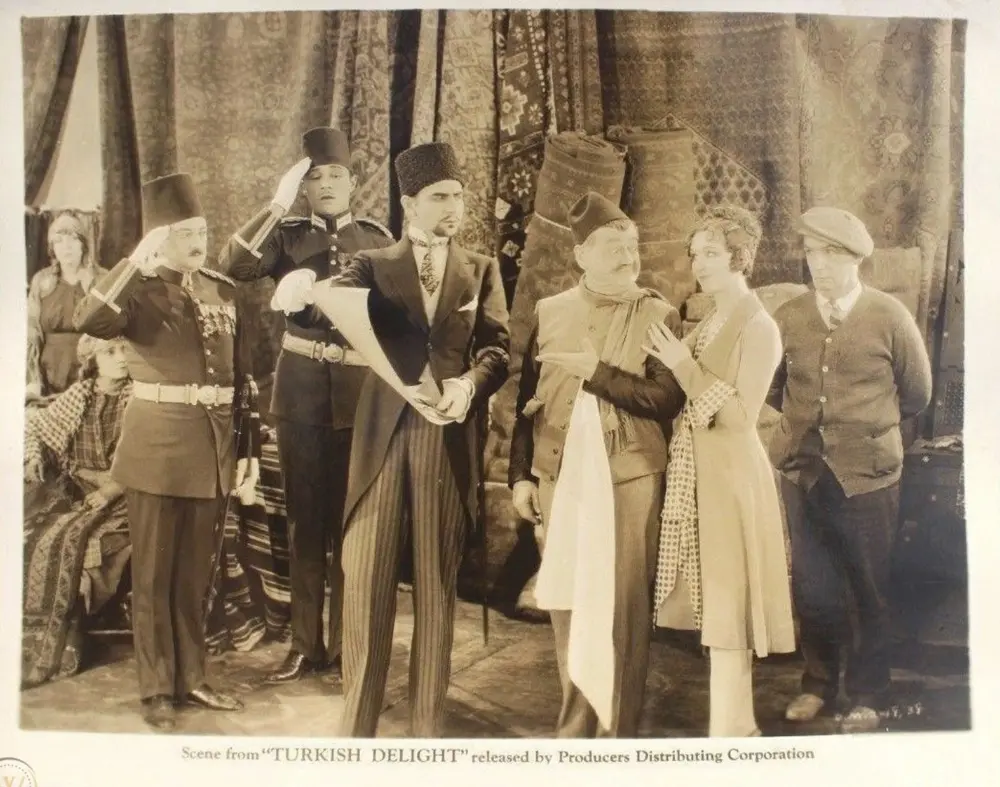
2) This film fails because its cultural stereotypes are so thick they often obscure the actual humor, and the pacing in the middle act feels as stagnant as a New York alleyway.
3) You should watch it if you want to see how 1920s writers like Tay Garnett and Irvin S. Cobb handled 'high-concept' comedy before the Hays Code tightened its grip.
The premise of Turkish Delight is pure 1920s escapism. We start with Donald, played with a sort of frantic bewilderment by Kenneth Thomson. He is a man of the cloth—specifically, the rug trade. His life is defined by margins, overhead, and the quality of a weave. When he inherits a harem, the film doesn't treat it as a sexual fantasy, but rather as a logistical nightmare. This is where the film finds its few genuine laughs.
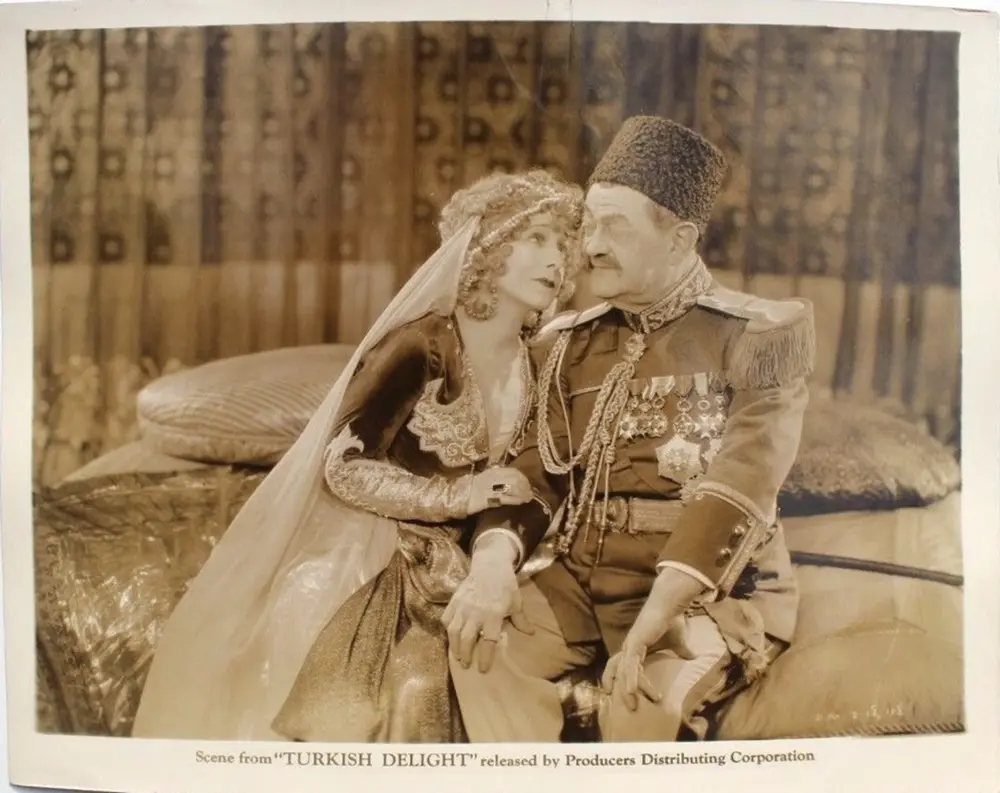
The clash of worlds is immediate. The sets transition from the cramped, realistic offices of New York to a Hollywood-imagined 'East' that looks like it was decorated by someone who had only ever seen a postcard of Istanbul. While North of 36 was busy romanticizing the American frontier, Turkish Delight was busy fetishizing a version of the Orient that never existed. It is loud, cluttered, and visually dense.
There is a specific scene where Donald tries to use his ledger to 'inventory' the women in the harem. He treats them like surplus inventory from a bankrupt warehouse. It’s a brutally simple comedic setup. It works. But it’s also deeply uncomfortable. The film relies on the 'otherness' of the setting to drive the plot, a common trope also seen in Beasts of Paradise, though handled here with much less grace.
May Robson is the MVP here. Known for her later work in 'Lady for a Day,' Robson brings a level of groundedness to the film that it desperately needs. While the rest of the cast is busy overacting in the typical silent-era 'pantomime' style, Robson manages to convey a sense of weary reality. She provides a counterpoint to the madness, much like the grounded characters in Thirty a Week.

Rudolph Schildkraut also turns in a performance that is surprisingly nuanced for a film this broad. He understands that the comedy comes from the contrast. If everyone is screaming, no one is funny. Schildkraut plays it straight, allowing the absurdity of the situation to do the heavy lifting. This is a lesson many modern comedies could stand to learn.
The female cast, including Julia Faye and Emily Barrye, are unfortunately given little to do other than look 'exotic' and act as obstacles for Donald. Unlike the more character-driven roles in Girls, these women are treated more like set dressing. This is the film's biggest narrative failure. There is a missed opportunity to give the harem members their own agency or comedic voice.
Tay Garnett is listed as one of the writers, and you can see flashes of his later cynical wit. Garnett, who would go on to direct 'The Postman Always Rings Twice,' seems to be poking fun at the American obsession with wealth and status. The rug merchant isn't happy because he has a harem; he's stressed because he doesn't know how to tax it. This subversion of the 'dream inheritance' is the most sophisticated thing about the movie.
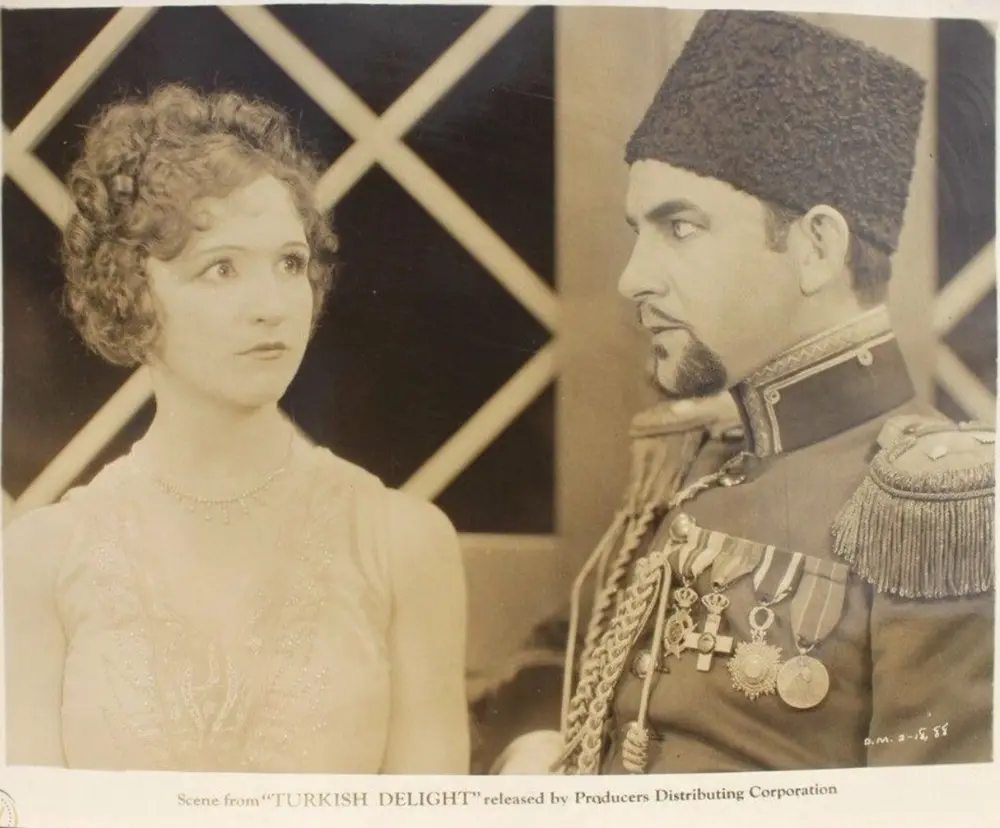
The direction by Paul Sloane is competent but uninspired. He lacks the visual flair of the era's masters. The camera stays mostly static, capturing the action like a stage play. If you compare this to the experimental visuals of The Mysteries of Myra, Turkish Delight feels positively archaic. It doesn't take risks with the medium; it just records the gags.
The pacing is another issue. At times, the film feels like it’s stretching a ten-minute sketch into a feature-length production. There are long sequences of physical comedy that overstay their welcome. For instance, a scene involving a chase through the palace corridors feels like it was lifted from a lesser short film like A Close Shave. It lacks the rhythmic precision of a Buster Keaton or Charlie Chaplin sequence.
Humor is subjective, but this film provides a unique look at 1920s farce. The comedy comes from the merchant's confusion. It is a physical comedy that relies on broad gestures. Modern audiences might find it more historically interesting than laugh-out-loud funny. It is a film that requires you to turn off your modern sensibilities and watch through a sepia-toned lens.
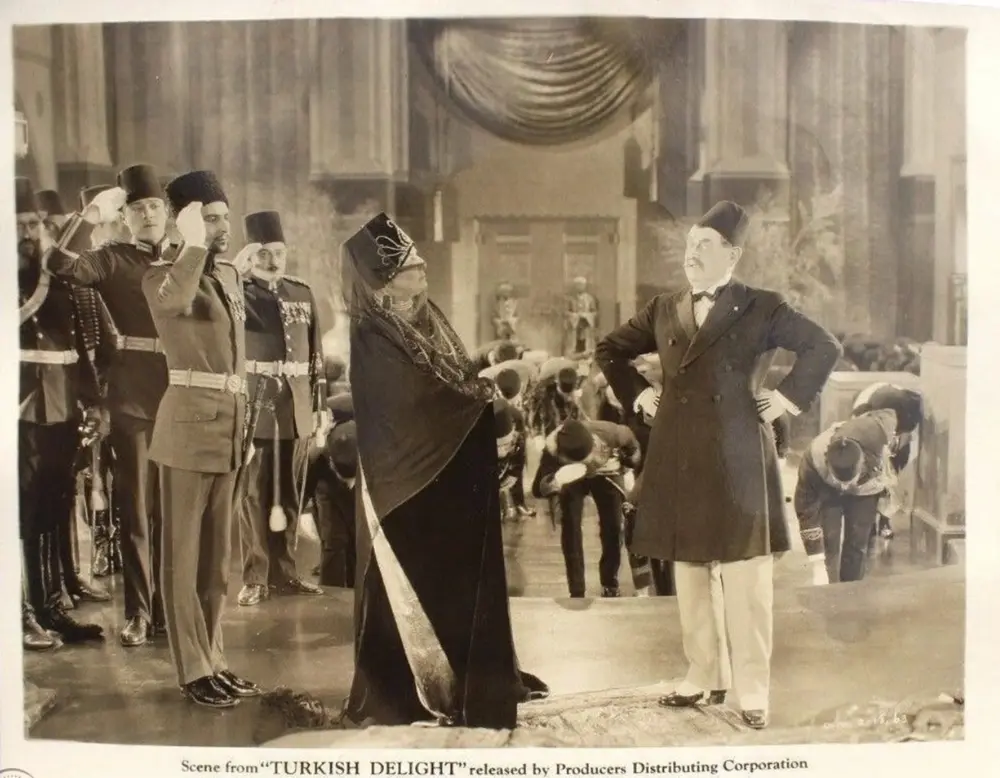
Does it hold up? Not really. But is it fascinating? Absolutely. It’s a window into what the average moviegoer in 1927 thought was 'exotic' and 'hilarious.' It shares a certain DNA with As Aventuras de Gregório in its attempt to bridge disparate cultures through the lens of a bumbling protagonist.
Pros:
• Fascinating historical production design.
• Strong cast of character actors.
• Interesting subversion of the 'inheritance' trope.
• A rare look at Tay Garnett's early comedic writing.
Cons:
• Deeply dated cultural depictions.
• Static cinematography that feels like a filmed play.
• The central protagonist is often more annoying than endearing.
• Lacks the emotional weight of contemporaries like His Father's Son.
The visual language of Turkish Delight is one of excess. The sets are overflowing with silk, pillows, and ornate carvings. It’s a 'more is more' approach to production design. However, the tone is inconsistent. It oscillates between a broad farce and a more cynical critique of American greed. This tonal whiplash can be jarring.
The film lacks the mystery of Who Is Number One? or the romantic tension of Love's Blindness. Instead, it settles for a middle ground of 'pleasant confusion.' There are moments where the lighting is surprisingly effective, casting long shadows across the palace floors, but these are few and far between. Most of the film is lit with the flat, bright light typical of silent comedies of the era.
One could argue that the film is a precursor to the modern 'culture clash' comedy. It shares themes with Believe Me, where a character's preconceived notions are challenged by a new environment. But where other films might find a moment of growth, Turkish Delight is content to leave its hero as confused at the end as he was at the beginning.
Turkish Delight is a weird movie. Not 'good-weird' like a modern surrealist piece, but 'weird' like finding a 100-year-old sandwich in a tuxedo pocket. It is a relic of a time when the world felt much larger and much less understood. The film is a mess, but it’s a colorful, ambitious mess that tells us more about 1927 America than it does about the 'East.'
If you’ve already sat through When a Woman Sins or The Other Side of the Door, you might find this a refreshing, if clunky, change of pace. Just don't expect a masterpiece. It’s a curiosity. A footnote in the careers of its talented writers and cast. Watch it for the history, not the hilarity.
IMDb 5.5
1937
Community
Log in to comment.