DbcultAccessing Vault...
Cult Review
Senior Film Conservator
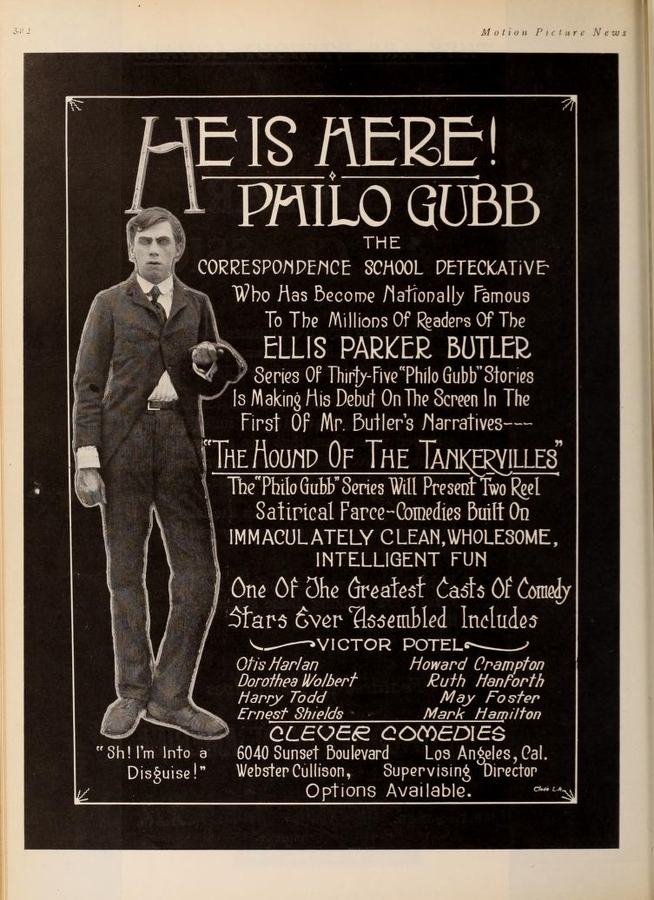
In the pantheon of early silent cinema, few characters embody the quixotic spirit of the American dreamer quite like Philo Gubb. Portrayed with a spindly, nervous energy by Ernest Shields, Gubb is the quintessential anti-hero of the vocational age. While The No-Good Guy might explore the social frictions of character flaws, Philo Gubb: The Correspondence School Detackative focuses its lens on the absurdity of unearned ambition. The film serves as a hilarious, albeit biting, commentary on the proliferation of correspondence schools that promised prestige through the postal service. Gubb’s unwavering belief in the 'Rising Sun' curriculum provides a fertile ground for a comedy that is as much about the failure of pedagogy as it is about the success of the gag.
The aesthetic of the film is intrinsically tied to its era—a time when the lines between manual labor and intellectual pursuit were being playfully blurred. Gubb, with his buckets of paste and rolls of floral wallpaper, represents the grounded reality of the working class. However, his soul belongs to the world of shadows and magnifying glasses. This duality is captured through a visual language that balances the mundane textures of a small-town workshop with the exaggerated, almost expressionistic silhouettes of Gubb’s various disguises. Unlike the gritty realism found in Hell Morgan's Girl, Gubb’s world is one of bright, sun-drenched farcicality, where even the most sinister plot is undermined by a poorly applied fake beard.
Ernest Shields delivers a performance that is nothing short of a masterclass in physical restraint. In an era where many comedians leaned into the manic energy of the Keystone Cops, Shields opts for a more cerebral, rhythmic approach. His Gubb is a man of singular focus, a trait he shares with the protagonists of more serious fare like The Reform Candidate. However, where the latter seeks societal salvation, Gubb seeks only the validation of his correspondence instructors. Every movement Shields makes—the way he adjusts his spectacles, the gingerly manner in which he handles a 'clue'—is infused with a pathetic dignity that makes the character oddly endearing.
The supporting cast, featuring stalwarts like Victor Potel and Mark Hamilton, provides a necessary counterpoint to Gubb’s delusions. They inhabit the 'real' world, their bewilderment acting as the audience's surrogate. While Maciste atleta relied on raw physicality and heroic stature, the ensemble here relies on the subtle art of the 'slow burn.' The comedic timing is impeccable, particularly in scenes where Gubb’s literal-mindedness clashes with the colloquial logic of his neighbors. It is a symphony of misunderstanding that elevates the film beyond mere slapstick into the realm of social satire.
One cannot discuss Philo Gubb without acknowledging the linguistic wit of Ellis Parker Butler. The transition from the printed page to the silent screen is often a treacherous one, yet the writers managed to preserve Butler’s unique 'Gubbisms.' The intertitles are not merely functional; they are essential to the film's character, dripping with the pseudo-intellectual jargon of the 'Detackative' world. This linguistic playfulness provides a sophisticated layer that distinguishes the film from more straightforward action pieces like Captain Alvarez. We aren't just watching a fool; we are watching a fool who has invented an entire vocabulary for his foolishness.
The direction utilizes the constraints of the 1910s to its advantage. The framing is often static, allowing the actors to explore the depth of the frame, a technique that emphasizes the isolation of Gubb’s absurdity. When compared to the sprawling, dramatic compositions of The Two Orphans, Philo Gubb feels intimate, almost claustrophobic in its domesticity. This intimacy serves the comedy well, as the smallest twitch of a mustache or the slight tilting of a hat becomes a monumental event. The film understands that in the world of the 'detackative,' the devil is truly in the details—or at least in Gubb's perception of them.
At its core, the film explores the tension between expertise and amateurism. In the early 20th century, the professionalization of everything from medicine to law was in full swing. Gubb is the counter-revolutionary, the man who believes that a few pamphlets and a spirit of 'get-up-and-go' can replace years of training. There is a tragicomedy here that mirrors the existential weight of The Martyrdom of Philip Strong, albeit through a much lighter lens. Gubb is a martyr for the cause of the self-taught man, suffering the slings and arrows of outrageous misfortune in his quest for a badge.
Furthermore, the film’s obsession with disguise touches upon themes of identity and performance. Gubb is never more himself than when he is pretending to be someone else—a sea captain, a widow, or a sinister 'foreign' agent. This fluidity of persona suggests a deeper anxiety about the stability of the self in a rapidly changing world. Much like the shifting loyalties in Dangerous Days, Gubb’s reality is a precarious construction of costumes and assumptions. He is a man built out of wallpaper and dreams, perpetually on the verge of peeling away.
The pacing of The Correspondence School Detackative is a fascinating study in early cinematic editing. It lacks the frantic, cut-heavy nature of modern comedy, opting instead for long takes that allow the physical comedy to breathe. We see the mechanics of Gubb’s failures in real-time. This deliberate speed reminds one of the grueling endurance found in The Railroader or the visceral tension of the Nelson-Wolgast Fight. There is a certain 'athleticism' to Gubb's clumsiness; it takes a great deal of skill to look that uncoordinated.
Even the lighting, though primitive by today's standards, plays a role in the storytelling. The use of natural light in the outdoor scenes provides a sense of place that is vital to the 'small town' feel of the narrative. In contrast, the interior scenes are often sharply lit, highlighting the artifice of Gubb’s 'detective office.' This visual dichotomy reinforces the theme of the outsider looking in—Gubb is a man trying to impose a cinematic, pulp-novel logic onto a world that is stubbornly ordinary. It is the same clash of worlds seen in Hawthorne of the U.S.A., where American brashness meets foreign complexity, though here the 'foreign' territory is simply the mind of a paperhanger.
Looking back from a century’s distance, Philo Gubb remains a vital piece of comedic history. It predates the more famous bumbling detectives of the sound era, laying the groundwork for the Clouseaus and Drebins to follow. Its influence can be felt in any story where the protagonist’s confidence is inverse to their ability. While it may lack the epic scope of The Race or the emotional poignancy of The Love Light, it succeeds brilliantly on its own terms. It is a focused, sharp, and ultimately joyous exploration of human folly.
The film also serves as a reminder of the sheer diversity of the silent era. For every grand spectacle like Das Zeichen des Malayen, there were these wonderful, character-driven comedies that spoke to the everyday experiences of the audience. The struggle to better oneself, the desire for adventure, and the inevitable pratfalls that accompany both are universal themes. Philo Gubb, with his mail-order diploma and his heart of gold, is a testament to the enduring power of the underdog. Even if his 'detecting' is more 'detacking,' he remains a hero of the highest order in the realm of the absurd.
In the final analysis, Philo Gubb: The Correspondence School Detackative is not just a relic of a bygone age; it is a vibrant, breathing piece of art that continues to resonate. It captures a specific moment in time—the dawn of the modern age—with a clarity and wit that is rare. Whether he is chasing a 'criminal' through a field of cows or meticulously planning a stakeout from his wallpaper shop, Gubb reminds us that the greatest mystery of all is the human capacity for delusion. It is a mystery that even the best correspondence course could never fully solve, and for that, we should be eternally grateful. The film’s enduring charm lies in its refusal to mock Gubb too harshly; instead, it invites us to join him in his fantasy, recognizing that we all, at some point, have tried to 'detack' the complexities of life with nothing but a pamphlet and a prayer. It is a cinematic experience that, much like Gubb's own wallpaper, sticks with you long after the lights have come up. From the subtle nods to Gates of Brass in its treatment of moral ambiguity to its slapstick roots, this film is a cornerstone of silent comedy that deserves its place in the sun.
Community
Log in to comment.