DbcultAccessing Vault...
Cult Review
Senior Film Conservator
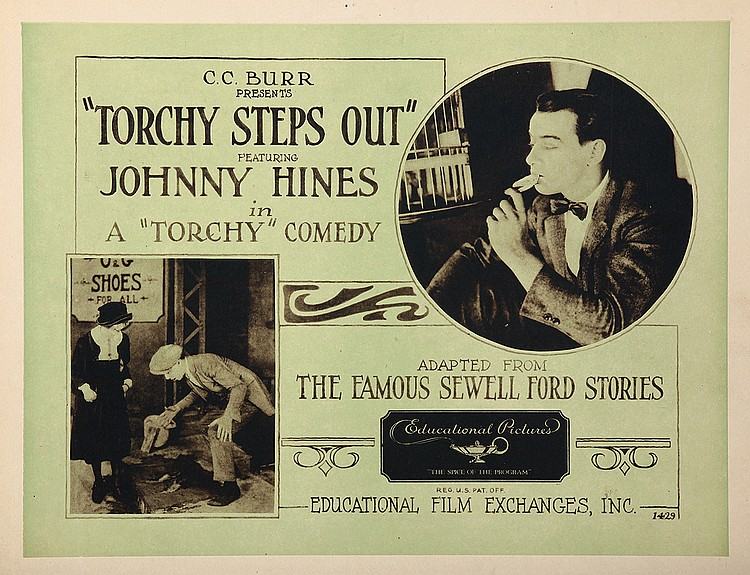
The annals of silent cinema are replete with grand spectacles, soaring romances, and thrilling adventures, yet it is often in the quiet corners, the unassuming narratives, that some of the most profound insights into the human condition are unearthed. Such is the case with 'Torchy Steps Out,' a film whose premise, on paper, might appear deceptively simple: a boss instructs his employee, Torchy, to break in a new pair of shoes. However, to dismiss this as mere cinematic fluff would be to overlook the subtle artistry and keen observations that writer Sewell Ford and actor Johnny Hines likely brought to this seemingly mundane task. This film, in its brevity and focus, offers a fascinating lens through which to examine themes of labor, class, and the often-unseen efforts that facilitate the comfort of others.
At its core, 'Torchy Steps Out' presents a scenario that, while specific to a bygone era of domestic and professional servitude, resonates with universal truths about work and hierarchy. The act of 'breaking in' shoes is not just a physical process; it’s an intimate ritual of comfort, demanding patience, a degree of discomfort, and a gradual molding to the wearer's unique gait. By delegating this task, the boss asserts not only his authority but also his expectation of a certain level of personal service, blurring the lines between professional duty and private convenience. Torchy, in this context, becomes an unwitting surrogate, literally walking in his employer's nascent footsteps, experiencing the initial stiffness and eventual suppleness of the footwear that will ultimately grace another's feet. This singular act, therefore, transforms into a powerful metaphor for the invisible labor that underpins societal structures, where one individual's ease is often predicated upon another's exertion.
This thematic richness, extracted from such a lean plot, is a testament to the evocative power of silent film. Without spoken dialogue, the weight of the narrative falls squarely on visual storytelling: the expressions of the actors, their physical comedy or pathos, and the staging of each scene. One can imagine Johnny Hines, known for his affable screen persona and comedic timing, imbuing Torchy with a blend of resignation, perhaps a hint of playful rebellion, or even a deep, unspoken melancholy. How does one convey the agony of new shoes without words? Through exaggerated limps, pained grimaces, or perhaps a series of increasingly elaborate and futile attempts to soften the leather, each gesture a silent soliloquy on the burden of his task.
Sewell Ford, as the writer, faced the challenge of extracting maximum dramatic and comedic potential from this minimalist premise. The brilliance lies not in an intricate plot, but in the exploration of a single, relatable human experience. Ford's work here likely exemplifies the silent era's mastery of vignette storytelling, where a brief snapshot of life is meticulously crafted to reveal deeper truths. It's a stark contrast to the sprawling epic narratives, such as The Count of Monte Cristo, which rely on decades of complex machinations and grand revenge plots. Instead, 'Torchy Steps Out' finds its dramatic resonance in the micro-drama of daily life, mirroring the quiet struggles and small victories that define the existence of the 'everyman.'
Consider the potential for comedic relief: Torchy's attempts to hasten the breaking-in process might lead to slapstick scenarios, or his internal frustration could manifest in subtle, humorous acts of defiance. Conversely, the film could lean into the pathos of his situation, presenting Torchy as a sympathetic figure trapped in a cycle of thankless tasks. This dual potential for comedy and drama within such a simple setup speaks volumes about Ford's understanding of character and situation, proving that a compelling story doesn't always require an elaborate tapestry of events, but rather a keen focus on the human element within a given circumstance.
Johnny Hines, a prominent figure in silent comedy, was uniquely suited to portray Torchy. His screen persona often revolved around the well-meaning but often beleaguered individual navigating the complexities of modern life. In 'Torchy Steps Out,' Hines would have relied heavily on his physical expressiveness and nuanced facial gestures to communicate the various stages of Torchy's ordeal. The initial stiffness, the growing discomfort, the eventual relief, and perhaps even a hint of resentment or pride in a job completed—all these emotional beats would have been conveyed without a single word. This demands a mastery of pantomime and a profound understanding of character psychology, allowing the audience to project their own experiences onto Torchy's silent struggle.
Unlike the more overtly adventurous roles seen in films like Branding Broadway or the rugged individualism of The Kid and the Cowboy, Hines's performance here would have been grounded in a more relatable, domestic heroism. His Torchy is not fighting villains or taming the wild frontier; he is battling the tyranny of stiff leather and the implicit demands of his employer. This makes the character profoundly human and his plight immediately accessible to a broad audience, fostering a sense of empathy that transcends the specific circumstances of the plot. His ability to evoke both laughter and a touch of pathos from such a humble scenario is a hallmark of his enduring appeal.
The silent film era, often romanticized or misunderstood, developed a sophisticated visual language that compensated for the absence of sound. Intertitles, while providing crucial exposition or dialogue, were used sparingly, with filmmakers prioritizing the power of the image. In 'Torchy Steps Out,' one can imagine the camera lingering on Torchy's feet, perhaps showing close-ups of his grimacing face as he takes another painful step, or wide shots of him traversing various terrains—from the polished floors of an office to the bustling streets—each step contributing to the softening of the shoes. The choice of set design, costuming (Torchy's humble attire versus the boss's more opulent wear), and even the lighting would have played pivotal roles in conveying the film's tone and thematic undertones.
This reliance on visual cues makes films like 'Torchy Steps Out' particularly compelling for modern audiences willing to engage with a different form of cinematic storytelling. It demands active participation, encouraging viewers to interpret gestures, expressions, and environmental details. This is a far cry from the more explicit and dialogue-heavy narratives of today, and it offers a unique insight into the craftsmanship of early cinema. It shares a common thread with films like Broken Shadows, where unspoken emotions and hidden realities are conveyed through subtle visual cues, allowing for a deeper, more personal connection with the characters.
Beyond the immediate humor or pathos, 'Torchy Steps Out' inadvertently delves into the social stratification prevalent in its time. The boss, unseen or perhaps only glimpsed as a figure of authority, represents the leisure class whose comfort is often maintained by the labor of others. Torchy, on the other hand, embodies the working class, whose daily existence is shaped by directives and tasks that, while seemingly small, contribute to the functioning of a larger system. This dynamic is not unlike the underlying tensions explored in films such as A Little Brother of the Rich, which often highlighted the stark contrasts between societal strata.
The film, therefore, can be viewed as a micro-commentary on the dignity of labor, or perhaps, its quiet indignity. Is Torchy's task demeaning, or is it simply a part of his job, a testament to his industriousness? The answer likely lies in the nuances of Hines's performance and Ford's directorial vision. It forces us to consider the value placed on different types of work and the often-unacknowledged contributions of those in service roles. This theme resonates with the core concept of Everyman's Price, albeit on a much smaller, more personal scale, where the 'price' is not just monetary but also measured in personal effort and comfort.
The theme of navigating daily routines and sometimes resisting them, even subtly, is a timeless one. While 'Torchy Steps Out' focuses on a literal physical task, it evokes the spirit of characters in other films who grapple with the demands of their circumstances. One might draw parallels to the adherence to tradition in Familjens traditioner, where individuals are bound by expected roles, or the sudden, unexpected obligations faced by characters in Just Dropped In. Torchy's journey, though confined to a pair of shoes, is a universal tale of human beings confronting their duties, whether self-imposed or externally dictated.
The subtle forms of resistance or coping mechanisms Torchy might employ could also draw connections to films where characters find agency in unexpected ways, even when 'shackled' by circumstances, much like the metaphorical constraints explored in Shackled. Perhaps Torchy finds a peculiar satisfaction in perfecting the shoes, or perhaps he subtly subverts the task, making it his own. These are the rich interpretive possibilities that a simple, yet well-executed, silent film allows.
In an era dominated by rapid technological advancement and a constant craving for novelty, a film like 'Torchy Steps Out' serves as a poignant reminder of the enduring power of concise, character-driven storytelling. It doesn't require elaborate special effects or a convoluted plot to capture attention; instead, it relies on the universal language of human experience—the daily grind, the dynamics of power, and the quiet resilience of the individual. It's an intimate look at a segment of life, stripped of pretense, allowing the audience to focus on the nuances of performance and the subtle implications of a seemingly simple request.
The film's legacy, though perhaps not as widely celebrated as some of its more epic contemporaries, lies in its capacity to provoke thought and elicit empathy through minimalist means. It reminds us that cinema, at its most fundamental, is about showing rather than telling, about inviting interpretation rather than dictating meaning. Much like the subtle character development in His Turning Point, 'Torchy Steps Out' showcases how even a seemingly minor event can reveal significant aspects of a person's character and situation. It stands as a testament to the ingenuity of early filmmakers and the timeless appeal of stories that find the extraordinary in the ordinary.
Ultimately, 'Torchy Steps Out' is more than just a film about breaking in shoes; it is a meditation on the invisible threads that connect individuals in a hierarchical society, a subtle exploration of human dignity in the face of mundane tasks, and a showcase for the expressive power of silent cinema. It invites us to look closer at the small moments, to appreciate the artistry in simplicity, and to recognize the universal truths hidden beneath the surface of everyday life. It is a quiet triumph, an unassuming gem that continues to resonate with its understated brilliance.
Its narrative simplicity allows for a deeper appreciation of the actor's craft and the writer's ability to distill complex social dynamics into an accessible, engaging format. While it doesn't boast the high-stakes drama of Steelheart or the intricate mystery of A London Flat Mystery, its strength lies precisely in its grounded realism and the universality of its central premise. This is a film that asks us to consider the quiet endurance of the human spirit, the often-unseen labor that supports the edifice of daily life, and the subtle ways in which individuals navigate their roles within larger societal structures. It’s a compelling example of how silent films, even with the most modest of plots, could achieve profound resonance through visual artistry and empathetic character portrayal. The film, in its essence, is a charming and insightful glimpse into a specific slice of life, proving that sometimes, the smallest steps can lead to the most significant reflections.
IMDb 4.9
1935
Community
Log in to comment.