DbcultAccessing Vault...
Cult Review
Senior Film Conservator
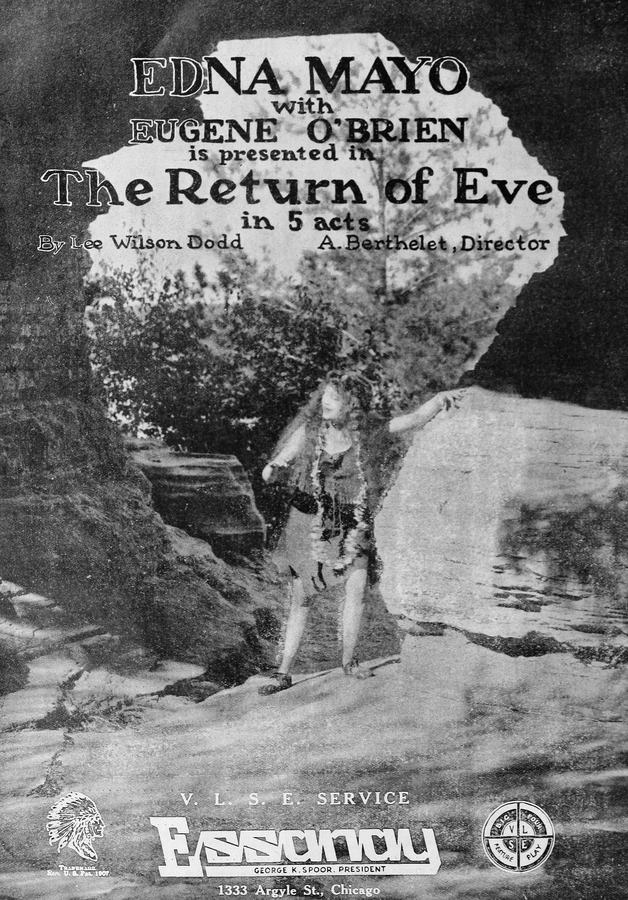
The cinematic tapestry of the early 20th century often presented moral fables, but few dared to weave a narrative as audacious and philosophically resonant as The Return of Eve. This silent era gem, penned by H.S. Sheldon and Lee Wilson Dodd, transcends mere melodrama to become a compelling societal critique, an exploration of human nature, and a poignant quest for authenticity. It challenges the very foundations of 'civilization' through the eyes of two innocents, offering a mirror to our own inherent contradictions and desires.
At its core, the film presents an extraordinary social experiment conceived by the eccentric millionaire, Eli Tapper. Convinced that the relentless march of 'progress' was eroding the very essence of humanity, Tapper embarks on a radical endeavor: he isolates two unrelated orphan children, a boy and a girl, in an untamed wilderness. Here, under the watchful, benevolent eye of the old tutor, David Winters, they are to grow, unblemished by societal artifice, into a new Adam and Eve. Their purpose, as Tapper envisioned, was nothing less than to become the 'path-breakers of a better race,' pure prototypes for a world unburdened by its own complexities. For nineteen years, this unique experiment flourishes. The children, portrayed with a captivating blend of naiveté and inherent wisdom by Eugene O'Brien as Adam and Leona Ball as Eve, embody a delightful simplicity, educated within the bounds of their natural world, untouched by the machinations and pretenses of the outside. Their existence is a testament to the purity of nature, a stark contrast to the world awaiting them.
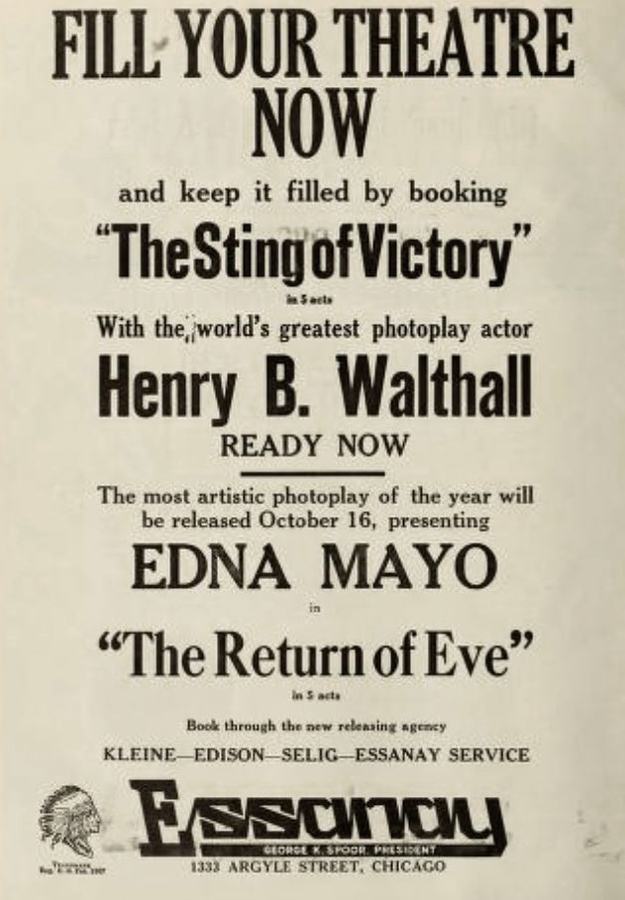
Meanwhile, in the gilded cages of high society, Tapper’s sister, Mrs. Tupper-Bellamy, portrayed by Emily Fitzroy, luxuriates in costly splendor, her every waking moment consumed by the anticipation of inheriting her brother's vast fortune. Her ambitions are meticulously calculated, particularly her scheme to marry her daughter, Clarice (Renee Clemmons), to Seymour Purchwell (Edward Arnold), a society idler whose standing is bolstered by his legal acumen. Purchwell, a character whose motivations are transparently venal, makes it abundantly clear that such a union is contingent upon the Tupper fortune flowing into the hands of Clarice and her mother. This intricate web of greed and social climbing serves as the perfect foil to the innocent world of Adam and Eve.
The true drama ignites with Tapper's demise. The revelation of his eccentric will sends ripples of shock and indignation through Mrs. Tupper-Bellamy’s meticulously constructed world. The will, a final act of subversion by the deceased millionaire, stipulates a most peculiar condition: his sister must integrate Adam and Eve into civilization to secure an annuity of $50,000 a year. The bulk of the inheritance, however, is bequeathed to the orphans. This twist immediately positions Purchwell as the primary antagonist, a veritable serpent in the garden, whose pursuit of the Tupper fortune drives the narrative forward. His quest leads him directly to the secluded Eden of Adam, Eve, and old Winters. The confrontation is inevitable; Winters, fiercely protective of his charges, initially resists the intrusion. However, a primal clash between Adam and Purchwell, a stark illustration of raw integrity against calculated cunning, ultimately sways the old tutor. The idyllic sanctuary must be abandoned.
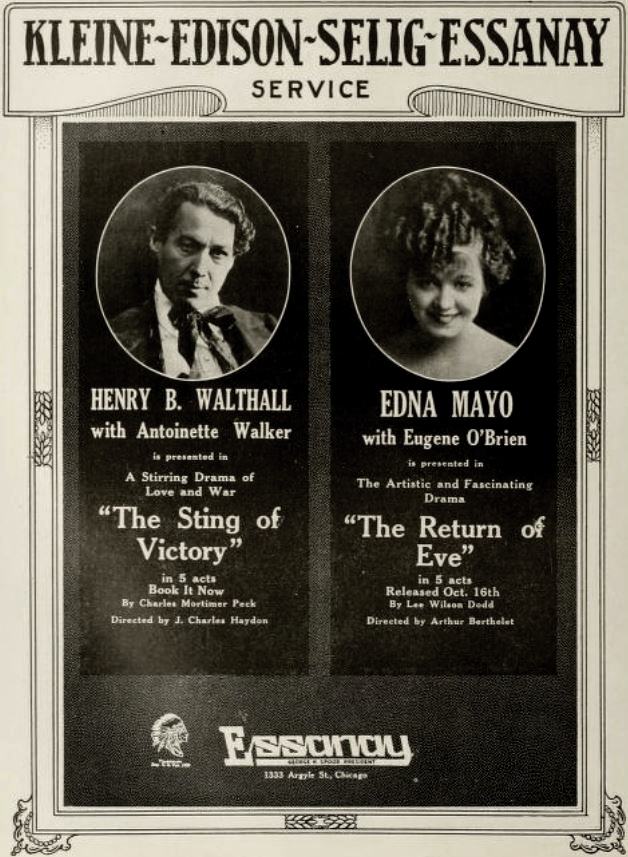
Plunged into the dizzying whirl of social affairs, Eve's initial reaction is one of unbridled delight. The shimmering gowns, the opulent balls, the endless stream of novelties – it’s a sensory overload, a stark contrast to her simple existence. Her innocence interprets the superficial glamour as genuine joy, a testament to the alluring facade that society so skillfully constructs. Adam, however, perceives the true nature of this new world with an almost visceral disgust. He sees through the veneer, recognizing the sham, the deceit, the hollow ambition that underpins every interaction. His pleas for Eve to return to their Eden are fervent, desperate, born of a profound understanding that this 'civilization' is fundamentally corrupting. But Eve, captivated by the novelty, refuses, her initial enchantment proving too potent. This divergence marks a critical turning point, highlighting the individual responses to external stimuli and the differing strengths of their inherent natures. The film subtly echoes themes found in Vanity, where the allure of social status and material wealth often leads characters astray from their true selves or simpler, more meaningful paths.
Unable to reconcile with the artificiality, Winters takes Adam to Paris, hoping that intellectual pursuits might offer some solace or a different path. This separation leaves Eve even more exposed to Purchwell’s predatory machinations. His focus shifts entirely to Eve, seeing her as the most direct route to the Tupper millions. The social landscape becomes a minefield of calculated smiles and veiled intentions. Clarice, already nursing a simmering resentment from Purchwell's spurned affection, finds herself in a frenzy of jealousy. The sight of Purchwell and Eve alone ignites her fury, leading to a public accusation before the entire house party. This dramatic confrontation is a pivotal moment, a shattering of the delicate illusion that Eve had begun to embrace. In her profound innocence, Eve initially struggles to grasp the venomous implications of Clarice's charge. The world she’d known, one of purity and unadorned truth, had no vocabulary for such duplicity. But as the meaning dawns on her, a profound bitterness takes root. She faces the assembled guests, her eyes now opened to the true nature of their world, and in a powerful, unvarnished denunciation, exposes them as 'tools of passion and greed.'
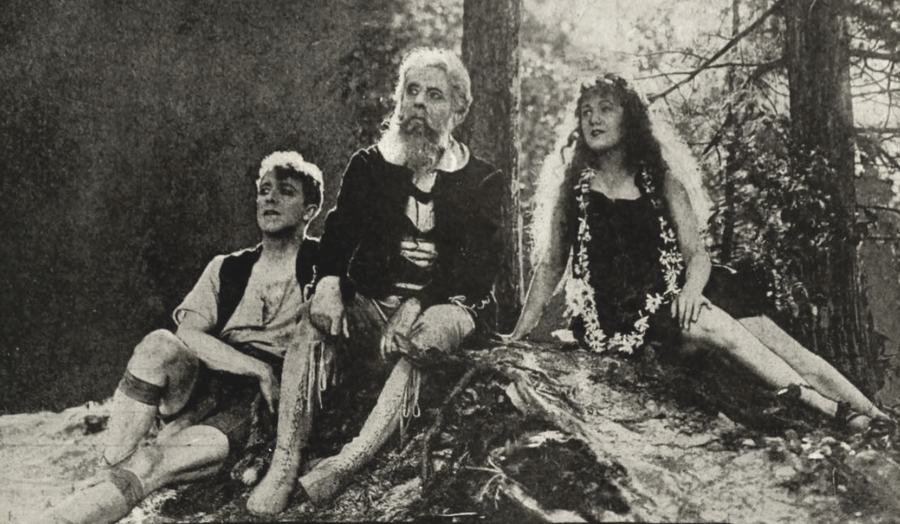
This scene is the film's moral crescendo, a powerful indictment of societal decay. Eve, having tasted the forbidden fruit of civilization, now rejects it with a clarity born of disillusionment. She announces her unequivocal decision: she will give up all the glittering pretense and return to Eden. With old Winters as her steadfast companion, she embarks on the journey back to their primal sanctuary. Adam is recalled from Paris, his own sojourn in the 'civilized' world having only deepened his conviction of its emptiness. The reunion in Eden is not merely a return to a physical place, but a spiritual homecoming. Now, truly 'awake to their love,' a love forged not in naive ignorance but in the crucible of shared experience and a conscious rejection of false values, the girl and the boy, together with their beloved guardian, irrevocably give up the world that had sought to corrupt them. This final act is a profound statement on the film's part, asserting the triumph of authentic connection and natural purity over the superficiality of societal constructs. It’s a beautifully rendered conclusion that resonates with a timeless yearning for an unblemished existence.
The performances in The Return of Eve are crucial, given the silent medium. Leona Ball as Eve delivers a nuanced portrayal of innocence transitioning to disillusionment. Her initial wide-eyed wonder at the social whirl, her gradual confusion, and her ultimate, forceful condemnation are conveyed with compelling clarity through her expressions and gestures. Eugene O’Brien’s Adam is a study in stoic integrity. His discomfort in society is palpable, his yearning for Eden almost a physical manifestation. He embodies the 'noble savage' archetype with a quiet dignity, making his eventual reunion with Eve all the more impactful. Edward Arnold, even in this early role, hints at the masterful villainy he would later perfect. His Purchwell is smoothly manipulative, a charismatic predator whose every action is calculated for personal gain. The supporting cast, including Edward R. Mawson as Winters, provides a solid framework for these central performances, grounding the fantastical premise in believable human reactions.
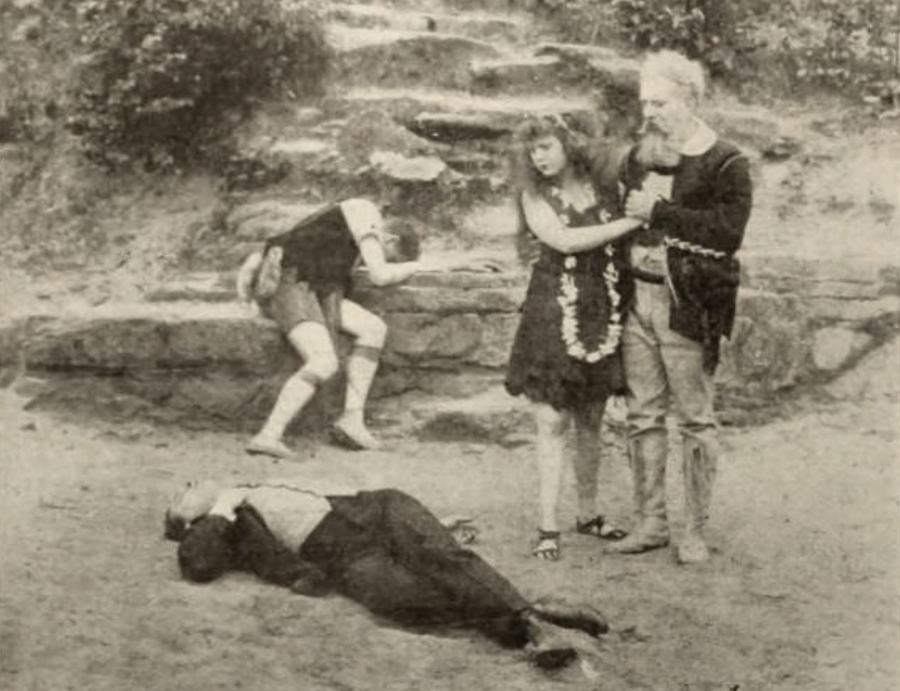
H.S. Sheldon and Lee Wilson Dodd’s screenplay, while rooted in a somewhat simplistic 'nature good, society bad' dichotomy, manages to explore the nuances within that framework. The film doesn't merely condemn society outright but shows how even the purest souls can be momentarily swayed by its glittering allure, only to find its core hollow. The contrast between Adam’s immediate revulsion and Eve’s initial fascination provides a richer texture to their journey. The direction, characteristic of the era, relies heavily on visual storytelling, using dramatic close-ups and expressive body language to convey complex emotions without the aid of dialogue. The settings, from the lush wilderness to the opulent, yet ultimately suffocating, ballrooms, are utilized effectively to underscore the thematic conflicts. One might draw parallels to the grand, sweeping narratives of films like The Napoleonic Epics in its ambition, albeit on a more intimate, psychological scale, or the dramatic societal clashes seen in Fire and Sword, though here the battle is more internal and philosophical.
The enduring legacy of The Return of Eve lies in its timeless questions. It asks us to consider what constitutes true progress, what price we pay for 'civilization,' and whether the pursuit of material wealth and social standing ultimately blinds us to more fundamental truths. It’s a poignant reminder that sometimes, the greatest wisdom lies in simplicity, and the truest love is found not in grand gestures but in shared values and an unwavering commitment to authenticity. In an era often remembered for its melodramatic flair, this film offers a surprisingly profound and thought-provoking commentary on the human condition. While other films of the period, such as Artie, the Millionaire Kid, might explore the lighter side of wealth, The Return of Eve delves into its corrupting influence with a far more serious and critical eye. It's a film that resonates beyond its silent frames, inviting contemporary audiences to reflect on their own 'Eden' and the societal serpents that tempt them away.
The film's resolution, with Adam and Eve returning to their chosen existence, now fully aware of the world they’ve rejected and consciously embracing their love and their simple life, is not a retreat into ignorance but a powerful act of self-determination. They choose a path less trodden, one that values purity, genuine connection, and the unadulterated beauty of nature over the fleeting, often destructive, allure of societal approval. This conscious choice elevates the narrative from a simple fable to a profound statement on personal freedom and the pursuit of a meaningful existence, making The Return of Eve a compelling piece of early cinema that continues to provoke thought and stir the soul.
IMDb 6
1933
Community
Log in to comment.