DbcultAccessing Vault...
Cult Review
Senior Film Conservator
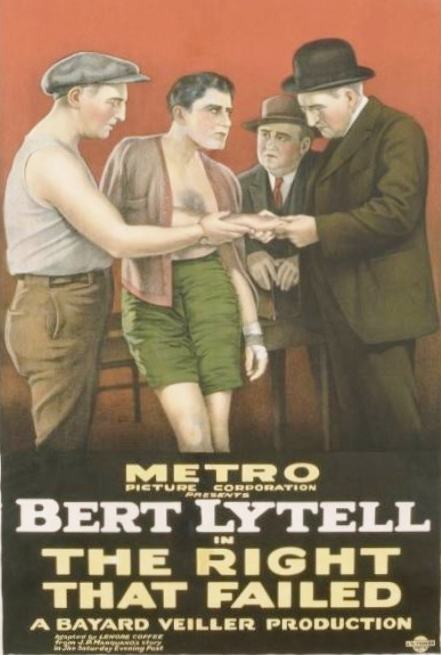
There is a moment—wordless, of course—when John Duffey, bandaged like a penitent, stands at the edge of Craigmoor’s moonlit croquet lawn and watches Constance’s silhouette glide across the veranda’s lattice of shadows. The camera holds on his eyes until the iris-in feels almost cruel, freezing the ache of social vertigo that no intertitle could articulate. That single iris becomes the film’s manifesto: privilege and prizefighting are merely two halves of the same blood-sport, scored by money instead of bells.
Director Jack Conway shoots the resort as though it were an aquarium: every window a pane of entitlement, every servant a blurry smear in the background. When Johnny finally smashes that aquarium—his fist splitting Roy’s arrogance as easily as crystal—it is both crime and emancipation. The broken wrist, already a ruin, becomes a talisman of authenticity; the gold-plated guests gasp not at the violence but at the exposure of their own porcelain illusions.
Bert Lytell gives Johnny a tramp-poet gait, shoulders rolling like a man forever ducking invisible jabs. Watch him in the training-cabin flashback: he shadowboxes in front of a cracked mirror, each punch landing slightly off the reflection, as though the self he must defeat is always one frame ahead. The performance is silent yet syncopated; you can almost hear the leather slap of bag against glove.
Virginia Valli’s Constance, meanwhile, weaponizes stillness. She enters scenes like a withheld breath, letting her gowns do the shouting—organdy explosions that billow when she pivots, revealing ankles that promise everything etiquette forbids. Her acceptance of Johnny’s brutality feels less like forgiveness than recognition: she has always understood that every empire, including her father’s, was founded on some version of bare-knuckle theft.
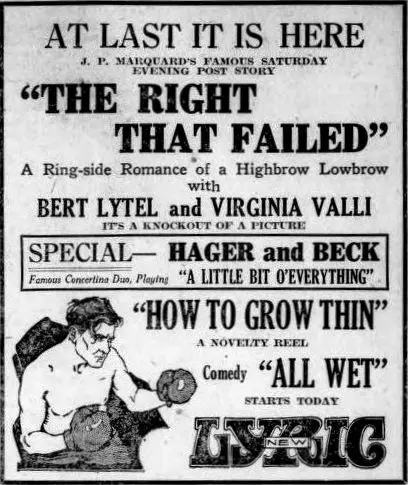
The screenplay, distilled from Lenore J. Coffee and fledgling John P. Marquand, crackles with subversive arithmetic: one broken hand equals one unbroken heart; one false fiancé minus one real fighter equals negative zero—absence carved into social arithmetic. Coffee’s intertitles flirt with jazz-age vernacular (“Love don’t pull punches, sweetheart—better duck”) yet sneak in metaphysical uppercuts about class mobility that land decades later.
Cinematographer George Schneiderman bathes the pugilistic flashbacks in nicotine amber—smoke, sawdust, and a single overhead bulb that swings like a referee counting to ten. Cut to Craigmoor’s terraces, and the palette shifts to moon-kissed cobalt, as though the rich have copyrighted even the night sky. The juxtaposition is so ruthless that when Johnny re-injures his hand the screen itself seems to bruise, tint stock darkening to a sickly parchment.
Comparative glances are inevitable: the amnesiac deception recalls The Stolen Play’s theatrical masquerades, while the bedroom-farce tremors flirt with the erotic disquiet of Erotikon. Yet where those films treat identity as a hat one doffs, The Right That Failed insists that identity is a scar tissue—once torn, it bleeds forever.
The supporting cast operates like a Greek chorus in tuxedos. Philo McCullough’s Roy is all enamel and entitlement; his pratfall after the knockout is so meticulously choreographed it borders on ballet. Max Davidson supplies puckish comic relief as a resort pharmacist who prescribes Johnny “two grains of anonymity dissolved in champagne.” Even DeWitt Jennings, playing the boxer’s manager, delivers a miniature masterclass in moral whiplash—one close-up registers betrayal, pride, and paternal terror within the span of three flickers.
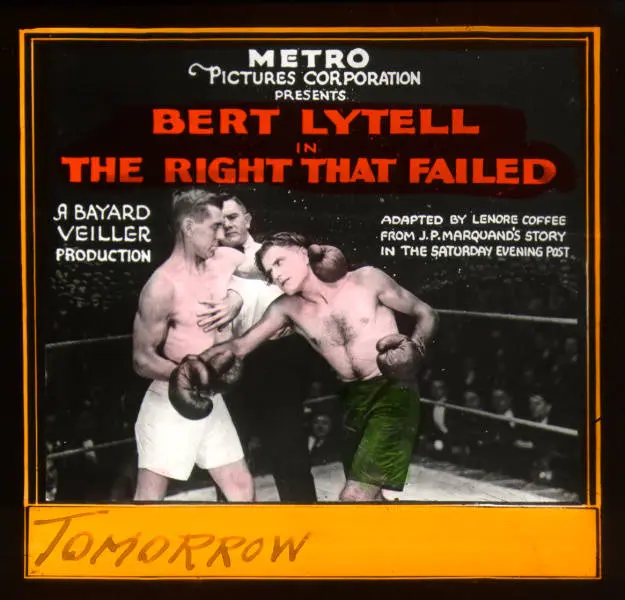
Historians often misfile this 1925 release as a trifle, yet its DNA coils through every subsequent sports-romance hybrid that dared suggest muscle and manor could share a heartbeat. Without Johnny’s fractured metacarpal, there is no Body and Soul noir, no Rocky ballroom schmaltz. The film’s thesis—that love’s truest knockout is recognition, not conquest—remains radical in an age still selling the myth that winners write the epilogue.
Contemporary viewers may flinch at the casual class caricatures, but the movie slyly indicts its own target audience. Every time Talbot Sr. bribes truth into silence, the camera lingers on the transaction longer than 1925 etiquette thought decent, forcing spectators to confront their own complicity in gilded silence.
The score on the recent 4K restoration (Milestone/MoMA collaboration) interpolates stride-piano motifs that stutter like Johnny’s jab, then swell into string-laden tsunami during the climactic confession. Purists may howl, but the anachronism works—because the film was always about time’s elasticity, about how a second in the ring can elongate into a season of regret.
One final detail haunts: after Constance accepts Johnny’s ruined hand, the closing shot frames their interlocked fingers against a sunrise so overexposed it nearly whites out the sprockets. You squint, trying to distinguish bone from bandage, lover from beloved, success from failure—and realize that ambiguity is the film’s parting gift. The right that failed has, against logic, connected. And in that connection, cinema’s silent bell rings louder than any arena roar.
Verdict: essential viewing for anyone who believes the most brutal bouts are fought without gloves, on the canvas of class.
IMDb 5.4
1927
Community
Log in to comment.