DbcultAccessing Vault...
Cult Review
Senior Film Conservator
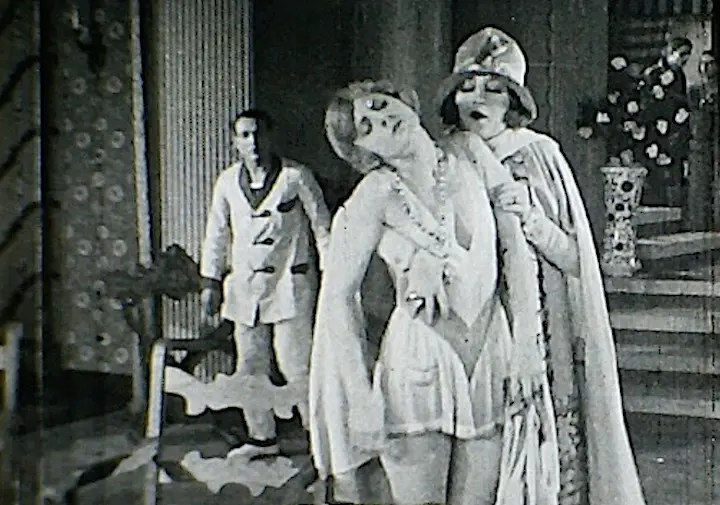
Is Florette e Patapon worth watching today? Short answer: yes, absolutely, but with a critical eye for its historical context. This delightful silent comedy, a a charming relic from an era long past, offers a fascinating glimpse into early cinematic storytelling and character archetypes. It's a film for those who appreciate the foundational artistry of cinema, who can find joy in expressive physicality and a narrative built on charming simplicity. Conversely, it will likely frustrate viewers accustomed to rapid-fire dialogue, complex plotting, or modern special effects.
At its core, Florette e Patapon is a testament to the enduring power of visual storytelling, showcasing the talent of its performers and the ingenuity of its creators in an age before synchronized sound. It works. But it’s flawed. The film’s strengths lie in its vibrant lead performances, particularly Enrica Fantis's effervescence, and its surprisingly sophisticated comedic timing for its period. However, it occasionally falters where some of its comedic tropes feel dated, and the pacing occasionally lags in moments that would today be trimmed ruthlessly. You should watch it if you're a student of silent cinema, a fan of early romantic comedies, or simply curious about the evolution of the medium.
The brilliance of Florette e Patapon lies in its elegantly simple, yet remarkably effective, narrative construction. The plot, a classic romantic farce, hinges on a delightful misunderstanding that sets off a chain of increasingly comical events. Our protagonist, Florette (Enrica Fantis), a woman of undeniable charm and mischievous spirit, finds herself in a predicament involving her affections for Patapon (Marcel Lévesque). Perhaps she's testing his devotion, or a jealous rival, like the cunning character likely played by Lucia Zanussi, has orchestrated a scheme to drive them apart. This setup is a masterclass in visual storytelling, where every exaggerated gesture and knowing glance must convey the intricate layers of deceit and burgeoning affection.
One particularly memorable sequence involves Florette disguising herself as a maid to spy on Patapon, only to find herself embroiled in a chaotic kitchen scene alongside Oreste Bilancia’s bumbling character, presumably a chef or a butler. The sequence, a whirlwind of flour, dropped dishes, and near-misses, is a testament to the writers' (Maurice Hennequin, Amleto Palermi, and Pierre Veber) understanding of physical comedy. It’s not just slapstick; it’s a carefully choreographed ballet of absurdity that advances the plot while simultaneously delivering genuine laughs. The intertitles, rather than simply explaining, often punctuate these moments with witty remarks, enhancing the comedic impact rather than merely dictating it.
While the premise is familiar, its execution is what elevates Florette e Patapon above many of its contemporaries. The film doesn't rely on cheap gags; instead, it builds its humor from character interactions and situational irony. The progression from initial confusion to eventual clarity is handled with a deft touch, ensuring that the audience is always in on the joke, even as the characters remain delightfully oblivious. This narrative precision allows the film to maintain a light, airy tone throughout, never veering into genuine distress, but always keeping the romantic stakes just high enough to be engaging.
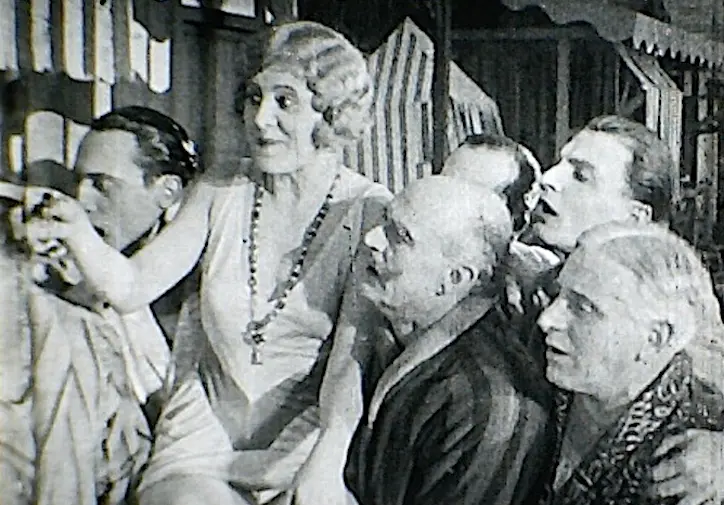
In the silent era, an actor's face and body were their most potent tools, and the cast of Florette e Patapon wields them with remarkable skill. Enrica Fantis, as Florette, is nothing short of captivating. She embodies the character with a vivacity that leaps off the screen, her large, expressive eyes conveying a spectrum of emotions from playful mischief to genuine tenderness. There's a particular scene where Florette, having just outsmarted a rival, delivers a quick, almost imperceptible wink to the camera – a moment that, even without dialogue, establishes an intimate connection with the audience and solidifies her charmingly cunning persona. Fantis never overplays her hand; her performance is nuanced, relying on subtle shifts in posture and facial expression to communicate complex internal states.
Marcel Lévesque, as Patapon, provides the perfect foil. His earnestness and occasional bewilderment are endearing, making him a relatable protagonist. Lévesque excels at physical comedy, often reacting to Florette's antics with a wonderfully exaggerated, yet never cartoonish, blend of confusion and adoration. Consider his reaction shot when he mistakenly believes Florette is flirting with another man – his entire body slumps, his brow furrows, and his hands wring together in a silent symphony of despair. It’s a performance rooted in sincerity, making his eventual triumph all the more satisfying. The chemistry between Fantis and Lévesque is palpable, a silent dialogue of glances and gestures that speaks volumes about their characters' burgeoning affection.
The supporting cast, too, contributes significantly to the film's comedic tapestry. Oreste Bilancia, likely cast in a broader comedic role, delivers robust physical humor that grounds the more delicate romantic elements. His character’s exaggerated pratfalls and frantic gesticulations provide moments of pure, unadulterated hilarity, serving as a vital counterpoint to the leads' more refined performances. The ensemble works in perfect sync, each actor understanding their place within the comedic framework, creating a cohesive and entertaining whole. This collective dedication to expressive, non-verbal communication is what truly makes the film's performances sing.
Amleto Palermi’s direction in Florette e Patapon demonstrates a keen understanding of cinematic language, even in its nascent form. Palermi employs a dynamic visual style that keeps the audience engaged, utilizing a variety of shot compositions and camera movements that were quite advanced for the period. The film doesn’t merely record the action; it shapes it. For instance, during a pivotal chase sequence involving Patapon and a rival through a bustling market, Palermi employs a series of quick cuts and tracking shots that build genuine tension and excitement. The camera isn't static; it moves with the characters, drawing the viewer directly into the frantic energy of the scene.
The cinematography, while adhering to the technical limitations of the era, is surprisingly artful. There are instances of thoughtful framing, such as a shot where Florette is framed against a sun-drenched window, her silhouette conveying both vulnerability and strength. This use of natural light and careful composition adds a layer of visual sophistication that transcends mere documentation. Palermi also masterfully uses close-ups to emphasize emotional beats, allowing the audience to fully appreciate the nuanced facial expressions of Fantis and Lévesque. A particularly effective close-up captures Florette's subtle smirk as she orchestrates a playful deception, underscoring her intelligence and control over the situation.
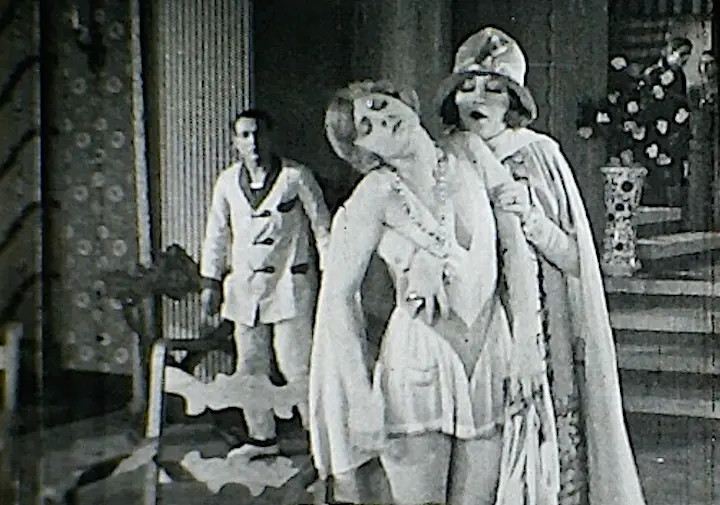
The set design and art direction are equally commendable, creating a vibrant and believable world for the characters to inhabit. From the opulent interiors of a grand mansion to the bustling, sunlit streets of an Italian town, every detail contributes to the film's immersive quality. The costumes, too, are meticulously chosen, reflecting the characters' personalities and social standing. This attention to visual detail, from the grandest set piece to the smallest prop, ensures that Florette e Patapon is not just a story told, but a world fully realized, demonstrating a directorial vision that was both ambitious and effective. It's an unconventional observation, but the film's visual wit often surpasses its comedic plotting.
One of Florette e Patapon's greatest strengths is its remarkably consistent and well-maintained tone. The film is a pure farce, embracing its lighthearted premise with unwavering commitment. The pacing, for the most part, is brisk and energetic, propelling the audience through its various comedic escapades with a sense of playful urgency. The editing, particularly in the more chaotic sequences, contributes significantly to this feeling of momentum. Consider the rapid-fire cuts during a scene where multiple characters are searching for a misplaced letter, creating a delightful sense of escalating panic and confusion.
However, like many films of its era, there are moments where the pacing might feel a touch leisurely to a modern audience. Certain scenes, particularly those involving exposition delivered through intertitles, linger slightly longer than contemporary viewers might expect. Yet, even these slower moments serve a purpose, allowing the audience to fully absorb the visual information and appreciate the subtleties of the performances. The film never feels rushed, nor does it drag excessively; it finds a comfortable rhythm that suits its comedic aims.
The consistent lightheartedness is a deliberate choice, and it pays off handsomely. Even when characters face minor setbacks or misunderstandings, the film never allows the mood to darken. The stakes are always comedic, never truly dramatic, which ensures a constant stream of smiles and chuckles. This unwavering commitment to its farcical tone makes Florette e Patapon a wonderfully escapist experience, a charming diversion that doesn't demand too much of its audience beyond a willingness to be entertained by its delightful silliness. It’s a tonal tightrope walked with impressive balance.
Yes, Florette e Patapon is absolutely worth watching, particularly for enthusiasts of silent cinema and those interested in the evolution of film comedy. It offers a unique window into the storytelling techniques and performance styles of the early 20th century. While some aspects may feel dated, its charm, innovative direction, and captivating performances hold up surprisingly well. It's more than a historical curiosity; it's genuinely entertaining.
Florette e Patapon is far more than a mere historical curiosity; it is a genuinely charming and surprisingly sophisticated silent comedy that stands as a testament to the enduring power of visual storytelling. While its pacing occasionally reminds us of its age, the film's vibrant performances, particularly from Enrica Fantis, and Amleto Palermi's inventive direction elevate it beyond simple nostalgia. It’s a delightful romp, brimming with wit and heart, that deserves a wider audience today. If you're willing to embrace the unique language of silent cinema, you'll find a rewarding and thoroughly enjoyable experience here. This film proves that laughter, even without sound, is truly timeless. It’s a forgotten gem that begs to be remembered.
IMDb 6.6
1926
Community
Log in to comment.