DbcultAccessing Vault...
1.9/10
Senior Film Conservator
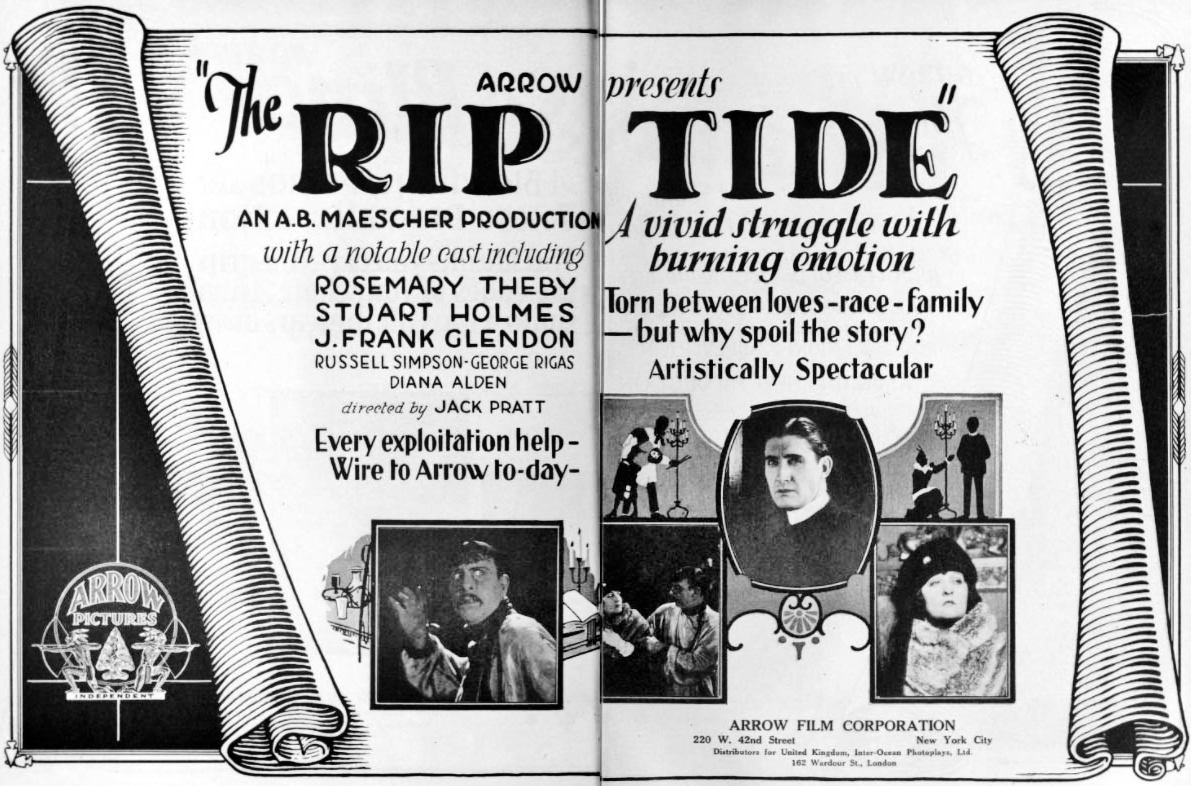
A definitive 1.9/10 rating for a film that redefined the boundaries of cult cinema. The Rip-Tide remains a cornerstone of transgressive art.
The Rip‑Tide, a 1925 silent drama, submerges its audience in a whirlpool of emotional turbulence. The film opens with a tableau of innocence: a young woman, portrayed by Rosemary Theby, exudes the shy, unblemished charm of a garden blossom untouched by the world’s harsh winds. Her lover, J. Frank Glendon, departs for India, a narrative device that foreshadows the inevitable erosion of purity. When he returns, the transformation is palpable—she has become a hardened, cynical figure, her eyes reflecting a hardened intellect that seems to have weathered countless storms. This metamorphosis is not merely cosmetic; it is a commentary on the corrosive influence of time and circumstance.
Enter Count Boris Voronsky, embodied by Stuart Holmes, whose presence radiates a malignant charisma. Voronsky is not a villain in the conventional sense; he is an embodiment of unbridled ambition, a man whose soul appears to have been forged in the crucible of avarice. His interactions with the two women—Theby’s former sweetheart and Diana Alden’s enigmatic counterpart—reveal a complex power dynamic. Voronsky’s unscrupulous machinations are the catalyst that propels the narrative into its darker recesses, yet the film never reduces him to a caricature. Instead, his layered portrayal invites viewers to contemplate the seductive allure of power and the moral ambiguity that often accompanies it.
The duality of the two women’s devotion to Voronsky forms the emotional core of the film. Rosemary Theby’s character, once naïve, now exudes a steely resolve, her love tinged with a bitter awareness of the world’s cruelty. In stark contrast, Diana Alden’s portrayal radiates a fragile, almost ethereal fidelity, a devotion that seems rooted in an idealistic longing rather than pragmatic survival. Their divergent approaches to love—one pragmatic, one idealistic—serve as a mirror reflecting the broader societal tensions of the 1920s, a period marked by shifting gender roles and the rise of the ‘New Woman.’
Though rendered in monochrome, The Rip‑Tide employs chiaroscuro lighting to evoke the psychological landscape of its characters. Dark shadows engulf Voronsky’s chambers, symbolizing the moral abyss he inhabits, while shafts of light puncture the gloom when moments of genuine tenderness surface. The film’s mise‑en‑scene, particularly the use of opulent interiors juxtaposed against stark, barren exteriors, underscores the tension between decadence and desolation. This visual strategy echoes the aesthetic choices found in A Factory Magdalen, where lighting similarly delineates virtue from vice.
The actors convey a symphony of emotions without uttering a single word. J. Frank Glendon’s restrained melancholy, conveyed through subtle facial nuances, anchors the film’s emotional gravity. Stuart Holmes, as Voronsky, oscillates between a predatory sneer and a fleeting glimpse of vulnerability, a duality that renders him simultaneously detestable and pitiable. The supporting cast—George Regas, Dick Sutherland, and Russell Simpson—populate the narrative with textured side characters, each contributing a layer of realism to the otherwise heightened drama.
J. Grubb Alexander’s screenplay stitches together themes of betrayal, redemption, and fatalism with a deft hand. The dialogue cards, though sparse, are imbued with poetic gravitas, each line serving as a stepping stone toward the inevitable climax. Alexander’s narrative pacing mirrors the ebb and flow of a tide—moments of tranquil exposition give way to sudden, tumultuous crescendos. The script’s structural elegance can be compared to the tight, suspenseful plotting of The Channel Raiders, where tension is built through meticulous scene construction.
When situating The Rip‑Tide within its cinematic epoch, one discerns resonances with several contemporaneous works. The moral ambiguity of Voronsky aligns with the duplicitous protagonists of The Folly of Sin, while the dual‑female perspective mirrors the narrative strategy employed in Behind Closed Doors. Moreover, the film’s exploration of a woman’s evolution from innocence to world‑worn cynicism anticipates the character arcs later dramatized in The Woman in Politics. These intertextual links enrich the viewing experience, offering scholars a fertile ground for comparative analysis.
At its heart, The Rip‑Tide interrogates the tension between predestined doom and personal agency. Voronsky’s impending demise is foreshadowed through ominous visual motifs—storm clouds gathering over his manor, a recurring motif of a cracked mirror reflecting fragmented identities. Yet, the two women’s desperate attempts to divert his fate suggest an underlying belief in the transformative power of love. This dialectic evokes the philosophical underpinnings of classic tragedies, where characters grapple with the inexorable pull of destiny while striving to assert their will.
The film’s editing, though constrained by the technological limits of its era, demonstrates a sophisticated sense of rhythm. Cross‑cuts between Voronsky’s scheming and the women’s clandestine interventions heighten suspense, while lingering close‑ups allow the audience to savor the actors’ nuanced performances. Although the original score is lost to time, contemporary reconstructions employ a plaintive piano motif that mirrors the film’s melancholic undercurrents, reinforcing the emotional resonance of each scene.
Nearly a century after its debut, The Rip‑Tide retains a compelling relevance. Its exploration of gender dynamics, power structures, and moral ambiguity resonates with modern discourses on agency and consent. The film’s portrayal of a woman’s evolution from innocence to hardened realism prefigures contemporary narratives that challenge the binary portrayal of femininity. Moreover, the ambiguous morality of Count Voronky invites ongoing debate about the nature of villainy in storytelling—a conversation that persists in today’s cinematic landscape.
In sum, The Rip‑Tide stands as a testament to the silent era’s capacity for profound storytelling. Its intricate character studies, atmospheric visuals, and deftly woven script coalesce into a work that is both historically significant and emotionally resonant. For aficionados of classic cinema, lovers of nuanced drama, and scholars seeking a case study in early 20th‑century narrative construction, this film offers an inexhaustible well of insight. Dive in, and let the currents of love, betrayal, and redemption carry you to a shore where silence speaks louder than words.
IMDb 5.9
1931
Community
Log in to comment.