DbcultAccessing Vault...
4.8/10
Senior Film Conservator
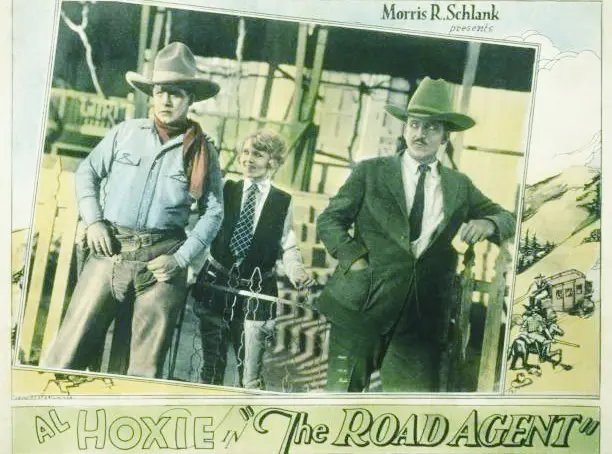
A definitive 4.8/10 rating for a film that redefined the boundaries of cult cinema. The Road Agent remains a cornerstone of transgressive art.
Is The Road Agent worth watching today? Short answer: yes, but with significant caveats that demand a particular kind of cinematic palate. This is a film for ardent Western history buffs and those curious about the genre's formative years, not for viewers seeking modern pacing or sophisticated narratives.
It’s a curious artifact, a silent Western that, despite its technical limitations and often rudimentary storytelling, manages to unearth a surprisingly compelling moral core. If you approach it as an archaeological dig into cinema's past, you might just unearth a few dusty gems. However, if your taste leans towards the polished narratives and dynamic visuals of contemporary film, or even later, more refined Westerns like The Beckoning Trail, this might prove a challenging watch.
This film works because of its surprisingly nuanced moral dilemma, offering a protagonist who evolves beyond simple archetypes, a rare spark in an otherwise conventional narrative.
This film fails because its technical limitations, particularly in pacing and character development outside the central conflict, often make it a challenging watch for contemporary audiences.
You should watch it if you appreciate the raw, unpolished charm of early Westerns and are willing to overlook significant production constraints for a glimpse into genre evolution.
The narrative of The Road Agent, penned by Charlie Saxton, is built on a foundation of classic dramatic irony and a familiar con-artist trope. We are introduced to Mrs. Worth, a character whose frailty and longing for her absent son, Roger, immediately establish a sense of vulnerability. This emotional vacuum is precisely what the film’s antagonist—a nameless schemer—seeks to exploit. The plan is simple, yet audacious: find a look-alike, the "Kansas Kid," and pass him off as Roger to inherit the family ranch.
What elevates this otherwise straightforward premise above mere melodrama is the unexpected moral awakening of the Kansas Kid. Initially, he's a willing participant, driven by circumstance or perhaps a lack of better options. However, as the deception deepens, and he experiences Mrs. Worth's genuine, maternal affection, his resolve wavers. This internal conflict is the film's beating heart, a genuine struggle between self-interest and emergent empathy.
The film asks us to consider the weight of a lie, not just on the deceived, but on the deceiver. The Kansas Kid's journey from opportunist to reluctant imposter is where the film finds its most compelling, and arguably, its most modern, psychological depth. It’s a subtle subversion of the typical Western hero archetype, where moral lines are often drawn in stark black and white. Here, we delve into the gray.
The eventual arrival of the real Roger Worth isn't just a plot device; it's the inevitable, chaotic hammer-blow that shatters the fragile illusion. This moment, while predictable in its dramatic function, forces all characters to confront the consequences of their actions and inactions. It’s a classic narrative turn that, despite its simplicity, still resonates with a certain theatrical power. The story, while not groundbreaking, is surprisingly effective in its exploration of human nature, particularly for an early silent film.
In early silent cinema, performances often leaned towards the broad and theatrical, a necessity to convey emotion without dialogue. The Road Agent is no exception, yet certain actors manage to carve out memorable portrayals within these constraints.
Tex Phelps, as the Kansas Kid, delivers a performance that, while expansive by modern standards, manages to convey an internal struggle. One can almost see the gears turning behind his eyes as he confronts the emotional weight of Mrs. Worth's genuine affection. There's a particular scene, likely conveyed through close-ups and subtle shifts in posture, where the Kid's initial smirk gives way to a furrowed brow of genuine concern. This subtle transformation elevates his portrayal beyond mere caricature, making his eventual change of heart believable.
Lew Meehan, portraying the primary antagonist, fully embraces the villainous archetype. His presence is often menacing, characterized by stern glares and a predatory posture. While his villainy can feel almost cartoonish at times—a common trait for the era—it serves its purpose in providing a clear foil for the Kansas Kid's evolving morality. He embodies pure, unadulterated greed, making his eventual comeuppance all the more satisfying for the audience. His performance, though lacking subtlety, is effective in its blunt force.
Ione Reed, likely as Mrs. Worth or another key female figure, brings a necessary vulnerability to the proceedings. Her portrayal of the ailing matriarch elicits genuine sympathy, which is crucial for the Kansas Kid's moral turning point to land effectively. Without her believable frailty and longing, the Kid’s crisis of conscience would feel manufactured. Her silent expressions of hope and eventual disappointment are central to the film's emotional impact, anchoring the more dramatic flourishes of the male leads.
The supporting cast, including familiar faces like Al Hoxie and Roy Bucko, provides the necessary texture of the Western landscape. Their roles are largely functional, filling out posse scenes or providing background action, but they contribute to the authentic, albeit rudimentary, atmosphere of the frontier. While not performances that will redefine cinematic acting, they are competent and earnest, fitting the film's overall aesthetic.
The directorial choices in The Road Agent are reflective of its time: largely functional, prioritizing clear storytelling over stylistic flourishes. The film relies heavily on straightforward shot compositions, often employing static, medium-to-long shots that capture the action much like a stage play. This approach, while lacking the dynamic energy we expect today, ensures that the audience can follow the narrative without confusion, a primary goal for early silent films.
Cinematography, while basic, makes effective use of the natural Western landscape. There are moments where the vastness of the plains or the ruggedness of a canyon wall serve as more than just a backdrop; they become silent characters, emphasizing the isolation or the grand scale of the conflict. However, the camera, often a static observer, feels more like a stage proscenium than a dynamic storytelling tool, a stark contrast to the emerging techniques seen in contemporaneous works like The Isle of Lost Ships, which explored more adventurous camera work.
Charlie Saxton's writing, while providing a solid dramatic framework, benefits from the visual interpretation. The challenge for a silent film director is to translate internal monologues and complex emotions into visually coherent sequences. While not always seamless, the director manages to convey the Kansas Kid's moral quandary through a series of reaction shots and physical gestures, often punctuated by intertitles that clarify his shifting thoughts. This reliance on visual cues is both the strength and, at times, the limitation of the film's direction.
The action sequences, typical of the era, are often rudimentary but effective. Horse chases and fistfights are staged with a certain raw energy, even if they lack the sophisticated choreography of later Westerns. There's an honest, unvarnished quality to these moments that, while not always polished, feels authentic to the genre's early days. The direction here prioritizes clarity and impact over elaborate spectacle, a pragmatic approach for the resources available.
The film's rhythm is undeniably an acquired taste. Long stretches of silent exposition, punctuated by title cards, demand patience. The initial setup, detailing Mrs. Worth’s ailing state and the villain’s machinations, feels protracted, almost like a drawn-out theatrical prologue. This deliberate, almost ponderous pace, while typical of the era, can test the resolve of even the most dedicated cinephile, especially when compared to the brisk narrative drive of a film like High and Dry.
The tone of The Road Agent oscillates between earnest melodrama and a more grounded, almost gritty Western realism. The emotional core involving Mrs. Worth and the Kansas Kid leans heavily into pathos, aiming for the heartstrings. Yet, the broader strokes of villainy and the inevitable confrontation ground it firmly in the Western tradition. This tonal blend can feel a little uneven, as if two different stories are vying for dominance within the same runtime.
There's a quaint charm to this unevenness, however. It speaks to a time when filmmaking was still finding its voice, experimenting with how to balance emotional depth with genre conventions. The film doesn't shy away from moments of genuine tension, particularly as the Kansas Kid grapples with his conscience, but these moments are often given ample room to breathe, a luxury rarely afforded in modern cinema.
One surprising observation is the film's subtle critique of unchecked greed. While not overtly political, the antagonist's relentless pursuit of the ranch, even at the expense of a dying woman, casts a shadow that feels surprisingly relevant. This undercurrent of social commentary, however faint, adds a layer of depth that might be easily overlooked by a casual viewer. It's a testament to the film's ability to, perhaps unintentionally, transcend its simple narrative.
Yes, but with reservations. The Road Agent is not for everyone.
It’s a valuable historical document for Western enthusiasts.
The film’s pacing is slow by contemporary standards.
Its moral dilemma remains compelling, despite the age.
Expect a rudimentary production, not polished spectacle.
It offers a unique glimpse into early genre filmmaking.
The Road Agent is more than just a dusty relic; it's a testament to the enduring power of simple, human drama. It works. But it’s flawed. Its true value lies not in its technical prowess or groundbreaking innovation, but in its unexpected moral heart and its position as a foundational piece of Western cinema. For those willing to adjust their expectations and embrace the unique charm of early film, there’s a quiet satisfaction to be found here. It’s a film that asks for patience and rewards it with a glimpse into the genre’s evolving soul. While it won't be topping any 'best of' lists for a general audience, its historical significance and a surprisingly resonant character arc make it a worthwhile watch for the dedicated cinephile.
IMDb 6.3
1934
Community
Log in to comment.