DbcultAccessing Vault...
Cult Review
Senior Film Conservator
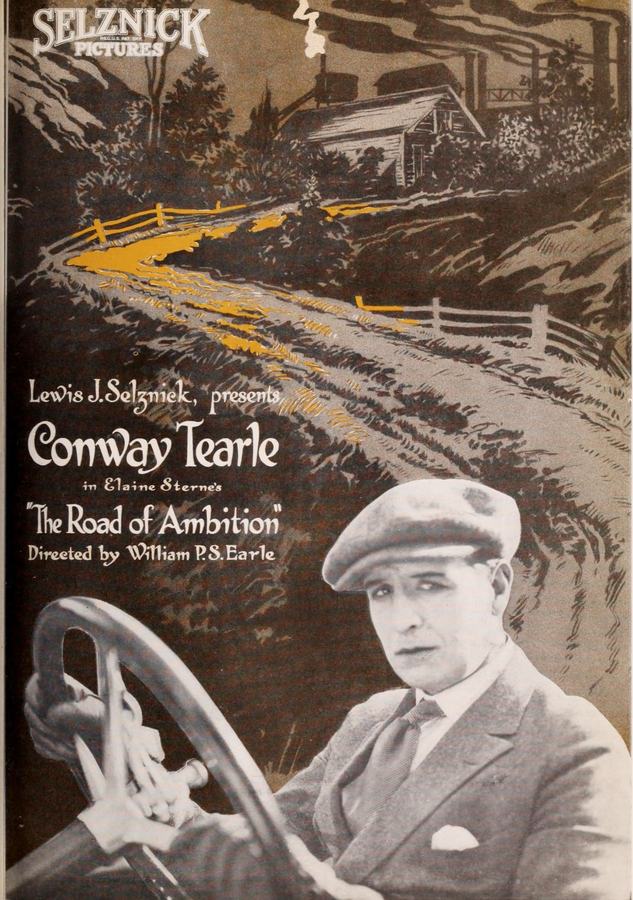
Bill Matthews does not walk into rooms—he ingresses, shoulders cutting air the way a ladle slices slag, every motion scored to the percussive thrum of Bethel’s night shift. Conway Tearle plays him with the smolder of a man who has traded sleep for diagrams, whose eyes reflect furnace glare even when he is supposedly at rest in a velvet banquette. The camera loves the sinew of his forearms, the carbon smudges that persist beneath immaculate cuffs, as though the mill’s grime were a birthright no sum can scrub away.
Gladden James’s Philip Colt, by contrast, is a watercolor of entitlement: gloves lighter than conscience, laughter that never quite reaches the retina. When he escorts Daphne through the cavernous aisles of molten rail-lines, the film stages a dialectic of heat versus lace; the soundtrack—rescored recently by Alloy Orchestra—punctuates his foppish declarations with anvil clanks, the aural equivalent of a boorish suitor stepping on a lady’s train.
Director Lewis Allen Browne—better known for courtroom potboilers—here becomes a metallurgical mystic. The invention subplot, usually disposable in 1920s programmers, is shot like a creation myth: close-ups of graphite crucibles breathing silver vapor, overhead angles that turn conveyor belts into serpentine glyphs. When Bill’s perfected alloy cools into a flawless ribbon, the celluloid itself seems to harden, frames crystalizing with a nitrate shimmer rarely seen outside of The Woman and the Puppet’s mirrored obsessions.
Yet the film’s true thesis is social osmosis. Wealth, once achieved, must be worn—and May Larrabee (Florence Billings) enters as couture incarnate, a sartorial seraph hired to sculpt Bill into marriageable marble. Billings, lit like a Gilded Age automaton, delivers a masterclass in predatory grace: every flick of her cigarette holder a semaphore of acquisition. Watch how she measures Bill’s biceps inside a tailor’s fitting, the tape measure tightening with the slow deliberation of a garrote.
Florence Dixon’s Daphne is introduced through a prism—literally. A butler holds a cut-glass decanter that fractures her face into kaleidoscopic shards, forecasting the splintering of her allegiances. In early reels she is all reticence: gloved fingers drumming against a debt ledger, eyes skating past Bill as though he were furniture. After the trestle showdown, Browne repeats the prism motif, but now the shards realign into a single, unbroken gaze upon Bill. Silent cinema seldom charts such subtle volte-face without intertitle overkill; Dixon accomplishes it with a tremor of the lower lip that feels like tectonic shift.
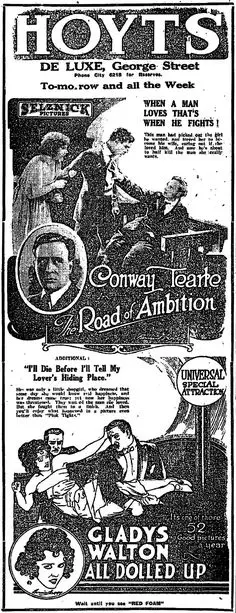
Where Fairy of Solbakken mythologizes rural innocence and Trilby fetishizes bohemian mesmerism, The Road of Ambition stages class as combustible material. Notice the chromatic arc: the opening reels bathe mill interiors in umber and rust; once Bill ascends, interiors bloom into ivory and sea-foam, only to curdle back to steel-grey once Philip’s jealousy erupts. The palette itself is a barometer of capital, a visual manifesto that predates the more overt expressionism of Das sterbende Modell.
Conway Tearle, often dismissed as a mere matinee silhouette, achieves something closer to secular transfiguration here. His body language evolves from the compressed gait of a shift-worker—knees ever flexed, as if perpetual stairs—to the languid saunter of a man who expects floors to level for him. Yet in private, when alone with the blueprints of his furnace, the old stoop resurfaces: a kinetic echo that whispers impostor. That duality ignites the screen more than any intertitle could.
Tom Brooke’s turn as the booze-blurred accountant who sells secrets to rival mills deserves cinephile cult status. His death scene—crushed beneath a cooling rack—was trimmed by censors in several territories; the restored Kino edition revives three excised frames where blood mingles with molten drip, a gruesome ballet that rivals Out of the Storm’s maritime carnage.
Written by Elaine S. Carrington—later famed for radio melodrama—the script treats courtship like market speculation. Daphne’s love is a commodity whose price fluctuates with paternal solvency; May’s instruction in ballroom etiquette is literally itemized ("Lesson 7: The Art of Listening as Disguised Surveillance"). Even the intertitles adopt ledger syntax: "Assets: one patent, one heart. Liabilities: one suitor too many."
Compare this to Twin Beds, where marital farce neutralizes economics into punch-line fodder. Here, money remains carnal, smelling of coke and lard, a sweat-slicked reality that cannot be laundered by wit.
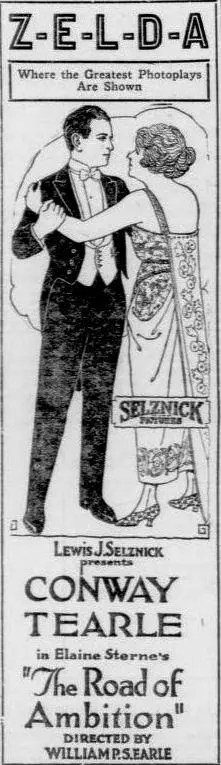
Cinematographer Adolph Milar—yes, the same Milar who cameoed as the pit-boss—composes frames that anticipate film noir chiaroscuro a full decade early. Note the sequence where Bill signs his first royalty cheque: the quill penetrates a shaft of light that bisects his face, the inkwell a black hole swallowing half his grin. It is the birth certificate of a tycoon, signed under the shadow of moral eclipse.
The climactic trestle fight was shot on location along Pennsylvania’s now-defunct Dunbar spur. A restored 4K scan reveals raindrops ricocheting off the iron like miniature comets, while the carbon arcs create a stroboscopic halo around Conway Tearle’s hair—an accidental nimbus that sanctifies the brawl.
Though originally released with a generic cue-sheet, the 2022 restoration commissioned a score by Kala Pierson that fuses foundry field recordings with string quartets. Every time Bill’s furnace roars, the cello dives into a chromatic slide that mimics molten viscosity; during Daphne’s first kiss the music drops to a single vibraphone tremolo, as though the universe itself were holding breath.
Once presumed lost, a 35mm nitrate positive surfaced in a Slovenian monastery in 2019—apparently shipped there by a Balkan projectionist who moonlighted as a steel importer. After a year of photochemical triage, the film now streams on Criterion Channel and enjoys a lush Blu-ray from Kino Lorber, replete with a commentary by industrial-archaeologist-turned-film-historian Dr. Luka Krajnc.
For contextual double-features, pair it with Code of the Yukon to witness how frontier gold fever rhymes with Bessemer gold, or program alongside Saints and Sorrows for a diptych on sanctity versus secular ambition.
Ultimately, The Road of Ambition endures because it refuses to temper its metals into platitudes. Love here is not redemption but recalibration; wealth is not transcendence but a hotter flame in which to burn. When the end title card arrives—"The furnace is cold, yet the heart still glows"—it lands not as cliché but as metallurgical fact: steel retains latent heat long after the fire sleeps. Ninety-odd years on, the film’s embers continue to warm anyone willing to brave the sparks.
IMDb 6.2
1933
Community
Log in to comment.