DbcultAccessing Vault...
Cult Review
Senior Film Conservator
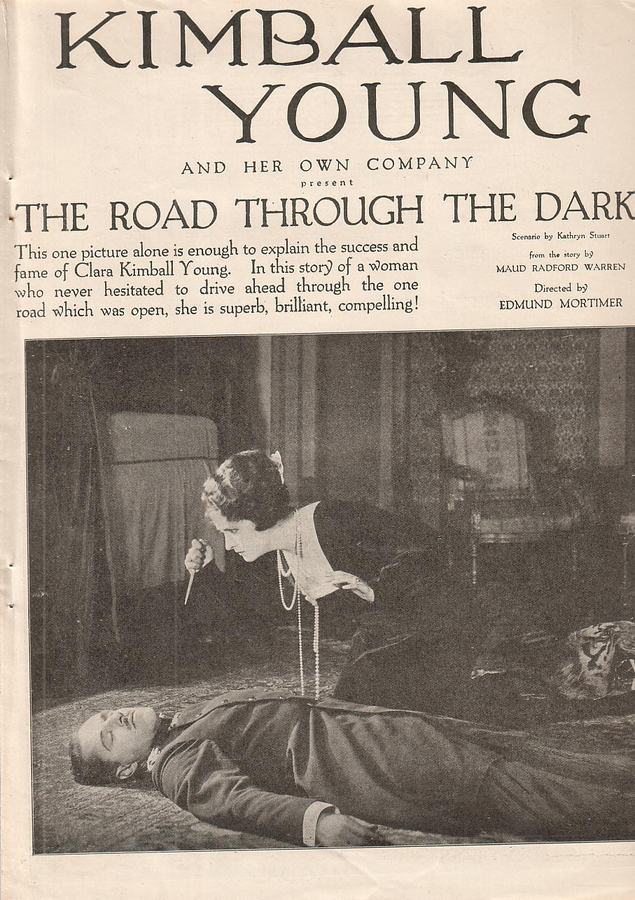
There are films that merely tell a story, and then there are those that etch themselves onto the very fabric of cinematic history, not just for their narrative prowess but for their daring exploration of the human condition under duress. The Road Through the Dark, a silent era gem from 1918, is unequivocally one of the latter. Penned by the insightful Kathryn Stuart and Maude Radford Warren, this picture transcends its time, offering a nuanced, often unsettling, portrayal of love, sacrifice, and the morally grey areas of wartime heroism. Far from a simplistic melodrama, it delves into the profound psychological toll of conflict, presenting a protagonist whose journey is as complex as it is courageous.
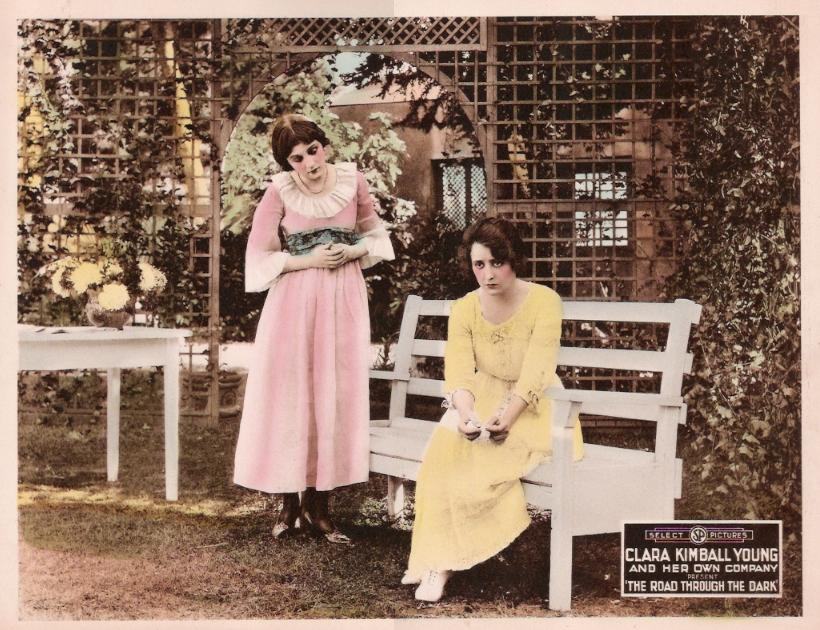
At its core, The Road Through the Dark is a testament to the indomitable spirit of a woman caught between societal expectations and the brutal realities of war. We are introduced to Gabrielle Jardee, portrayed with captivating fragility and burgeoning strength by Elinor Fair, a young Parisian woman whose heart belongs to John Morgan, an American, expertly played by Jack Holt. Their love, however, is deemed unsuitable by Gabrielle's staunchly conservative family, leading to her banishment from the vibrant streets of Paris to the quiet, unassuming confines of a provincial French village. This initial act of familial disapproval sets the stage for a narrative steeped in isolation and yearning, a prelude to the far greater trials that await her.
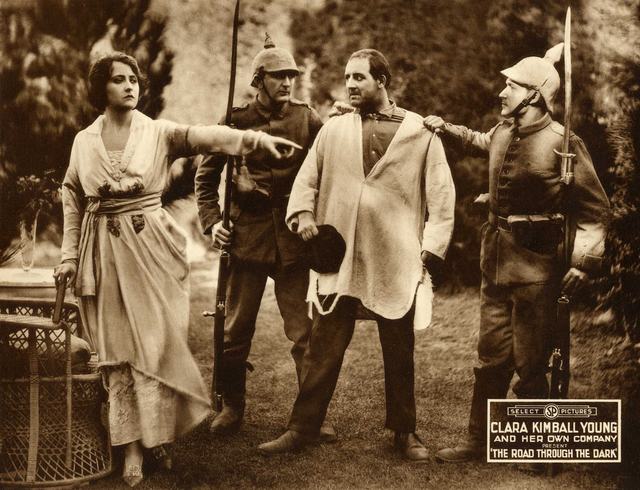
The bucolic tranquility of her new surroundings is short-lived. As the shadow of the Great War lengthens across Europe, the German war machine inexorably rolls into her village, bringing with it occupation, fear, and an unbearable sense of subjugation. It is here, amidst the oppressive presence of the enemy, that Gabrielle's character truly begins to forge itself in the crucible of necessity. The film masterfully navigates her transformation from a heartbroken, displaced lover to a woman of extraordinary resolve. Her decision to become the mistress of a German Kommandant, a figure of authority and menace, is not born of weakness or desire, but of a chillingly pragmatic calculation. It is a sacrifice of the most intimate kind, a deliberate plunge into moral ambiguity, all for a purpose far greater than her personal comfort or reputation.
This pivotal choice immediately elevates The Road Through the Dark beyond the typical wartime romance. Unlike the often idealized heroines of some contemporary films, such as the charming if less complex narrative of Susie Snowflake, Gabrielle's path is fraught with genuine ethical dilemmas. Her actions force the audience to confront uncomfortable questions about the nature of patriotism, the boundaries of sacrifice, and the lengths to which an individual might go to resist tyranny. Her liaison with the Kommandant is a constant, agonizing performance, a mask of complicity worn with chilling conviction, making her a truly compelling and tragic figure.
The true genius of the plot unfolds as Gabrielle, under the guise of her compromised position, begins to gather invaluable intelligence for the French government. Her method of communication is a testament to the film's clever writing: a coded message system understood only by John Morgan. This element injects a thrilling layer of espionage into the narrative, transforming Gabrielle from a passive victim of circumstance into an active, strategic player in the war effort. The tension derived from her clandestine activities is palpable, amplified by the silent film medium's reliance on visual storytelling and the audience's emotional investment in her plight. Each stolen glance, each subtle gesture, carries the weight of life and death, underscoring the immense peril she faces daily.
The portrayal of espionage in The Road Through the Dark is surprisingly sophisticated for its era. It eschews overt action sequences for a more psychological thriller approach, focusing on the mental fortitude required to maintain such a dangerous double life. The silent film format, with its reliance on intertitles to convey dialogue and crucial plot points, here becomes an asset. The starkness of the text, often appearing against a dark background, lends an urgency to Gabrielle's coded messages and the Kommandant's directives, emphasizing the gravity of her situation. This minimalist approach to storytelling allows the audience to project their own anxieties and hopes onto Gabrielle's silent struggle, making her journey intensely personal.
The contrast between Gabrielle's internal turmoil and her outward composure is a magnificent achievement of Elinor Fair's performance. Her eyes, often shadowed with unspoken dread or steely resolve, communicate volumes. She embodies the quiet heroism that often goes unsung, the bravery of those who fight their battles not on the front lines, but in the treacherous landscape of deception and manipulation. This depth of character portrayal sets a high bar for silent film acting, showcasing the capacity of the medium to convey profound emotional complexity without a single spoken word. One might compare the intricate web of deception to the psychological intensity found in films like Ipnosi, where mental states drive the narrative, though The Road Through the Dark grounds its psychological drama firmly in the brutal realities of war.
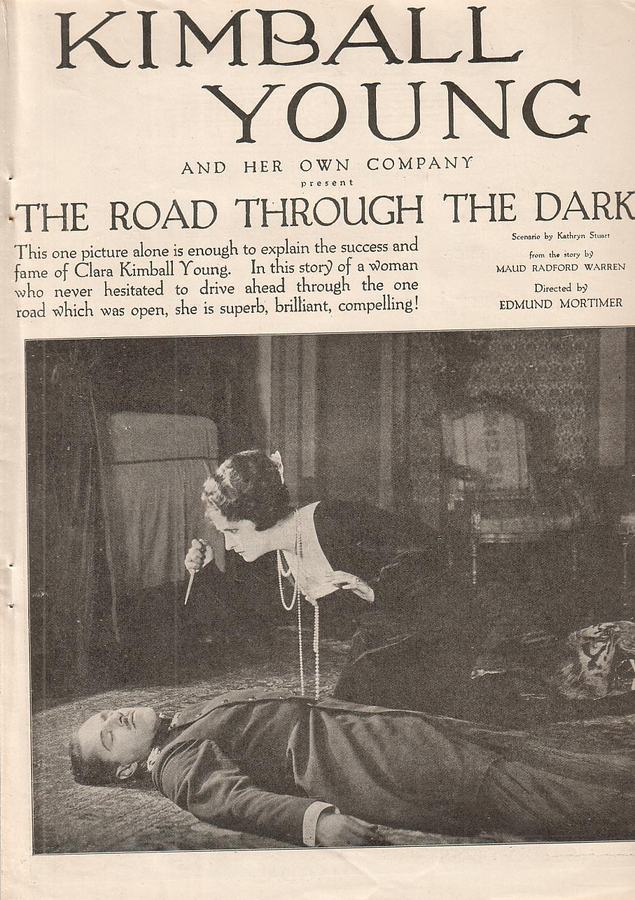
The narrative escalates to a breathtaking climax when Gabrielle finds herself in Berlin. Here, in the very heart of the enemy's power, she takes the ultimate, irreversible step: she kills Karl, the Kommandant. This act is not one of vengeance, but of calculated necessity, a final, desperate move in her grand game of espionage. The film handles this moment with a stark realism that avoids sensationalism, focusing instead on the sheer nerve and desperation behind her actions. It's a shocking, brutal moment that underscores the irreversible choices war forces upon individuals, forever altering their moral landscape.
Her subsequent escape back to Paris is depicted with a sense of frantic urgency, a perilous journey fraught with danger and the constant threat of discovery. The relief of her return to the liberated city is almost palpable, yet it is tempered by the profound scars she carries. The emotional weight of her experiences, the unspeakable acts she committed for her country, threaten to overwhelm her. She arrives a changed woman, bearing the indelible marks of her harrowing ordeal, unsure if the love she once shared with John can possibly survive the chasm of her wartime actions.
It is in this moment of profound vulnerability and doubt that John Morgan's unwavering devotion becomes the film's ultimate beacon of hope. His unconditional acceptance, his offer of the love she believed irrevocably lost, provides a powerful, cathartic resolution. This reunion is not a simple happy ending, but a recognition of enduring love's capacity to heal, to offer solace in the face of unimaginable trauma. Jack Holt's portrayal of John is commendable for its quiet strength and steadfastness, providing the anchor Gabrielle so desperately needs. Their final embrace is a poignant tableau, symbolizing the promise of a future, however scarred, built on understanding and forgiveness. This emotional depth rivals the most poignant moments in other silent dramas, perhaps even surpassing the more conventional romantic arcs found in films like He Comes Up Smiling, by virtue of the immense obstacles overcome.
The ensemble cast, under the direction implied by the powerful narrative crafted by Kathryn Stuart and Maude Radford Warren, delivers performances that resonate with an unexpected modernity. Elinor Fair, as Gabrielle, is the undeniable heart of the film. Her evolution from innocent romantic to hardened spy is portrayed with remarkable subtlety and emotional range. She conveys fear, determination, sorrow, and a profound sense of duty, often through nothing more than a flicker of expression or the posture of her body. Her performance is a masterclass in silent acting, demonstrating how much can be communicated without dialogue. It's a performance that deserves to be rediscovered, a testament to the power of non-verbal storytelling.
Jack Holt, as John Morgan, provides a necessary counterpoint to Gabrielle's turbulent journey. His character embodies the steadfastness and unwavering love that serves as Gabrielle’s ultimate refuge. Holt’s stoic presence and the sincerity he projects make John a believable and empathetic figure, his quiet strength a powerful force against the backdrop of war. The chemistry between Fair and Holt, though often conveyed through longing gazes and brief, stolen moments, is palpable, grounding the fantastical elements of espionage in a very human love story.
The supporting cast, including talents like John Steppling, Henry Woodward, Bobby Connelly, Edward Kimball, Elmo Lincoln, Lillian Leighton, Eugenie Besserer, and Clara Kimball Young, contribute to the film’s rich tapestry. While their roles might be less central, each actor contributes to the atmosphere and emotional tenor of the film, creating a believable world in which Gabrielle's extraordinary actions unfold. The Kommandant, though a villain, is portrayed with enough gravitas to make Gabrielle's predicament truly perilous, avoiding a one-dimensional caricature and adding layers of nuance to her difficult position.
The Road Through the Dark stands as a powerful example of silent cinema's capacity for profound storytelling. Released in 1918, during the final year of the war it depicts, the film likely resonated deeply with contemporary audiences grappling with the realities of conflict, sacrifice, and the hope for peace. The writers, Kathryn Stuart and Maude Radford Warren, crafted a narrative that challenged conventional gender roles, presenting a female protagonist who is not merely a damsel in distress but an active agent of change, capable of extraordinary bravery and morally complex decisions. This progressive portrayal of women in wartime was ahead of its time, offering a vision of female strength that still feels relevant today.
The film's technical aspects, though perhaps rudimentary by today's standards, were effective for their era. The use of natural light, the framing of shots, and the editing rhythms all contribute to a compelling narrative flow. The reliance on expressive acting and evocative intertitles ensures that the story's emotional beats are clearly communicated, drawing the audience deep into Gabrielle's personal drama. It serves as a stark reminder that storytelling prowess does not require elaborate special effects or booming soundtracks; sometimes, the most potent narratives are those told with stark simplicity and profound human emotion. Compared to the perhaps more adventurous narrative structures of films like Zollenstein, The Road Through the Dark finds its strength in its emotional realism and character depth.
Exploring films like The Road Through the Dark offers invaluable insight into the evolution of cinematic language and the socio-political landscape of the early 20th century. It prompts reflection on how war impacts individual lives, forcing ordinary people into extraordinary circumstances. The film doesn't shy away from the darker aspects of human experience, yet it ultimately champions the enduring power of love and resilience. It's a compelling historical document and a moving piece of art that continues to speak to audiences about courage, sacrifice, and the thorny path to redemption.
In an era when many films offered escapism or clear-cut morality tales, The Road Through the Dark dared to tread a more complex path. It asks uncomfortable questions about what constitutes heroism, suggesting that true bravery often resides in the agonizing compromises made in the shadows, far from public accolades. Gabrielle Jardee's journey is a powerful allegory for the hidden battles fought by countless individuals during wartime, whose sacrifices remain largely unacknowledged. The film's nuanced perspective on moral ambiguity is particularly striking; it doesn't judge Gabrielle for her choices but rather presents them as the desperate measures of a patriot in an impossible situation. This distinguishes it from simpler narratives, offering a profound psychological examination that resonates even in contemporary cinema.
The film, sourced from the Moving Picture World, captures a moment in time when cinema was rapidly evolving, pushing boundaries not just in technology but in thematic depth. It is a testament to the vision of its creators and performers that such a complex narrative could be conveyed so effectively without synchronized sound. The emotional impact relies entirely on the actors' expressions, gestures, and the carefully crafted intertitles, proving that the silent era was anything but silent in its ability to stir the soul. The legacy of films like this reminds us that the foundations of compelling dramatic storytelling were laid long before the advent of sound, and that true artistry transcends technological limitations. One might consider its thematic depth alongside other profound silent dramas, perhaps even drawing parallels to the intricate family dynamics explored in Dombey and Son, though with a starkly different setting and stakes.
Ultimately, The Road Through the Dark is more than just a historical artifact; it is a vibrant, emotionally charged drama that speaks to the timeless themes of love, loss, and the extraordinary courage found in ordinary people. It challenges us to look beyond simplistic notions of good and evil, inviting empathy for those forced to navigate unimaginable ethical landscapes. For cinephiles and historians alike, revisiting this film is a rewarding experience, offering a glimpse into the sophisticated storytelling capabilities of early Hollywood and a poignant reminder of the human cost of conflict. It remains a powerful, often heartbreaking, exploration of the dark paths one must sometimes travel to find the light, and the enduring power of love to guide the way.
IMDb 5.3
1935
Community
Log in to comment.