DbcultAccessing Vault...
Cult Review
Senior Film Conservator
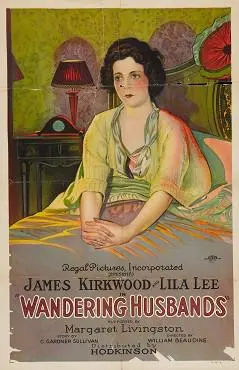
The hushed, often understated world of silent cinema frequently plumbed the depths of human emotion with a clarity and intensity that modern audiences, accustomed to a cacophony of dialogue and sound, might find surprisingly potent. Among these gems, C. Gardner Sullivan’s Wandering Husbands emerges as a particularly incisive, if somewhat melancholic, examination of marital fidelity and the intricate, often cruel, psychological games played when trust erodes. It is a narrative that eschews bombast for a more insidious, internal conflict, a slow burn of suspicion and calculated retaliation that resonates with a chilling authenticity even a century later.
At its core, the film presents a domestic tragedy, not of grand, operatic gestures, but of quiet, devastating betrayals. Diana Moreland, portrayed with a remarkable subtlety and inner steel by Margaret Livingston, is not merely a wronged wife; she is an architect of her own justice, a woman whose intelligence and wounded pride manifest in a strategy far more piercing than any public confrontation. Her discovery of her husband’s infidelity with Marilyn Foster (Lila Lee, whose delicate beauty masks a certain vulnerability) is not met with the expected histrionic outburst. Instead, the scene at the roadhouse, where Diana observes the illicit rendezvous, is imbued with a quiet, almost observational dread. It’s a testament to the power of visual storytelling that Livingston conveys a universe of pain and resolve without uttering a single word, her eyes alone tracing the contours of her husband's deceit.
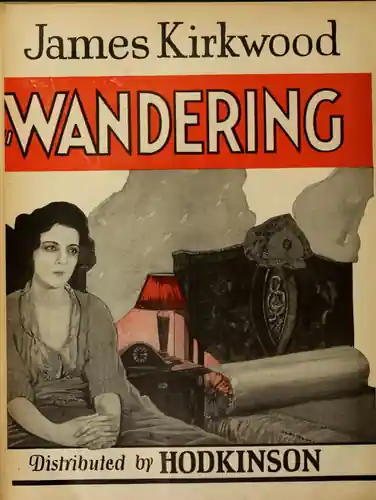
What follows is not an immediate explosion, but a meticulously constructed psychological trap. Diana, with a chilling composure that belies her inner turmoil, extends an invitation to Marilyn to join them at her home. This is where Wandering Husbands truly distinguishes itself from conventional melodramas of the era. It’s a chess match, not a brawl. Diana’s ‘test’ is not merely to expose the affair, but to force her husband, played by Turner Savage with a believable blend of weakness and conflicted affection, to confront the true landscape of his desires. She aims to strip away the veneer of superficial passion and reveal where his genuine loyalty and love truly reside. This narrative choice elevates the film from a simple tale of infidelity to a profound exploration of human psychology, of the power dynamics within a fractured marriage, and the lengths one spouse might go to reclaim, or at least definitively ascertain, the heart of another.
The performances, particularly Livingston’s, are the linchpin of the film’s enduring power. Her Diana is not a victim, but a strategist, a woman who navigates the treacherous waters of betrayal with a quiet dignity and an unnerving resolve. She embodies the archetype of the wronged woman who refuses to be passive, choosing instead to exert a subtle, yet devastating, control over her circumstances. Her expressions, her posture, the nuanced gestures — all contribute to a portrayal of immense depth, allowing the audience to glimpse the storm raging beneath her composed exterior. Savage, as the wayward husband, manages to convey a sense of genuine conflict, trapped between the allure of a new romance and the weight of his marital vows. His vacillation is not cartoonish but rather a believable depiction of a man caught in the throes of his own moral failing, making Diana's ultimate test all the more impactful.
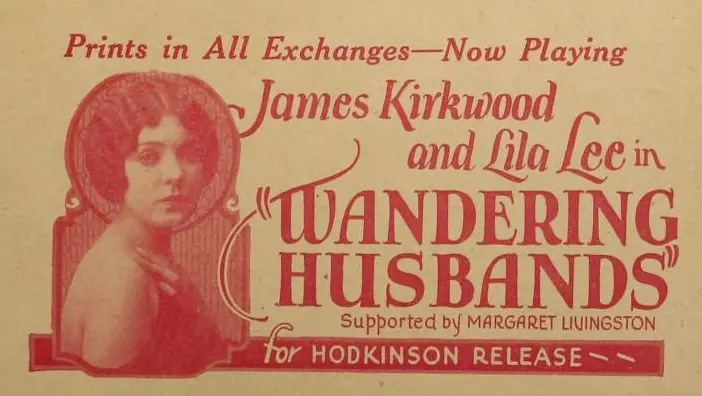
Lila Lee's Marilyn Foster, while initially presented as the 'other woman,' is not painted with a broad stroke of villainy. Her character possesses a certain naive charm, a susceptibility that makes her less a conniving temptress and more a participant in a complicated emotional triangle. This nuance in characterization, a hallmark of C. Gardner Sullivan's writing, prevents the film from devolving into simplistic good-versus-evil dichotomies. Instead, it offers a more complex, humanistic view of infidelity, where motivations are muddled and consequences ripple far beyond the immediate participants.
The direction, though uncredited in some records, handles this delicate material with a keen understanding of silent film aesthetics. The use of close-ups to capture the subtle shifts in emotion, the careful framing of scenes to emphasize power dynamics, and the pacing that allows moments of quiet contemplation to resonate are all masterfully employed. The film’s visual language speaks volumes, conveying inner turmoil and unspoken desires with remarkable clarity. One might compare its emotional precision to the focused psychological intensity found in films like The Career of Katherine Bush, which also delves into the complex inner lives of women navigating societal expectations and personal desires, albeit through a different lens of ambition and social climbing.
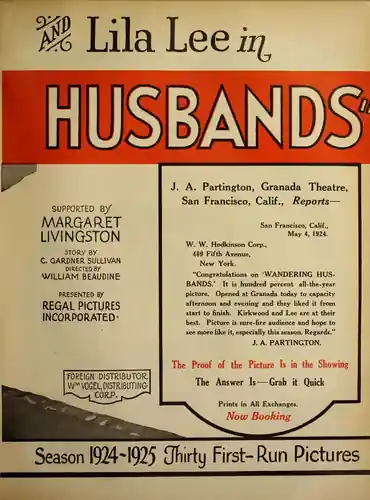
In an era where many films relied on overt physical action or exaggerated emoting, Wandering Husbands stands out for its reliance on psychological tension. The drama unfolds not through external events but through the internal machinations of its characters, particularly Diana. Her decision to invite Marilyn into her home transforms the marital dwelling into a crucible, a stage for an intimate, brutal drama. This daring narrative choice forces both the characters and the audience to grapple with uncomfortable truths about loyalty, desire, and the very nature of love itself. It’s a sophisticated approach that feels remarkably contemporary, even as it operates within the expressive constraints of silent cinema.
The film's exploration of societal norms surrounding marriage and fidelity in the 1920s is also noteworthy. While divorce was becoming more common, the ideal of a lifelong, monogamous union remained deeply ingrained. Diana’s actions, while extreme, can be seen as a desperate attempt to salvage her marriage on her own terms, to understand the true state of her husband’s heart before deciding its ultimate fate. This nuanced portrayal of a woman taking agency in a difficult situation offers a compelling counterpoint to more passive depictions often found in other films of the period. One might draw a parallel to the themes of moral quandary and personal integrity explored in a film like The Whistle, which, though dealing with different subject matter, similarly highlights the profound impact of individual choices and the moral tests faced by its protagonists.
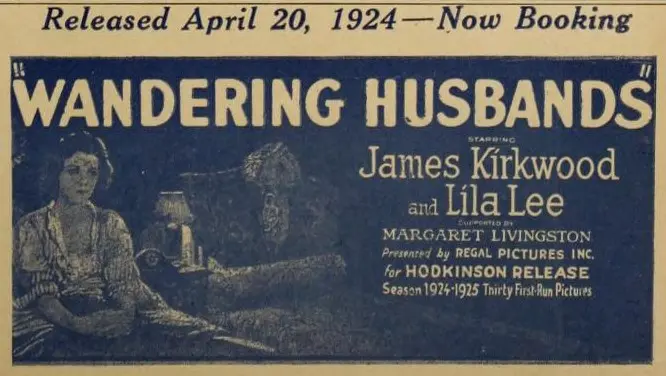
The supporting cast, including George B. French, Eugene Pallette, and George C. Pearce, contributes effectively to the film’s atmosphere, providing context and reaction without distracting from the central trio’s emotional maelstrom. Their presence grounds the central drama in a believable social fabric, subtly reinforcing the societal pressures and expectations that weigh upon the main characters. Even the brief appearances by James Kirkwood and Muriel Frances Dana add texture to the domestic setting, reminding us of the broader life that exists around the core conflict.
What particularly resonates about Wandering Husbands is its timelessness. The emotional complexities it explores – betrayal, forgiveness, manipulation, and the enduring quest for genuine connection – are not bound by the specific social mores of the 1920s. They are universal human experiences. The film asks profound questions: Can love survive betrayal? Is it possible to truly know another’s heart? And what price are we willing to pay for truth, even if that truth is painful? It’s a testament to Sullivan’s writing and the actors’ skill that these questions are posed and explored with such compelling force.
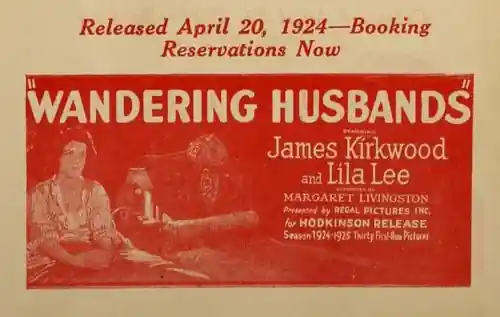
While it might not possess the grand adventure of The Alaskan or the swashbuckling romance of Devil McCare, Wandering Husbands offers a different kind of thrill – the thrill of psychological suspense. It draws you into the intimate confines of a troubled marriage and forces you to witness the raw, often uncomfortable, process of emotional reckoning. The film’s power lies in its ability to make the audience complicit in Diana's experiment, making us observers of a deeply personal drama, wondering alongside her what the outcome will be.
The film’s conclusion, without revealing specifics, is as thought-provoking as its premise. It doesn't offer easy answers or simplistic resolutions, which is another mark of its artistic integrity. Instead, it leaves the viewer to ponder the fragile nature of human relationships and the lasting scars of infidelity. It’s a study in consequences, both intended and unintended, and a powerful reminder of the delicate balance required to sustain a marriage. In many ways, it mirrors the introspective quality found in dramas like Blind Man's Holiday, where characters are forced to confront their inner demons and make difficult choices that define their future.
For enthusiasts of silent era drama, Wandering Husbands is an essential viewing. It’s a masterclass in non-verbal communication, a testament to the fact that profound emotional narratives can be conveyed without a single spoken word. Margaret Livingston's portrayal alone is worth the price of admission, a performance that elevates the material and etches Diana Moreland into the annals of compelling silent film heroines. It’s a film that lingers long after the final frame, prompting reflection on love, loyalty, and the intricate dance of human relationships, a dance that often involves more calculated steps than passionate embraces. It’s not a grand spectacle, but an intimate, piercing look into the human heart, demonstrating that the quietest dramas can often be the most resonant and impactful. This film is a testament to the enduring power of character-driven storytelling, proving that the silent screen could articulate complex emotional landscapes with a subtlety and depth that continues to captivate and challenge audiences today.
The genius of Wandering Husbands lies not in its sensationalism, but in its psychological realism. Diana's approach is not born of vengeance in the crude sense, but of a profound need to understand, to quantify the damage, and to ultimately decide if what remains is worth salvaging. This intellectual curiosity, fused with deep personal pain, makes her a truly captivating figure. Her 'test' is a risky gamble, one that could either reaffirm her husband's love or irrevocably shatter any illusion of it. The tension derived from this uncertainty is palpable throughout the latter half of the film, making every glance, every hesitant gesture, loaded with meaning. It's a prime example of how C. Gardner Sullivan, a prolific writer of the era, could craft narratives that transcended simple melodrama, elevating them to studies of human nature. His ability to craft compelling, morally ambiguous situations is evident here, much like the nuanced character explorations in films such as The Halfbreed, which, though set in a different world, similarly delves into complex personal dilemmas and societal judgment.
Ultimately, Wandering Husbands is more than just a period piece; it's a timeless exploration of the fragility of trust and the resilience of the human spirit. It asks us to consider what we would do when faced with profound betrayal, and whether the pursuit of truth, however painful, is always the most courageous path. It's a powerful reminder that even in the absence of spoken dialogue, the human face, illuminated by the flickering light of a projector, can convey an entire universe of emotion, making this silent drama a profoundly vocal statement on the complexities of the human heart.
IMDb 5
1935
Community
Log in to comment.