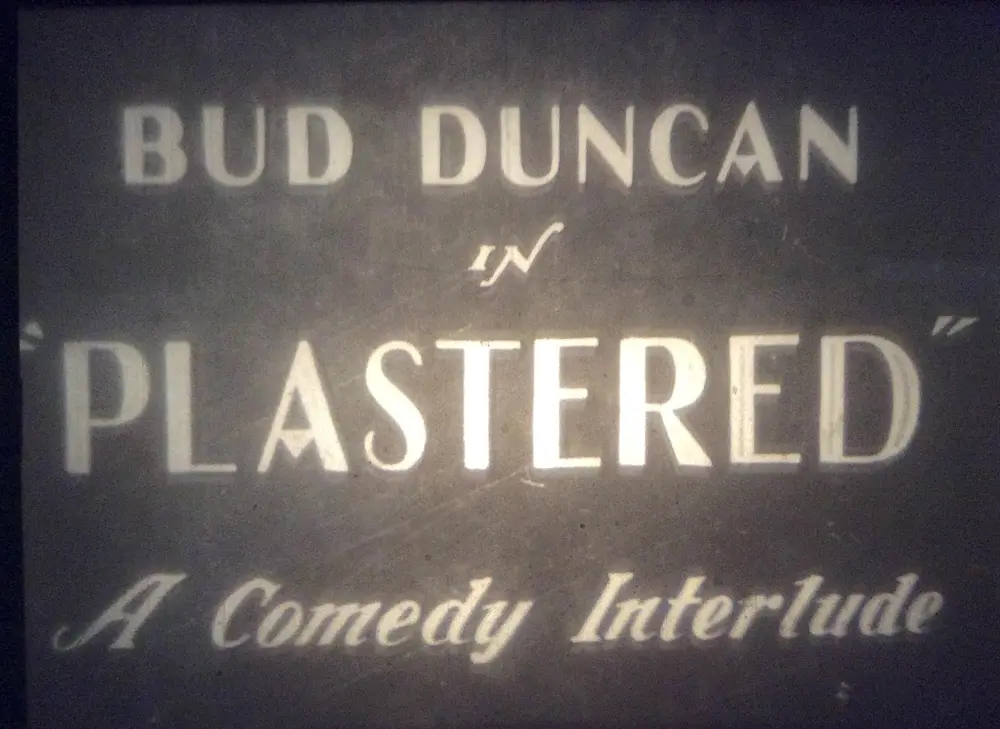
Is 'Plastered - A Comedy Interlude' Worth Watching Today?
Is 'Plastered - A Comedy Interlude' a film worth carving out time for in our hyper-saturated cinematic landscape? Short answer: yes, but with significant caveats. This early cinematic curiosity offers a fascinating glimpse into the nascent days of screen comedy, but it’s decidedly not for everyone.
This film will resonate deeply with ardent film historians, devotees of silent-era slapstick, and those keen on understanding the evolutionary trajectory of comedic timing and narrative. However, if your taste leans towards contemporary humor, intricate plotlines, or high-budget spectacle, you might find its charms elusive and its pacing jarringly deliberate.
The Unveiling of 'Plastered - A Comedy Interlude'
'Plastered - A Comedy Interlude' arrives as a delightful, if slight, artifact from an era when cinema was still finding its voice. It’s a film that, despite its apparent simplicity, manages to capture a certain effervescence—a lightheartedness that defined much of early comedic short-form storytelling. The premise, revolving around a social gathering gone awry due to an ill-advised beverage swap and a series of escalating physical gags, is as old as comedy itself, yet here it feels fresh in its historical context.
The film’s title itself, 'Plastered,' is a wonderfully evocative double entendre, hinting at both the physical state of inebriation and the literal plasterwork that becomes a central prop in the unfolding farce. This clever play on words sets the tone for a production that, while not striving for profundity, certainly aims for a hearty chuckle.
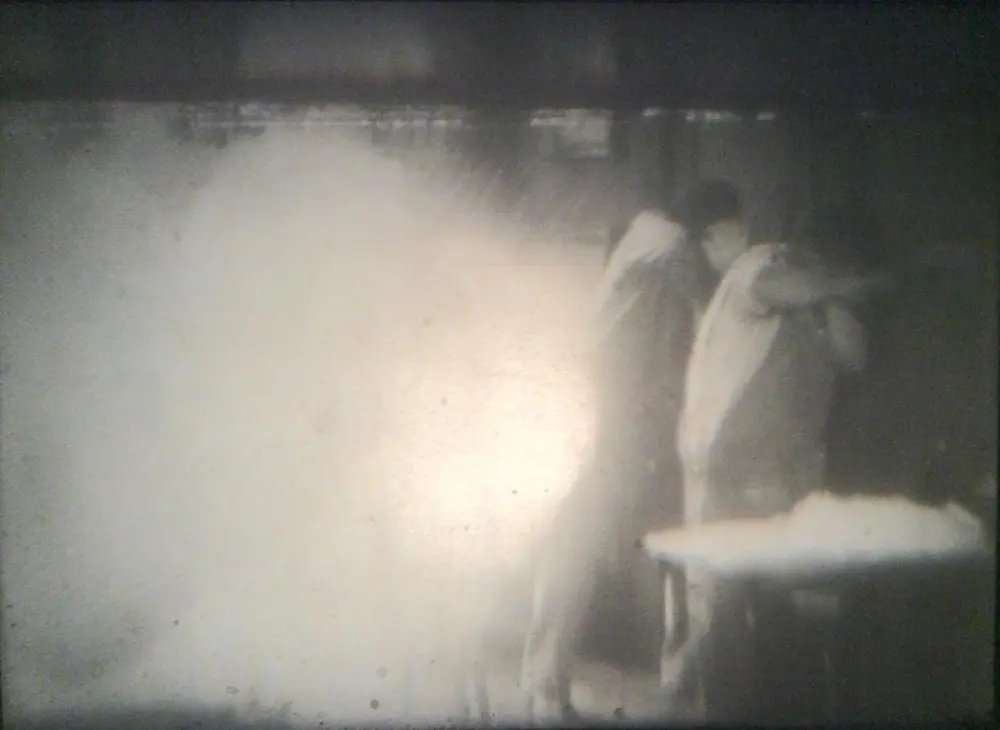
Scene from Plastered - A Comedy Interlude
Cinematic perspective: Exploring the visual vocabulary of Plastered - A Comedy Interlude (1927) through its definitive frames.
At its core, the narrative follows Mrs. Agatha Primrose, portrayed with commendable earnestness by Marie Stanley, as she endeavors to host a faultless tea party. Her objective: to impress the eccentric art collector, Mr. Fitzwilliam. The stage is set for a comedy of manners that quickly becomes a comedy of errors, propelled by external forces beyond her control.
The film’s strength lies in its unpretentious commitment to its comedic structure. It doesn't attempt to reinvent the wheel, but rather to spin it with as much gleeful abandon as possible within the constraints of its time. This commitment, while admirable, also exposes some of the inherent limitations of early cinema, particularly when viewed through a modern lens.
Early Impressions: What Works and What Doesn't
This film works because it embraces the foundational elements of physical comedy and character archetypes with an infectious enthusiasm, offering a clear window into the comedic sensibilities of its era.
This film fails because its humor is undeniably dated, requiring a significant shift in audience perspective to appreciate fully, and its production values are inherently rudimentary.
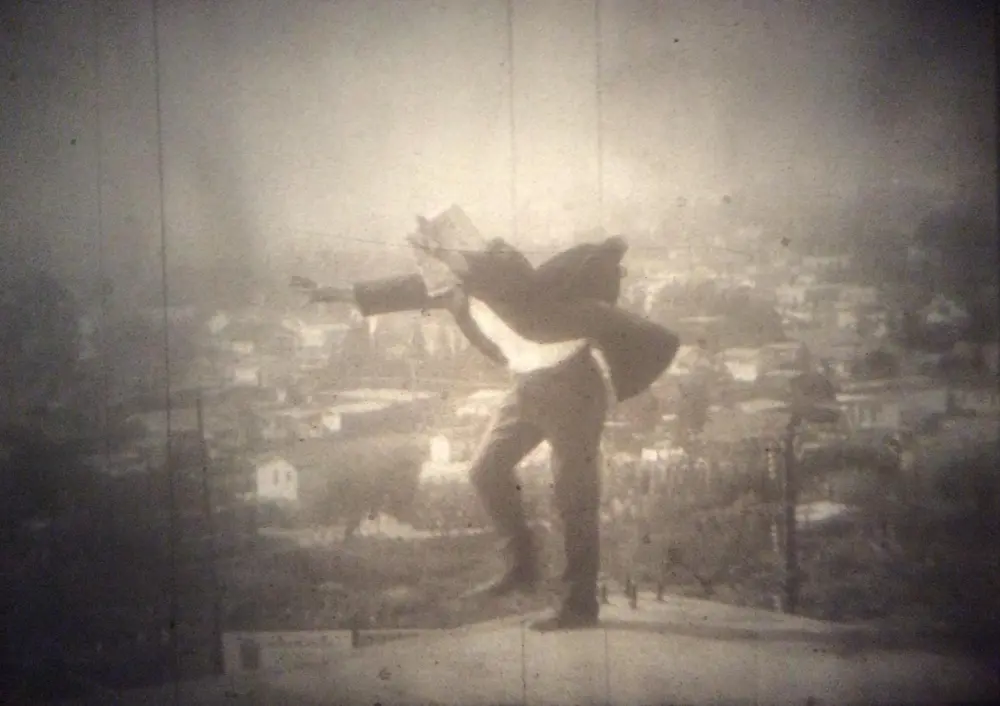
Scene from Plastered - A Comedy Interlude
Cinematic perspective: Exploring the visual vocabulary of Plastered - A Comedy Interlude (1927) through its definitive frames.
You should watch it if you possess a genuine interest in the history of cinema, enjoy the earnest performances of early film actors, and appreciate the raw, unpolished charm of pre-talkie farces.
It works. But it’s flawed. The charm of 'Plastered' is undeniable for those who appreciate the earnest, almost innocent, quality of early filmmaking. The performances, while broad, are delivered with a conviction that sells even the most outlandish gags. However, its comedic rhythms are out of sync with contemporary expectations, often feeling slow by today's standards despite the rapid succession of events.
The technical limitations of the period are also evident. While they contribute to its historical authenticity, they can be a hurdle for viewers accustomed to the visual sophistication of modern cinema. The simple framing and static shots, while effective for the gags, don't offer the dynamic visual storytelling we now expect.
A Deeper Dive into the Craft
Directing: A Masterclass in Simplicity
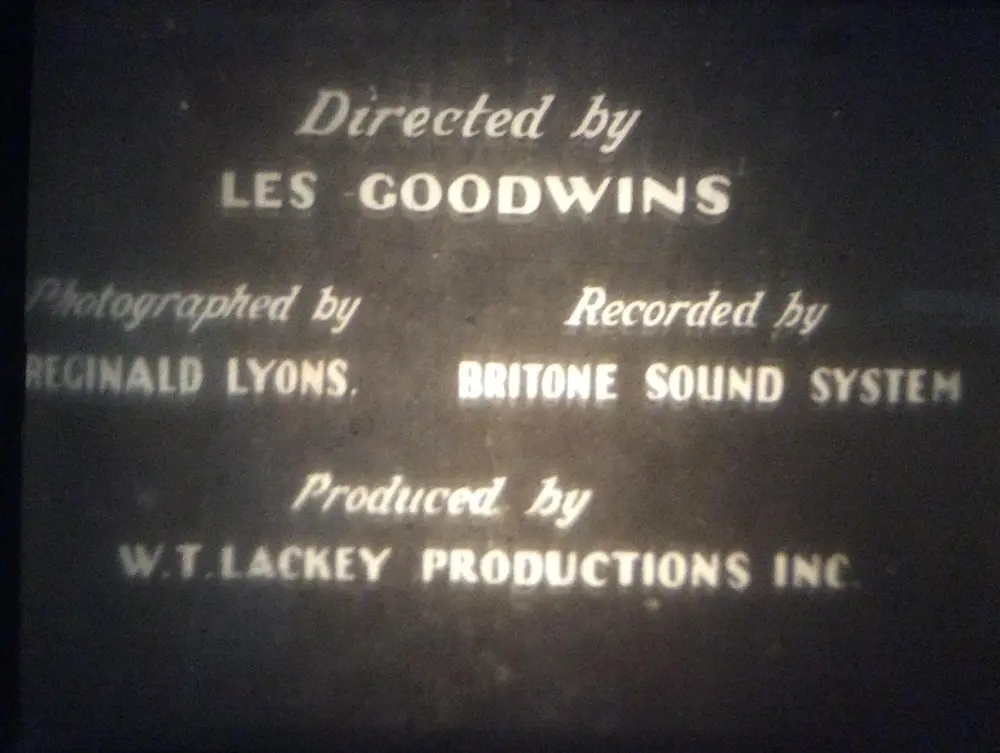
The direction in 'Plastered - A Comedy Interlude' is a testament to the effectiveness of simplicity. The filmmaker, whose name remains uncredited in the provided context, understood that early cinema's strength lay in clear visual communication of action and reaction. There are no elaborate tracking shots or complex montages here. Instead, the camera largely remains a static observer, allowing the actors and their physical comedy to fill the frame.
Scene from Plastered - A Comedy Interlude
Cinematic perspective: Exploring the visual vocabulary of Plastered - A Comedy Interlude (1927) through its definitive frames.
Consider the scene where Daisy (Georgia O'Dell) attempts to right the tottering plaster bust. The director wisely employs a medium shot, keeping both Daisy's frantic efforts and the bust's precarious wobble in clear view. This allows the audience to anticipate the inevitable crash, building a simple but effective comedic tension. It’s a pragmatic approach, prioritizing the gag over stylistic flourish, a hallmark of early comedic direction.
The blocking of the actors within the relatively confined space of the drawing-room is also noteworthy. The director orchestrates the movement of Marie Stanley's Mrs. Primrose, Cliff Lancaster's Mr. Fitzwilliam, and the other guests with a balletic precision that enhances the farcical nature of the proceedings. Every near-miss, every accidental bump, feels deliberately choreographed, even if the execution sometimes appears charmingly clumsy.
Performances: The Heart of the Farce
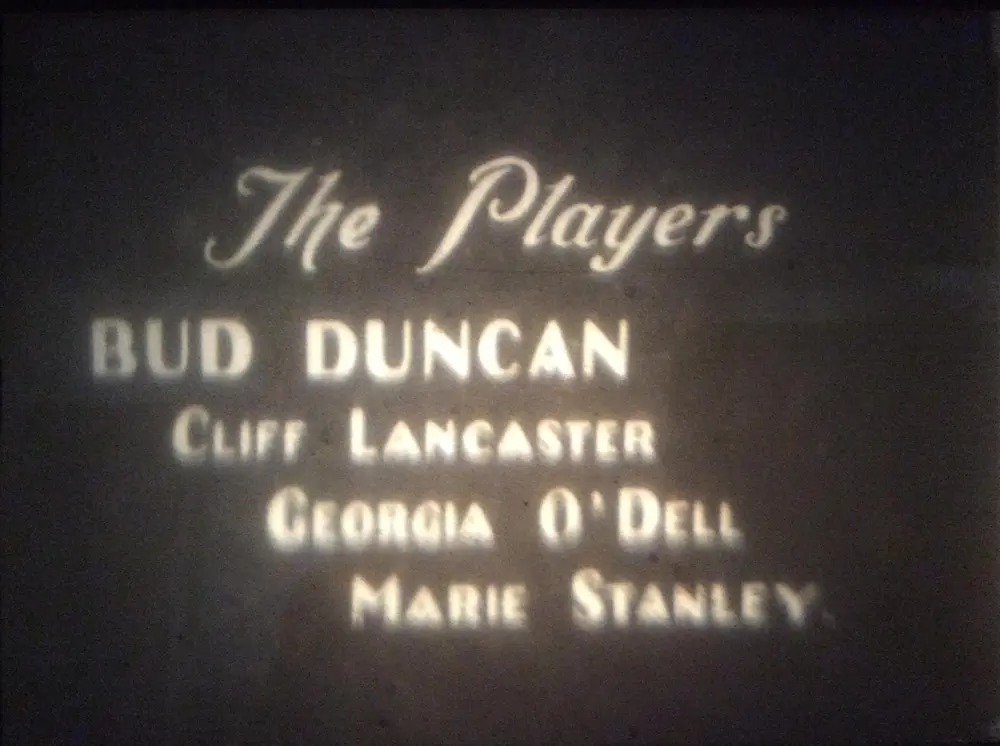
The ensemble cast, featuring Marie Stanley, Georgia O'Dell, Cliff Lancaster, and Bud Duncan, is undeniably the engine driving this comedic interlude. Their performances are broad, expressive, and perfectly aligned with the theatrical conventions of the era. They understand that in a film without dialogue, every emotion, every intention, must be writ large across their faces and bodies.
Marie Stanley, as Mrs. Agatha Primrose, delivers a performance that oscillates between flustered hostess and bewildered victim of circumstance. Her increasingly strained smiles and wide-eyed reactions to the unfolding chaos are a particular highlight. One specific moment, when she subtly tastes the 'punch' and her eyes widen imperceptibly, yet tellingly, speaks volumes without a single word. It's a nuanced piece of physical acting that hints at the potency of the altered drink.
Scene from Plastered - A Comedy Interlude
Cinematic perspective: Exploring the visual vocabulary of Plastered - A Comedy Interlude (1927) through its definitive frames.
Georgia O'Dell, as the clumsy maid Daisy, embodies the classic comedic archetype of the well-meaning but accident-prone servant. Her physical comedy, particularly her attempts to 'fix' the plaster bust with ever-increasing futility, is genuinely amusing. Her wide-eyed panic and exaggerated gestures are typical of the era, yet O'Dell brings a particular vulnerability to the role that makes Daisy more than just a caricature.
Cliff Lancaster's portrayal of Mr. Fitzwilliam is delightfully eccentric, a character whose appreciation for 'art' is so abstract it allows him to embrace outright destruction as genius. His gradual descent into tipsy approval, marked by increasingly expansive gestures and a beatific smile, is a masterclass in silent comedic transformation. And Bud Duncan, as the mischievous nephew Bertie, is the impish instigator, his knowing glances and subtle smirks providing a crucial undercurrent of intentional mischief amidst the accidental chaos. His performance is a subtle counterpoint to the more overt physical comedy, anchoring the film's central deception.
Cinematography and Visual Storytelling
The cinematography of 'Plastered' is, as expected for its time, straightforward and functional. Shot in black and white, it relies on natural light or simple studio setups to illuminate the scene. There's a certain stark beauty in its simplicity, with strong contrasts often highlighting the actors' expressions and movements against the relatively sparse background of the drawing-room set.
The camera's primary function is to capture the action clearly, ensuring that every pratfall, every spilled drink, and every shattered piece of plaster is visible to the audience. Close-ups are used sparingly, often to emphasize a character's reaction to a particularly egregious mishap or to showcase a crucial prop, such as the nefarious punch bowl. This deliberate choice keeps the focus squarely on the unfolding comedic narrative.
Scene from Plastered - A Comedy Interlude
Cinematic perspective: Exploring the visual vocabulary of Plastered - A Comedy Interlude (1927) through its definitive frames.
One could argue that the film's visual style, while rudimentary by modern standards, possesses an accidental artistry. The way light catches the shattered pieces of plaster on the floor, or the subtle sheen on the faces of the 'plastered' guests, creates a texture that is uniquely evocative of early cinema. It’s a visual language that communicates effectively, even without the benefit of color or complex camera work.
Pacing and Tone: A Rhythmic Dance of Absurdity
The pacing of 'Plastered - A Comedy Interlude' is a fascinating study in early comedic rhythm. It begins with a relatively calm, almost stately introduction to Mrs. Primrose's elegant tea party, establishing the decorum that is soon to be shattered. This deliberate opening allows the audience to fully grasp the 'normalcy' from which the comedy will spring.
Once the altered punch begins to take effect and Daisy's mishaps escalate, the pacing quickens, building momentum with each successive gag. The film masterfully employs a domino effect, where one small blunder leads inevitably to a larger catastrophe. The director understands the importance of escalation in farce, creating a crescendo of comedic chaos that culminates in Mr. Fitzwilliam's grand, drunken pronouncement.
The tone is consistently light and farcical, never straying into genuine drama or pathos. Even when Mrs. Primrose's social standing seems to hang in the balance, the underlying current of the film is one of playful amusement. This unwavering commitment to a purely comedic tone ensures that the audience is always in on the joke, even as the characters on screen struggle to comprehend the unfolding absurdity.
Unconventional Observations and Debatable Opinions
One might argue that the true genius of 'Plastered' isn't in its intentional humor, which can feel quaint, but in its accidental sociological commentary. The film, in its depiction of a meticulously maintained social façade crumbling under the weight of an unexpected variable, offers a surprisingly poignant, if unintended, critique of Edwardian-era social anxieties. The characters' desperate attempts to maintain composure, even when clearly inebriated or faced with destruction, speak volumes about the societal pressures of the time.
Furthermore, I'd contend that the film's most enduring legacy isn't its individual gags, but rather its encapsulation of the pure, unadulterated joy of early cinematic experimentation. It's a reminder that before elaborate special effects and complex narratives, the simple act of watching people behave foolishly on screen was, in itself, a profound and revolutionary form of entertainment. Its simplicity is its strength, not a weakness.
However, a controversial take: 'Plastered' inadvertently highlights the limitations of purely visual comedy without the nuanced support of strong character development. While the actors are expressive, their roles are largely archetypal, making it difficult for a modern audience to invest emotionally. Is it truly funny, or merely interesting as a historical document?
Key Takeaways
Best for: Film historians, students of silent cinema, and enthusiasts of classic physical comedy.
Not for: Viewers seeking contemporary humor, intricate plots, or high-octane action.
Standout element: The earnest and expressive physical performances of the ensemble cast, particularly Marie Stanley's flustered hostess.
Biggest flaw: Its dated comedic style and rudimentary production values may prove inaccessible to a broad modern audience.
Pros and Cons
Pros:
Historical Significance: Provides an invaluable window into the evolution of cinematic comedy and early narrative structures. It's a foundational piece, showing how filmmakers learned to tell stories and evoke laughter without spoken dialogue.
Charming Performances: The cast, including Georgia O'Dell and Bud Duncan, delivers committed, often delightful, physical comedy that transcends the lack of dialogue. Their expressions and body language are remarkably clear and engaging, a testament to their theatrical training.
Simple, Effective Storytelling: The plot, while straightforward, is executed with a clarity that ensures the audience always understands the comedic premise and its escalating consequences. It’s a masterclass in 'show, don't tell.'
Unintentional Social Commentary: Beyond the laughs, the film offers a subtle, perhaps accidental, commentary on social decorum and the fragility of appearances in polite society. It’s a fascinating look at the pressures of maintaining an image.
Accessible for Study: Its short runtime and clear narrative make it an excellent choice for film students or anyone interested in analyzing early film techniques and comedic tropes.
Cons:
Dated Humor: The comedic sensibilities are very much of their time, and many modern viewers may find the gags predictable or lacking the sharp wit of contemporary comedy. The humor often relies on slapstick and broad caricature.
Rudimentary Production Values: As an early film, it naturally lacks the technical sophistication of later productions, which might be a barrier for audiences accustomed to high-definition visuals and complex sound design. The visual quality is raw.
Slow Pacing (for some): While effective for its era, the pacing can feel deliberate or even slow to viewers accustomed to the rapid-fire editing and quick jokes of modern films. The build-up to gags can feel extended.
Limited Replay Value (for general audience): Once the novelty of its historical context wears off, its entertainment value for a casual viewer might be limited compared to films with more complex narratives or timeless humor.
Lack of Character Depth: The characters are largely archetypes serving the comedic plot, offering little in the way of deep psychological insight or emotional arcs. They are functional, not profound.
Verdict
'Plastered - A Comedy Interlude' is more than just a forgotten film; it's a vibrant, if small, piece of cinematic history. It stands as a charming testament to the foundational principles of visual comedy, showcasing how early filmmakers, with limited tools, could still elicit genuine laughter and tell engaging stories. While its humor won't universally land with today's audiences, its value as a cultural and historical document is immense. It reminds us that laughter, in its purest form, transcends eras, even if the delivery mechanisms evolve.
For those willing to approach it with an open mind and an appreciation for the pioneering spirit of early cinema, 'Plastered' offers a delightful, if fleeting, escape into a bygone era of innocent farce. It's a film that, much like a good, strong punch, leaves you with a lingering, slightly dizzying smile, even if you can't quite remember all the details. Don't expect a A Western Wooing or a Aelita, the Queen of Mars in terms of scope or ambition, but rather a focused, effective comedic gem. It deserves its place in the archives, and perhaps, a viewing from those curious enough to seek it out.