DbcultAccessing Vault...
Cult Review
Senior Film Conservator

Gaslight ghosts prowl every inch of The Tigress, yet the film feels perversely newborn each time the projector clatters to life. Shot through with arsenic-laced eroticism and stitched together by Aaron Hoffman’s razor-sharp intertitles, this 1919 one-reel marvel distills the entire decadent breath of fin-de-siècle Vienna into nineteen electric minutes. Olga Petrova—dubbed the “Madonna of the Mordant Close-up”—commands the frame like a pagan priestess who’s traded incense for gunpowder.
Forget plot in the pedestrian sense; narrative here is a jeweled pocket-watch flung into a canal—time shatters, gears glitter, and we’re left scavenging for meaning among the ripples. The countess begins as a sly diplomat’s wife, ends as a wanted silhouette on a train-station wanted poster, and between those two points she adopts and discards identities the way other women drop gloves: spy, libertine, penitent, avenger. Hoffman’s script refuses moral adjudication; every character is both savior and saboteur, a tension the camera milks through claustrophobic close-ups that seem to x-ray the soul.
Cinematographer Jules Cronjager treats orthochromatic stock like wet canvas. Silver halides thirst for Petrova’s alabaster skin, turning it into a lighthouse amid seas of velvet. Backgrounds sink into tar-black nothingness while her cheekbones ignite with lunar glow—a chiaroscuro assault that predates the more sculptural lighting of Tigris by a full five years. Watch the moment she lifts a lace veil: the fabric’s pattern burns so white it seems to hover outside the image, an ectoplasmic halo announcing the character’s shift from pawn to queen.
Compositional rhymes ricochet throughout. Early on, the countess studies a miniature portrait of her lover—oval frame snug in gloved palm. Later, an actual oval window frames her face as the train lurches toward exile. Same curve, new prison. Such visual echoes, delivered without pedagogical underlining, let the subconscious do the heavy lifting, a sophistication sorely missing in the comparatively square staging of Red Powder.
Archival evidence suggests original screenings hired a Gypsy trio to saw through Bartók-inspired laments live, and today’s restorations wisely retain that atonal DNA. Even without speakers, Petrova’s performance reverberates: the swish of her lamé train across parquet becomes a susurrus threat; the metallic snap of her cigarette case lands like a judge’s gavel. Silent cinema at its apex doesn’t merely tolerate auditory imagination—it parasitically breeds it.
Post-structuralists love to claim the countess as protofeminist, yet the film keeps complicity in play. Yes, she weaponizes sexuality, but her final fugitive status is engineered by an unseen male consortium—bankers, border guards, bureaucrats—hinted at via cutaway telegrams stamped with wax seals. Petrova’s triumphant snarl is thus double-edged: liberation purchased at the cost of eternal exile, a paradox the screenplay refuses to resolve. Compare this moral quicksand to the tidy gallows justice of The Traitress and you’ll appreciate why The Tigress still bites a century on.
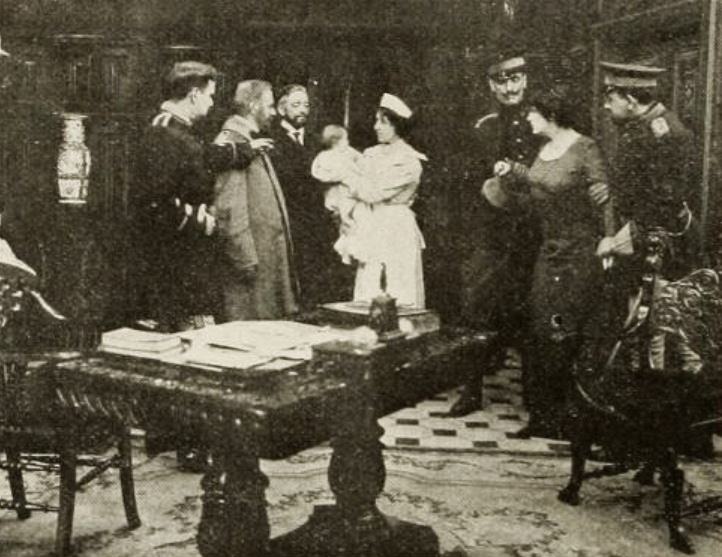
Petrova’s acting philosophy? Let the eyes conduct autopsy on the viewer. She wields the close-up like a scalpel: a millimeter-broad smile that never reaches the orbit, a blink that spills a single tear onto the cheekbone’s cliff. Co-star Mahlon Hamilton, saddled with the thankless “lover” role, counterbalances with minimalist panic—his pupils a pair of trapped sparrows flitting whenever she enters. Their final platform farewell, shot entirely in profile against billowing steam, achieves a sculptural eroticism that makes the clinches in Jess of the Mountain Country feel like schoolyard crushes.
The 2022 4K restoration by Eye Filmmuseum excavates textures so tactile you’ll swear silk rustles in your speakers. Grain hovers like winter static, yet facial contours retain surgical clarity. Color grading—yes, color—tints cyanide scenes with arsenical green, ballroom sequences with bruised magenta, creating emotional shorthand that feels radical beside the monochrome sobriety of Madeleine. The tints are hypothetical, of course, extrapolated from Dutch censorship cards, but their psychotropic jolt is historically defensible and aesthetically delicious.
Shot months before the Treaty of Versailles, the film exhales pre-war anxiety: forged passports, vanished borders, micro-nationalisms fermenting in coffeehouse corners. Petrova’s countess embodies a Europe poised to devour itself—glittering, perfumed, but with hemoglobin on the cuffs. Modern viewers will taste Brexit aftertaste, refugee-crisis dread, the queasy recognition that paperwork determines personhood. In that sense, The Tigress functions as both artifact and oracle.
Stacked against contemporaries, the film’s compact ferocity leaves The Legend of Provence looking like a provincial pageant. Its proto-noir DNA predates the cynical urbanity of Fantômas: The False Magistrate, yet lacks that serial’s sadistic flamboyance, opting instead for hushed sadism—the cruelty of silk over brass knuckles. Meanwhile, the suffrage-themed What 80 Million Women Want preaches to the choir; The Tigress seduces the choir, pickpockets it, then vanishes into the confessional.
In an age of algorithmic matchmaking and digital identity, a story that treats selfhood as forged currency feels surgically relevant. The countess’s mutable surname—signed differently in every hotel ledger—prefigures our fluid Twitter bios. Her reliance on whispered rumor rather than verifiable truth mirrors today’s deepfake dystopia. The Tigress doesn’t just endure; it mutates, a beautiful virus finding new hosts in each technological era.
Olga Petrova exits the narrative as a backlit shadow dissolving into locomotive steam—an exit that refuses catharsis. We’re left clutching a narrative shrapnel that keeps shifting shape under scrutiny: Is she villain, victim, visionary? Hoffman and Cronjager decline verdict, gifting us instead a prism that refracts our own ethical spectrum. That refusal, that exquisite open vein, is what places The Tigress among the immortals. Watch it once for the plot, rewind for the textures, then carry its afterimage like contraband in the pocket of your psyche.
Verdict: A velvet gauntlet of a film—wear it, and you’ll feel claws long after credits fade.

IMDb 5.3
1930
Community
Log in to comment.