DbcultAccessing Vault...
6.4/10
Senior Film Conservator
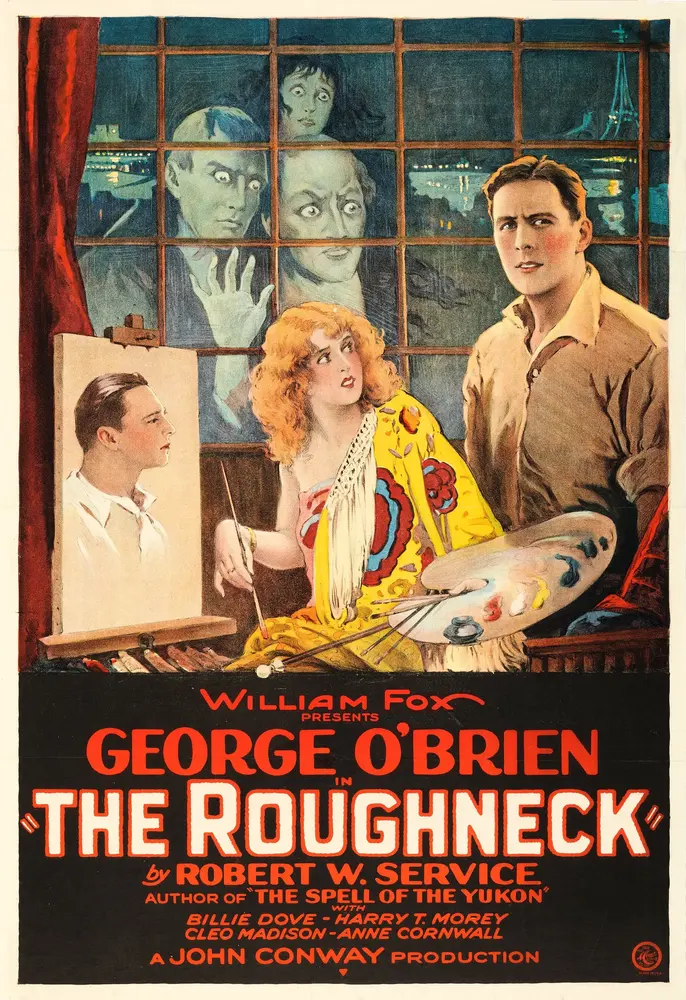
A definitive 6.4/10 rating for a film that redefined the boundaries of cult cinema. The Roughneck remains a cornerstone of transgressive art.
Ah, the silent era! A time when narratives unfolded through the eloquent ballet of gesture, the poignant flicker of intertitles, and the evocative power of light and shadow. Amidst this rich tapestry of early cinema, certain films emerge from the archives, whispering tales of forgotten grandeur or understated charm. One such cinematic artifact, ‘The Roughneck,’ a 1924 production, beckons us back to an age of raw storytelling, exotic locales, and the magnetic charisma of its stars. Penned by the formidable talents of Robert W. Service and Charles Kenyon, this picture promised a foray into the untamed, a promise it largely endeavors to keep. It's a film that, despite its vintage, still possesses a certain visceral pull, drawing viewers into a world where the forces of nature and human passion collide with thrilling abandon.
The premise, deceptively simple, sets the stage for a drama of profound emotional resonance. Imagine, if you will, the serene existence of Felicity Arden, portrayed with breathtaking luminosity by the incomparable Billie Dove. She is a woman of discernible refinement, accustomed to the comforts and conventions of her world, a world far removed from the primal forces that are about to engulf her. Then, a storm — not merely a meteorological event, but a cataclysmic upheaval of fate — descends upon her, tearing her from her moorings and casting her adrift. This tempest, a furious maelstrom of wind and water, serves as more than just a plot device; it is a primal force, mirroring the internal turmoil and societal disruptions that often underpin human drama. It is a narrative catalyst, stripping away the artificial layers of civilization and exposing the raw nerve of existence.
Her reluctant sanctuary is the dwelling of Mad Marrat, a figure whose very moniker conjures images of wildness and unpredictability, situated on a remote South Sea Isle. This isn't merely a geographical location; it's a character in itself, imbued with an air of mystery, danger, and untamed beauty. The island, with its lush, brooding vegetation and the ceaseless roar of the ocean, becomes a crucible where two diametrically opposed worlds are forced into an uneasy, yet undeniably compelling, cohabitation. The contrast between Felicity’s delicate sensibilities and Marrat’s rugged, perhaps even savage, disposition forms the pulsating heart of the narrative. It’s a classic trope, certainly, but one that ‘The Roughneck’ explores with an earnestness and dramatic flair that transcends its era. The film invites us to ponder the boundaries of civility and the intoxicating allure of the wild, questioning what truly defines us when stripped of our familiar surroundings. This collision is not just physical; it's a clash of ideologies, of lived experiences, and of the very essence of what it means to be human.
At the core of ‘The Roughneck’s enduring appeal lies the captivating performance of Billie Dove. In an era teeming with iconic screen goddesses, Dove carved out a unique niche for herself, distinguished by a blend of ethereal beauty, subtle emotional depth, and an undeniable screen presence. As Felicity Arden, she is not merely a damsel in distress; she embodies a resilience that slowly, yet powerfully, emerges from beneath the veneer of her initial vulnerability. Her transition from a woman of delicate refinement to one grappling with the harsh realities of survival, and perhaps even a burgeoning, forbidden attraction, is rendered with remarkable nuance. Dove’s expressive eyes and graceful movements convey a torrent of unspoken emotions, a hallmark of truly great silent acting. She manages to communicate fear, defiance, curiosity, and a complex array of feelings without uttering a single audible word, a testament to her mastery of the silent craft. Her performance anchors the film, providing a relatable human core amidst the swirling drama of the storm and the enigmatic presence of Marrat.
The cast supporting Dove, though perhaps less prominent in the annals of film history, contributes effectively to the film’s atmosphere. While specific details about the performances of Cleo Madison, Charles Sellon, Harvey Clark, and George O'Brien might be lost to the mists of time for many, their collective presence undoubtedly helped forge the film’s distinctive mood. Harry T. Morey, likely portraying the titular 'roughneck' or a similar rugged character, would have provided the necessary counterbalance to Dove’s refined elegance. The chemistry, or indeed the friction, between these central figures is paramount, and it is through their interplay that the film truly comes alive. The silent era demanded a particular kind of physicality and expressiveness, and it is clear that the ensemble worked to create a believable, if heightened, reality for the audience. The challenge of conveying complex relationships without dialogue often resulted in performances that were both grand and intimately revealing, and 'The Roughneck' seems to have benefited from this approach.
The visual language of ‘The Roughneck’ would have been crucial, especially given its exotic setting. Silent films often excelled at creating immersive environments through inventive cinematography and art direction. One can imagine the storm sequences, for instance, being rendered with dramatic flair, utilizing practical effects and clever lighting to convey the sheer power and danger of the tempest. The South Sea Isle itself, with its lush, untamed beauty, would have been captured to evoke both its allure and its inherent perils. Such settings were a popular motif in early 20th-century cinema, offering audiences a vicarious escape to distant, romanticized lands. Films like Desert Blossoms or Ubirajara, while perhaps different in their specific cultural contexts, share this fascination with the exotic and the untamed, using remote landscapes as backdrops for intense human drama. The visual spectacle, therefore, was not just about aesthetics; it was integral to the narrative, amplifying the sense of isolation and the clash of cultures.
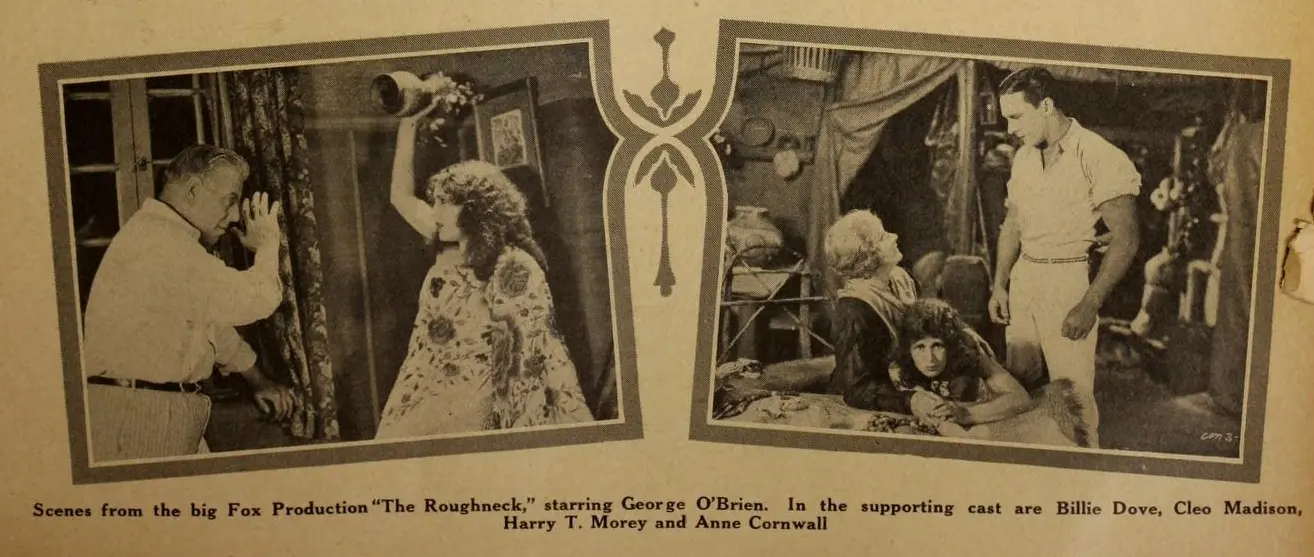
Thematically, ‘The Roughneck’ delves into fascinating territory. At its heart, it explores the age-old dichotomy between civilization and wilderness. Felicity, a product of refined society, is thrust into an environment where such conventions hold little sway. Marrat, the 'roughneck,' represents the untamed, perhaps even a more authentic, mode of existence. The film implicitly asks: which is truly more liberating? Which offers a truer path to self-discovery? This theme of personal transformation under duress is powerful. Felicity's forced refuge is not merely a physical ordeal but a journey of self-reckoning, a shedding of preconceived notions and societal expectations. It's a narrative arc that resonates even today, reminding us that true character is often forged in the crucible of adversity. The film also touches upon the 'lure of youth', as hinted by films like The Lure of Youth, where the freshness and naivety of young characters are challenged by harsh realities or complex relationships. Here, Felicity's youth makes her particularly susceptible to the transformative power of her experience on the island, forcing her to mature rapidly and confront aspects of life she had previously been shielded from.
The involvement of Robert W. Service as one of the writers is particularly noteworthy. Known for his vivid, often gritty poetry of the Yukon, Service had a knack for depicting harsh environments and the rugged individuals who inhabited them. His influence, even if filtered through Charles Kenyon’s screenplay adaptation, likely imbued ‘The Roughneck’ with a sense of authentic struggle and a raw, unvarnished portrayal of its characters. Service’s literary voice often celebrated the resilience of the human spirit against overwhelming odds, a sentiment that perfectly aligns with the film’s core narrative of survival and adaptation. This literary pedigree suggests a script that aimed for more than mere melodrama, striving instead for a deeper exploration of human nature under duress. Kenyon, as the screenwriter, would have been tasked with translating Service's evocative themes and characterizations into the visual language of silent film, a challenging yet rewarding endeavor that required a keen understanding of cinematic rhythm and emotional pacing.
The narrative’s progression, from the initial shock of the storm to the evolving relationship between Felicity and Marrat, would have been carefully paced to build suspense and emotional intensity. Silent films, often accompanied by live musical scores, relied heavily on visual cues and the dramatic arc to captivate audiences. One can imagine moments of quiet tension, punctuated by bursts of action or intense emotional exchanges, all underscored by the swelling strains of an orchestra. The film’s ability to sustain interest over its runtime, without spoken dialogue, is a testament to the strength of its storytelling and the power of its visual execution. It’s a delicate balance, one that the finest silent films mastered, transforming what might seem like a limitation into a unique artistic strength.
‘The Roughneck’ offers a fascinating window into the cinematic sensibilities of the 1920s. It reflects an era fascinated by adventure, exoticism, and the dramatic interplay of societal norms against untamed natural forces. While it may not possess the same canonical status as some of its more frequently discussed contemporaries, its existence speaks to the sheer volume and diversity of films produced during the silent era. Each film, regardless of its ultimate recognition, contributed to the evolving language of cinema, experimenting with narrative forms, character archetypes, and visual techniques. The fact that a film like ‘The Roughneck’ could bring together a star like Billie Dove with the literary gravitas of Robert W. Service indicates a vibrant and ambitious film industry, constantly seeking compelling stories and talented individuals to bring them to life.
Moreover, the film implicitly explores themes that might have resonated deeply with audiences of the time. The idea of a refined woman being tested, perhaps even transformed, by a rugged environment or a 'roughneck' character, touches upon societal anxieties and aspirations regarding gender roles and class distinctions. Would Felicity remain 'above reproach', as in the film The Woman Above Reproach, or would her experiences on the island challenge her moral fortitude and societal standing? These were questions that silently simmered beneath many narratives of the period. The film might have served as both an escape and a subtle commentary on the shifting cultural landscape, inviting viewers to imagine themselves in similar circumstances, grappling with the same fundamental questions of identity and survival. The enduring appeal of such narratives lies in their ability to tap into universal human experiences, regardless of the specific historical context.
Today, rediscovering films like ‘The Roughneck’ is a crucial endeavor for cinephiles and historians alike. It allows us to appreciate the breadth of silent cinema beyond the handful of masterpieces that dominate popular discourse. Each rediscovered print, each restored frame, adds another piece to the vast puzzle of film history. These films are not merely relics; they are living documents, offering insights into the artistic, social, and cultural currents of their time. They remind us that the foundations of modern cinematic storytelling were laid by these pioneering efforts, often against significant technical and artistic challenges. The courage to experiment, to tell stories without the crutch of spoken dialogue, fostered an incredibly visual and emotionally direct form of filmmaking that still holds lessons for contemporary creators.
‘The Roughneck’ stands as a testament to the enduring power of elemental narratives: a woman, a storm, a wild man, and a remote island. It’s a formula that, when handled with the right blend of dramatic tension and compelling performances, can transcend the limitations of its era and speak directly to the human heart. Billie Dove’s performance alone makes it a film worthy of attention, her silent artistry a beacon in the often-overlooked landscape of early Hollywood. While it may not boast the frenetic energy of some action-packed dramas or the intricate plotting of a mystery like Das Rätsel von Bangalor, its strength lies in its focused intensity and the raw emotional journey it undertakes. It’s a film that quietly asserts its place, reminding us that sometimes, the most profound stories are told not with a roar, but with a whisper, a glance, and the crashing waves of a South Sea storm.
IMDb —
1921
Community
Log in to comment.