DbcultAccessing Vault...
6.2/10
Senior Film Conservator
A definitive 6.2/10 rating for a film that redefined the boundaries of cult cinema. The Royal Imposter remains a cornerstone of transgressive art.
The cinematic tapestry of The Royal Imposter unfurls a narrative steeped in the intoxicating allure of power, the perilous game of identity, and the tragic consequences of ambition. It’s a compelling exploration of class distinctions, moral decay, and the relentless hand of fate, painting a portrait of a kingdom teetering on the brink of chaos, all orchestrated by the whims of a privileged few. From its very inception, the film plunges us into a world where appearances are paramount and reality is a fluid construct, easily manipulated by those with the means and the motive. The narrative, while seemingly straightforward in its premise, quickly spirals into a labyrinth of deceit and despair, challenging viewers to ponder the true cost of wearing another’s crown.
At the heart of this intricate drama lies Prince Ludwig of Gravania, a character epitomizing unchecked aristocratic indulgence. His life is a continuous cycle of dissipation, a cavalcade of scandals that stain the venerated name of his royal lineage. Ludwig is not merely a flawed individual; he is a force of destructive self-interest, utterly devoid of any sense of responsibility or empathy. His solution to maintaining his hedonistic lifestyle while preserving a semblance of decorum is ingenious in its audacity: he employs Enrico, his servant, a man who bears an astonishing resemblance to him, to act as his proxy. This charade, initially a mere convenience for Ludwig’s illicit escapades, becomes the fulcrum upon which the entire tragedy pivots. It’s a chilling commentary on the expendability of those beneath the ruling class, where a human being can be reduced to a mere prop in the grand theatre of a prince’s debauchery. The sheer arrogance of Ludwig, believing he can simply don and doff his identity at will, sets the stage for a dramatic reckoning.
Enrico, in stark contrast, embodies a quiet integrity. He is a man bound by duty, yet capable of profound affection. His world is one of humble service, brightened by his genuine love for Valerie, a peasant girl whose steadfast loyalty mirrors his own. Their burgeoning romance forms a poignant counterpoint to the decadent machinations of the palace, a beacon of authentic human connection amidst a landscape of artifice. Valerie, too, is a figure of unyielding virtue, her simple beauty and unwavering spirit serving as a stark rebuke to the corruption that surrounds the royal court. Her fidelity to Enrico is not just a personal choice; it is a defiance of the societal norms that would typically dictate her subjugation to a man of higher status. This purity, however, inadvertently draws the predatory gaze of Prince Ludwig, setting in motion a chain of events that will irrevocably alter all their lives.
Ludwig’s encounter with Valerie is less an act of falling in love and more an assertion of royal prerogative. Unaccustomed to having his desires thwarted, her rejection of him — her unwavering devotion to Enrico — ignites a furious entitlement within the Prince. He views her as an object to be possessed, not a person with agency. The subsequent kidnapping of Valerie and her imprisonment within the palace walls is a brutal demonstration of his power, a violation that shatters the idyllic world she shared with Enrico. This act of egregious abuse is not merely a plot device; it is a critical moment that exposes the inherent injustice of a system where power can be wielded with such impunity. It forces the audience to confront the moral vacuum that often exists at the apex of society, a theme that resonates with the desperate struggles depicted in films like Europäisches Sklavenleben, which also explores the vulnerability of individuals against oppressive systems.
The narrative then takes a dramatic turn, showcasing a profound sense of dramatic irony. Enrico, by sheer accident, stumbles upon Valerie’s plight within the very palace where he often serves as the Prince’s stand-in. Her desperate tale of abduction and imprisonment ignites a fierce protectiveness within him, transcending his servant’s duty. He orchestrates her escape through a secret passage, an act of selfless courage that reaffirms his intrinsic nobility. This moment is pivotal, marking Enrico’s transition from a passive pawn in Ludwig’s game to an active agent of his own destiny. Yet, fate, in its cruelest manifestation, has a darker path in store. No sooner has Valerie vanished than Prince Ludwig reappears, his fury at her escape culminating in a violent confrontation with Enrico. The ensuing quarrel, fueled by rage and desperation, ends with the Prince’s untimely demise, a stark and sudden punctuation mark on his life of excess.
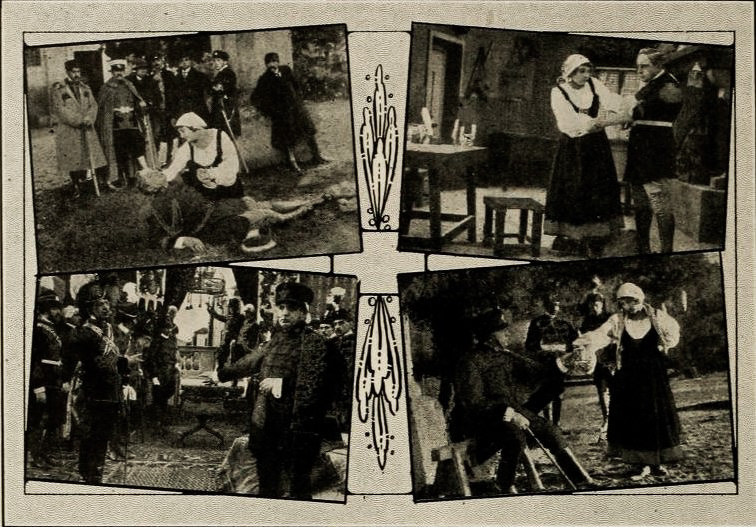
The immediate aftermath of Ludwig’s death is a maelstrom of unforeseen circumstances. Almost simultaneously, news arrives of the King’s passing, leaving a sudden void at the pinnacle of Gravania’s power structure. In a moment of audacious opportunism, or perhaps desperate self-preservation, Enrico makes a fateful decision: he dons the Prince’s uniform and steps into the vacant role, passing himself off as the new monarch. This act of usurpation, born out of a chaotic confluence of events, thrusts Enrico into an unimaginable position. He is now the “Royal Imposter” not just in disguise, but in dominion. The discovery of Ludwig’s body, grotesquely misidentified as the deceased servant Enrico, further complicates the already treacherous situation. The blame for the supposed murder of the servant falls squarely upon the shoulders of the newly crowned “servant-king,” creating a precarious foundation for his reign. The cabinet, ever watchful and acutely aware of the fragility of power, swiftly convenes, their suspicions aroused by the purported regicide. Their decision to orchestrate the downfall of this new, seemingly scoundrelly king highlights the cynical pragmatism of those who truly hold the reins of authority, a stark reminder of the Machiavellian machinations that often underpin royal courts, much like the intricate political maneuverings depicted in historical epics such as Karadjordje or Charles IV, where the throne is a constant battleground.
Enrico’s ambition, initially perhaps a desperate means to an end, begins to consume him. The allure of the crown, the power it bestows, and the sudden elevation from servitude to sovereignty must be intoxicating. Yet, beneath the gilded facade, his heart yearns for authenticity, for the simple love he shared with Valerie. This internal conflict between the trappings of power and the call of true affection forms a compelling psychological core for the character. He makes the fateful decision to seek out Valerie, not merely to reunite with her, but to declare his true identity, to shed the burdensome mantle of the imposter and reclaim his self. This act, intended as a liberation, instead becomes his undoing. The chief of police, ever vigilant and perhaps sensing the inherent instability of the new regime, has laid a meticulous trap. The paths to Valerie’s home, once a sanctuary of their love, are now a carefully guarded snare.
Valerie, with a lover’s unerring instinct, immediately recognizes Enrico despite his royal garb. Her attempt to aid his escape is a testament to her enduring loyalty, a final, desperate act of defiance against the forces closing in. But the web of deceit and ambition, once spun, proves inescapable. The guards are too numerous, the escape routes too well-sealed. Enrico, the servant who briefly wore a prince’s crown, falls victim to the very ambition that propelled him to such dizzying heights. His story is a poignant exploration of identity’s mutable nature and the crushing weight of circumstance. It echoes the tragic heroism found in narratives like The Leap of Despair, where protagonists face insurmountable odds born from their own choices or the cruel hand of destiny. The film doesn't offer easy answers; instead, it forces us to confront the uncomfortable truth that sometimes, even the most noble intentions can lead to the most catastrophic outcomes.
The narrative’s strength lies in its relentless momentum and the palpable tension it generates. Each twist and turn feels earned, each consequence a logical, albeit tragic, extension of the characters’ choices and the societal structures they inhabit. One can almost feel the oppressive weight of the palace, the whispers of conspiracy, and the desperate yearning for freedom. The visual storytelling, even when imagined through the lens of early cinema, must have been profoundly impactful, relying on strong performances and clear emotional beats to convey the intricate plot. The contrast between the opulent, yet morally bankrupt, royal settings and the humble, sincere world of Enrico and Valerie is a recurring motif, highlighting the vast chasm between the classes and the inherent injustices that permeate such a rigid social order. This stark juxtaposition underscores the film's underlying critique of aristocratic privilege and the corrupting influence of absolute power.
Furthermore, The Royal Imposter compels us to consider the very nature of kingship. Is it a matter of birthright, or a performance? If a servant can convincingly embody a prince, what does that say about the institution of royalty itself? Enrico’s brief reign, however fraught with peril, implicitly challenges the legitimacy of inherited power. He is, for all intents and purposes, a more morally upright individual than the prince he replaces, yet his claim to the throne is deemed illegitimate, not because of his character, but because of his origin. This philosophical undercurrent elevates the film beyond a mere melodrama, imbuing it with a thought-provoking depth that resonates with modern sensibilities. It subtly asks: what truly makes a leader worthy of their position? Is it bloodline or character, tradition or capability? The cabinet’s swift decision to dispose of the “scoundrelly” king, based on a misattribution of guilt, further highlights the hypocrisy and self-serving nature of power dynamics, where truth is often secondary to political expediency. This intricate web of intrigue and mistaken identity could easily find a companion piece in the labyrinthine plots of films like On the Trail of the Spider Gang or Stuart Webbs: Das Panzergewölbe, where deception and hidden motives drive the narrative forward.
The film's tragic conclusion, with Enrico falling victim to his own ambition, is both inevitable and heartbreaking. It's a testament to the idea that some fates, once set in motion, are inescapable. His desire to be both king and true to his love proved to be an impossible duality. The story doesn’t shy away from the harsh realities of its world, offering no easy redemption or miraculous escape. Instead, it delivers a powerful, albeit somber, message about the dangers of living a lie, the corrupting influence of power, and the devastating impact of societal inequalities. The final scene, with Valerie’s desperate, futile attempt to save her beloved, leaves an indelible mark, solidifying the film’s status as a profound and affecting drama. It's a narrative that, despite its period setting, speaks volumes about timeless human struggles: the yearning for authenticity, the perils of social climbing, and the enduring power of both love and ambition. In its exploration of mistaken identity and the unraveling of a carefully constructed deception, it shares thematic threads with works like The Pursuit of the Phantom, where the boundaries of self are constantly challenged and ultimately broken. The Royal Imposter, therefore, stands as a compelling and richly layered work, a poignant reminder of the intricate dance between fate, choice, and the masks we wear, or are forced to wear, in the grand, often unforgiving, spectacle of life.
IMDb —
1919
Community
Log in to comment.