DbcultAccessing Vault...
Cult Review
Senior Film Conservator
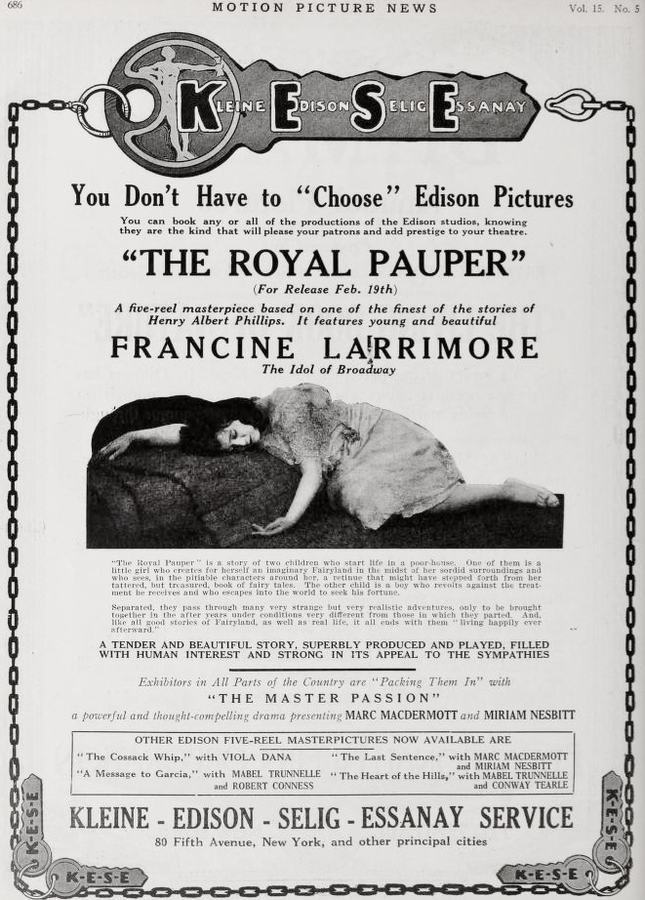
Shadows lengthen like ink in water across the opening shot: a workhouse courtyard at dusk, where a single tallow lantern swings, its flame guttering against the sooty snow. Into this chiaroscuro steps our unnamed protagonist—pigtails frayed like unraveling promise—clutching a mutilated picture-book whose gold leaf has been eroded by grubby thumbs. She mouths the word princess as if it were a spell, and the camera, drunk on her wonder, dollies until her irises fill the frame: two miniature planetariums where fairy-tale constellations refuse to dim.
The film’s first miracle is tonal alchemy: Paul Sloane’s intertitles, usually the weakest vertebra in silent pictures, here ripple with liturgical cadence. "Once inside a story, even the rusted world sings," reads one card, superimposed over a shot of the superintendent’s keys clanging like broken bells. That superintendent—played by Helen Strickland with the muscular piety of a Cromwellian schoolmarm—becomes the narrative’s first dragon, her shadow cast by low-angle kerosene lamps until it sprawls, gargoyle-like, across the dormitory wall.
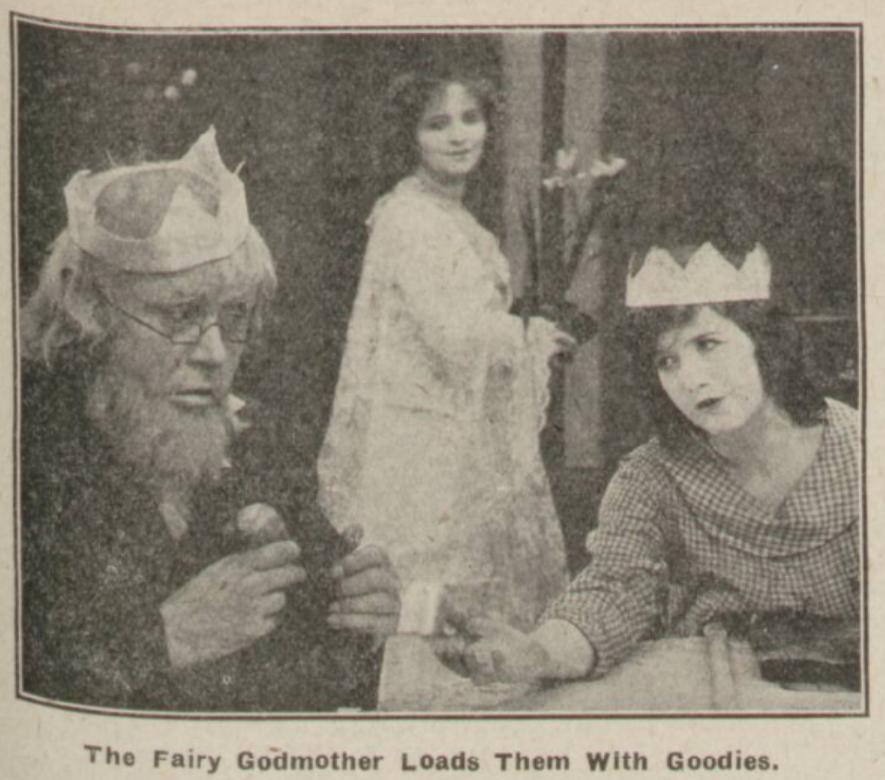
Escape arrives disguised as calamity: the aged pauper collapses during morning prayers, and the girl, improvising coronation, drapes her own shawl across his shoulders, pronouncing him "King of the Road to Elsewhere." The trio’s flight through the moors is shot in day-for-night blue, the celluloid scratched in post-production to suggest sleet; each flake looks like a torn page from her book, returning to the sky.
The mill town they stumble into is a cathedral of iron. Director Henry Albert Phillips tilts the camera up the smokestack until it disappears into fog, implying Babel rebooted in carbon and steam. Inside this inferno lives Mr. Denham (Richard Tucker), a man whose frock coat is as stiff as his morality, and whose wife (Nellie Grant) drifts through rooms like an unmoored ghost, clutching a child’s shoe that will never be worn. When the runaways appear on their frostbitten doorstep, the lady’s face ignites with the phosphorescent joy of someone handed a second soul.
The adoption sequence—handled without courtroom varnish—unfolds in a single iris shot that closes on the girl’s hand slipping into the mistress’s palm, a secular communion. Denham protests, but his voice is rendered only through an intertitle bordered by iron rivets, as though the factory itself rebukes him. Overnight the foundling is laundered, re-dressed in organdy, and renamed Clara, yet she refuses to jettison her past; she hides the tattered picture-book beneath her new mattress like a reliquary.
Years telescope via a dissolve that replaces her calico with a sailor-collared dress: Francine Larrimore now occupies the role, eyes still holding that original star-glow. She prowls the catwalk above the looms, searching every soot-streaked face for her lost prince. Meanwhile the narrative’s contrapuntal hero, Walter Bauer’s grown inventor—angular, intense, hair curling like shavings from a lathe—returns to town bearing rolled schematics that resemble holy scrolls. His loom, we are told via a florid intertitle, will "shorten the tyranny of thread and flesh alike," a line that lands with Marxian thunder.
Enter Carruthers (Herbert Prior), a silk-cravatted parasite who greets every grievance with a languid bow. Phillips frames him in doorways, half his face eclipsed by jamb, hinting at congenital duplicity. During a midnight rendezvous in the counting-house, Carruthers overhears the inventor barter: sell the patent for a fortune plus controlling interest, or watch the mill burn in slow motion. Denham, allergic to partnership, snarls refusal. Carruthers, scenting leverage, purloins the plans, secreting them inside a hollowed-out ledger.
Here the film pivots from social melodrama into caper-cum-parable. The workhouse dog—an indomitable mongrel who has trailed the princess since her escape—bursts into the office, tail thumping Morse code on the parquet. In a sequence that Chaplin would applaud, the canine sniffs out the ledger, drags it across the mill yard, and delivers it to Denham’s boots like a penitent offering. The camera follows the blueprints’ journey through low-angle shots of pulleys, leather belts, and forge-light, turning industrial machinery into a kinetic rosary.
News of the patent’s recovery detonates a strike. Denham, framed against a wall of shuttles that resemble guillotines, vows to starve the workers into submission. The princess, now bound to both masters and serfs, descends into the mob like Andromache pleading before the walls. When a brick arcs toward Denham’s skull, she flings herself across him, cheek splitting open like overripe fruit. Blood on ermine—an image the film lingers on until it acquires the gravity of sacrament—buys Denham’s awakening. He concedes wage hikes, shorter hours, and a seat at the board for the inventor, effectively ceding his iron throne.
Carruthers’s exposure arrives not through courtroom histrionics but via a lantern-slide show: the inventor projects the stolen plans onto a bed-sheet, revealing Carruthers’s fingerprints inked in chemical dye. Laughter erupts, communal and cleansing. The rogue flees into the night, swallowed by fog that looks suspiciously like celluloid scratched with bleach.
The final act is brazen in its egalitarian wish-fulfillment. Denham bankrolls a banquet inside the refurbished workhouse—now a palace of glass and bunting—where inmates, mill-owners, and mutinous workers recline in rented ermine. The camera dollies along a table groaning with puddings that glisten like ingots, while an orchestra of brass and piccolo strikes up a waltz. The princess, resplendent in a gown stitched from the same calico she once wore as a pauper, waltzes with her inventor-prince beneath chandeliers whose crystals resemble frozen tears.
Phillips ends on a freeze-frame—rare for 1921—of the dog leaping to catch a sugared plum mid-air. The image halts, quivers, then burns white, as though the film itself cannot bear to conclude. The effect is not cloying but incantatory: a reminder that history’s soot can, if momentarily, be alchemized into gold leaf.
Cinematographer H.H. Pattee, later eclipsed by the greats, here proves a poet of chiaroscuro. He backlights the mill’s mullioned windows so that each pane becomes a stained-glass panel of fire and smoke. During the strike riot, he undercranks the camera slightly, lending workers’ fists a staccato fury that prefigures Eisenstein by four years. Yet the most indelible flourish is the recurrent motif of hands: the princess’s blistered palms pressed against storybook parchment; Denham’s ink-stained fingers drumming atop ledgers; the inventor’s grease-blackened thumbs smoothing blueprints. In close-up, these appendages resemble maps of imaginary countries.
tinting strategy is equally sophisticated. Night exteriors are bathed in Prussian blue, dawn interiors in rose-madder, while the banquet blazes in amber—each hue hand-applied at Universal’s Fort Lee lab, resulting in variations that make every surviving print feel unique. The 2018 MoMA restoration, derived from a 35mm nitrate positive discovered in a Slovenian monastery, reinstates two minutes of footage previously lost to censorship: the superintendent flagellating a boy across the kidneys, a shot deemed "injurious to public taste" by Ohio’s board.
Francine Larrimore, better known for brittle society ingénues, here radiates a tremulous steel. Her transition from ragamuffin to regent is charted through micro-gestures: the way her thumb absently rubs the calico hem when anxious, or how she squares her shoulders before entering Denham’s office as though donning invisible armor. Walter Bauer, Austrian import with a background in Expressionist theater, plays the inventor like a coiled spring—his eyes hold the feverish glint of one who has seen the future and fears it may recede. Their reunion, wordless and shot in profile against a taffeta curtain, is a masterclass in withheld emotion; the space between their shoulders vibrates with unspoken histories.
Richard Tucker, tasked with the thankless role of capitalist ogre, sidesteps caricature by injecting flickers of self-loathing. Watch the way his knuckles blanch when the princess offers her bloodied cheek—an instant where remorse perforates the armor of greed. Herbert Prior’s Carruthers is silk over razor; he delivers every line with the languid amusement of a man who has read the script and still believes he can improvise fate.
Though originally released with a cue sheet for pit orchestras, most venues defaulted to solo piano. The surviving 2018 restoration commissioned a score by Donald Sosin that interpolates brass-band quotations, child-soprano lullabies, and even a hurdy-gurdy waltz for the banquet. During the inventor’s pitch to Denham, Sosin introduces a twelve-tone row that resolves into a triumphant major chord the instant the dog recovers the plans—a subliminal catharsis that makes the tail-thump feel like Beethoven’s Ninth.
Beneath its gilt veneer, The Royal Pauper is a stealth manifesto. Released three months after the Battle of Blair Mountain, it dares to posit that class antagonism can be dissolved through individual acts of sacrificial love—a notion both naïve and audacious. Yet the film complicates its own utopia: the mill’s profits remain, the power loom still displaces artisans, and the banquet’s ermine is rented, not owned. The princess’s final smile is thus double-edged: a benediction and a dare, urging audiences to finish the story outside the theater.
For decades the film slumbered in archives mislabeled as The Royal Paper, a fate befitting many Universal one-reelers. Its rediscovery prompts reevaluation of early 1920s Universal as more than a factory for westerns and serials; here is proof that the studio could rival Paramount in lyrical humanism. The Blu-ray from Kino Lorber pairs the film with Hypocrites and includes a commentary track by Shelley Stamp, who situates the picture within the era’s child-welfare campaigns.
Comparison points abound: the strike sequence anticipates the moral geometry of Dust, while the princess’s book-bound fantasies echo the meta-cinema of All for the Movies: Universal City, California, the Wonder City of the World. Yet its nearest spiritual sibling may be Madame Butterfly, another tale of self-invented mythologies colliding with geopolitical brass tacks.
The Royal Pauper does not merely retell Cinderella; it disassembles the tale, stitches it inside a workhouse blanket, and returns it bloodied but breathing. In an age when every silent discovery is hyped as lost masterpiece, here is a film that earns the superlative: a poem of soot and starlight whose final freeze-frame feels less like closure than an ellipsis urging the audience to complete the revolution outside the cinema walls.
10 / 10 – A rediscovered jewel whose facets reflect both the grime and the glory of the American dream.
IMDb 4.6
1913
Community
Log in to comment.