DbcultAccessing Vault...
Cult Review
Senior Film Conservator
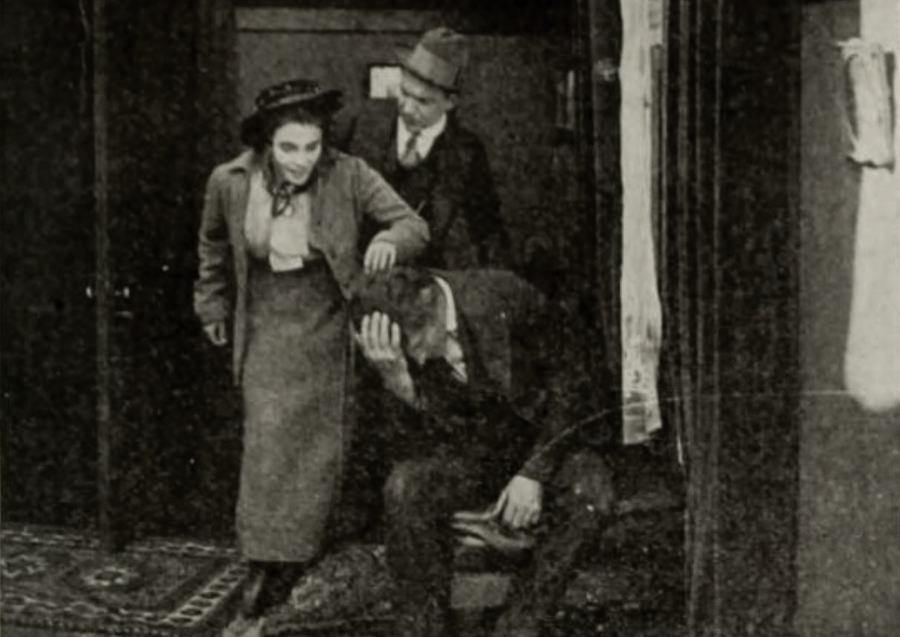
From the shadowy corridors of early 20th-century American cinema emerges a compelling narrative, a testament to the enduring power of human fallibility and the arduous journey toward redemption. 'The Rummy,' a 1921 silent film directed and written by Wilfred Lucas, is far more than a simple melodrama; it's a stark, unflinching look at the corrosive effects of pride, the fragility of trust, and the societal prejudices that can derail lives. While its title might suggest a lighthearted romp, the film delves into the profound complexities of character and circumstance with an intensity that belies its era, cementing its place as a significant piece of cinematic history worthy of contemporary re-evaluation.
Our story commences in the dispassionate setting of a night court, a tableau vivant of urban despair and legal minutiae. Here, a seasoned newspaperman, whose name, though unvoiced, carries the weight of his profession, is plying his trade, seeking the grist for tomorrow's headlines. His world, ostensibly ordered by facts and deadlines, is abruptly thrown into disarray by the arrival of a woman, played with poignant vulnerability by Pauline Starke, brought before the bench on a prostitution charge. The film, through subtle glances and the silent language of early cinema, conveys an immediate, almost primal, connection between them. There's an unspoken recognition, a spark that transcends the squalid circumstances of her arrest. This initial encounter, fraught with the potential for scandal and social ostracization, instead blossoms into an unexpected romance, culminating in a rapid, almost impulsive, marriage. The reporter, convinced of her innocence despite the damning accusation, sees beyond the superficial judgment, a testament to his burgeoning love and perhaps, a touch of his own idealistic nature. It's a bold move for the era, marrying a woman tarnished by such a public charge, highlighting the reporter's defiance of societal norms and his profound belief in her purity.
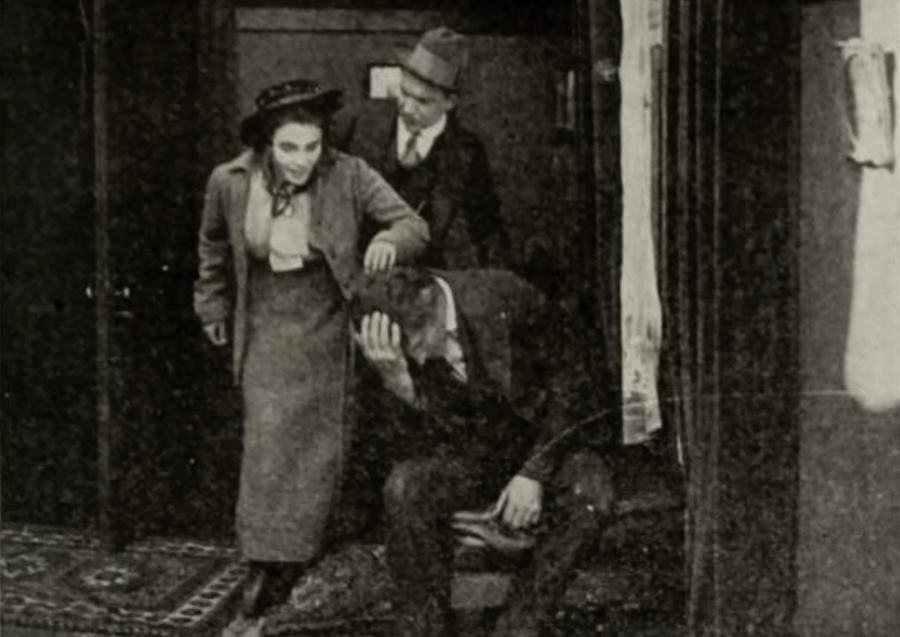
The fragile edifice of their newfound happiness, however, is destined for a brutal demolition. In a scene designed to extract maximum dramatic impact, the reporter discovers his wife in a compromising position with Dan O'Sullivan, the very publisher who signs his paychecks. The visual shorthand of silent film, often relying on exaggerated gestures and stark framing, here serves to amplify the shock and betrayal felt by the protagonist. O'Sullivan, embodying the corrupting influence of power, is portrayed by an actor whose very presence exudes a predatory menace. The wife, frantic and desperate, attempts to explain, asserting that she was lured to O'Sullivan's room under false pretenses and fought valiantly against his advances. Her pleas, however, fall on deaf ears. The reporter, whose earlier conviction of her innocence was so absolute, now finds himself utterly consumed by a virulent cocktail of wounded pride, jealousy, and a crushing sense of personal failure. His trust, once unwavering, shatters into a thousand irreparable pieces. This pivotal moment is a masterclass in silent film acting, with the reporter's face contorting through a gamut of emotions from disbelief to rage to profound despair. His inability to reconcile his wife's explanation with the visual evidence he witnessed speaks volumes about the societal expectations placed upon women, the ease with which their word could be dismissed, and the destructive power of a man's ego. This sequence, in its raw emotionality, resonates with the thematic undercurrents found in other dramas of the period, such as The Sin of a Woman, where female characters often find themselves at the mercy of male judgment and societal condemnation, regardless of their true culpability.
The immediate consequence of this catastrophic misunderstanding is a complete rupture. The reporter, unable to reconcile his internal conflict, abandons his wife, choosing instead a path of self-destruction. His once-promising career as a newspaperman rapidly unravels, replaced by the numbing embrace of alcohol. The film charts his descent into the throes of alcoholism with a stark realism that, for a silent film, is remarkably impactful. We witness his physical deterioration, the loss of his job, and the social ostracization that accompanies his new, self-inflicted identity. The portrayal of addiction, while perhaps lacking the overt psychological depth of later cinematic works, effectively conveys the devastating cycle of dependence and despair. His once sharp intellect dulls, his journalistic drive evaporates, and he becomes a specter of his former self, haunted by the ghost of his lost love and the gnawing doubt of his own hasty judgment. This period of his life is a harrowing illustration of how quickly one's foundations can crumble when emotional stability is compromised. It echoes the themes of personal downfall and the corrosive nature of unchecked vices seen in films like His Last Dollar, where characters grapple with the consequences of their choices and the harsh realities of their self-inflicted predicaments. The film doesn't shy away from depicting the ugliness of his new existence, emphasizing the profound cost of his pride and his refusal to truly listen to the woman he claimed to love.
Just as the reporter seems irrevocably lost to the depths of his despair, a potent catalyst emerges: a lead on a pervasive graft story, intricately linked to the very man who orchestrated his downfall, Dan O'Sullivan. This is where the film skillfully pivots from a personal tragedy to a compelling narrative of investigative journalism and righteous vengeance. The reporter, once a shadow of his former self, finds a renewed sense of purpose, a burning desire not just for professional vindication but for personal justice. His journalistic instincts, dulled by drink, begin to resurface with a ferocious intensity. He meticulously uncovers the layers of corruption surrounding O'Sullivan, demonstrating a keen intellect that had merely been dormant. The pursuit of this story becomes his lifeline, pulling him from the abyss. It’s a powerful exploration of how a sense of purpose, even one born from vengeance, can ignite a path to recovery. As he delves deeper into O'Sullivan's illicit dealings, the narrative cleverly intertwines his professional quest with his personal redemption. This storyline, of a wronged individual using their skills to expose corruption, is a timeless trope, but 'The Rummy' imbues it with a raw, emotional core. The stakes are not just professional; they are existential. The film builds suspense as the reporter inches closer to discrediting O'Sullivan, knowing that success means not only bringing down a powerful figure but also potentially uncovering the truth about his own past.
The climax of his investigation yields more than just incriminating evidence against O'Sullivan; it serendipitously unearths irrefutable proof that his wife had, indeed, been telling him the truth all along. The discovery, presented without overt fanfare but with immense emotional weight, serves as a devastating blow to his hardened pride and a profound vindication for his long-suffering wife. The film handles this moment with a delicate touch, allowing the audience to feel the full impact of the reporter's belated realization. The shame, regret, and overwhelming sense of injustice he must feel are palpable. This revelation paves the way for a deeply moving reconciliation. The scene of their reunion, stripped of dialogue but rich with expressive acting, conveys the profound relief, forgiveness, and renewed hope that blossoms between them. It is a testament to the enduring power of love and the possibility of overcoming even the most grievous betrayals. His wife, who endured years of undeserved scorn and abandonment, demonstrates an extraordinary capacity for forgiveness, a characteristic that elevates her beyond a mere plot device. The film suggests that true love, when rediscovered and reaffirmed, possesses the power to heal the deepest wounds. This resolution is not merely a happy ending; it's a hard-won triumph of truth over prejudice and understanding over blind judgment. It's a narrative arc that, in its journey from disillusionment to enlightenment, echoes the redemptive qualities found in stories of spiritual or moral awakening.
With the truth unveiled and his wife's innocence unequivocally proven, the reporter's journey toward complete redemption accelerates. He decisively abandons his reliance on alcohol, embracing a life of sobriety with a renewed vigor that mirrors his investigative prowess. This commitment to sobriety is portrayed not as a sudden, miraculous cure but as a conscious, determined choice, fueled by the rediscovery of his wife's love and his own reclaimed integrity. Furthermore, his professional fortunes experience a remarkable resurgence. The very skills that led to O'Sullivan's downfall now propel him to greater heights. He secures an even more prestigious newspaper position than the one he had previously lost, signifying a complete restoration of his reputation and career. This dual triumph—personal and professional—serves as the film's ultimate message of hope and the potential for second chances. It underscores the idea that true success is not merely about external accolades but about internal peace and moral rectitude. The ending is not a simplistic 'happily ever after' but a hard-earned conclusion, one that acknowledges the pain endured but celebrates the resilience of the human spirit. It leaves the audience with a sense of satisfaction, seeing a character who has traversed the depths of despair emerge stronger, wiser, and more complete, having learned invaluable lessons about judgment, forgiveness, and the unwavering pursuit of truth.
The performances in 'The Rummy' are a crucial component of its enduring appeal. Pauline Starke, as the unjustly accused wife, delivers a portrayal of quiet dignity and desperate vulnerability. Her eyes, in particular, convey a depth of emotion that transcends the absence of spoken dialogue, making her pleas for understanding heartbreakingly resonant. William H. Brown, as the tormented reporter, navigates a complex emotional landscape, transitioning from idealistic lover to embittered drunkard to determined truth-seeker with compelling conviction. His physical transformation throughout the film, from sharp-suited journalist to disheveled alcoholic, is a powerful visual metaphor for his internal decay and subsequent rebirth. Wilfred Lucas, serving as both writer and director, demonstrates a keen understanding of dramatic pacing and character development. His dual role likely contributed to the seamless integration of narrative and visual storytelling. The film's reliance on intertitles is judicious, providing necessary exposition without overwhelming the visual narrative. The cinematography, while perhaps not groundbreaking for its era, effectively uses light and shadow to enhance the mood, particularly during the reporter's descent into alcoholism and the clandestine nature of O'Sullivan's corruption. The thematic resonance of 'The Rummy' extends beyond its immediate plot. It's a commentary on the power dynamics within early 20th-century society, particularly concerning gender roles and the vulnerability of women to male authority and societal judgment. It also touches upon the ethics of journalism, the corrupting influence of power, and the redemptive potential of truth. In its exploration of these timeless themes, 'The Rummy' stands as a compelling example of silent cinema's capacity for profound storytelling, proving that a lack of spoken words does not equate to a lack of voice or emotional impact. It's a film that speaks volumes through its imagery and the raw power of its human drama, inviting audiences to reflect on the nature of truth, the burden of pride, and the enduring hope for forgiveness and second chances.
'The Rummy' might not be as widely celebrated as some of its silent film contemporaries, but its narrative potency and the depth of its character arcs ensure its lasting relevance. It serves as a stark reminder of the social injustices prevalent in its time, particularly the precarious position of women in a patriarchal society, easily condemned by rumour and circumstantial evidence. Yet, it also champions the enduring human capacity for resilience, forgiveness, and the tireless pursuit of justice. The film’s exploration of alcoholism as a destructive force, and its eventual overcoming, remains a powerful message. Its portrayal of investigative journalism as a tool for both personal and societal redemption resonates strongly, especially in an era where the integrity of the press is constantly scrutinised. Wilfred Lucas's ability to weave together a complex tapestry of personal tragedy, societal critique, and ultimate triumph within the confines of silent film is commendable. 'The Rummy' is a testament to the fact that compelling storytelling transcends technological limitations. It speaks to universal themes of trust, betrayal, pride, and the arduous path to redemption, making it a valuable piece for both film historians and contemporary audiences interested in the roots of cinematic drama. Its conclusion, one of hard-won peace and restored dignity, offers a powerful, hopeful counterpoint to the initial despair, solidifying its status as a poignant and thought-provoking cinematic experience that continues to echo with relevance today.
IMDb —
1919
Community
Log in to comment.