DbcultAccessing Vault...
Cult Review
Senior Film Conservator
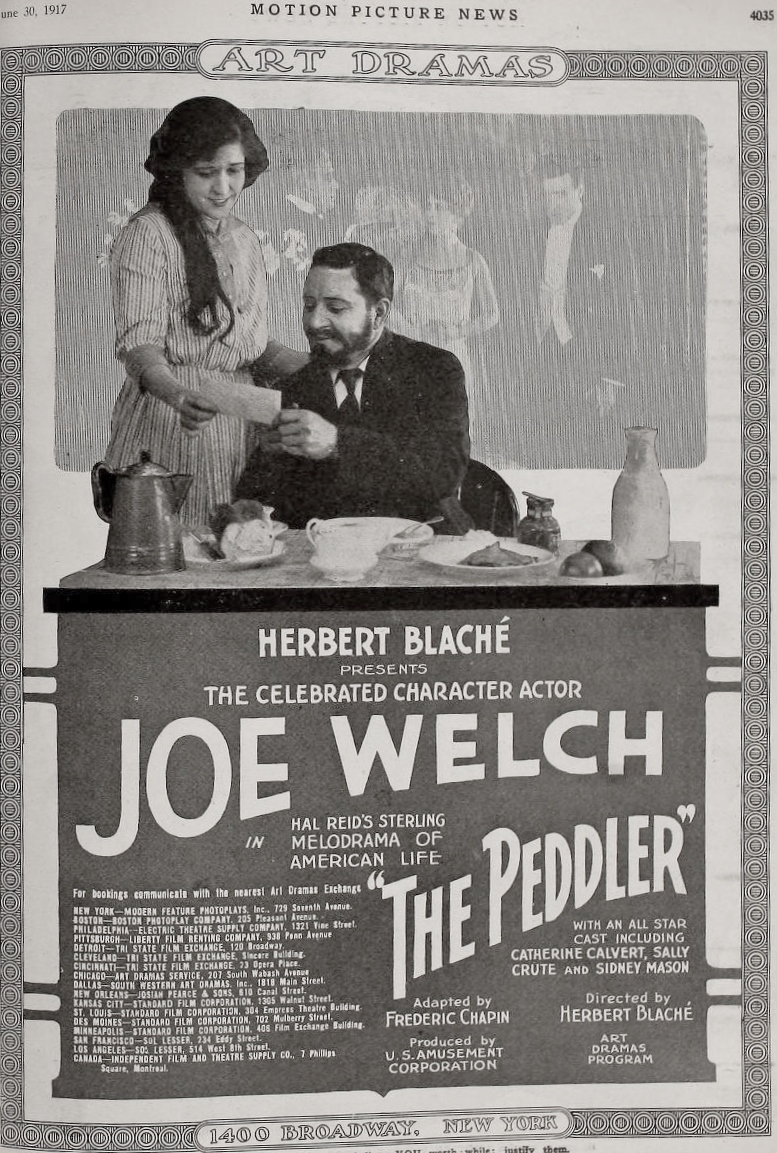
The first time we meet Abraham Jacobs, the camera drowns him in a tide of anonymous feet—soldiers, farmers, drifters—yet his face, framed by a battered derby, refuses to dissolve. That obstinate visage is silent cinema’s riposte to every Ellis-Island cliché: here is a Jew who will not be liquefied into melting-pot abstraction.
Director Frederick Chapin, best remembered for one-reel society trifles, suddenly discovers the patience of a Talmudic scholar. He holds a static shot as Abraham counts copper coins on a scarred counter, allowing the metallic chatter to become a secular liturgy. Each penny is a syllable in a name the world keeps mispronouncing. When the pile finally towers high enough to purchase a moth-eaten storefront, the iris-in feels like resurrection—except the grave clothes are second-hand overcoats exhaling camphor and someone else’s exile.
Enter Sonny, played by Sidney Mason with the lax swagger of a man who trusts the ground will always rise to meet his shoes. Sonny’s moral arithmetic is simple: if desire outruns cash, requisition the future. The safe-cracking sequence unfolds in a chiaroscuro that anticipates 1940s noir: a single candle guttering, shadows jitter-bugging across Hebrew lettering on a charity pushke. When the iron door yawns, it exhales not just banknotes but the acrid stench of filial sacrilege. Chapin cuts to an exterior shot of the father’s coat rack—empty hooks trembling like a synagogue quorum minus its tenth man.
Contrast this with He Who Gets Slapped, where Lon Chaney’s betrayal is painted in circus rouge. Here the palette is drab, the wound deeper for being invisible. The son does not merely steal; he erases the hyphen between generations, turning immigrant striving into vapor.
Years elide in a dissolve so prolonged it feels like a geological epoch. A derrick punctures the sky above Abraham’s inherited pasture, and black nectar geysers into a sky already greasy with soot. Overnight, the peddler swaps sackcloth for a fur-collared coat, yet the garment hangs on him like a foreign passport. Joe Welch—vaudeville veteran whose eyes can toggle between Borscht-belt mirth and Ashkenazi melancholy in one blink—lets the camera read every contradiction: the hand that once bartered needles now signs contracts; the mouth that haggled over kopeks now tastes caviar and finds it briny with ancestral tears.
Inside the nouveau-riche parlor, Mary—Kittens Reichert in a performance of porcelain restraint—plays piano variations on “Eli, Eli” while oil-baron investors puff cigars. The moment is Chapin’s answer to the belle-époque salons in The Extraordinary Adventures of Saturnino Farandola, except here the opulence is radioactive, every gilded frame haunted by the hollow clink of coins once stored in a peddler’s pouch.
When Sonny slinks back, the film risks bathos: rain-soaked, hat brim floppy, he resembles every penitent husband in every melodrama from Drugged Waters to Sealed Lips. Yet Chapin sabotages sentiment by staging the reunion in the kitchen, amid cabbage smell and scullery steam. Abraham, ladling borscht, does not drop the ladle; instead he offers a bowl, as if betrayal were an ingredient he learned to digest long ago. The scene’s emotional torque lies in its refusal to torque: forgiveness is not thunderclap but sediment.
Sarah—Catherine Calvert’s housekeeper with cheekbones sharp enough to slice cholent—becomes the hinge upon which repentance pivots into covenant. Her marriage to Sonny is no romantic reward but a communal safeguard: the wayward soul will be monitored by a woman whose ethics were honed over washtubs and Sabbath candlesticks. When the canopy is raised, Abraham’s eyes glisten with something beyond joy—call it historical fatigue finally allowed to sit down.
Photographer Jules Cronjager—later to lens Daughter of Maryland—works here with a stock so insensitive it demands sunlight, yet he turns limitation into lithograph. Interior scenes are staged near windows, the outside world blown out into pure white, creating halos around heads like medieval illuminations. Note the shot where Abraham first fingers the oil deed: the parchment glows while his face recedes into under-exposed gloom, a literalization of wealth as secular providence eclipsing mortal visage.
Intertitles, penned by Chapin with the concision of Yiddish aphorism, deserve anthology status. When Sonny exits after the theft, the card reads: “He took the coins that sang of tomorrow and left only the echo.” Try finding that in An Amateur Orphan.
Contemporary exhibitors often paired the film with live violin improvisations based on “Oyfn Pripetshik.” The match is uncanny: the melody’s circling motifs echo Abraham’s trudging circuit, while the minor-key lift at the refrain mirrors the film’s final, cautious uplift. Archival accounts describe audiences in Brownsville tenements weeping openly when the fiddler, at the exact frame of Sonny’s return, modulated into major, as if the scale itself were adopting the prodigal.
Mary’s adoption subplot, often dismissed as sentimental filler, functions as the film’s ethical gyroscope. She is the outsider-insider, a non-Jewish daughter who learns to daven through sheer osmosis of goodness. Compare her to Kitty in The Marriage of Kitty, whose rebellion is aristocratic prerogative. Mary’s obedience is not submissiveness but stewardship of memory; she insulates Abraham from the corrosions of both poverty and wealth.
Mrs. Morgan, the mistress, remains off-screen after the theft—a hole in the narrative that critics still spar over. Was Chapin squeamish about portraying a sexually autonomous woman? Or does her absence critique the disposable role of gentile femininity in immigrant upward-mobility tales? The lacuna festers like an unlanced boil, giving the film’s moral universe a jagged edge smoother films such as A Woman’s Awakening sand away.
Economics in The Peddler operate on a triadic symbol: pennies (labor), oil (fortune), marriage (covenant). Each conversion demands a blood sacrifice—first the mother’s death, then the son’s exile, finally the father’s pride. Only when all three currencies have circulated does the narrative allow stasis. It’s a moral schema more Talmudic than Christian: redemption is not granted but negotiated through transactional acts of memory.
Joe Welch’s Abraham channels the luftmensch archetype—man whose head stays in study while feet slog through muck—yet avoids caricature. Watch the micro-shift when he first feels oil grease under fingernails: shoulders square, pupils dilate, not with avarice but with ancestral disbelief that the earth beneath Jews could yield anything but pogroms. The moment lasts three seconds and contains an entire historiography.
Sidney Mason’s Sonny channels no such depth; he is all surface glint, by design. His performance ages badly in the mirror of viewer sympathy, yet that shallowness is the character’s essence: a man who mistakes the world’s outer gloss for durable substance. In the penultimate shot, as he lifts the wedding veil, his eyes flick toward the camera—half-smirk, half-sob—acknowledging that the audience knows him better than he knows himself.
Trade papers in 1920 praised the film’s “racial authenticity,” a backhanded epithet signaling both fascination and marginalization. Variety sniffed that the story “rambles like an old-country folktale,” inadvertently complimenting its ethnographic orality. Modern scholars locate the film within the khazones tradition—cantorial cinema that sings the diaspora into coherence.
Compared to Heimgekehrt, a German variant of homecoming soaked in expressionist angst, The Peddler feels Shtetl-realist, its shadows earthbound rather than metaphysical. Yet both films share the post-war suspicion that return is never possible, only renegotiation.
The surviving 35 mm print, held by the Library of Congress, suffers from nitrate shrinkage in reel three, causing the wedding scene to jitter like a bride’s pulse. A 4K scan circulated among archivists in 2022; fingers crossed for a Blu-ray paired with Fatherhood or The Cave Man, two other Welch vehicles languishing in rights limbo.
Screen it at home via digital projector, volume low enough to hear floorboards creak—those ambient ghosts are part of the experience. Pair with tsimmes and a dry Riesling; let the sweetness cut the film’s latent salt.
The last image—Abraham dozing in a rocking chair while family silhouettes blur into background murk—free-frames before fade-out, as if the celluloid itself were loath to relinquish the dignity it has wrested from history. Ninety minutes earlier we watched a peddler count pennies; now we witness a patriarch counting breaths, each exhale a small coin of gratitude dropped into the universe’s vast, indifferent purse. The film ends, but the accounting never does.
IMDb —
1919
Community
Log in to comment.