DbcultAccessing Vault...
Cult Review
Senior Film Conservator
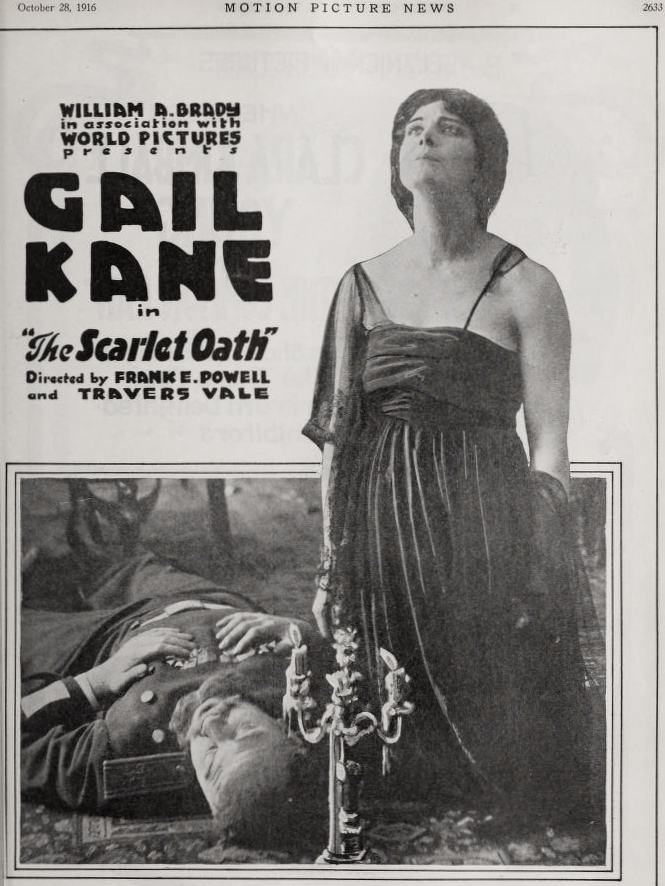
The cinematic landscape of the early 20th century often served as a canvas for grand narratives, sweeping epics that wrestled with profound moral and political questions. Among these, The Scarlet Oath emerges as a particularly potent and complex work, a silent film that dares to delve into the brutal heart of Nihilism, personal sacrifice, and the labyrinthine consequences of mistaken identity. Far from a simple potboiler, this is a meticulously crafted tragedy, a testament to the era's capacity for intricate storytelling, even without the aid of spoken dialogue. It commences with a scene of harrowing desperation: Ivan Pavloff, a man broken by the Russian police state's persecution that claimed his wife, flees his homeland. His two infant twin daughters, Olga and Nina, are his sole companions, his last vestiges of hope as they embark on a perilous journey across the ocean, seeking the elusive promise of freedom in America. The very premise sets a tone of relentless struggle, mirroring perhaps the plight of countless immigrants and political exiles of the time. The weight of their past, the specter of Tsarist tyranny, casts a long shadow over their nascent dreams.
During the arduous sea voyage, a chance encounter irrevocably alters the course of the Pavloff family's destiny. Mr. and Mrs. Victor Karenin, wealthy Russians returning from a European tour, cross paths with the struggling Nihilist. The Karenins, having recently endured the crushing loss of their own child abroad, find solace in the innocent charm of little Nina. Mrs. Karenin, in particular, develops a profound attachment, an emotional lifeline extended in a moment of mutual vulnerability. This seemingly benign connection blossoms into a life-altering proposition upon their arrival in America. When Pavloff, despite his fervent ideals, struggles to secure employment in the harsh new world, he turns to the Karenins for aid. Their offer is both a lifeline and a severance: they propose to adopt Nina, to raise her as their own. It is a decision born of destitution and a desperate paternal love, a choice that cleaves the twin sisters' lives into two starkly divergent paths. One, Olga, remains tethered to her father's revolutionary fire; the other, Nina, is granted the gilded cage of privilege, shielded from the brutal realities that forged her lineage.
Twenty years elapse, a silent testament to the enduring chasm between the sisters. Ivan Pavloff, far from abandoning his cause, has ascended to a position of prominence within the American Nihilist movement, his fiery rhetoric finding expression as a celebrated writer. His daughter, Olga, now a formidable and educated woman, stands by his side, assisting him in his unwavering crusade. Their lives are steeped in the clandestine world of revolution, a stark contrast to the trajectory of Nina. It is through the mundane medium of a newspaper that Olga uncovers a startling revelation: her sister, Nina, is engaged to John Huntington, a man intimately connected with the State Department in Washington. The irony is palpable; one sister, a beacon of anti-establishmentarianism, the other, poised to marry into the very fabric of the establishment. This discovery ignites a new urgency in Pavloff's heart. He is swayed to return to the treacherous soil of Russia, to assist in the long-planned destruction of Savaroff, the Chief of Police, the very architect of his wife's demise and his family's initial tragedy. The following day, in a scene dripping with solemnity, Olga and her father bind themselves to a scarlet oath: a vow of vengeance for their mother's death. To ensure their mission's success, they choose separate routes, a tactical decision to guarantee that even if one falls, the other might yet reach Russia and fulfill their shared, terrible promise. This desperate gamble underscores the depth of their commitment, a bond forged in shared grief and revolutionary zeal, a stark echo of the sacrifices depicted in a film like Mother o' Mine, where maternal devotion drives extreme actions, albeit in a different context.
The narrative deftly weaves between these two worlds. While Olga and Pavloff are preparing for their perilous return to Russia, John Huntington, in America, receives an appointment to a diplomatic post in Warsaw. Eager to cement his future with Nina, he pleads with Mr. Karenin to permit their immediate marriage. However, Karenin, perhaps with an air of paternalistic control or genuine concern for his wife's health, objects. He insists that Mrs. Karenin embark on a European tour for her well-being, demanding Nina's accompaniment, promising his consent to the marriage only upon their return. This deferral, seemingly innocuous, sets in motion a chain of events that will have devastating consequences. A few weeks later, Huntington, receiving final confirmation of his appointment, sails for Warsaw, unknowingly leaving Nina vulnerable to the unfolding drama across the continent. The separation of lovers due to duty or familial obligation is a classic trope, but here, it serves as a crucial cog in the machinery of fate, paving the way for the intricate web of mistaken identities that defines the film's climax.
In Russia, the revolutionary plot accelerates. At a clandestine meeting of the Nihilists, held within the shadowy confines of the Lamond Chateau, final arrangements are meticulously laid for the assassination of Savaroff, the detested Chief of Police. The tension is palpable, the air thick with the weight of impending action. But the walls have ears; one of Savaroff's ubiquitous spies infiltrates the meeting, promptly relaying the crucial intelligence to his master. The consequences are immediate and brutal. Soldiers, a grim tide of state power, raid the chateau, overwhelming the revolutionaries. In the ensuing chaos, Pavloff and Olga, the father and daughter bound by their scarlet oath, are captured. The scene shifts to a chilling tableau of interrogation and torture. Savaroff, a figure of icy cruelty, attempts to extract the Nihilists' secrets from Pavloff, employing horrifying 'death rays' – a terrifying, futuristic device that speaks to the era's fascination with scientific dread. Yet, Pavloff, a man of unwavering conviction, refuses to yield, his silence a defiant testament to his cause. It is then that Savaroff's gaze falls upon Olga. Struck by her beauty, he offers a diabolical bargain: her father's life in exchange for a night with her. In a moment of unbearable moral agony, Olga, her soul torn between purity and filial love, consents. This agonizing decision, a profound act of self-sacrifice, mirrors the tragic choices often found in melodramas like The Heart of a Child, where innocence is often bartered for survival or love.
The scene of Olga's sacrifice is rendered with a stark, almost operatic intensity. She is taken to Savaroff's opulent home, awaiting his arrival, her heart a maelstrom of despair and grim determination. While there, a cruel twist of fate intervenes. She overhears a hushed conversation between Savaroff's secretary and the Assistant Prefect of Police, a conversation that shatters her already fragile world: her father, Ivan Pavloff, is dead. The bargain was a lie, his promise a cruel deception. When Savaroff enters, brazenly lying about her father's recovery, a cold fury settles upon Olga. Pretending to embrace his advances, she seizes a knife and, in a swift, brutal act of vengeance, slays him. This climactic moment, a visceral explosion of long-simmering rage and betrayal, is the heart of the scarlet oath fulfilled. Miraculously, Olga escapes unmolested, a testament to Savaroff's arrogant instructions to his guards to permit her free passage. She makes her way to the Bristol restaurant, the prearranged rendezvous point for her Nihilist comrades, seeking solace and a path to safety.
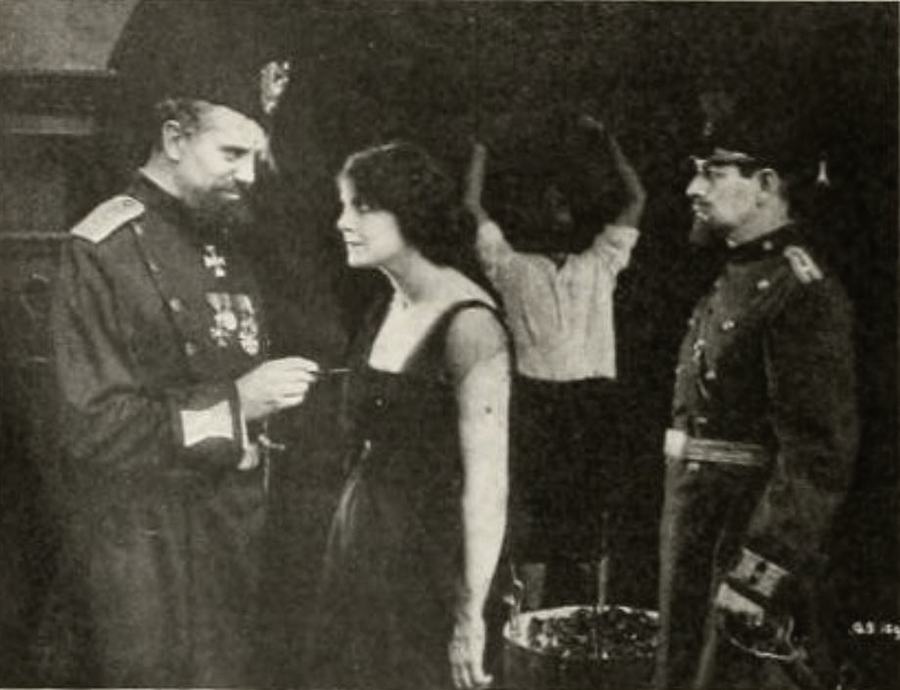
The narrative's brilliance truly shines in its intricate dance of mistaken identities, a device that elevates it beyond a mere revenge thriller. The very same evening, John Huntington, having arrived in Warsaw to commence his diplomatic duties, seeks leisure at the Bristol restaurant. It is here that Olga recognizes him as her sister's fiancé. A desperate, audacious plan forms in her mind: if she can convince him of her perilous situation, he might aid her escape to America. The universe, it seems, conspires in her favor. Huntington, spotting her, mistakes her for Nina, knowing his fiancée is somewhere in Europe. He rushes over, his heart full of eager greeting. Instantly, Olga seizes the opportunity, allowing him to believe she is Nina, constructing an elaborate façade of innocent reunion. This pivotal misidentification, a stroke of pure, desperate genius on Olga's part, becomes her ticket to freedom. Together, under the guise of reunited lovers, they escape to America, unwittingly carrying the seeds of further confusion and danger. This dramatic irony, where a man's love for one woman inadvertently saves her identical sister, is a powerful engine for the plot, reminiscent of the elaborate deceptions in films like The Crown Prince's Double, though with far more dire personal stakes.
Meanwhile, in Paris, the real Nina and her mother, having failed to locate Huntington, decide to return to America before the holidays, oblivious to the swirling vortex of danger that now surrounds them. The police in Warsaw, however, are relentless in their pursuit of Olga, dispatching detectives across Europe. Petrovitch, a Russian police spy, arrives in Paris and, in a cruel twist of fate, mistakes Nina for Olga. Consumed by a desire to avenge his cousin Savaroff, he resolves to follow her to America. Simultaneously, Amazov, a detective from Hamburg who had lost Olga's trail, also proceeds to America, driven by his duty to locate the fugitive. The stage is set for a grand, tragic confrontation on American soil, with multiple parties pursuing the wrong twin, each with their own agenda, their own understanding of justice or vengeance. The film masterfully builds this suspense, relying on the visual power of identical appearances to create a sense of impending doom for the innocent Nina.
The thematic richness of The Scarlet Oath lies in its unflinching exploration of sacrifice, identity, and the elusive nature of justice. Olga's journey is one of profound self-abnegation, her initial sacrifice of virtue followed by the ultimate act of vengeance, all in the name of a familial and ideological oath. Her actions, while brutal, are framed within the context of a tyrannical state, inviting the audience to grapple with the moral ambiguities of revolutionary violence. The film posits that freedom often demands a terrible price, a concept echoed in other socially conscious films of the era like The Girl of Today or For barnets skyld, which often explored the plight of individuals against larger societal forces. The recurring motif of mistaken identity serves not merely as a plot device but as a potent metaphor for the blurred lines between perception and reality, between who one is and who one is perceived to be. Nina, living a life of comfort, is thrust into mortal danger not by her own choices, but by the shadow of her sister's revolutionary past. The film asks: can one truly escape their origins, or are we forever bound by the choices of our bloodline? The performances, particularly Gail Kane as the twins and Montagu Love as the menacing Savaroff, must have been pivotal in conveying these complex emotional and moral landscapes in the silent era, relying on exaggerated gestures and facial expressions to communicate the internal turmoil.
The narrative’s resolution, though tinged with the bittersweet, offers a powerful, if stark, commentary on the consequences of such a life. As the intricate web of mistaken identities unravels on American soil, the film culminates in a tragic denouement. The real destroyer of Savaroff, Olga, ultimately pays the penalty for her actions. This implies either her capture, a judicial reckoning, or perhaps a final, ultimate sacrifice that brings her journey to its inevitable, somber close. Her story, a blazing comet of vengeance and selflessness, extinguishes itself, leaving a void. Yet, amidst this sorrow, a fragile hope emerges: Nina and her beloved John Huntington are finally reunited, finding their eternal happiness. This dual resolution, one tragic and the other triumphant, underscores the film's complex moral framework. It suggests that while revolutionary fervor and personal vengeance carry a heavy price, the innocent caught in the crossfire may yet find peace. The film, penned by Gardner Hunting and Frederic Kulz, exhibits a profound understanding of dramatic structure, building suspense through carefully orchestrated revelations and escalating stakes. The performances by Montagu Love, Philip Hahn, Boris Korlin, Gail Kane, Lillian Paige, Carleton Macy, and Alan Hale, though now viewed through the lens of a bygone cinematic era, undoubtedly contributed to its powerful emotional resonance. The Scarlet Oath stands as a compelling artifact, a testament to silent cinema's enduring power to tell stories of profound human struggle, sacrifice, and the relentless pursuit of both justice and love, even in the face of insurmountable odds. It is a film that lingers, its scarlet hues of passion and bloodshed indelibly etched onto the canvas of its era.

IMDb —
1919
Community
Log in to comment.