DbcultAccessing Vault...
Cult Review
Senior Film Conservator
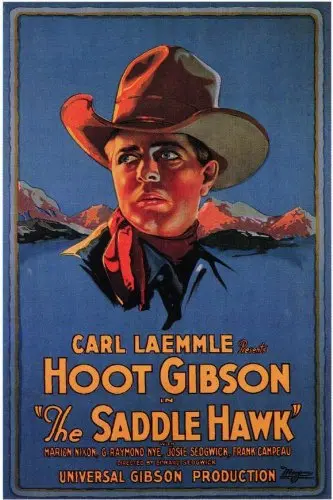
Short answer: yes, but with significant caveats. "The Saddle Hawk" is worth watching today for devoted enthusiasts of silent cinema and Western historians keen on understanding the genre's formative years. It is decidedly not for casual viewers accustomed to modern narrative pacing or those who find the conventions of early 20th-century filmmaking too alienating.
This film, a product of 1925, offers a fascinating glimpse into the nascent stages of Hollywood's most enduring genre, showcasing both its raw charm and its inherent limitations. While it might not resonate with everyone, its historical significance and the sheer audacity of its silent storytelling deserve a closer look.
The Western genre, arguably America's most iconic cinematic export, has always been steeped in myth and rugged individualism. "The Saddle Hawk" stands as a testament to these foundational ideals, presenting a narrative that, while simple by today's standards, was likely thrilling in its era. Directed by Edward Sedgwick, a prolific filmmaker whose career spanned the silent era into talkies, the film embodies many of the tropes that would define the genre for decades to come: the lone hero, the damsel in distress, the vengeful outlaw, and the stark, unforgiving landscape.
Yet, to approach "The Saddle Hawk" as one would a contemporary film is to miss its point entirely. It is a time capsule, a grainy window into a period when cinema was still finding its voice, relying on exaggerated gestures, dramatic intertitles, and the audience's willingness to fill in the auditory blanks. This isn't just a film; it's a historical artifact demanding a different kind of engagement, a more patient, analytical gaze.
The film's strength lies not in its groundbreaking originality, but in its confident execution of established formulas, proving that even early narratives could grip an audience with familiar archetypes. It's a reminder that sometimes, the comfort of the known is exactly what a story needs.
At its core, "The Saddle Hawk" tells the story of Ben Johnson (Fred Humes), a sheepherder who, quite amusingly, despises his own livelihood. This small detail, introduced early on, immediately imbues Ben with a touch of relatable, working-man cynicism, making him more than just a stoic hero. His reluctance to embrace the pastoral life hints at a spirit destined for greater adventure, a common trait for Western protagonists.
His initial mission to escort the beautiful Rena Newhall (Josie Sedgwick) to her father's ranch is the inciting incident, a seemingly innocuous task that quickly unravels into a classic abduction scenario. Rena's capture by Zach Marlin (G. Raymond Nye) isn't random; it's a calculated move orchestrated by Buck Brent (Frank Campeau), an outlaw seeking vengeance against Rena's father, Jim Newhall (Charles K. French), for a past imprisonment.
This setup, while standard, effectively establishes the stakes. Ben's subsequent decision to infiltrate Brent's gang by posing as an outlaw is where the narrative truly finds its stride. It's a bold move, requiring a suspension of disbelief, but one that allows for dynamic character development and narrative tension. Humes, through his physical performance, sells this transformation from reluctant shepherd to daring spy, even if the intertitles do most of the heavy lifting in explaining his motivations.
The sequence where Ben participates in the cattle rustling, all while secretly planning his capture to gain Newhall's trust, is a particularly clever plot device. It showcases a protagonist who isn't just brawny but also cunning, a refreshing departure from the purely righteous heroes often seen in early cinema. This strategic intelligence elevates Ben beyond a simple rescuer, painting him as a true tactician.
The plot's progression, from deception to exposure and ultimately to a climactic rescue, is remarkably fluid for a film of this vintage. The writers, Edward Sedgwick and Raymond L. Schrock, craft a story that, despite its occasional reliance on convenient coincidences, maintains a propulsive energy. The final chase, with Ben pursuing Marlin and Rena, is a thrilling conclusion, solidifying Ben's heroism and, predictably, winning Rena's affection.
Edward Sedgwick's direction in "The Saddle Hawk" is a masterclass in silent film efficiency. He understands the visual language necessary to convey complex emotions and fast-paced action without dialogue. The film's pacing, often a challenge for modern viewers accustomed to rapid cuts and CGI spectacles, is surprisingly consistent, balancing moments of exposition with bursts of action.
Sedgwick employs wide shots to emphasize the vastness of the Western landscape, particularly during the cattle rustling scenes and the climactic chases. This not only grounds the narrative in its setting but also highlights the isolation and danger inherent in frontier life. The cinematography, while not groundbreaking, is competent, effectively using natural light and simple compositions to tell the story.
Consider the scene of Rena's abduction by Zach Marlin. Sedgwick doesn't dwell on gratuitous violence but uses quick cuts and the actors' frantic movements to convey the suddenness and brutality of the act. The visual shorthand is clear: danger is immediate, and the hero's intervention is desperately needed. This economy of storytelling is a hallmark of good silent film direction.
The sequence where Ben infiltrates Brent's gang is also noteworthy. Sedgwick carefully stages the interactions, allowing the audience to see Ben's cautious integration into the group. There's a particular shot where Ben, having joined the outlaws, subtly observes their leader, Brent, a moment that visually communicates his internal conflict and strategic intent. It's a quiet moment, but impactful in its ability to reveal character and plot progression without a single spoken word.
While the film doesn't boast the artistic flourishes of a Griffith or a Murnau, Sedgwick's approach is pragmatic and effective. He prioritizes clarity and narrative drive, ensuring that even without sound, the audience is always aware of who, what, where, and why. This functional yet engaging style makes "The Saddle Hawk" a solid entry in the early Western canon.
The success of any silent film hinges almost entirely on its actors' ability to convey emotion and intent through physicality and facial expressions. Fred Humes, as Ben Johnson, delivers a performance that, while occasionally broad, is undeniably charismatic. He embodies the classic Western hero – rugged, resourceful, and ultimately noble.
Humes' transformation from the sheep-hating shepherd to the daring outlaw is a testament to his stage presence. His posture and stride shift, projecting confidence and a hint of menace when he's undercover. When he's about to be killed and is saved by Newhall's posse, Humes' relief and renewed determination are palpable, communicated through a subtle change in his eyes and a tightening of his jaw, rather than an overt display of emotion.
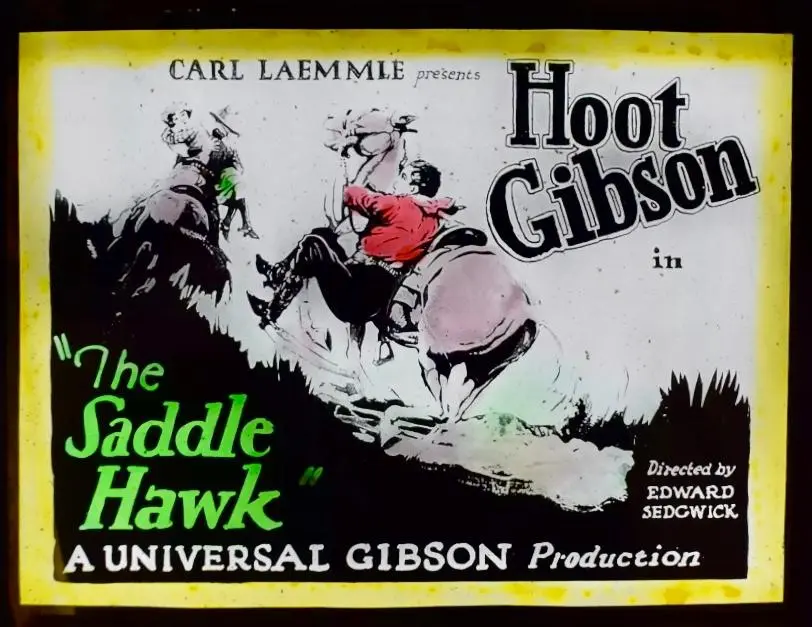
Josie Sedgwick, as Rena Newhall, provides the necessary damsel-in-distress vulnerability, but with a spark of resilience. She isn't merely a passive object to be rescued; her fear and eventual trust in Ben are clearly communicated. Her performance, while adhering to the conventions of the era, avoids becoming overly melodramatic, a common pitfall for female leads in silent films.
G. Raymond Nye, as the villainous Zach Marlin, is particularly effective. His sneering expressions and aggressive physicality make him a genuinely detestable antagonist. In a silent film, a good villain needs to be visually distinct and overtly menacing, and Nye delivers on both fronts. His actions, like the swift abduction of Rena, are sharp and decisive, painting him as a credible threat.
The supporting cast, including Frank Campeau as Buck Brent and Charles K. French as Jim Newhall, also contribute solid performances, etching out their archetypal roles with conviction. While not as nuanced as performances in later eras, they serve the narrative's needs with admirable clarity. One interesting observation is how many silent-era Westerns, like Hitchin' Posts, relied on a core group of actors who could convey a wide range of emotions through physical acting, and "The Saddle Hawk" is no exception, benefiting from this established talent pool.
The pacing of "The Saddle Hawk" is brisk for a silent film, seldom lingering too long on any single scene. This ensures that the narrative maintains momentum, crucial for keeping an audience engaged without the benefit of spoken dialogue or a complex musical score (beyond what would have been played live). The film moves from Ben's initial task to Rena's abduction, Ben's infiltration, the double-cross, the rescue, and the final pursuit with a purpose that belies its age.
The tone is largely adventurous and heroic, with clear distinctions between good and evil. There's a palpable sense of urgency during the chase sequences, which are choreographed with a surprising degree of dynamism. While some silent films can feel ponderous, "The Saddle Hawk" rarely succumbs to this, thanks to Sedgwick's clear vision for action and progression.
The use of intertitles is effective, providing necessary exposition and dialogue snippets without overwhelming the visual storytelling. They are integrated thoughtfully, appearing when crucial plot points or character thoughts need to be explicitly stated. This delicate balance between showing and telling is essential for the silent film experience, and "The Saddle Hawk" manages it well.
A particular moment that highlights the film's pacing is the swift transition from Ben's capture to his convincing Newhall of his good intentions. This could have been a drawn-out affair, but Sedgwick keeps it tight, cutting directly to the critical information exchange, then to Newhall's immediate action, demonstrating a confident command of editing for impact. This efficiency is often overlooked in silent cinema, where a lack of sound could tempt directors to over-explain visually. Sedgwick avoids this trap.
This film works because it embraces the conventions of its genre and era with conviction. It doesn't try to be something it's not, offering a straightforward, action-packed Western story that prioritizes visual storytelling and clear character motivations. The underlying narrative of deception and redemption is timeless.
This film fails because its inherent age and the limitations of silent cinema make it inaccessible to a broad modern audience. The acting, while effective for its time, can appear overly dramatic or simplistic, and the lack of sound or a compelling contemporary score can make sustained viewing a challenge for the uninitiated.
You should watch it if you have a keen interest in film history, particularly the development of the Western genre, or if you are a fan of silent cinema and appreciate the unique artistry required to tell a story without spoken dialogue. It's also suitable for those who enjoy uncovering the foundational elements of beloved genres.
Conversely, if you prefer fast-paced, dialogue-driven narratives, complex character studies, or modern special effects, "The Saddle Hawk" will likely test your patience. It demands a particular kind of engagement, one rooted in historical appreciation rather than immediate gratification.
"The Saddle Hawk" occupies an interesting niche in the early history of the Western. It's not a grand epic like some of the later silent Westerns, nor is it a gritty, revisionist take. Instead, it's a solid, workmanlike example of the genre's bread and butter – a clear-cut story of good versus evil set against a backdrop of wide-open spaces.
It's a film that helped solidify the archetypes that would become synonymous with the Western: the stoic hero, the dastardly villain, the vulnerable yet resilient woman, and the climactic showdown. These elements, while familiar to us now, were still being refined and popularized in the 1920s. The film's uncomplicated moral compass is a hallmark of this era, reflecting a societal desire for clear-cut heroes and villains.
One debatable opinion is that early Westerns like "The Saddle Hawk" often prioritized spectacle and plot mechanics over genuine character depth, creating heroes who were more symbols than complex individuals. While Humes gives Ben Johnson a touch of personality, his motivations are largely external – duty, revenge, and love – rather than an exploration of internal conflict. This isn't necessarily a flaw, but a characteristic of the storytelling prevalent at the time, where the narrative engine was more important than psychological realism.
The film, much like its contemporaries such as Freckles or Adventures of Tarzan (though not a Western, it shares the adventure serial DNA), relies on a straightforward quest structure. It's less about exploring the nuances of frontier life and more about delivering a thrilling adventure. This focus on clear action and visible stakes made these films highly accessible and popular with audiences of the time.
"The Saddle Hawk" is a commendably crafted silent Western that, despite its age, still delivers a coherent and engaging adventure. It's not a film that will revolutionize your understanding of cinema, nor will it likely convert skeptics of silent films. What it offers, however, is a robust example of a genre finding its footing, executed with a confidence that belies the technical limitations of its time.
For those willing to engage with it on its own terms, understanding it as a product of its era rather than judging it by modern metrics, there's genuine enjoyment to be found. It’s a sturdy, foundational piece of American cinema, showcasing the silent heroics and clear-cut morality that captivated audiences almost a century ago. A solid, if not spectacular, ride through the cinematic frontier.
IMDb 6.6
1935
Community
Log in to comment.