DbcultAccessing Vault...
Cult Review
Senior Film Conservator
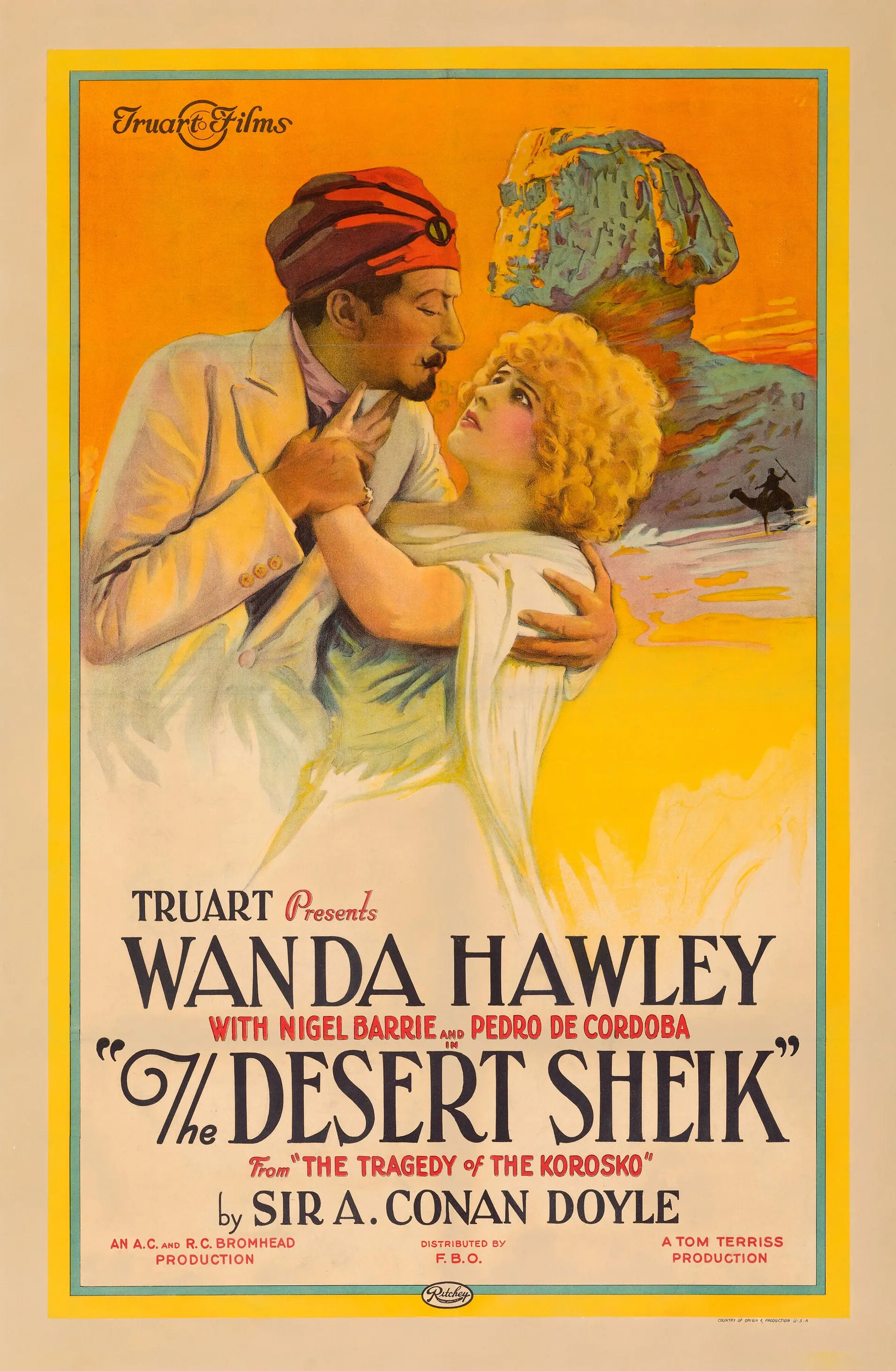
In the pantheon of 1920s cinema, few genres captured the public imagination quite like the 'Sheik' cycle, a movement characterized by its fixation on the exoticism of the Levant and the sweeping vistas of Northern Africa. While many of these films relied on superficial tropes, The Desert Sheik (1924) distinguishes itself through a narrative gravity that borders on the existential. Directed with a keen eye for both the intimate and the immense, this film manages to transcend its contemporary competitors, such as the visually similar The Tents of Allah, by injecting a poignant sense of mortality into its central romance.
The screenplay, a collaborative effort involving the legendary Arthur Conan Doyle, brings a structured tension rarely seen in silent melodramas of this period. Doyle’s influence is palpable in the film’s pacing; there is a methodical unfolding of the plot that mirrors his detective fiction, where every glance and every desert shadow holds a weight of impending consequence. Unlike the more operatic and historically loose Marc'Antonio e Cleopatra, The Desert Sheik feels grounded in the specific geopolitical anxieties of the post-Great War era, where British hegemony in Egypt was both a fact of life and a source of constant friction.
At the heart of the film is a performance by Nigel Barrie as Major Egerton that defies the era's tendency toward overacting. His portrayal of a man living on borrowed time—suffering from a terminal illness while falling deeply in love with Corinne Adams (played with luminous vulnerability by Wanda Hawley)—adds a layer of pathos that elevates the film above mere adventure. Their love is not just forbidden by circumstance or social standing, as seen in Gypsy Love, but by the ultimate arbiter: death itself. This subtext transforms their Cairo flirtations into a desperate grab for life, making the subsequent desert tragedy feel like a cruel joke of fate.
"The desert is not merely a setting here; it is a psychological landscape where the characters' internal struggles are mirrored in the harsh, unforgiving topography of the dunes."
Visually, the film is a triumph of location scouting and lighting. The transition from the bustling, crowded markets of Cairo to the silent, suffocating emptiness of the Sahara is handled with a mastery of contrast. The cinematography captures the heat haze and the shifting sands with a clarity that rivals the work in Ashoka, though the tone here is far more claustrophobic. When the Bedouin tribe attacks, the action is chaotic and terrifying, eschewing the choreographed grace of contemporary swashbucklers for something more visceral and frightening.
The sequence where the women are captured and Egerton is left for dead serves as the film’s emotional and narrative pivot. Here, the 'fate worse than death' trope—a common anxiety in colonial literature—is utilized to ramp up the tension to an almost unbearable degree. The audience is forced to sit with the helplessness of the characters, a feeling reminiscent of the mounting dread in The Greatest Question, though the scale here is significantly more epic.
The supporting cast provides a sturdy framework for the central drama. Pedro de Cordoba brings a magnetic, albeit menacing, presence to the desert sequences, while the inclusion of Stewart Rome and Edith Craig ensures that even the secondary characters feel like fully realized individuals with their own stakes in the survival of the party. The direction manages to balance these multiple perspectives without losing sight of Corinne’s plight, a feat of editing that many modern blockbusters fail to achieve.
When placed alongside films like Smiling Jim or the lighthearted Beaches and Peaches, The Desert Sheik feels like a somber meditation on the fragility of human connection. It lacks the whimsical charm of Johanna Enlists, opting instead for a gritty realism that was quite progressive for 1924. Even when compared to the patriotic fervor of Britain's Bulwarks, this film’s portrayal of the British military is more complicated, focusing on the individual’s sacrifice and physical decline rather than institutional might.
The film’s climax—a race against time as the British troops mobilize—is a masterclass in cross-cutting. The desperation of the soldiers, the terror of the captives, and the flickering life of the Major are woven together in a sequence that predates the sophisticated action editing of later decades. It shares a certain DNA with the rescue tropes of $1,000 Reward, but the stakes feel infinitely higher due to the established emotional depth of the protagonists.
In the final analysis, The Desert Sheik is much more than a period-piece curiosity. It is a work that captures the zeitgeist of the early 20th century—a time of exploration, colonial romanticism, and a burgeoning realization of the world's vastness. It doesn't rely on the easy resolutions of Casey at the Bat or the domestic simplicity of Os Fidalgos da Casa Mourisca. Instead, it leaves the viewer with a lingering sense of the ephemeral nature of joy.
The film’s ability to evoke such strong emotional responses nearly a century after its release is a testament to the vision of its creators. While some might find the 'fate worse than death' narrative dated, when viewed through the lens of historical context and the brilliant performances of Barrie and Hawley, it remains a potent piece of cinema. It stands alongside The Fourth Musketeer as a prime example of how genre conventions can be bent to serve a more profound thematic purpose. For those willing to look past the surface-level tropes of the 1920s, The Desert Sheik offers a rewarding, if melancholic, journey into the heart of the desert and the human soul.
Final Verdict: A sophisticated blend of romance and peril that remains one of the most compelling entries in the silent era's Orientalist canon. Essential viewing for fans of Arthur Conan Doyle and early 20th-century adventure.
IMDb 6
1934
Community
Log in to comment.