DbcultAccessing Vault...
Cult Review
Senior Film Conservator
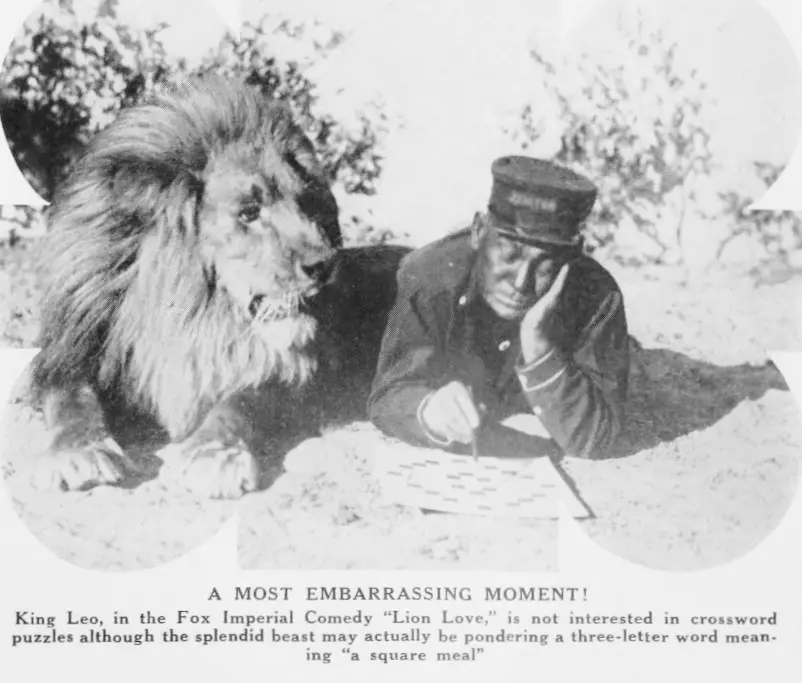
Is The Scientific Husband worth watching today? Short answer: yes, but with significant caveats that speak to the evolving nature of comedy itself.
This film is primarily for ardent silent comedy enthusiasts, film historians, and those curious about the foundational elements of slapstick; it is decidedly NOT for viewers seeking modern comedic sensibilities or deep narrative engagement.
Early silent comedies often present a unique challenge for modern audiences, but The Scientific Husband offers a clear lens through which to appreciate its era. It works, in its own peculiar way.
This film works because of its audacious commitment to physical comedy and the sheer novelty of its central gags, particularly the animated household, which, for its time, was a marvel of practical effects and comedic timing.
This film fails because its humor is deeply rooted in a repetitive, almost relentless pursuit of a single gag structure, lacking the character development or narrative sophistication that even some contemporary shorts were beginning to explore.
You should watch it if you appreciate the raw, unadulterated energy of early slapstick and are willing to overlook a thin plot for moments of genuine, if dated, visual spectacle.
Stepping back into the nascent days of cinema, particularly the riotous world of early 20th-century slapstick, requires a certain recalibration of expectation. The Scientific Husband, a Sunshine Comedy short, is less a narrative journey and more a relentless assault of two distinct, yet intertwined, comedic premises. It's a testament to the era's fascination with mechanical contrivances and the timeless appeal of a man in peril.
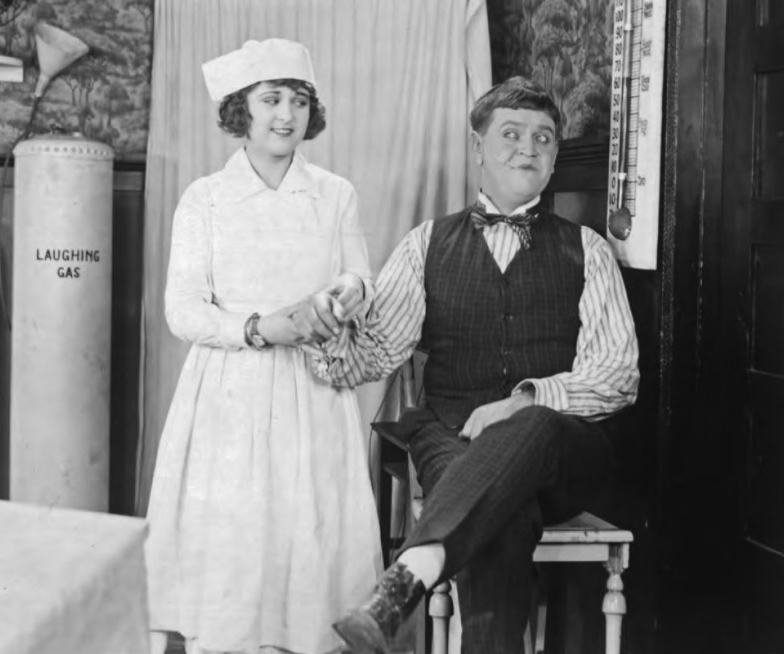
The film's premise is deceptively simple, almost childlike in its directness. We are introduced to a domestic setting, ostensibly the domain of the 'scientific husband' Fred Spencer, where the very furniture seems to possess a mischievous, almost sentient, life. Tables and chairs, far from being inert objects, are prone to sudden, violent spasms, often triggered by what appears to be ambient electrical phenomena or, perhaps, the sheer will of an unseen comedic force.
The true genius, or perhaps the most enduring curiosity, of The Scientific Husband lies in its twin comedic engines. First, there's the 'mechanical house,' an invention that predates smart homes by a century but exhibits a similar, albeit more chaotic, sense of automation. Watching chairs hop around the room or tables dance on their own accord is, even today, a strangely hypnotic experience. It speaks to a primitive yet effective use of practical effects and clever set design, a precursor to the elaborate visual gags that would define later silent comedies.
The second, and arguably less inspired, gag involves Fred Spencer's constant pursuit by a lion. This is a comedic trope as old as time, a simple device to inject immediate peril and physical comedy. While effective in its simplicity, it lacks the inventive spark of the animated furniture. It's a stark contrast between a novel, almost surreal domestic disruption and a more conventional, albeit still amusing, 'man vs. beast' scenario. The film's central conceit is that these two distinct threats operate in tandem, creating a never-ending cycle of frantic evasion for our beleaguered protagonist.
This dual-threat approach, while providing consistent opportunities for physical comedy, also highlights one of the film's most glaring weaknesses: its narrative thinness. There's no real plot beyond the setup and the ensuing chaos. Characters are archetypes, and motivations are purely comedic. Yet, for an early short, this directness was often the point. It wasn't about a story; it was about the laughs, pure and unadulterated.
Fred Spencer, the man at the center of this maelstrom, delivers a performance built entirely on physical exertion and exaggerated reaction. His character, the 'scientific husband,' is less a defined personality and more a human pinball, constantly ricocheting between the threats of his rebellious furniture and the jaws of the persistent lion. Spencer's energy is undeniable, a raw, almost frantic kineticism that drives the film forward.
He doesn't possess the nuanced pantomime of a Charlie Chaplin in The Idle Class, nor the acrobatic grace of a Buster Keaton. Instead, Spencer's style is more akin to the broad, often frenzied movements of early vaudeville performers translated to the screen. His wide-eyed terror and desperate attempts to escape are the primary sources of humor. Every jump, every dodge, every near-miss is amplified for maximum comedic effect, relying on the audience's immediate recognition of physical peril.
One could argue that Spencer's performance is less about acting and more about reacting. He is the canvas upon which the film's gags are painted, his body a vehicle for the escalating absurdity. There's a particular sequence where he attempts to sit down, only for the chair to skitter away, forcing him into an awkward, undignified scramble. These moments, repeated with variations, form the backbone of his comedic contribution. It’s a testament to the sheer stamina required for such roles in the silent era.
While not a performance that delves into psychological depth, it perfectly serves the film's purpose. Spencer is relatable in his exasperation, even if his situation is utterly fantastical. He embodies the everyman caught in an extraordinary, hilariously inconvenient situation. His relentless pursuit of normalcy amidst chaos is the comedic through-line, making him an effective, if one-note, protagonist for this particular brand of Sunshine Comedy.
The uncredited director of The Scientific Husband understands the assignment: deliver laughs, and deliver them quickly. The pacing is relentless, almost breathless. Gags are stacked one upon another, with little downtime for exposition or character development. This is a film that doesn't waste a single frame; if a character isn't reacting to a mechanical chair or fleeing a lion, they're preparing to do so.
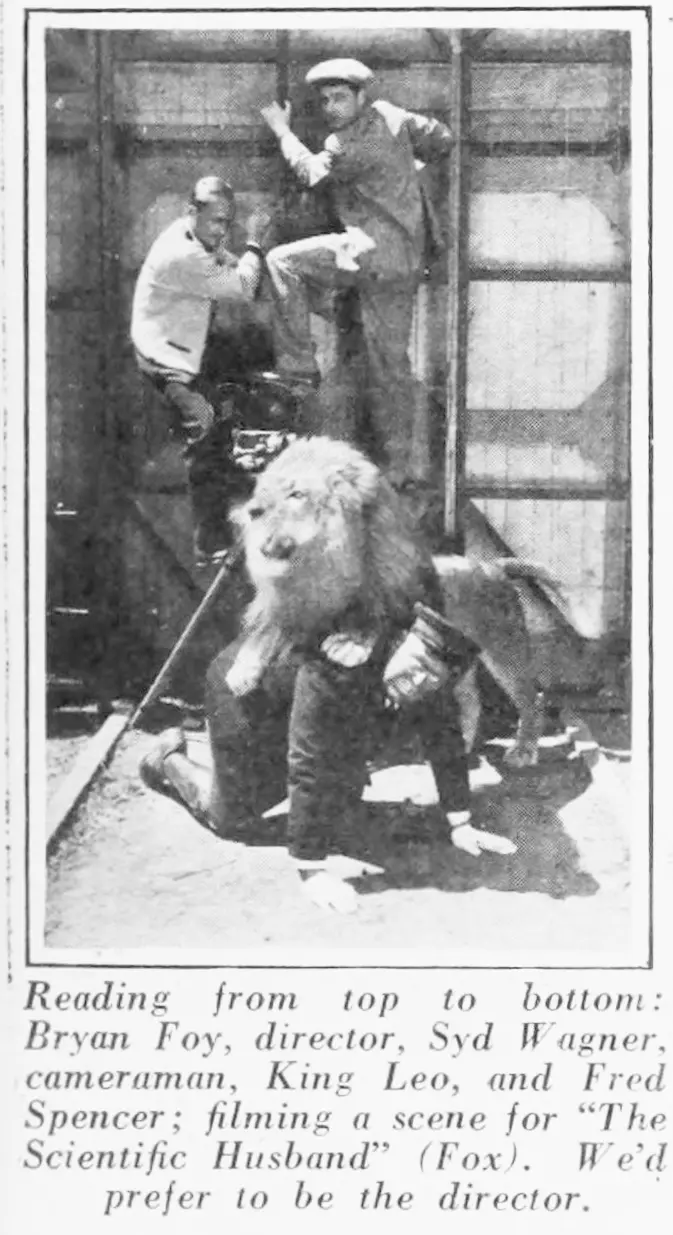
The tone is overtly lighthearted, bordering on the absurd. There's no genuine sense of danger, despite the presence of a wild animal. The lion, much like the furniture, functions purely as a comedic prop, its pursuit more a playful inconvenience than a life-threatening ordeal. This establishes a clear contract with the audience: suspend disbelief and simply enjoy the spectacle of escalating chaos. This approach is reminiscent of other shorts of the era, such as The Hick, where the primary goal was to elicit immediate, visceral reactions rather than build complex emotional arcs.
The orchestration of the mechanical house is particularly noteworthy. The director manages to create a sense of genuine, if comedic, disruption within a confined space. The timing of the furniture's movements, often in direct response to Spencer's attempts to interact with them, demonstrates a keen understanding of comedic rhythm. The cuts are functional, designed to keep the action moving and to emphasize the punchline of each gag.
However, this relentless pacing also contributes to the film's repetitiveness. After the initial novelty of the dancing furniture and the lion's appearance, the subsequent iterations of these gags can begin to feel a little stale. The director could have benefited from a slightly more varied approach or a brief respite from the chaos to allow the humor to breathe. But in the context of early shorts, brevity and intensity were often prioritized over subtlety.
The cinematography in The Scientific Husband is, as expected for a film of its vintage, functional rather than artistic. The camera is largely static, positioned to capture the full scope of the physical comedy unfolding on screen. Wide shots dominate, ensuring that both the mechanical furniture and the lion's pursuit are visible within the frame, allowing the audience to appreciate the choreography of the chaos.
There's a deliberate lack of close-ups, which might seem like a missed opportunity for modern viewers accustomed to more intimate portrayals of emotion. However, in early slapstick, the full body was the instrument of comedy, and wide shots served to emphasize the physical predicament and the spatial relationships between the characters and their environment. We see Spencer's entire frantic dance, his full body contortions as he dodges and weaves.
The lighting is straightforward, illuminating the set clearly to ensure the gags are visible. There are no dramatic shadows or complex compositions; the focus is entirely on clarity and the successful execution of the visual jokes. The practical effects of the furniture moving are captured effectively, relying on simple, yet ingenious, mechanisms that are clear to the eye, even if their exact workings remain a mystery. This unpretentious approach to filmmaking ensures that the comedic intent is never obscured by technical flourishes.
While not groundbreaking in its visual language, the cinematography is perfectly adequate for its purpose. It's a testament to the effectiveness of simple, direct filmmaking in delivering immediate entertainment. The camera is a witness to the unfolding spectacle, a neutral observer that allows the inherent humor of the situation to play out without unnecessary intervention.
The central comedic strategy of The Scientific Husband is repetition. The mechanical house acts up, Spencer reacts. The lion appears, Spencer flees. This cycle repeats throughout the short, building a rhythm of predictable, yet initially effective, gags. For audiences of the era, this consistent comedic pattern was likely a source of reliable amusement, a known quantity in a nascent art form.
However, for a contemporary viewer, this reliance on repetition can feel a bit thin. While the initial surprise of a chair hopping away is genuinely funny, the tenth time it happens, the impact diminishes. This is where the film shows its age, struggling to maintain comedic momentum without evolving its core gags or introducing new elements. Unlike more sophisticated silent comedies that built character and narrative alongside their physical humor, The Scientific Husband leans heavily on its two primary ideas.
One could argue that this very simplicity is its charm. It's pure, unadulterated slapstick, stripped down to its bare essentials. There's an honesty in its directness, a refusal to complicate what is essentially a series of visual jokes. It's a film that knows exactly what it wants to be and executes it without pretense. This makes it a fascinating artifact for studying the foundations of comedic filmmaking, even if it doesn't always provide sustained belly laughs for a modern audience.
In a surprising observation, the film inadvertently explores themes of domestic anxiety and the illusion of control long before surrealist cinema would tackle such concepts head-on. The home, typically a sanctuary, becomes a source of unpredictable terror, a space where the familiar turns hostile. This subtext, however, is likely unintentional, merely a byproduct of the filmmakers' desire for immediate comedic effect rather than philosophical inquiry. It works. But it’s flawed.
For silent film purists and historians, absolutely. It offers a clear, unvarnished look at early comedic filmmaking techniques and the kind of broad humor that captivated audiences a century ago. It’s a valuable piece of cinematic history.
For the casual viewer, it's a tougher sell. The humor is dated, and the narrative is almost non-existent. Without an appreciation for the historical context, its repetitive nature might lead to boredom rather than laughter. It's a curiosity, a snapshot of a bygone era, but not necessarily a universally entertaining experience.
If you enjoy exploring the origins of slapstick and appreciate the ingenuity of early practical effects, give it a watch. If you're looking for something with the narrative depth of Everything But the Truth or the refined character work of later silent comedies, you might find it lacking.
The Scientific Husband is a fascinating, if ultimately limited, glimpse into the foundational years of cinematic comedy. Its commitment to two central, outlandish gags—a rebellious mechanical house and a relentless lion—provides moments of genuine, if broad, amusement. Fred Spencer's frenetic energy is the engine of the film, driving the chaos with admirable stamina. However, its relentless repetition and lack of narrative depth prevent it from achieving the timeless appeal of its more celebrated contemporaries.
It's a film that serves as an excellent historical document, showcasing the raw inventiveness and directness of early slapstick. But as a purely entertaining piece for a modern audience, it requires a generous degree of patience and an appreciation for the context of its creation. It's less a transcendent work of art and more a boisterous, if somewhat one-note, comedic experiment. Watch it for the history, for the sheer audacity of its premise, but temper your expectations for sustained, sophisticated humor. Pure chaos. Simple. Effective. But undeniably flawed.
IMDb —
1933
Community
Log in to comment.