DbcultAccessing Vault...
Cult Review
Senior Film Conservator
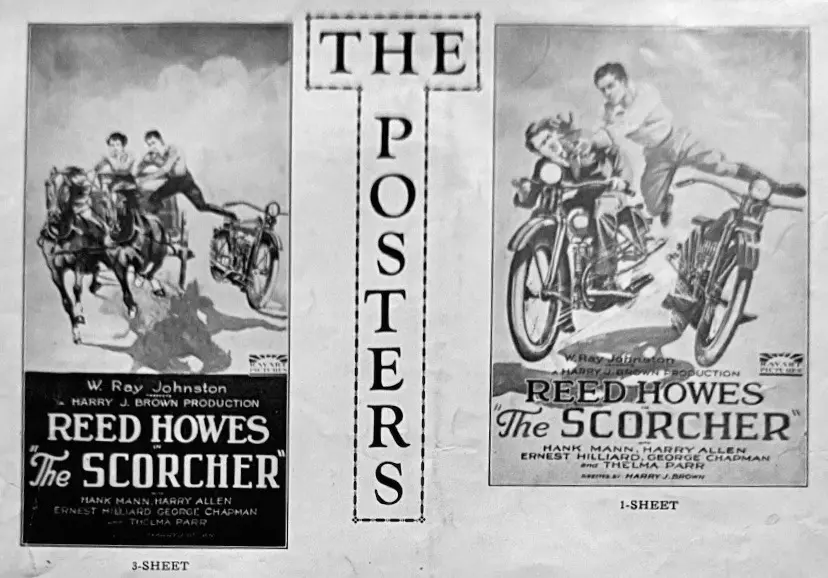
Is The Scorcher a lost relic that deserves a modern restoration? Short answer: No, but it is a fascinating artifact for anyone obsessed with the intersection of early cinema and automotive history. It is a film that functions like the very machinery it depicts—clunky, loud in its silence, and powered by pure, unadulterated grease. This movie is for the silent film completionist and the motorcycle enthusiast who wants to see how speed was sold to the masses in 1927. It is definitely not for those who require narrative nuance or character-driven drama.
This film works because it captures the raw, dangerous energy of early 20th-century racing without the safety net of modern CGI. This film fails because the plot is a skeletal framework designed only to move Mike from one race track to the next, leaving the emotional beats feeling unearned. You should watch it if you want to see Reed Howes at the height of his physical charisma, performing stunts that would make a modern insurance agent weep.
The Scorcher is a film obsessed with the idea of the 'inventor-hero.' In the late 1920s, the American spirit was deeply tied to mechanical innovation. Mike O'Malley, played with a square-jawed intensity by Reed Howes, isn't just a racer; he’s an engineer. This adds a layer of stakes that goes beyond mere ego. When Mike is in his shop, the cinematography lingers on the tools and the metal. One specific scene where Mike handles his prototype fork shows a level of tactile reverence usually reserved for religious icons in films like La virgen de cristal.
The invention itself—a special fork for motorcycles—is the ultimate MacGuffin. We don't really need to know how it works, only that it represents Mike's ticket out of poverty. This trope was common in the era, but here it feels more grounded than the high-society dramas like Lord Saviles brott. Mike’s struggle is a working-class struggle. His hands are dirty. His clothes are stained. It is a refreshing bit of realism in a genre often prone to melodrama.
Reed Howes was often called the 'Advertiser's Dream,' and in The Scorcher, you can see why. He possesses a physical presence that anchors the film. While his acting range in this particular piece doesn't quite reach the heights of the performances in The Misfit Wife, he understands the assignment. He is a man of action. There is a moment during the cross-country race where Mike’s goggles are caked in dust, and he has to wipe them clear while navigating a sharp turn. Howes plays this with a cool, collected confidence that makes the audience believe in his technical prowess.
The supporting cast, however, is a mixed bag. Hank Mann provides the necessary comedic relief, but his routines often feel like they belong in a different movie entirely, perhaps something more akin to The Rat's Knuckles. Thelma Parr, as the sweetheart, is given very little to do other than look concerned from the sidelines. Her role is a checklist item: the prize at the end of the race. It’s a flat characterization that we see far too often in films like Someone Must Pay.
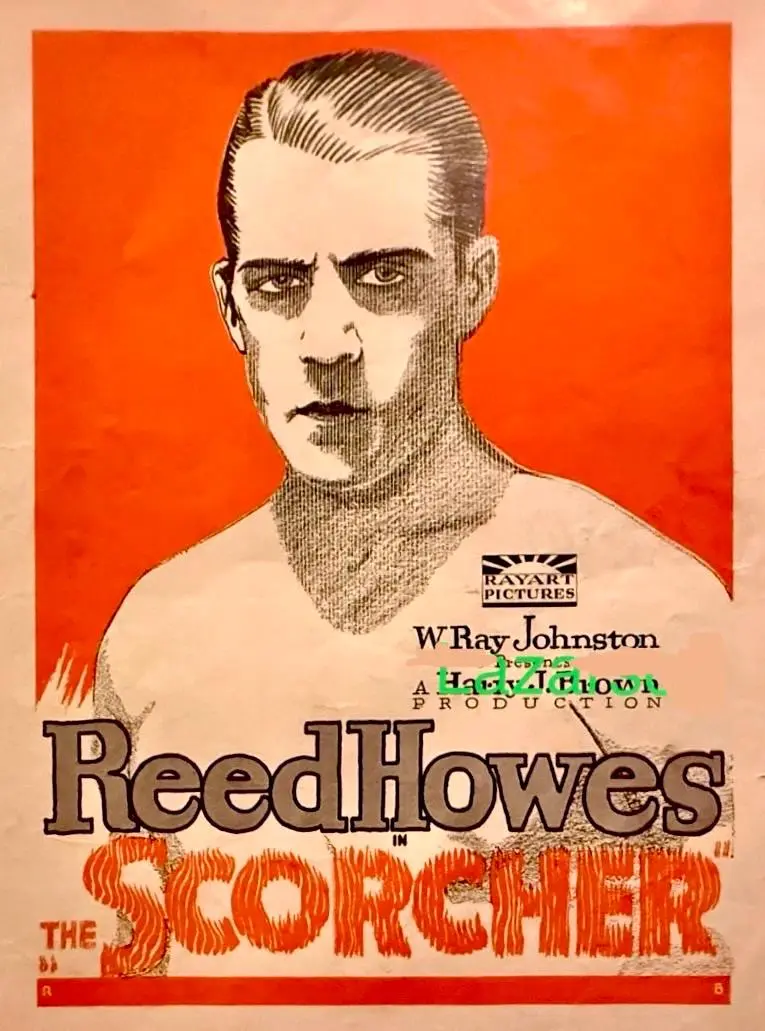
What The Scorcher lacks in script, it makes up for in its depiction of velocity. Director Harry J. Brown (uncredited but widely attributed) uses wide shots to capture the scale of the cross-country race. We see the motorcycles traversing rugged terrain that looks genuinely inhospitable. Unlike the controlled environments of Sahara, the landscapes here feel raw. The camera is often mounted in ways that were quite daring for 1927, giving the viewer a sense of the vibration and the peril of the ride.
One specific example of the film’s visual flair is the sequence where Mike overtakes his rival on a narrow dirt bridge. The editing quickens, and the use of close-ups on the spinning wheels creates a rhythmic tension. It’s a primitive form of the action editing we see today. It works. But it’s flawed. The pacing occasionally stutters when the film tries to pivot back to the 'invention' subplot, which lacks the visual dynamism of the racing scenes.
Does The Scorcher offer a compelling experience for a modern audience? The answer depends entirely on your appreciation for the technical evolution of cinema. If you enjoy seeing how directors handled high-speed action before the advent of sound and modern safety protocols, then yes, it is a fascinating watch. However, if you are looking for a story with emotional depth or complex character arcs, you will likely find it lacking. It is a film of surface-level thrills that succeeds mostly as a historical document of 1920s motorcycle culture.
The Scorcher is a time capsule of an era that believed a single invention could change a man's life overnight. This optimism is infectious, even if the execution is simplistic. It shares a certain thematic DNA with Hit-the-Trail Holliday, where the hero's success is tied to his ingenuity and moral fiber. In Mike O'Malley, we see the idealized American man: someone who can build a machine and then master it. It’s a simple message for a simpler time.
The racing footage is genuinely impressive for the era. The film doesn't rely on back-projection; these are real men on real machines in real dirt. The mechanical focus of the film gives it a unique texture that separates it from the more generic romances of the time, such as Irish Eyes. Reed Howes is a magnetic lead who carries the film through its slower moments.
The pacing is uneven. The first act spends too much time on the financial woes of Mike without making us care about his business. The villain, while present, is a caricature that lacks the menace found in films like The Scarlet Oath. Finally, the resolution of the 'invention' plot feels rushed and far too convenient.
The Scorcher is a sturdy piece of silent-era entertainment that knows its audience. It doesn't try to be high art like Pilgrims of the Night; it just wants to show you a man going fast on a bike. While the story is as thin as a 1920s tire, the visual energy and the historical context make it a worthy footnote in cinematic history. It’s not a masterpiece, but it’s a hell of a ride if you’re in the right frame of mind. The film is a reminder that before we had superheroes, we had mechanics with good ideas and the guts to test them. It’s a loud movie that can’t make a sound, and in its best moments, that’s more than enough.
IMDb 6.7
1935
Community
Log in to comment.