DbcultAccessing Vault...
Cult Review
Senior Film Conservator
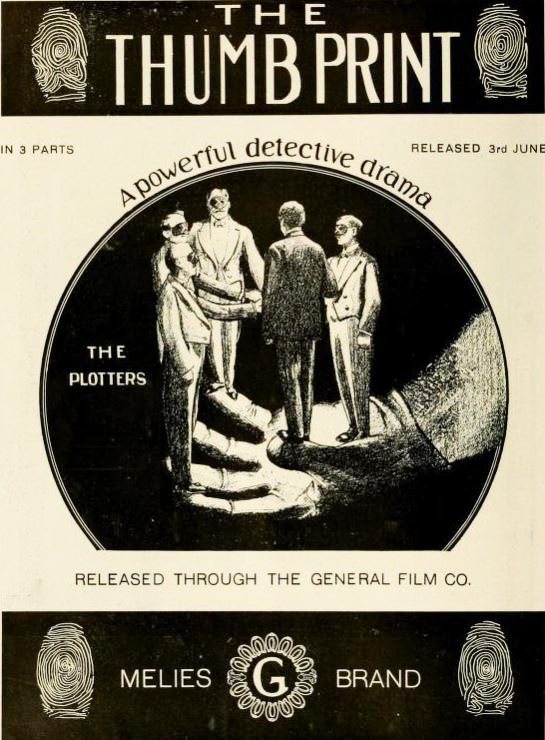
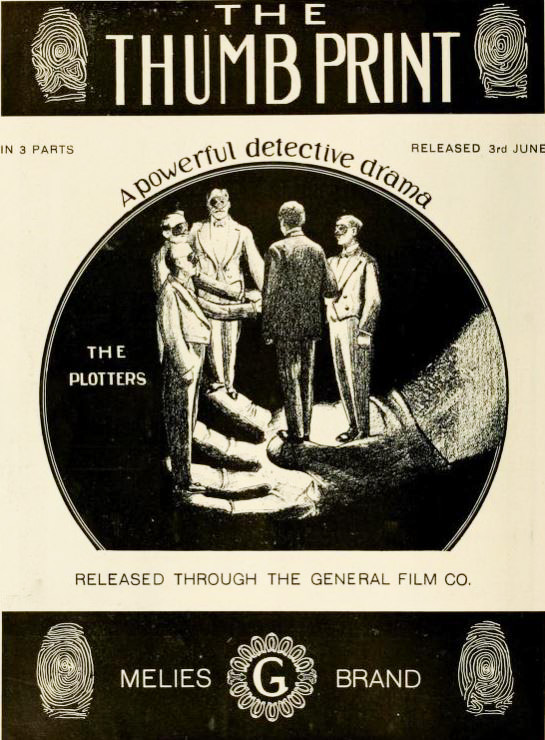
Imagine a world where identity is a cufflink you can swap between tailcoats, where a thumbprint is both signature and death warrant, and where every polished boot risks betraying its owner by a millimeter of torn kid. The Thumb Print—released in March 1914 and now resurrected via a 4K tinting from a Nitrate negative—does not merely prefigure film noir; it detonates the very notion that Edwardian cinema was all lace doilies and fainting heroines.
Director Paul Guidé, better known for boulevard farces, here swaps custard pies for the acrid smoke of gun-cotton. His camera glides across ballrooms choked with ostrich feathers, then dives into sewer-scented hideouts where gaslight carves gargoyle shadows on damp stone. The tonal whiplash feels impossibly modern—think Fincher’s Se7en spliced into Visconti’s The Leopard—all achieved with nothing sturdier than mahogany hand-cranks and orthochromatic stock.
We open on a phantasmagoric engagement gala: champagne geysers, a string quartet sawing through Strauss, and Albert Decoeur’s bogus Count swirling across parquet like a matador who has already marked the bull for slaughter. Notice how Guidé withholds a close-up until the first mention of the missing dowry—then Decoeur’s visage floods the frame, pupils dilated, a shark’s smile under a pencil-thin mustache. The iris-in feels predatory, as though the lens itself were complicit in the swindle.
The narrative engine runs on three fetish objects: a betrothal ring (access to capital), a safe key (liquidation of identity), and a smudged fingerprint (the illusion of truth). Each is passed, pocketed, palmed, or planted with the dexterity of a card-sharp, and each transference tightens the noose. Guidé’s genius lies in refusing to fetishize the MacGuffin; instead, he fetishizes the transfer—the moment a thing changes hands and meaning mutates.
Take the boots. A lesser film would treat the incriminating scrap of glace kid as a mere clue. Here it becomes a doppelgänger: the Count commissions a second pair, meticulously scarred, then shrinks them in a tin bathtub of boiling water—an alchemical ritual worthy of a medieval tannery. When Joubert purchases the decoy footwear from a musty cobbler, Guidé inserts a subjective shot: we see the detective’s stubby fingers probing the tear, the camera tilting ninety degrees so the boot yawns like a criminal mouth. The frame breathes suspicion.
Decoeur essays the impostor with reptilian elegance—every bow a fraction too deep, every compliment a silk garrote. Watch how he modulates proximity: with men he stands too close, breath fogging brandy into nostrils; with women he retreats a half-step, forcing them to lean in, to surrender balance. The performance is steeped in cadavérique charm, a walking memento mori in white tie.
As the Countess—listed only as Madame Varnèse in vintage programs—actress Simone Vélez (credited pseudonymously) delivers a sleepwalker’s lament. Bedridden after the stabbing, she wordlessly clutches a child’s photograph while tears bead like mercury on her cheekbones. Guidé holds the shot for an agonizing twenty seconds, long enough for the image to flip from pathos to terror: we realize the camera is not observing her pain, it is protecting the last shard of maternal resolve.
Joubert, played by veteran character actor Henri Marteau, is anything but the bumbling flatfoot of Keystone Comedies. He saunters through crime scenes with the slumped weariness of a man who has read Baudelaire in the morgue. Note the sequence where he measures the study’s dimensions with a pocket tape, muttering calculations under his breath—an ancestor of Fincher’s procedural obsessives. When he finally confronts the Count, the two men circle a billiard table, cues replaced by loaded silences; the green felt becomes a moral chessboard.
Cinematographer Lucien Andriot, later lauded for his work on Les Misérables, Part 1: Jean Valjean, pioneers a chiaroscuro grammar that prefigures German Expressionism. In the banker’s mansion, chandeliers scatter buttery light across stucco, yet corners remain inkwell-black—wealth as selective amnesia. Contrast this with the Count’s lair: a single kerosene lantern throws upward shadows that carve his face into a gargoyle, a living gothic cornice.
Most daring is the fingerprint comparison scene. Andriot back-projects a magnified loop pattern onto a linen sheet; Joubert and a forensic clerk stand inside the projection, their bodies intersecting whorls. The men literally inhabit identity, a visual thesis that who we are is a maze others must walk through.
Though released sans synchronized score, archival cue sheets prescribe a bruising itinerary: Saint-Saëns’ Danse Macabre for the murder, a jaunty cake-walk for the boot-planting, and a requiem mass for the finale. Modern restorations often commission new compositions; the Bologna Cinema Ritrovato 2022 print features a prepared-piano score that sounds like bones rattling in a velvet pouch—perfect counterpoint to the film’s eroticized dread.
Released the same year as The Battle of Gettysburg’s patriotic pageantry and The Adventures of Kathlyn’s cliff-hanger serialism, Guidé’s thriller feels like a scalpel plunged into a birthday cake. While American studios chased lengthier spectacles, French filmmakers refined the cliff-face of suspense. The Thumb Print anticipates not only Lang’s Dr. Mabuse but also the bureaucratic paranoia of Les Misérables, Part 1: Jean Valjean—both share a cosmos where documents trump decency.
Viewers of The Port of Doom will recognize the fatalistic waterside climax; fans of Chûshingura may detect a samurai-styled honor code among thieves. Yet Guidé’s film is ruthlessly secular: no deus ex machina, only the slow grind of evidence.
For decades the film languished in the shadow of Louis Feuillade’s Fantômas, but recent restorations reveal a missing link between Victorian penny-dreadful and hard-boiled noir. Streaming platforms have yet to license it; your best bet is the 2022 Blu-ray from Éditions Cinématographe, which pairs the film with a scholarly commentary by Denise Andriot (grand-daughter of the cinematographer) and a 20-page booklet on pre-dactyloscopy police methods.
If you curate a silent-film festival, lobby for a midnight slot; audiences tipsy on absinthe will hallucinate the ink of fingerprints oozing from the screen. For classroom use, juxtapose it with Damon and Pythias to debate shifting moral pole stars, or pair it with The Midnight Wedding to dissect how 1914 cinema staged class anxiety.
The Thumb Print is less a museum relic than a hand-grenade with the pin half-pulled. Its concerns—identity theft, forensic fallibility, the liquidity of social class—feel ripped from tomorrow’s headlines. Seek it out, but beware: after the last reel, your own fingertips will feel foreign, each whorl a potential betrayal.
IMDb —
1936
Community
Log in to comment.