DbcultAccessing Vault...
Cult Review
Senior Film Conservator
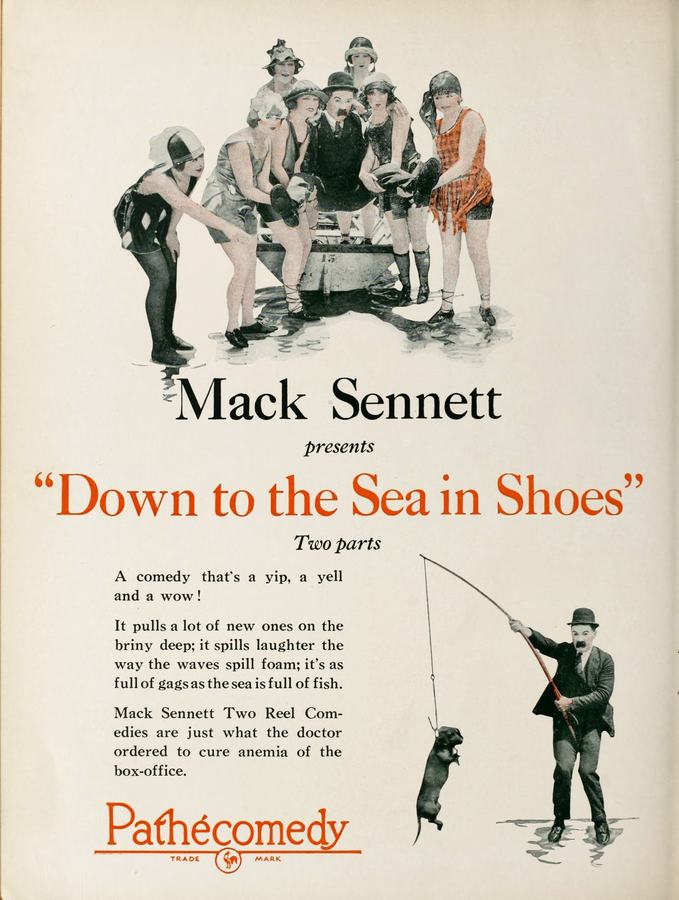
Ah, the silent era! A time when the visual gag reigned supreme, when the human body was the ultimate special effect, and when a simple, outlandish premise could launch a thousand laughs. Today, we're casting our gaze upon a particularly charming, if somewhat overlooked, gem from that golden age: Down to the Sea in Shoes. And let me tell you, this isn't just another dip in the cinematic ocean; it’s a full-blown, splash-filled spectacle that, for its sheer audacity and whimsical spirit, deserves far more than a passing glance.
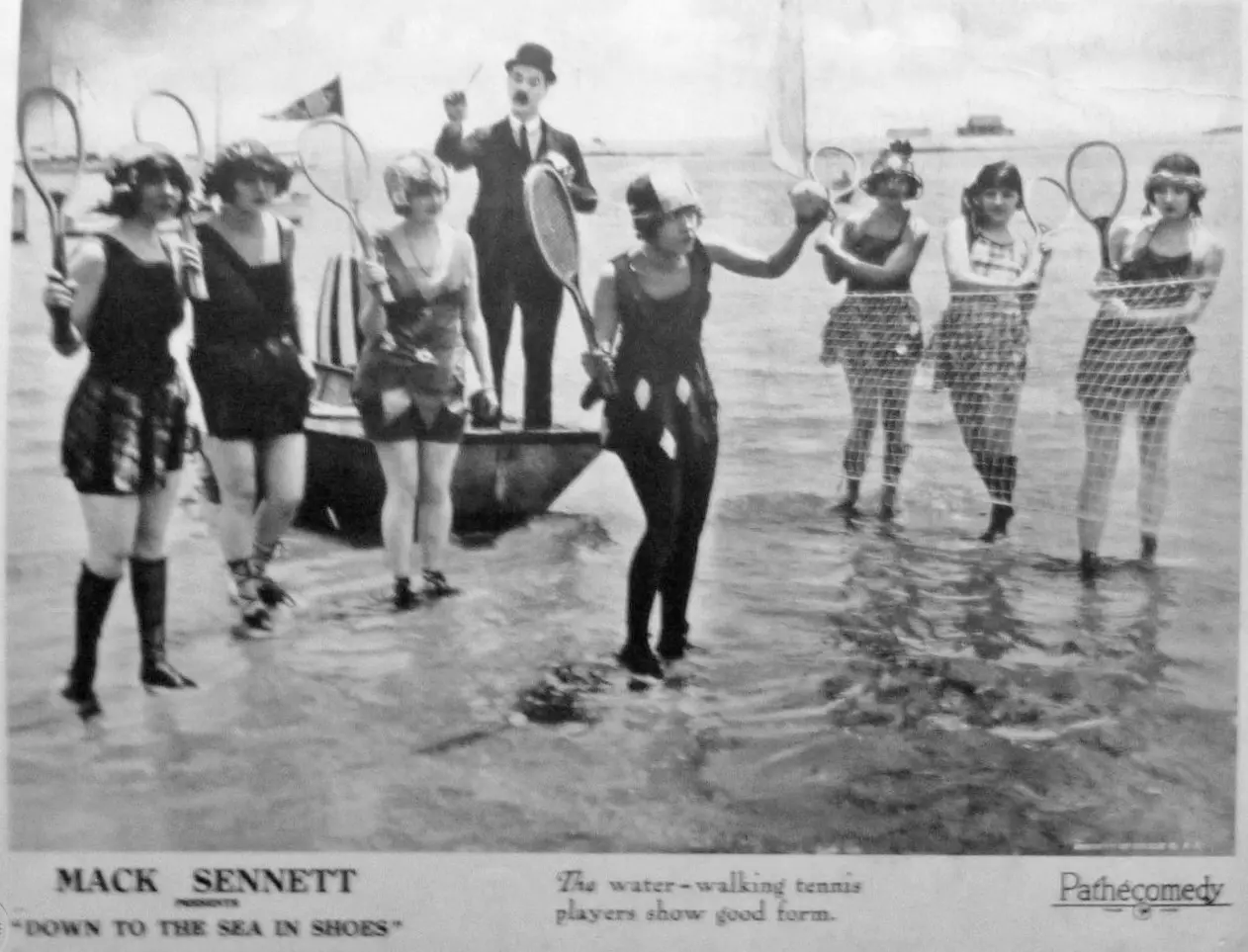
Imagine, if you will, a world where the seemingly impossible becomes the bedrock of comedic genius. That's precisely the enchanting landscape Down to the Sea in Shoes invites us to explore. Its central conceit, the invention of 'water shoes' that allow our intrepid protagonists to literally walk on water, is a stroke of pure, unadulterated brilliance. It's a premise so delightfully absurd, so utterly captivating, that it immediately sets the stage for a film that refuses to be confined by the mundane. In an age before CGI could conjure any fantasy, the filmmakers leaned into practical ingenuity and the boundless energy of their cast to bring this aquatic marvel to life. It speaks volumes about the creative spirit of the time, a spirit often more imaginative in its constraints than today's limitless digital canvases.
The film, a veritable showcase of physical comedy, introduces us to a troupe of comedians who stumble upon (or perhaps meticulously craft) these revolutionary foot coverings. Their adventures, as one might expect, are less about grand scientific discovery and more about the chaotic, joyous, and utterly hilarious applications of their newfound ability. It's a testament to the universal appeal of slapstick, a reminder that the sight of someone defying gravity with a comical wobble is inherently funny. Unlike the grim realities portrayed in a film like El Verdugo, where the absurdities of life are tinged with existential dread, Down to the Sea in Shoes embraces its own brand of absurdity with an infectious, lighthearted glee. There's no deeper societal critique here, no profound philosophical musing, just pure, unadulterated fun, an escape into a world where gravity is merely a suggestion.
The ensemble cast is truly the beating heart of this aquatic escapade. Cecille Evans, with her undeniable screen presence, leads the charge, her expressions a masterclass in silent film acting. She conveys surprise, delight, and occasional exasperation with a subtle tilt of the head or a widening of the eyes that speaks volumes. Paired with her is the inimitable Billy Bevan, a stalwart of silent comedy, whose rubbery face and agile physicality are perfectly suited to the film's demands. Bevan, known for his incredible range from the dapper gentleman to the bumbling fool, here finds ample opportunity to showcase his unique brand of chaotic charm. His interactions with the water shoes are a highlight, each near-fall and triumphant glide executed with a precision that belies the apparent spontaneity.
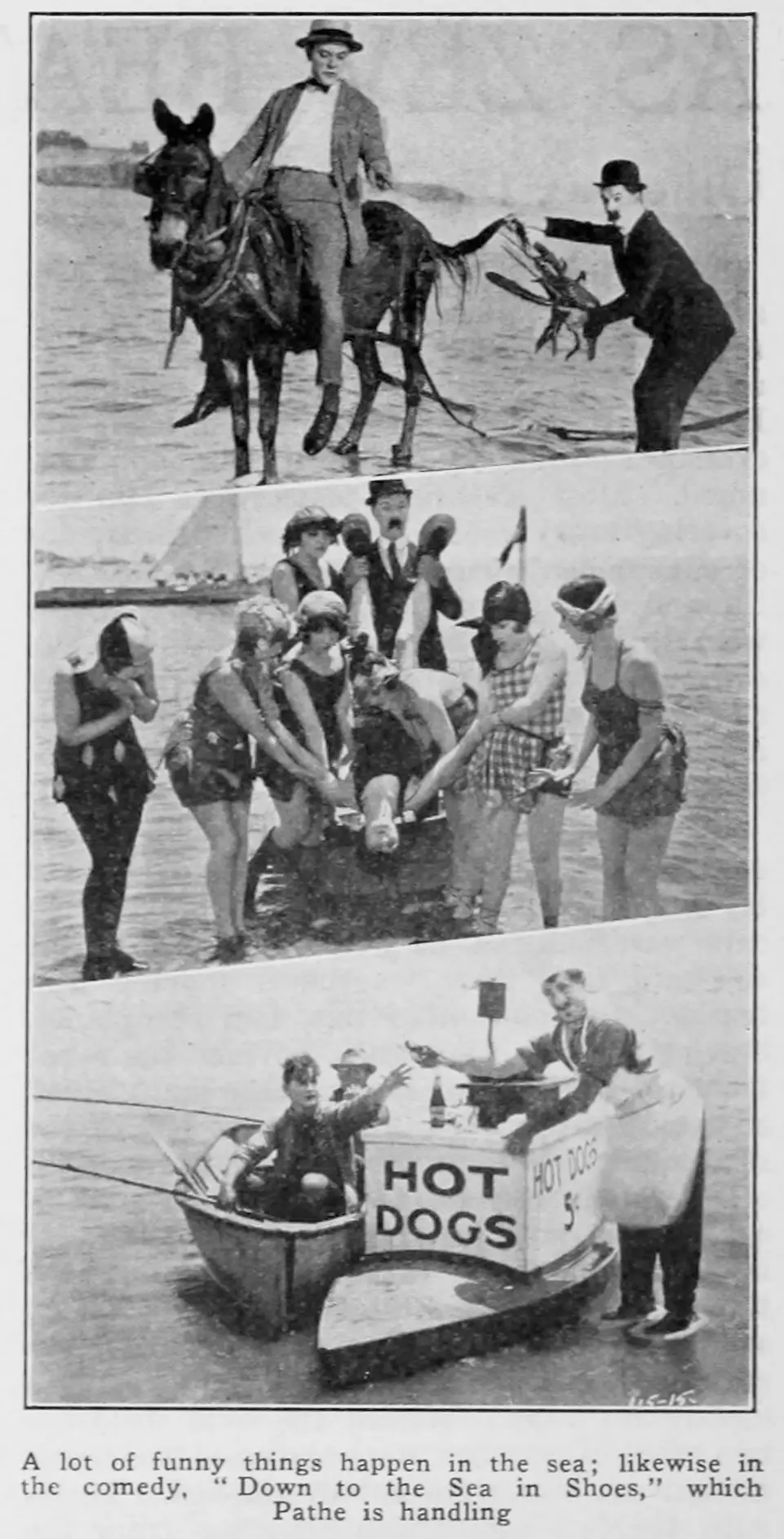
Then we have Elsie Tarron, whose vivacious energy adds another layer of comedic texture, and Alberta Vaughn, whose elegant demeanor provides a delightful contrast to the surrounding pandemonium. Gladys Tennyson, Harry Gribbon, Margaret Cloud, Sunshine Hart, and Jack Cooper round out this wonderfully diverse cast, each contributing their own distinct comedic flair. It's a symphony of expressive faces and exaggerated movements, a testament to the collaborative spirit that defined so much of early cinema. Their collective chemistry elevates what could have been a one-note gag into a dynamic, engaging narrative. One could draw a parallel to the ensemble work in a film like Know Your Men, where character interplay drives much of the narrative, though here, the stakes are delightfully lower, focusing purely on the comedic payoff.
The genius of Down to the Sea in Shoes lies not just in its initial concept, but in the myriad ways it explores the implications of that concept. How does one walk on water? What are the comedic possibilities of such an act? The film answers these questions with a relentless stream of visual gags: characters attempting to fish while standing on the lake, impromptu aquatic races, and the inevitable moments of near-disaster that are always narrowly averted, much to the audience's delight. The pacing is brisk, a hallmark of silent comedies, ensuring that the laughter never truly subsides. It’s a masterclass in sustaining a single, outlandish premise for its entire runtime, extracting every possible drop of comedic potential.
While the specific writers are not widely credited, the film's structure and execution suggest a collaborative creative process, perhaps born from the fertile minds of the comedians themselves and the director. This collective authorship often yielded some of the most innovative and enduring works of the era, where improvisation and on-set development were key. The absence of a singular credited writer allows us to appreciate the film as a product of its time, a collaborative artistic endeavor where the lines between performer, director, and writer were often delightfully blurred. This contrasts sharply with the often singular, authorial vision seen in a film like John Barleycorn, which is deeply rooted in a literary source.
The cinematography, while perhaps not groundbreaking in the vein of a more dramatic feature, is perfectly attuned to the film's comedic aims. The shots are clear, allowing the physical comedy to shine, and the camera often frames the action in a way that maximizes the visual impact of the water-walking. There's a refreshing lack of pretense, a straightforward approach that serves the narrative without distraction. The aquatic settings are utilized to their fullest, providing a dynamic backdrop for the shenanigans. One can almost feel the spray of the water, the sun on the faces of the performers, a testament to the evocative power of well-composed silent imagery.

Reflecting on its place within the broader tapestry of silent cinema, Down to the Sea in Shoes stands out for its unique blend of invention and pure, unadulterated joy. It doesn't aim for the epic scale of a Burning Daylight, nor the intense drama of a Lucretia Lombard. Instead, it carves its own niche, proving that sometimes, the simplest, most outlandish ideas can yield the most enduring entertainment. It’s a film that asks us to suspend our disbelief not for a moment of terror or heartbreak, but for a sustained period of delightful absurdity.
The legacy of such a film, though not always shouted from the rooftops of cinematic history, lies in its contribution to the evolution of comedic storytelling. It showcases the ingenuity of filmmakers in an era without sound, relying solely on visual cues and physical prowess to elicit laughter. The 'water shoes' themselves could be seen as a precursor to many later comedic props and fantastical devices, sparking the imagination of audiences and future creators alike. It's a foundational piece, demonstrating how a singular, innovative gag can be stretched and explored to its fullest comedic potential.
Consider, for a moment, the sheer technical challenge of pulling off such a film in its time. While the 'water shoes' were undoubtedly a clever bit of stagecraft, filming the actors seemingly walking on water would have required careful planning and execution. The seamlessness with which these scenes are integrated speaks to the skill of the crew and the dedication of the performers. This is not the grand, sweeping naturalism of Die Landstraße, but a focused, almost theatrical presentation of a fantastic concept, brought to life through practical effects and brilliant acting.
Moreover, the film's enduring charm is a testament to the timeless appeal of human inventiveness and the desire to transcend perceived limitations. While the comedians use their shoes for entertainment, there's an underlying current of aspiration, a playful defiance of the natural order. It's a dream made manifest, a wish fulfillment fantasy played out for laughs. This universal theme resonates even today, much like the aspirational journey in The Man Life Passed By, though here, the journey is purely for mirth.
In an era that often saw dramatic narratives and historical epics dominate the cinematic landscape, Down to the Sea in Shoes offered a refreshing counterpoint. It was pure escapism, a joyous romp that required nothing more than an open mind and a willingness to laugh. It reminds us that cinema, at its heart, can be a simple pleasure, a magic trick designed to delight and amuse. It’s a far cry from the complex moral dilemmas found in a film like The Reckoning, choosing instead to focus on the lighter side of human experience.
The performances, as mentioned, are exemplary. Cecille Evans, in particular, possesses a captivating screen presence. Her comedic timing is impeccable, and she navigates the film's various scenarios with a delightful blend of grace and playful clumsiness. Billy Bevan, with his expressive face and incredible physical dexterity, is a master of the double-take and the exaggerated reaction, perfectly suited for the film's brand of physical comedy. Their partnership, and indeed the entire ensemble's dynamic, is what truly anchors the film and prevents its central gag from becoming stale.
It's also worth noting the sheer joy emanating from the screen. This isn't a film where the comedians are merely performing; they genuinely seem to be having a blast, and that infectious enthusiasm translates directly to the audience. This genuine sense of fun is often a hallmark of the best silent comedies, setting them apart from more cynical or calculated modern counterparts. There's an innocence to the humor, a purity of intent that is utterly disarming. It's a refreshing contrast to the often dark and intense themes explored in films such as Kiss of Death.
While we might not place Down to the Sea in Shoes on the same pedestal as some of the canonical masterpieces of the silent era, its value is undeniable. It's a perfect example of how a simple, ingenious premise, combined with a talented cast and a clear vision for comedic execution, can create something truly memorable. It's a piece of cinematic history that reminds us of the power of imagination and the enduring appeal of a good, hearty laugh. It's more akin to the charming, focused narrative of The Honor of the Range in its directness, albeit in a wildly different genre.
The film’s lasting impression is one of pure, unadulterated delight. It’s a reminder that sometimes, the most sophisticated cinematic experiences are born from the simplest, most imaginative ideas. The 'water shoes' are not just a plot device; they are a symbol of creative freedom, a visual metaphor for breaking free from the ordinary. And in a world that often feels bogged down by the weight of reality, a film like Down to the Sea in Shoes offers a much-needed respite, a buoyant journey into the realm of the wonderfully impossible. It’s a film that, much like the fantastical elements in Passa il dramma a Lilliput, transports its audience to a world where the rules are playfully bent. It even shares a thematic thread of aspiration and overcoming obstacles, albeit in a lighter vein, with films like Torchy's Promotion and Kildare of Storm, where characters strive for success against odds, though here, the odds are merely the laws of physics themselves.
So, if you ever find yourself yearning for a dose of vintage charm, a laugh that transcends the decades, and a testament to the boundless creativity of early cinema, then I implore you to seek out Down to the Sea in Shoes. It’s a film that walks on water, not just literally, but figuratively, gliding effortlessly into the annals of delightful, unforgettable comedies. It’s a humble masterpiece of its kind, offering a refreshing perspective on what cinema can achieve with ingenuity, wit, and a healthy dose of good old-fashioned fun. It leaves you with a smile, a sense of wonder, and perhaps, a whimsical desire to try walking on water yourself. Much like the simple, poignant narrative of The Beggar Maid or the straightforward adventures of The Deuce of Spades, its strength lies in its directness and its ability to deliver exactly what it promises, with an extra splash of unexpected charm.

IMDb 5.1
1924
Community
Log in to comment.