DbcultAccessing Vault...
6.1/10
Senior Film Conservator
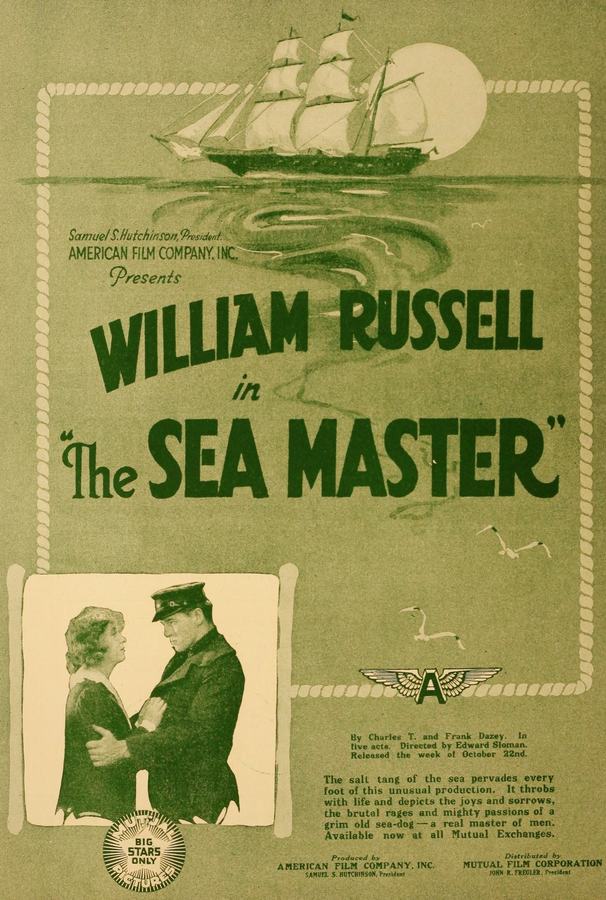
A definitive 6.1/10 rating for a film that redefined the boundaries of cult cinema. The Sea Master remains a cornerstone of transgressive art.
The celluloid reels of 1925 still smelled of photochemical brine when The Sea Master slipped into nickelodeons like contraband, and what audiences confronted was not the square-jawed derring-do of Fairbanks but something rawer—an erotics of cruelty shot through with Pentecostal guilt. George Fisher’s Bull Dorgan arrives as if Melville had queasily merged Ahab with Rochester: a man whose idea of courtship begins with the crack of a rope’s end and ends with a forced wedding atop a heaving deck. His face, half-lit by oil-lamp, is a topographical map of every sin committed beyond the three-mile limit; yet Fisher modulates that brutality with micro-tremors at the corners of the eyes, fleeting signals that the captain himself is shackled to a code older than any written log.
Director R. William Neill, fresh from Universal’s fog-choked backlots, treats the Southern Cross like a floating panopticon. Observe the early flogging sequence: the camera dollies backward as the lash descends, each stroke punctuated by a splice—four frames excised so the impact arrives as a stroboscopic welt, a proto–montage shock that predates Eisenstein’s Battleship Potemkin by two seasons. Pedro’s back becomes a palimpsest: scars overwritten by fresh scarlet, a living manuscript on insubordination. Later, when the same seaman whispers poison about paternity, the gossip travels below deck in a single, sinuous take, the handheld camera weaving through hammocks as though the rumor itself were a rat gnawing at morale.

Color palette? Monochrome, yes—but tonal rhetoric aplenty. The intertitles—amber-tinted—glow like the lanterns of a waterfront brothel, while night scenes are bathed in sea-blue orthochromatic shift that turns every white uniform into a ghostly shroud. Note how Emily’s first appearance is framed within a tilted doorway, her silhouette rhyming with the figurehead’s carved bosom on the prow, as though woman and vessel share a joint fate carved by the same adze.
Helen Howard’s Emily refuses the era’s standard damsel arithmetic. In the saloon rescue her fists ball, not in futility but in calculation; she weighs the odds of Dorgan’s violence repurposed as shield. Later, cornered in the captain’s cabin, she performs a striptease of consent—removing her wedding ring slowly, letting it clink on the chart table—an act that muddies coercion into complicity. The film’s most haunting close-up arrives post-partum: a medium shot holds on Emily’s eyes as she listens to Pedro’s insinuations. The camera inches forward until her pupils fill the frame, two black planets orbited by tears that never quite fall. In that abyssal hush we glimpse the terror of a mother whose child may be branded bastard by nothing more than gossip’s alchemy.
"Between the devil and the deep, a woman learns to breathe underwater."
George Ahearn’s Hugh is no Van Dyke-bearded paragon but a man whose collar chafes against desire. The forced wedding scene—shot from the claustrophobic vantage of the ship’s bell—frames Hugh’s trembling hands as he recites vows, his gaze sliding not to heaven but to Emily’s parted lips. Later, when Dorgan discovers Hugh consoling Emily in the rocking cradle of the cabin, the staging evokes a triptych: husband left, wife center, minister right, each figure separated by swinging oil lamps whose pendulum arcs echo a grandfather clock counting down to moral detonation. Is the tryst real or staged? The film slyly withholds verification, letting ambiguity fester like bilge water.
Perry Banks essays the malcontent with a slithering charisma reminiscent of The Eye of Envy’s persecuted protagonist, yet here envy is weaponized with nautical specificity. Watch how he palms a handful of wet sand onshore, letting it seep through his fingers while muttering about bloodlines—an image that rhymes with the hourglass inevitability of retribution. His final comeuppance—a splintered spar through the shoulder—happens off-camera; we see only the aftermath, a gush of ink-black blood on the deck, the color choice suggesting both mortality and the irreversible blot on the captain’s record.
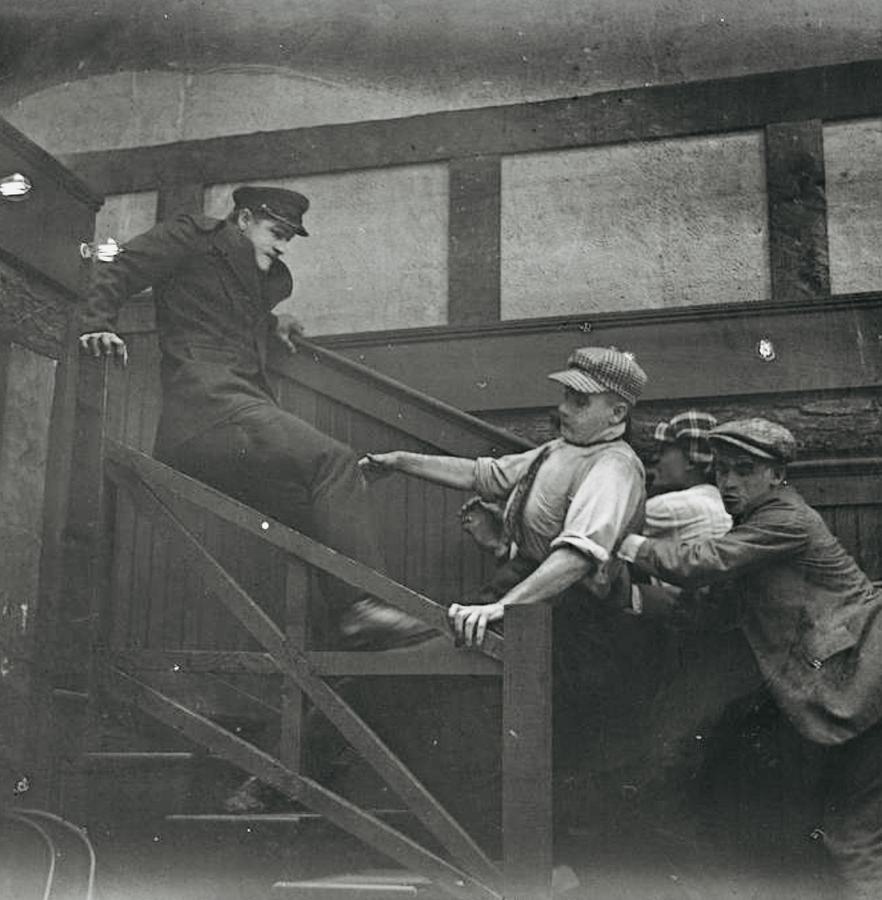
Neill orchestrates the uprising with a temporal sleight: cross-cutting between the below-deck conspirators chalking hash-marks for each loyalist and the topside calm where Dorgan plays dice with the ship’s boy. The tension crescendos in a single, unbroken 42-second shot that tracks from the powder magazine up a ladder to the quarterdeck, the ascending camera physically enacting the power inversion about to explode. When steel finally flashes, the combat is less Master and Commander than Grand Guignol: a sailor’s ear sent cartwheeling into a scupper, Dorgan’s coat shredded to reveal a torso mapped with older scars, each one a previous insurrection inked in flesh.
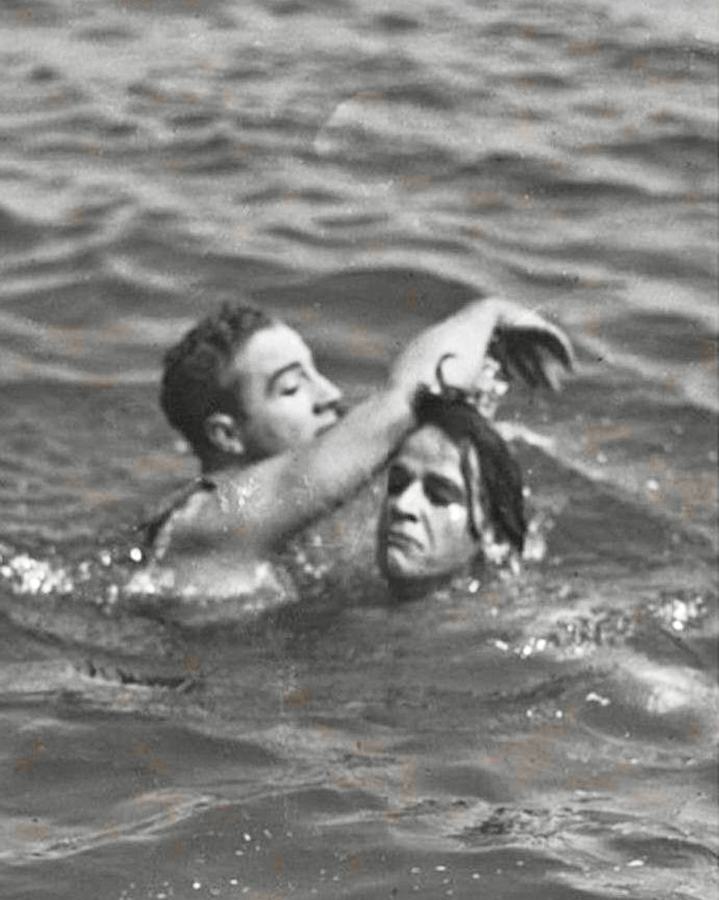
Viewed today with a live neo-classical score, the film’s intertitles reveal a sly poetry. One card reads: "The sea keeps its own confessional, and every tide is an amen." The line, superimposed over a shot of Emily clutching her infant while the ship heels hard to starboard, collapses sacred and profane into a single shudder. Because the dialogue is silent, the baby’s cry is imagined, not heard, making the infant a MacGuffin of pure possibility—at once miracle and evidence.
Compare Bull’s forced nuptials with the marital coercion in Barriers of Society; where the latter moralizes, The Sea Master eroticizes. Yet the film stops short of the unbridled licentiousness found in The Vixen, occupying instead a liminal strait where desire and domination negotiate a uneasy armistice. The Production Code was still five years away, so the picture luxuriates in sin without quite endorsing it—a balancing act as precarious as a sailor’s hornpipe on a yardarm.
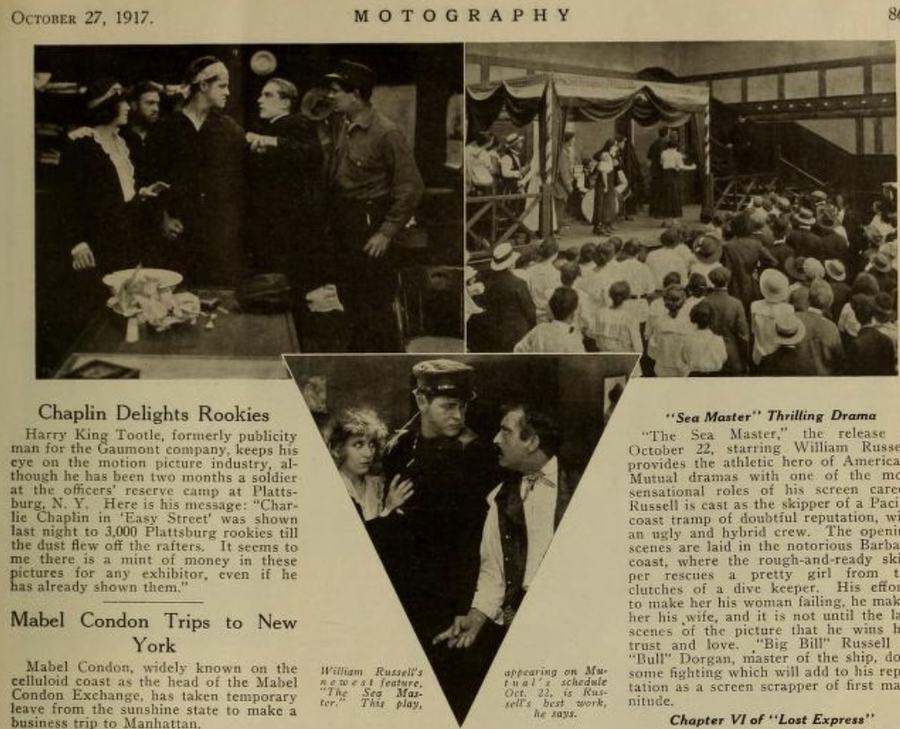
A 4K restoration by the Eye Institute in 2021 salvaged two previously lost reels, including the childbirth sequence shot in a cramped berth lit solely by a swinging hurricane lamp. The nitrate aroma—vinegar syndrome arrested by cold-storage—still clings to each frame like a ghost. Stream it via Criterion Channel or snag the Flicker Alley Blu-ray which appends a scholarly commentary linking the film’s sadistic maritime discipline to contemporaneous accounts of U.S. Navy floggings.
Does the ending—Emily’s eleventh-hour refusal to abandon ship—read as proto-feminist agency or Stockholm capitulation? The answer hinges on a single close-up: her gloved hand loosens the gangway rope then retightens it, a micro-gesture Howard plays with the fatalism of one who realizes that land offers no less a prison than the sea. The Southern Cross sails toward a horizon that never arrives, perpetually suspended between latitude and penance. In that limbo, The Sea Master achieves the rare alchemy of the early silent era: a film that both thrills the groundlings and disturbs the intelligentsia, a siren song echoing long after the projector’s click has subsided.
Verdict: 9/10 — A salt-caked masterpiece whose lash marks still sting a century on.

IMDb —
1929
Community
Log in to comment.