DbcultAccessing Vault...
Cult Review
Senior Film Conservator
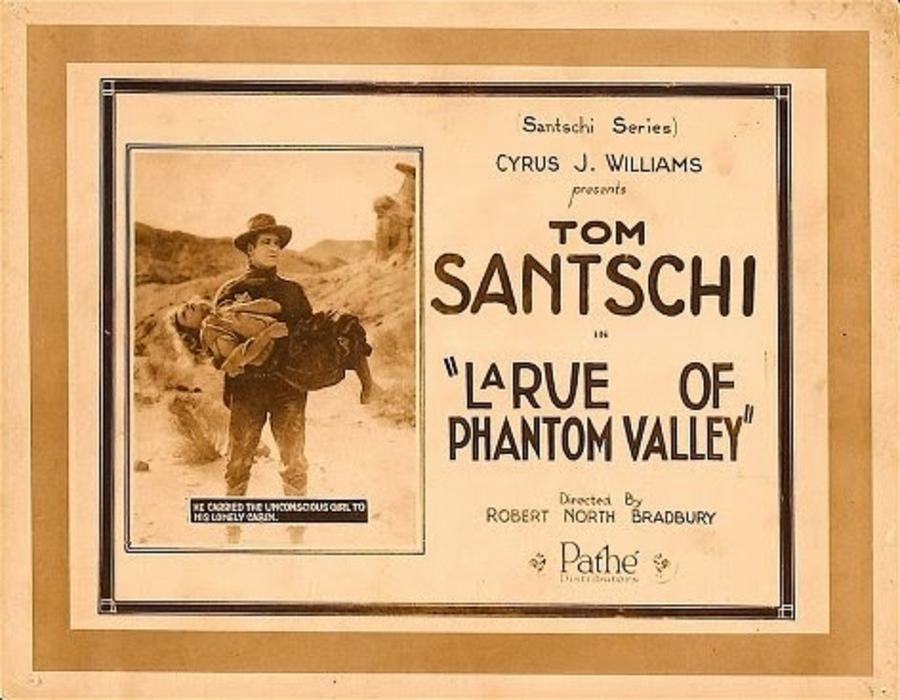
The first thing you notice is the negative space. In LaRue of Phantom Valley, director Frank Howard Clark lets silence pool like mercury in the corners of every composition, forcing the viewer to listen to dust. Where contemporaries—say, Alias Jimmy Valentine—pushed urban velocity, this 1926 one-reeler luxuriates in arid stasis, turning the desert itself into a slow-breathing character whose exhalations warp morality.
Tom Santschi’s Tom—no surname offered, as though the landscape had erased lineage—hauls the stoic gravitas he honed in Riders of Vengeance but strips it of vengeance entirely. Here his eyes carry not the glint of reprisal but the bruised luster of a man who has outlived every possible reason to speak. When he cradles Lila’s counterfeit-wilted frame, the gesture feels geologic: epochs of solitude shifting to make room for one more seismic fault.
Clark’s screenplay, deceptively linear, spirals inward like a coyote’s skull picked clean by narrative vultures. The rumored cache of gold operates less as MacGuffin than as moral mirage; every time the camera tilts toward the baked earth, expectation shimmers, then evaporates. Compare this with the Brazilian carnival effervescence of As Aventuras de Gregório, where fortune is a slapstick coin forever bouncing out of reach; in Phantom Valley, wealth is silence, an anti-object that teaches hunger to revere absence.
The film’s tinting strategy deserves cinephilic genuflection. Day exteriors bathe in ochre so sulphuric you can taste evaporated iron on your molars; night sequences sink into indigo so viscous it feels like breathing ink. Midway, a single amber intertitle intrudes—Lila’s confession—its yellow glow rhyming with the sulfuric sky, implying that contrition itself is a pigment soluble only in celestial solvents.
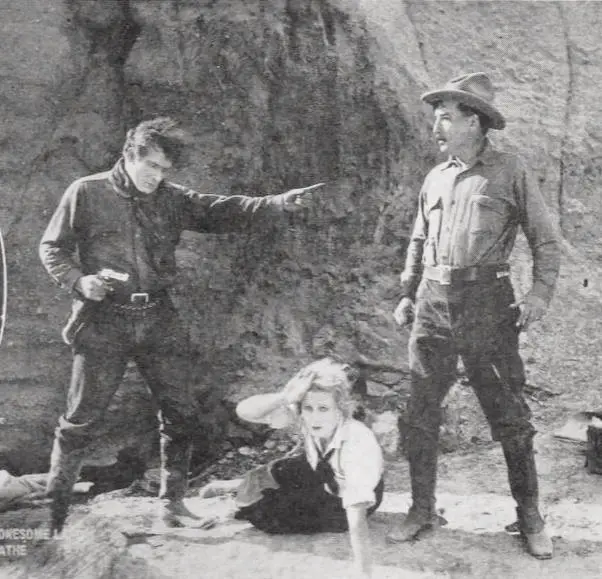
Performances oscillate between tableau and tremor. Santschi moves as if his joints were quarried from the sandstone around him; each step raises a miniature dust storm that settles on his cuffs like unpaid debt. Opposite him, the uncredited danseuse playing Lila (reportedly a Ziegfeld refugee) weaponizes the flutter of a gloved wrist, turning coquetry into cartography—she maps the borders of Tom’s heart with the same precision Jack maps card seams. Their chemistry ignites not in clinches but in aural lacunae: the hush between wind-gusts where two souls negotiate the foreign currency of trust.
Jack, the gambler, is shot from a low angle that elongates his silhouette until it resembles a hieroglyph for bad luck. His pocket-watch, clicked open like a tiny stage curtain, recurs as a metronome of damnation. Each tick overlays a subtitle—“Time to betray,” “Time to fold,” “Time to vanish”—yet the device itself is mute, its hands excised by the censor of moral awakening. In the final reel, when he slinks away defeated, the desert devours his outline whole, a reminder that villainy here is merely a passing weather system.
Clark’s montage, constrained by single-reel economics, achieves epiphany through juxtaposition. A close-up of Lila’s pupil dilating dissolves into a long shot of a distant butte shaped like a shattered cup; the cut implies that landscape and gaze are reciprocal vessels, each filling the other with unspoken history. This dialectic recalls Soviet constructivism more than it does the nickelodeon pratfalls of Flips and Flops, proving that even Poverty Row could harbor montage theoreticians disguised as cowboy hacks.
Sound, though absent by technology, haunts the celluloid like tinnitus. Listen—through the sepia crackle—to the imagined score: a lone cello bowing a minor ninth that never resolves, echoing the unresolved chord of Tom’s buried gold. Critics who revere the Wagnerian cacophony of Sea Sirens might scoff, but Phantom Valley argues that silence can be orchestrated, that negative acoustics amplify emotional overtones better than any brass section.
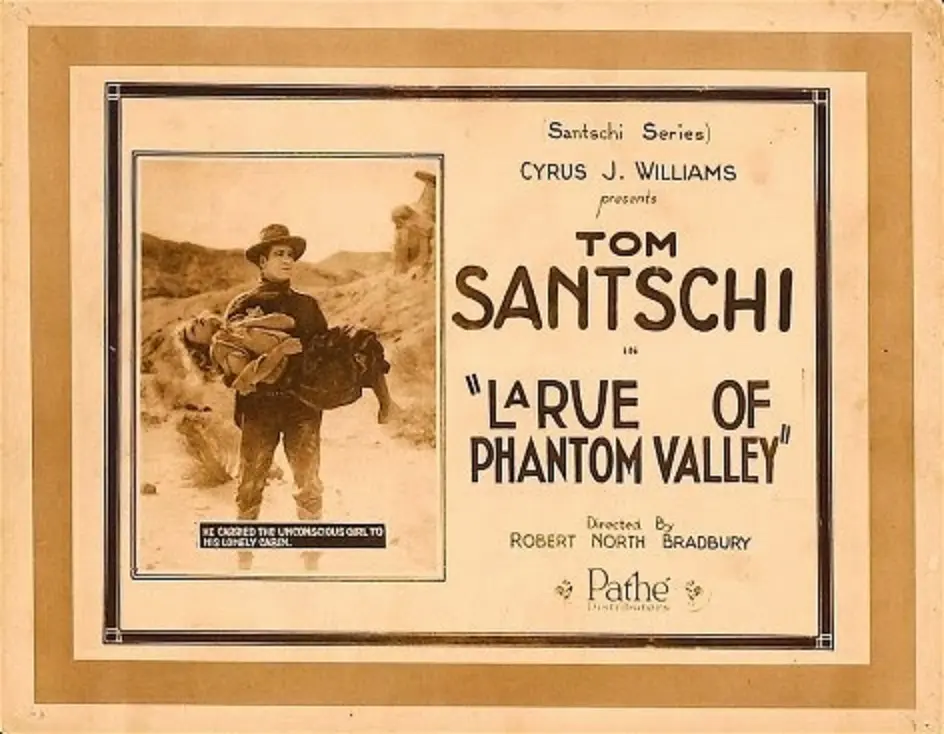
Gender politics, usually the Achilles heel of frontier romances, invert here. Lila engineers the heist, scripts her own pseudo-exhaustion, and, crucially, authors her repentance. Tom’s forgiveness is not patriarchal clemency but recognition of mutual fragility: two desolate continents colliding to form a precarious archipelago. Compare this with the marital determinism of Her Husband’s Honor, where a wife’s virtue is a ledger balanced by husbandly arbitration; in Phantom Valley, morality is a negotiation conducted under star-charts legible only to those willing to admit their own larceny.
Theology loiters at the edge of frame. When Tom fires his revolver heavenward, the smoke writes a cursive question mark against the cobalt. Is it an oath, a renunciation, or a secular prayer? The absence of clergy—so conspicuous in sanctified sagas like Otets Sergiy—leaves salvation unmediated, a DIY covenant etched in sand. Redemption arrives not through baptism but through shared thirst, two mouths sipping from the same canteen under a sun that could flay the piety off a saint.
Cinematographer Pliny Goodfriend (whose career vanished like a mirage) lenses the climactic kiss through heat-distorted air, turning the lovers into smeared pigments on God’s own palette. The image anticipates the expressionist smears of Kreuzigt sie! yet retains a documentary frailty: you can almost smell alkali on their lips. Preservationists who obsess over the nitrate purity of The Child Thou Gavest Me should note how the deliberate emulsion decay here—flecks, scratches, water stains—functions as patina, a reminder that morality itself is a corroding artifact needing periodic excavation.
Yet for all its metaphysical heft, the film never succumbs to the lugubrious self-importance that hobbles The Chalice of Sorrow. Comic grace notes intrude: a prairie dog pilfering Jack’s cigarette paper, a cloud shaped like a poker hand folding. These levities keep the narrative porous, allowing the audience oxygen between moral convulsions. One thinks of the breezier humanism in The Habit of Happiness, yet Clark refuses to let humor resolve tension; instead, it hovers like a dragonfly over brackish water, beautiful and irrelevant.
Reception history is a ghost story. Trade papers of 1926 dismissed the picture as “another sagebrush soaper,” blind to its minimalist audacity. By 1932, the negative was rumored melted for its silver content—an ironic apotheosis for a fable about the futility of wealth. Archivists now hunt it like Coronado sought Cíbola, though only a 47-foot fragment at MoMA survives, its sprockets ticking like Jack’s phantom watch. Even in tatters, the film teaches that narrative can exist as ellipsis, that a story can be completed not by frames but by the after-burn of retinal persistence.
What lingers longest is the final tableau: two silhouettes astride one horse, descending a dune whose crest resembles a breaking wave. No iris, no fade—just a hard cut to black, as if the desert itself had spliced the ending. You exit the screening room blinking at the city lights, suddenly aware that every pavement crack is a dry arroyo, every stranger a potential conspirator of grace. And somewhere, in the canyons between skyscrapers, you swear you hear a cello bowing that unresolved ninth, reminding you that gold may stay buried but absolution, like water, always finds its way to the surface.

IMDb —
1936
Community
Log in to comment.