DbcultAccessing Vault...
7.2/10
Senior Film Conservator
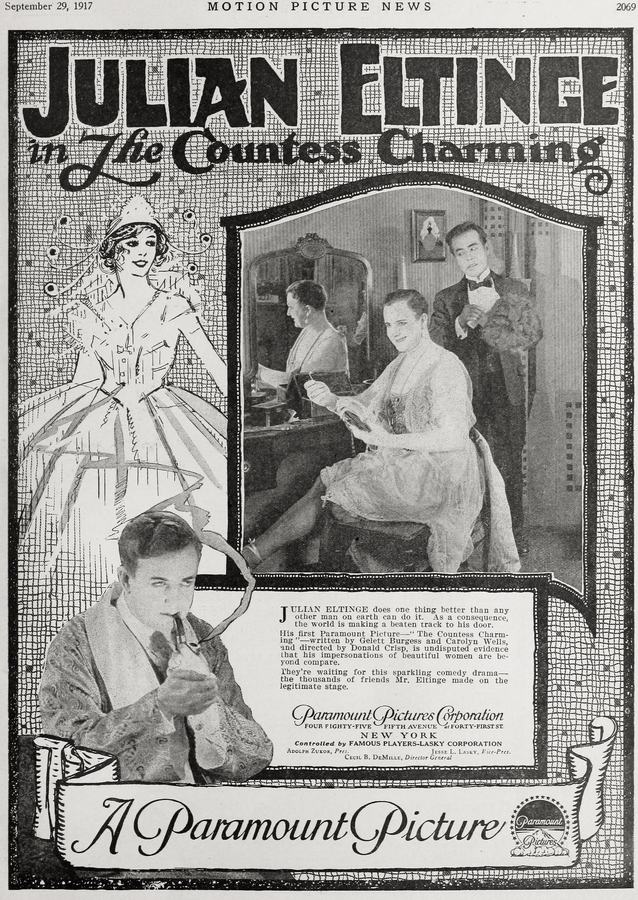
A definitive 7.2/10 rating for a film that redefined the boundaries of cult cinema. The Countess Charming remains a cornerstone of transgressive art.
Step back into the nascent days of cinema, a time when the silver screen was just beginning to find its voice, even without sound. It was an era ripe for experimentation, for bold narratives, and for performers who could command attention with naught but a glance and a gesture. Among the many gems unearthed from this period, one film stands out for its audacious premise and its star's magnetic performance: 'The Countess Charming.' Released in 1917, this cinematic confection, penned by the collaborative talents of Gardner Hunting, Gelett Burgess, and Carolyn Wells, is more than just a cross-dressing comedy; it's a sly commentary on class, social hypocrisy, and the often-blurred lines between justice and personal vendetta.
At its heart, 'The Countess Charming' introduces us to Stanley Jordan, portrayed with an exquisite blend of earnestness and mischievous wit by Julian Eltinge. Jordan is a wealthy young bachelor, seemingly navigating the labyrinthine corridors of high society with the best of intentions. His initial foray into the social scene, a Red Cross benefit at the country club, is pivotal. Here, he encounters Betty Lovering (Florence Vidor, radiant and compelling), the object of his immediate affection, and simultaneously, the formidable Mrs. Vandergraft (Mabel Van Buren), a titan of social standing whom he inadvertently offends. This seemingly minor faux pas ignites a chain reaction, revealing the venomous undercurrents of the elite. The Vandergrafts, wounded in their pride, orchestrate a campaign to ostracize Jordan from the very club that defines their social universe.
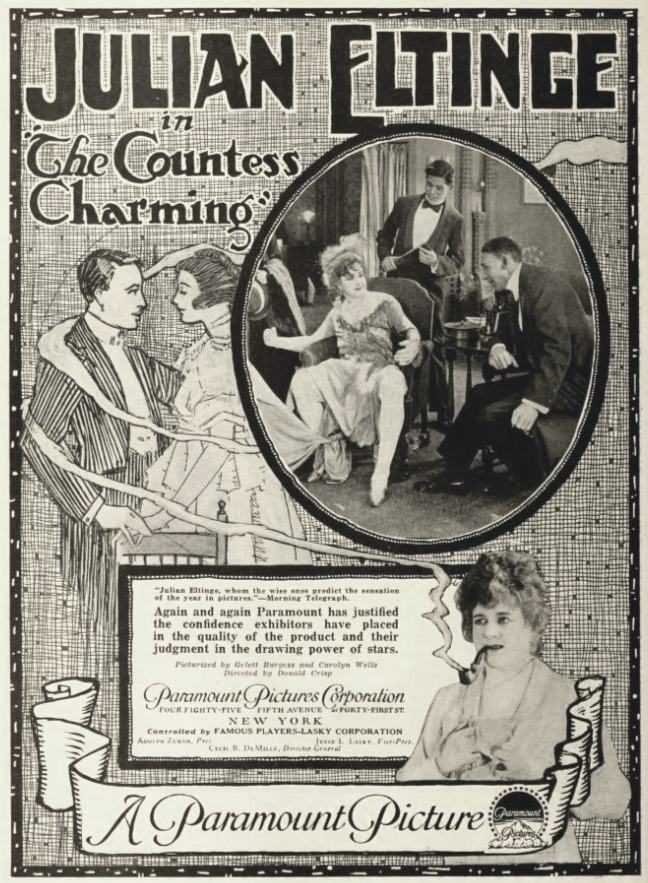
It is at this juncture that the film truly unfurls its wings, soaring into the realm of delightful absurdity. Incensed by the petty cruelty of the Vandergrafts, Jordan conceives a plan for retribution that is as elaborate as it is theatrical. He transforms himself, not merely into another man, but into a captivating, enigmatic Russian Countess. This metamorphosis is not a simple change of clothes; it is a complete embodiment, a masterclass in gender performance that was Eltinge’s signature. As the Countess, Jordan re-enters the very social circles that had spurned him, now welcomed with open arms, wined and dined, and celebrated for his exotic allure. The irony is palpable: the same society that rejected the authentic Stanley Jordan now embraces his fabricated female counterpart with fawning adoration. This narrative beat resonates with the themes explored in films like Beverly of Graustark, where mistaken identity and assumed roles drive the comedic and dramatic tension, though 'Countess Charming' adds the layer of deliberate, gender-bending disguise for revenge.
The Countess's agenda, however, extends beyond mere social reintegration. As a privileged guest in the homes of the wealthy, he embarks on a series of audacious thefts, systematically liberating their valuables. Yet, these are no ordinary acts of larceny; they are acts of 'philanthropic larceny.' Each stolen trinket, each pilfered jewel, finds its way not into the Countess's coffers, but directly into the coffers of the Red Cross Fund. This ingenious twist elevates the film from a simple revenge comedy to a pointed social critique. Jordan, as the Countess, becomes a vigilante of sorts, redistributing wealth from the self-serving elite to a cause dedicated to genuine humanitarian aid. It's a delightful inversion of the 'stop thief' trope, where the audience is implicitly rooting for the 'criminal,' a sentiment that might echo in the audience's mind during viewings of films like Stop Thief!, albeit with a vastly different moral compass guiding the protagonist.
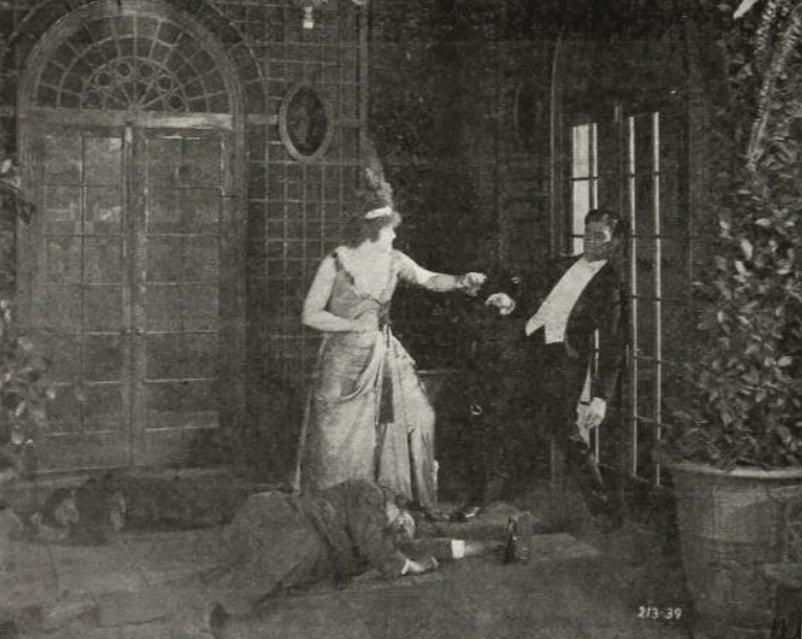
The escalating series of thefts naturally alarms the neighborhood, prompting the hiring of a detective. The tension mounts as the law closes in on the elusive Countess, building towards a climax that promises exposure. But 'The Countess Charming' has one more trick up its sleeve. Just as the detective is on the verge of uncovering the truth, a startling announcement ripples through society: the Russian Countess has been the victim of an assault and lies on her deathbed. This dramatic turn of events, a masterful stroke of narrative manipulation, not only provides a convenient escape route for Jordan but also sets the stage for the film's emotional denouement.
Concerned by the news, Betty Lovering, who has grown fond of the enigmatic Countess, calls upon her supposed deathbed. It is here, in a moment of vulnerability and raw emotion, that the Countess's true identity is revealed. Betty discovers that the captivating Russian noblewoman is none other than Stanley Jordan, the man she loves. This revelation serves as the emotional core of the film, tying together the threads of romance, revenge, and social commentary. The film concludes not with punishment for Jordan's 'crimes,' but with the affirmation of love and, implicitly, a quiet triumph over the superficiality of the social world he sought to expose.
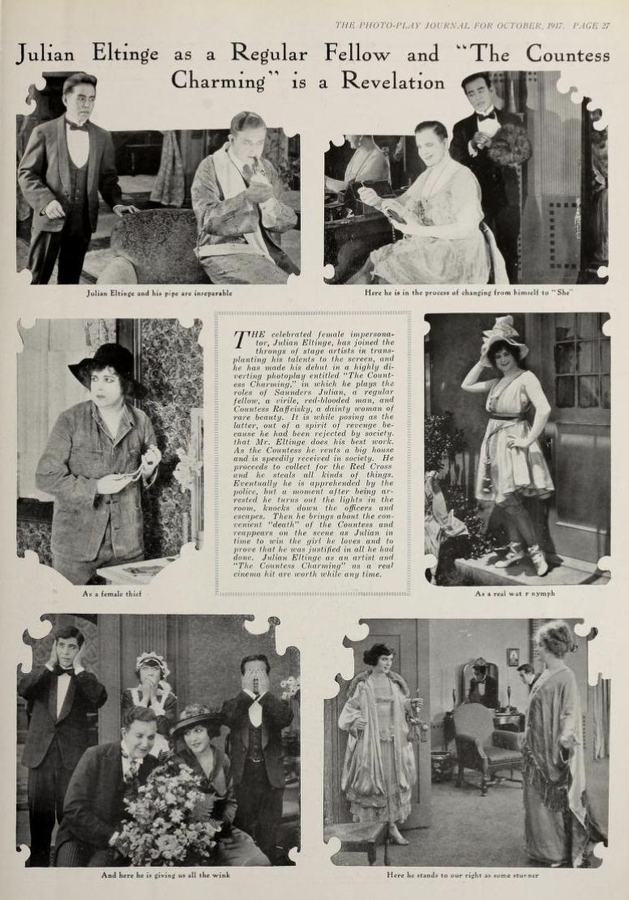
No discussion of 'The Countess Charming' would be complete without a deep dive into the performance of Julian Eltinge. Eltinge was, without hyperbole, a phenomenon of his era. A vaudeville star renowned for his exquisite female impersonations, he brought a level of artistry and conviction to his cross-dressing roles that transcended mere caricature. Unlike many comedic portrayals of men in drag, Eltinge's 'women' were not objects of ridicule but rather figures of grace, charm, and often, genuine beauty. His ability to embody femininity so completely, from the subtle gestures to the nuanced vocal inflections (even in a silent film, the implication of voice was conveyed through body language), was unparalleled. In 'The Countess Charming,' he doesn't just put on a dress; he *becomes* the Countess. His performance is a masterclass in silent acting, conveying both the inherent masculinity of Stanley Jordan and the convincing elegance of his alter ego. This duality is crucial to the film's success, allowing the audience to believe in the disguise while simultaneously appreciating the cleverness of the man beneath it.
Eltinge's portrayal challenges contemporary notions of gender and performance. In an age where gender roles were rigidly defined, his stage and screen presence offered a fascinating fluidity. His characters were often strong, intelligent women, which further elevated his art beyond simple novelty. For 'The Countess Charming,' his star power was undoubtedly a major draw, promising audiences a blend of sophisticated comedy, romantic intrigue, and the mesmerizing spectacle of Eltinge's transformation. This film, alongside others like Ihre Hoheit (Her Royal Highness), which might explore themes of royalty in disguise, would have leveraged the audience's fascination with hidden identities and dramatic reveals, though Eltinge's unique skill set added a layer of gender performance that was truly his own.
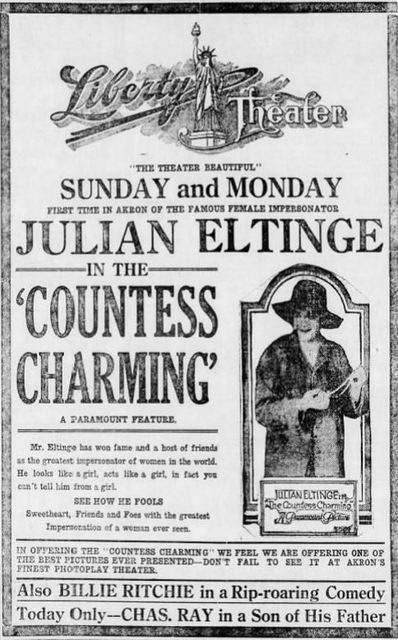
While Eltinge is the undeniable star, the ensemble cast provides solid support, creating a believable world for his antics to unfold. Florence Vidor, as Betty Lovering, brings a sympathetic and spirited presence to her role, making her eventual discovery of Stanley's true identity genuinely impactful. Her chemistry with Eltinge, even through the layers of disguise, is crucial for the romantic subplot to land effectively. Mabel Van Buren's Mrs. Vandergraft is the perfect foil, embodying the haughty, superficial socialite with convincing disdain, thus giving Jordan's revenge a legitimate catalyst. Gustav von Seyffertitz and Tully Marshall also contribute to the film's texture, rounding out a cast that understands the nuances of silent film performance.
The screenwriters – Gardner Hunting, Gelett Burgess, and Carolyn Wells – deserve credit for crafting a narrative that balances comedic elements with a surprisingly sharp social commentary. The plot is intricate enough to maintain suspense yet clear in its satirical intent. They understood how to build a scenario that would allow Eltinge to shine, maximizing the comedic potential of his dual role while ensuring the underlying story remained engaging. The pacing of the film, a critical aspect of silent cinema, is well-handled, building momentum from Jordan's initial slight to the grand reveal of the Countess's 'deathbed.' The film's direction (though not explicitly credited in the provided information, it's integral to the execution) would have played a crucial role in translating this complex narrative to the screen, ensuring that the visual storytelling was clear and compelling, a challenge that films like Il film rivelatore (The Revealing Film) also faced in their own narrative complexities.
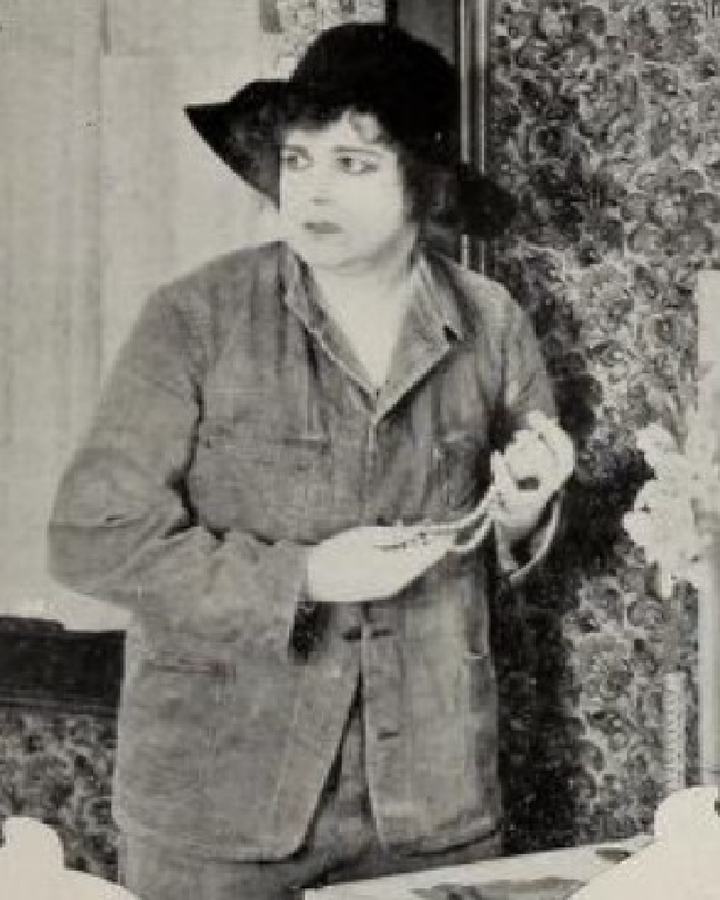
As a silent film, 'The Countess Charming' relies heavily on visual storytelling, expressive acting, and well-designed intertitles to convey its narrative. The costumes, particularly those donned by Eltinge as the Countess, would have been opulent and meticulously crafted, playing a significant role in establishing his character's allure and exoticism. The sets, too, would have aimed to evoke the grandeur of high society, providing a lavish backdrop for the Countess's exploits and the Vandergrafts' snobbery. The cinematography, while perhaps not groundbreaking by modern standards, would have focused on clear compositions and effective use of light and shadow to enhance the drama and comedy. The art of silent film often lay in its ability to communicate complex emotions and plot points without dialogue, relying on exaggerated expressions, dramatic gestures, and carefully constructed scenes. This film exemplifies that craftsmanship, using every visual tool at its disposal to draw the audience into its unique world.
The use of intertitles, often overlooked in modern discussions of silent film, would have been vital here, not just for dialogue but also for conveying exposition, setting tone, and delivering punchlines. A good silent film understands that intertitles are not merely text, but an integrated part of the visual and emotional flow. They must be concise, impactful, and contribute to the overall narrative rhythm. Considering the comedic and satirical nature of 'The Countess Charming,' these intertitles would likely have been imbued with wit and irony, further enhancing the film's charm. The seamless integration of these textual elements with the visual performance is a hallmark of well-executed silent cinema, a craft that films like The Tyranny of the Mad Czar would have employed to convey historical drama, contrasting with the comedic tone here.
'The Countess Charming' holds a significant place in the history of silent film, not only as a vehicle for Julian Eltinge's unique talents but also as an example of early cinematic social satire. It bravely tackled themes of class distinction, superficiality, and personal integrity through the lens of comedy and disguise. The film's willingness to feature a male star in a convincing female role, not as a crude joke but as a sophisticated plot device, speaks volumes about the progressive (in some respects) nature of early Hollywood. While films like Slave of Sin might have explored more overt moral dilemmas, 'The Countess Charming' subtly questioned societal values through its protagonist's unconventional actions.
Its enduring appeal lies in its timeless themes. The desire for revenge against social snobbery, the allure of a secret identity, and the triumph of genuine affection over superficiality are narratives that continue to resonate with audiences. The film also provides a fascinating glimpse into the entertainment landscape of the early 20th century, where vaudeville stars transitioned to the burgeoning medium of film, bringing their established personae and performance styles with them. For cinephiles and historians alike, 'The Countess Charming' serves as a valuable artifact, showcasing the ingenuity and charm of silent era filmmaking.
In conclusion, 'The Countess Charming' is far more than a mere curiosity from the silent era. It is a cleverly constructed, expertly performed comedy that uses disguise and social critique to deliver both laughs and a subtle commentary on human nature. Julian Eltinge's performance is a tour de force, embodying the title character with a conviction and grace that elevate the entire production. The film’s narrative, with its philanthropic heists and romantic entanglements, remains engaging and surprisingly fresh. For those interested in the history of cinema, the evolution of comedic storytelling, or simply a delightful escape into a bygone era, 'The Countess Charming' offers a charming, witty, and surprisingly insightful experience. It reminds us that even without spoken dialogue, the power of visual storytelling, compelling characters, and a sharp script can transcend time, proving that some films, much like their disguised protagonists, harbor unexpected depths beneath a captivating exterior.
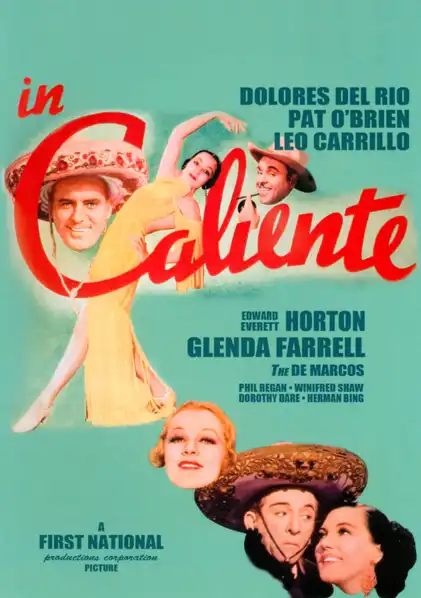
IMDb 5.9
1935
Community
Log in to comment.