DbcultAccessing Vault...
Cult Review
Senior Film Conservator
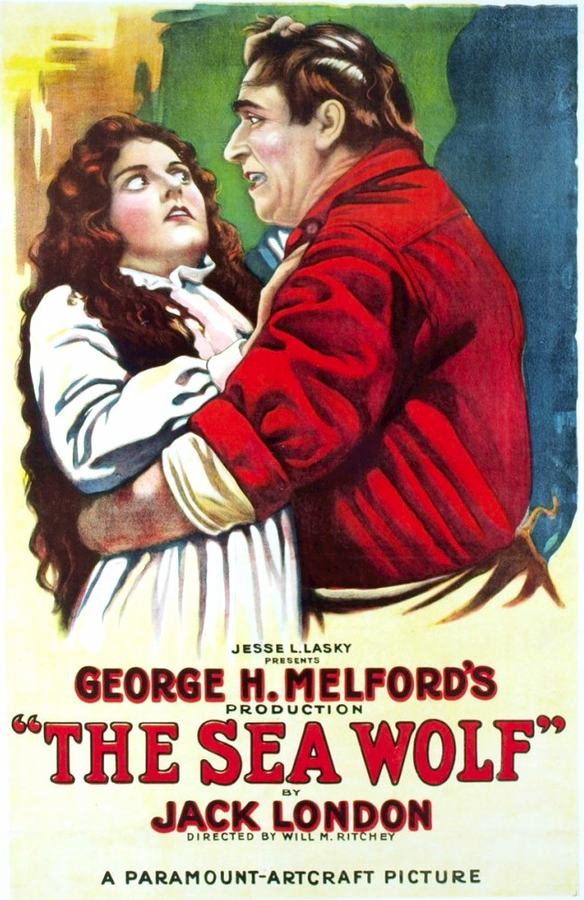
Stepping back into the annals of early cinema often feels like unearthing a forgotten language, a lexicon of gestures, expressions, and intertitles that speaks volumes without uttering a single audible word. George Melford's 1920 adaptation of Jack London's seminal novel, The Sea Wolf, stands as a formidable testament to this silent artistry. It's a film that doesn't merely tell a story; it plunges the viewer headlong into a visceral, often horrifying, exploration of human nature's darkest corners, all played out against the vast, indifferent expanse of the Pacific Ocean. This isn't just a film; it's an experience, a stark reminder of the enduring power of London's narrative and the nascent genius of cinematic storytelling. The decision to tackle such a philosophically dense and psychologically brutal novel in the silent era was audacious, and the result is a surprisingly potent, if occasionally melodramatic, journey into the heart of darkness. It forces us to reconsider the limitations we often impose on silent film, revealing a medium capable of profound emotional and intellectual depth.
The narrative unfurls with a jarring suddenness, a common stylistic choice of the era designed to immediately hook the audience. We are introduced to Humphrey Van Weyden, portrayed with an earnest, almost naive vulnerability by A. Edward Sutherland. Humphrey is the quintessential London protagonist—a man of letters, a gentle intellectual, utterly unprepared for the savage realities that await him. His world, one of comfort and refined thought, is shattered when the ferry he and the equally refined Maud Brewster (Mabel Julienne Scott, radiating an almost ethereal fragility) are traveling on collides with another vessel and sinks. This sudden cataclysm serves as more than a plot device; it's a symbolic stripping away of civilization's thin veneer, propelling our protagonists into a primal struggle for survival. The rescue that follows, however, is no salvation, but merely an exchange of one peril for another, far more insidious one. The 'Ghost,' a sealing schooner, emerges from the fog like a harbinger of doom, its crew a motley collection of rough-hewn men, and its captain, Wolf Larsen, a figure of almost mythical menace. This dramatic opening, devoid of sound, relies entirely on visual cues and the compelling performances of its cast to convey the sheer terror and disorientation of the shipwreck.

At the black heart of The Sea Wolf beats the terrifying pulse of Captain Wolf Larsen, brought to chilling life by the formidable Noah Beery. Beery's portrayal is nothing short of iconic, a masterclass in silent film villainy. He doesn't merely play Larsen; he embodies the character's brutal philosophy, his predatory intellect, and his sheer, unadulterated malevolence. Larsen is not just a cruel captain; he is a force of nature, a self-taught philosopher of the brute, a man who has meticulously constructed his own worldview based on survival of the fittest and the utter insignificance of human life beyond its immediate utility. His eyes, even in the grainy black and white of the era, convey a chilling intensity, a gaze that penetrates and dissects, finding weakness and exploiting it with ruthless efficiency. His physical presence is immense, a coiled spring of latent violence, yet it's his psychological torment that truly defines him. He is a man perpetually at war with the universe, and his ship, the 'Ghost,' becomes a micro-cosmos where this war is waged against all who fall under his sway. Beery captures this complex duality—the beast and the philosopher—with remarkable nuance, using subtle shifts in posture, the curl of a lip, or the sudden, terrifying flash in his eyes to communicate volumes of unarticulated thought. It’s a performance that transcends the limitations of its medium, leaving an indelible impression long after the final frame.
Larsen's interactions with Humphrey Van Weyden form the narrative's central psychological battleground. Instead of returning the shipwrecked survivors to shore, Larsen, with a perverse sense of ownership, forces Humphrey into servitude as a cabin boy. This act is not merely pragmatic; it's a deliberate psychological experiment. Larsen delights in breaking Van Weyden, in stripping away his gentlemanly pretensions and forcing him to confront the raw, unvarnished ugliness of existence. Humphrey's journey from effete intellectual to hardened survivor is the novel's core, and Sutherland, despite the inherent challenges of silent acting, manages to convey this gradual, painful transformation. We witness his initial revulsion, his clumsy attempts at manual labor, and his slow, agonizing adaptation to the 'Ghost's' brutal rhythm. The contrast between his former life and his new reality is starkly drawn, emphasizing London's recurring theme of the fragility of civilization when confronted by primal forces. Larsen, in his twisted mentorship, becomes both tormentor and unwitting catalyst for Humphrey's growth, a dark mirror reflecting the baser instincts that lie dormant within all humanity. This dynamic is a powerful exploration of character evolution under extreme duress, a testament to London's genius and Melford's faithful interpretation.

The arrival of Maud Brewster further complicates the already volatile atmosphere aboard the 'Ghost.' Mabel Julienne Scott imbues Maud with a delicate strength, a woman who, despite her sheltered upbringing, refuses to be entirely broken by Larsen's menacing presence. Her presence introduces a new dimension to Larsen's tyranny. While he enjoys tormenting Humphrey intellectually, Maud ignites a different kind of desire within him—a possessive, almost aesthetic appreciation for her beauty and refinement. His 'ideas' for her are never explicitly stated in the subtle language of silent film, but the implication of sexual menace hangs heavy in the air, creating an unbearable tension. Maud becomes a symbol of the civilization and morality that Larsen so vehemently rejects, yet paradoxically, also desires to conquer or corrupt. Her vulnerability heightens the stakes for Humphrey, transforming his struggle for survival into a desperate fight to protect her. The silent film's reliance on visual storytelling here is masterful, using close-ups of Larsen's predatory gaze and Maud's fearful, yet defiant, expressions to convey a complex interplay of power and resistance. It's a testament to the actors' abilities and the director's vision that such nuanced emotional landscapes can be painted without dialogue. Her character also serves as a moral compass, albeit a fragile one, in the amoral universe Larsen has created, reminding both Humphrey and the audience of what is at stake beyond mere physical survival.
The casting throughout the film is largely commendable, particularly given the demands of silent acting, which required exaggerated yet precise movements and facial expressions to convey emotion. Beyond Beery, Sutherland, and Scott, the supporting cast, including Kamuela C. Searle and Tom Forman, contribute to the grim authenticity of the ship's crew. Each face tells a story of hardship and desperation, forming a convincing backdrop to Larsen's reign. The ensemble creates a palpable sense of claustrophobia, a world confined within the wooden hull of the 'Ghost,' where escape seems an impossible dream. The interactions, though wordless, are charged with unspoken tension, fear, and simmering rebellion. The film excels at creating a sense of a living, breathing, albeit brutal, community, where every glance and gesture carries weight. This collective portrayal enhances the isolation of Humphrey and Maud, making their predicament even more desperate and poignant. It’s a masterclass in how to build a world with limited tools, relying on the sheer expressive power of the human form.

From a technical perspective, The Sea Wolf (1920) showcases the burgeoning artistry of silent cinema. The cinematography, while perhaps lacking the elaborate tracking shots or complex editing of later decades, effectively captures the grim beauty of the open sea and the oppressive confines of the ship. Shots of the stormy ocean, though likely achieved with miniatures and clever stagecraft, evoke a powerful sense of nature's raw power. The lighting, crucial in black and white film, is used to heighten dramatic effect, casting deep shadows that emphasize the nefarious atmosphere surrounding Larsen and highlighting the vulnerability of his captives. The interior shots of the 'Ghost' are particularly effective, creating a sense of cramped, dangerous living conditions that amplify the psychological pressure on the characters. Melford's direction demonstrates a keen understanding of how to build tension visually, relying on sustained gazes, dramatic entrances, and carefully choreographed physical confrontations. The film avoids excessive intertitles, trusting the actors and the visual narrative to carry the emotional weight, a sign of sophisticated filmmaking for its time. This reliance on visual cues is what makes silent films so fascinating, forcing the audience to engage more actively with the images presented, to decipher the unspoken emotions and motivations.
The adaptation by Will M. Ritchey from Jack London's novel is a commendable effort to distil a complex literary work into a visual medium. London's prose is rich with philosophical discourse and psychological introspection, elements that are inherently challenging to translate to silent film. Ritchey and Melford, however, succeed in capturing the essence of London's themes: the struggle between civilization and savagery, the indomitable will to survive, and the corrupting influence of absolute power. While some of the novel's deeper philosophical debates are necessarily streamlined or conveyed through more overt visual metaphors, the core emotional and thematic resonance remains intact. The film emphasizes the physical and external conflicts, which were more easily portrayed, but never loses sight of the internal struggles that define London’s characters. This balancing act is a significant achievement, particularly given the constraints of the era. It speaks to a deep respect for the source material, ensuring that even without the author's eloquent prose, the spirit of his narrative endures on screen. It is this fidelity to the thematic heart of the novel that allows the film to resonate even today, reminding us that certain struggles are timeless.

Comparing this 1920 rendition to other cinematic interpretations of The Sea Wolf is a fascinating exercise. Later adaptations, particularly the 1941 version starring Edward G. Robinson, benefited from sound and more advanced cinematic techniques, allowing for a more direct translation of London's verbose philosophical dialogues. However, the silent film's strength lies in its ability to convey these ideas through sheer atmospheric dread and the raw power of its performances. Beery's Larsen, in particular, stands as a unique interpretation, a silent behemoth of malevolence that relies on visual cues rather than spoken word to communicate his terrifying intellect. It’s a testament to the raw, visceral impact of early cinema that it could capture the essence of such a complex character without the aid of dialogue. This earlier version, by necessity, leans more heavily into the physical brutality and the stark visual contrasts, making its impact felt in a more primal, less intellectualized manner. This is not to say one is superior, but rather that each adaptation brings its own unique strengths to London's enduring tale.
In the broader context of silent cinema, The Sea Wolf (1920) can be seen alongside films that explored themes of confinement and psychological torment. While not a direct comparison, one might draw thematic parallels to films like In the Python's Den, where characters find themselves ensnared in dangerous, inescapable situations, forced to confront their inner demons or external threats. The sense of being trapped, of struggling against an overwhelming force, is a shared thread. Similarly, the moral ambiguities and the quiet desperation of characters facing impossible choices, though perhaps not as overtly dramatic, might echo in films like The Guilt of Silence, where the unspoken weight of circumstances shapes destinies. These comparisons are not about direct narrative parallels but about the shared cinematic language of conveying profound psychological states and moral quandaries through visual means alone. The ability of silent film to evoke such deep-seated emotions without the crutch of dialogue is truly remarkable, relying on the universal language of human expression. The sheer terror and moral compromises depicted on the Ghost resonate with the claustrophobic dread found in other narratives of entrapment, where the human spirit is tested to its absolute limits.

The enduring appeal of London's story, and by extension, this film, lies in its unflinching examination of the human condition. It asks fundamental questions: What defines humanity? Is it our intellect, our morality, or merely our capacity for survival? How thin is the line between civilization and savagery? These questions, explored through the harrowing experiences of Humphrey and Maud, resonate as powerfully today as they did a century ago. The film, despite its age and the technical limitations of its era, manages to convey the brutal poetry of London's vision. It is a stark, uncompromising tale that challenges audiences to look beyond the surface, to confront the darkness that lurks not only in the depths of the ocean but within the human soul itself. The performances, particularly Noah Beery's Wolf Larsen, remain compelling, a testament to the power of silent acting to create truly unforgettable characters. The film serves as a vital historical document, showcasing how early filmmakers grappled with complex literary source material, translating profound philosophical ideas into a new, visual language. It’s a reminder that true cinematic artistry isn't defined by technological sophistication, but by the ability to evoke emotion and provoke thought, a feat this 1920 production achieves with remarkable efficacy. It's a film that demands patience from modern audiences, but rewards it with a glimpse into a foundational period of cinematic storytelling, offering a raw, unvarnished look at a timeless struggle.
In conclusion, George Melford's The Sea Wolf (1920) is more than just a historical curiosity; it's a robust and impactful adaptation that captures the primal essence of Jack London's masterpiece. While it naturally lacks the sonic richness and narrative complexities that sound cinema would later afford, its visual storytelling and powerful performances carve out a compelling, if often disturbing, experience. It reminds us that the fundamental elements of compelling drama—conflict, character transformation, and thematic depth—were being masterfully explored even in cinema's infancy. For enthusiasts of classic literature, silent film, or simply a gripping tale of survival against overwhelming odds, this early rendition of London's brutal odyssey is an essential viewing. It stands as a powerful artifact, demonstrating the profound capabilities of a medium often underestimated, and reaffirms the timeless resonance of London's exploration into the heart of human savagery and resilience. The film, in its stark, uncompromising vision, continues to echo the profound questions London posed, inviting each generation to grapple with the wildness within and without.

IMDb 5.5
1926
Community
Log in to comment.