DbcultAccessing Vault...
Cult Review
Senior Film Conservator
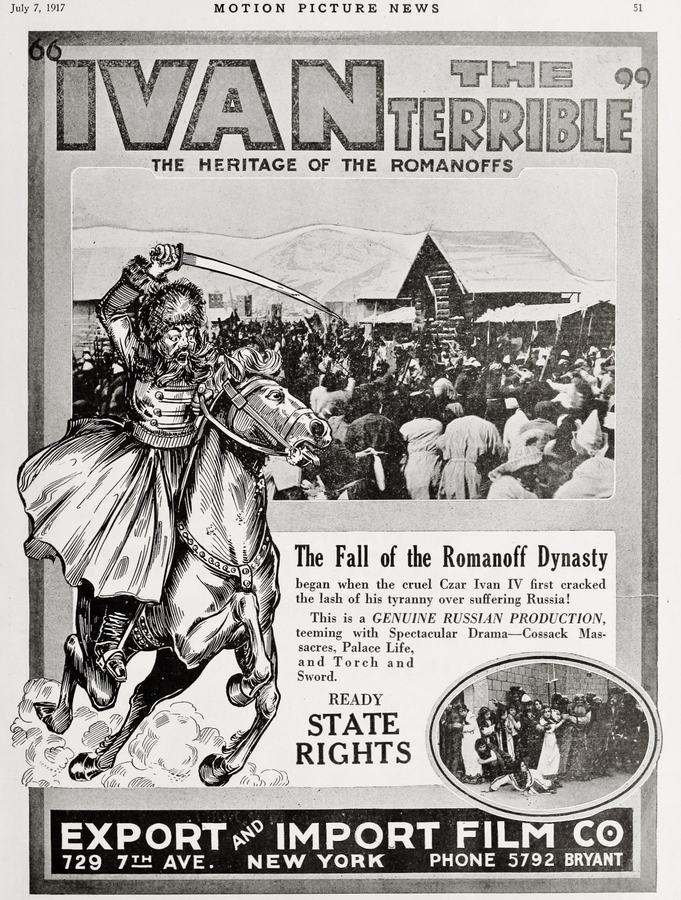
To witness Enrico Guazzoni’s 1917 Ivan the Terrible (Ivan il Terribile) is to step into a time capsule where the nascent language of cinema collided with the ancient weight of historical tragedy. In an era where the medium was still grappling with its own identity, Guazzoni—a man whose background in painting and set design informed every frame—constructed a visual lexicon that remains startlingly potent. While the 1917 cinematic landscape was occupied by diverse experiments, from the social realism of Marta of the Lowlands to the whimsical innocence of Twin Kiddies, Guazzoni’s work stood as a monolith of operatic intensity.
The film’s power resides primarily in the Herculean performance of Amleto Novelli. Novelli does not merely play Ivan; he inhabits him with a physicality that transcends the limitations of silent film pantomime. In the early scenes, his Ivan is a figure of rigid, almost architectural stability, a man whose ambition for a unified Russia is written in the sharp angles of his posture. This stands in stark contrast to the more fluid, romantic archetypes seen in contemporary productions like Romeo and Juliet. As the narrative progresses and the Tsar’s sanity begins to fray under the pressure of treachery and bereavement, Novelli’s movements become jagged, unpredictable, and hauntingly expressive.
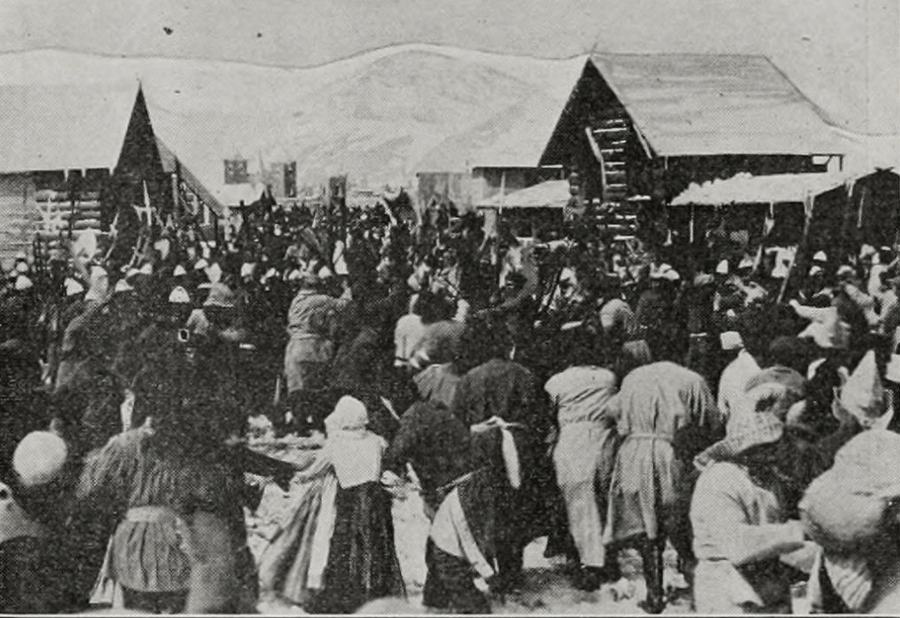
Guazzoni, acting as both director and aesthetic architect, utilizes the Kremlin’s interiors not as mere backdrops, but as psychological extensions of the protagonist. The deep shadows and heavy tapestries create a sense of claustrophobia that rivals the most atmospheric moments in Satan's Rhapsody. There is a tactile quality to the film; one can almost smell the incense and the damp stone of the Russian winter. Unlike the expansive, documentary-style vistas found in The Captain Besley Expedition, Ivan the Terrible is an interior epic—a journey through the corridors of power and the recesses of a tortured soul.
The supporting cast, including Andrea Habay and Matilde Di Marzio, provides a necessary foil to Novelli’s central gravity. Di Marzio, in particular, captures the ethereal grace of Anastasia, whose death serves as the film’s emotional pivot point. Her presence is a fleeting warmth in a world otherwise dominated by the cold steel of the Oprichnina. This loss is handled with a gravity that avoids the saccharine pitfalls of The Flame of Youth, opting instead for a somber, liturgical mourning that feels profoundly Russian despite its Italian origins.
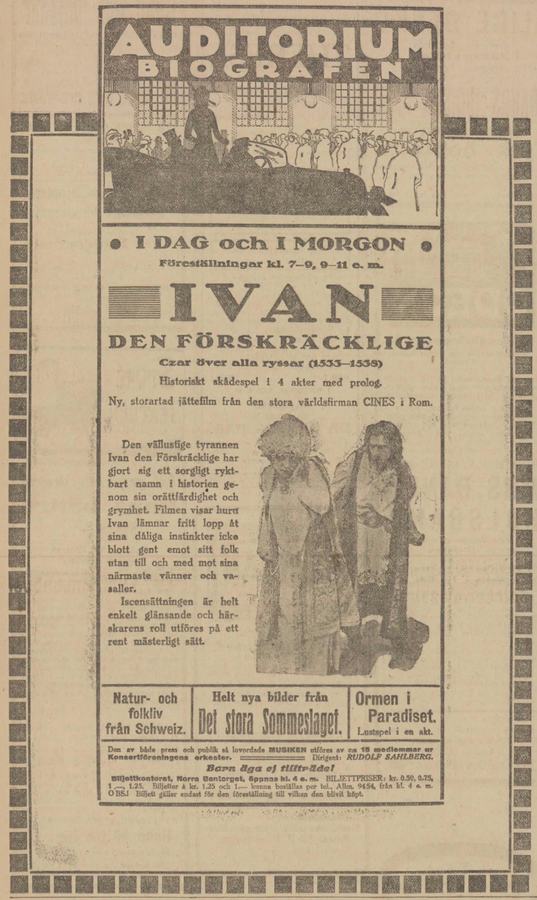
When placing Ivan the Terrible alongside its peers, the distinction in ambition is palpable. While Her Great Match or John Glayde's Honor dealt with the intricacies of social standing and personal integrity within a modern context, Guazzoni reached back into the annals of history to find a mirror for the turbulent world of 1917. The Great War was ravaging Europe, and the Russian Revolution was unfolding in real-time as this film was being screened. There is an inescapable subtext of collapsing old worlds that permeates the celluloid. The film’s exploration of autocratic excess and the subsequent isolation of the leader feels remarkably prescient, far removed from the fairy-tale morality of Snow White.
Technically, the film is a marvel of early lighting. Guazzoni employs a proto-expressionist style, using high-contrast lighting to accentuate the furrows in Novelli’s brow and the glint of the Tsar’s crown. This visual strategy is far more sophisticated than the flat, utilitarian lighting seen in The Perfect '36'. It suggests a director who understood that the camera could do more than record; it could interpret. The sequences involving the Oprichnina, Ivan’s personal guard, are filmed with a rhythmic intensity that prefigures the montage techniques that would later be perfected by Eisenstein. The black-clad riders moving through the snow are an image of pure, distilled dread, a stark contrast to the adventurous spirit of The Remittance Man or the rugged survivalism of Moondyne.
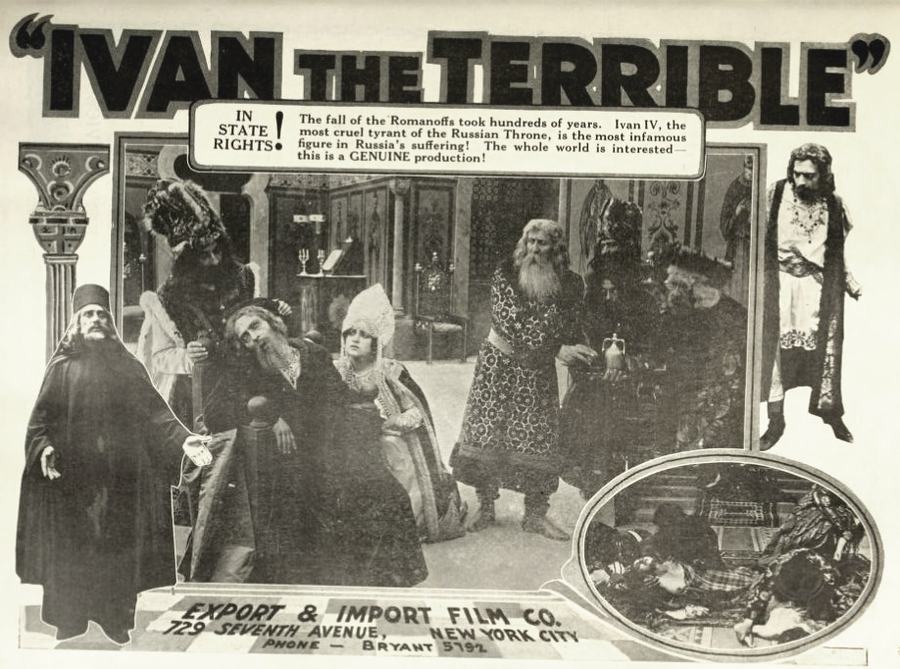
The climax—the accidental slaying of the Tsarevich—is the film’s undisputed masterpiece of staging. Guazzoni avoids the sensationalism that might have defined a lesser work, such as the melodrama inherent in Woman Against Woman; or, Rescued in the Clouds. Instead, he focuses on the silence of the aftermath. The image of Novelli cradling the lifeless body of his son, his eyes wide with the realization that he has destroyed his own future, is one of the most indelible images in silent cinema. It is a moment of profound existential horror that elevates the film from a historical pageant to a universal tragedy. In this scene, the film reaches a level of maturity that makes contemporary efforts like Ålderdom och dårskap seem quaint by comparison.
Even when the film occasionally succumbs to the theatricality of its time—long takes that might feel static to a modern eye accustomed to rapid-fire editing—it maintains a sense of purpose. Every gesture is calculated to convey the struggle between the man and the myth. The Tsar is portrayed not as a cartoon villain, but as a tragic figure caught in the machinery of his own making. This nuanced approach to character is a far cry from the more binary morality of Pro Patria.
To watch Ivan the Terrible today is to engage with a ghost. It is a reminder of the sheer scale of the Italian silent film industry, which at its height, produced epics that were the envy of the world. Guazzoni’s Ivan is a bridge between the 19th-century stage and the 20th-century screen, a hybrid of old-world gravitas and new-world visual experimentation. It is a film that demands patience but rewards the viewer with a richness of texture and a depth of emotion that is rarely found in the early archives.
In the final analysis, the film’s legacy is one of uncompromising artistic vision. While many of its contemporaries have faded into the obscurity of footnotes, Ivan the Terrible remains a vital, breathing piece of art. It captures the essence of a man who was both a builder and a destroyer, rendered in shades of sea blue and dark orange that defy the binary of black and white. It is a testament to the power of the silent image to convey the most complex of human conditions: the terrifying loneliness of the absolute ruler. For anyone seeking to understand the roots of cinematic grandeur, this 1917 opus is not just a curiosity; it is an essential text, a haunting melody played on the strings of history and madness.
Technical Note: The restoration of such works is paramount, as the nitrate decay often threatens the very chiaroscuro that Guazzoni worked so tirelessly to perfect. This film stands as a beacon of what was possible before the advent of sound, proving that the silent screen was never truly quiet—it spoke through the eyes of its actors and the shadows of its sets.
IMDb 6.5
1914
Community
Log in to comment.