DbcultAccessing Vault...
Cult Review
Senior Film Conservator
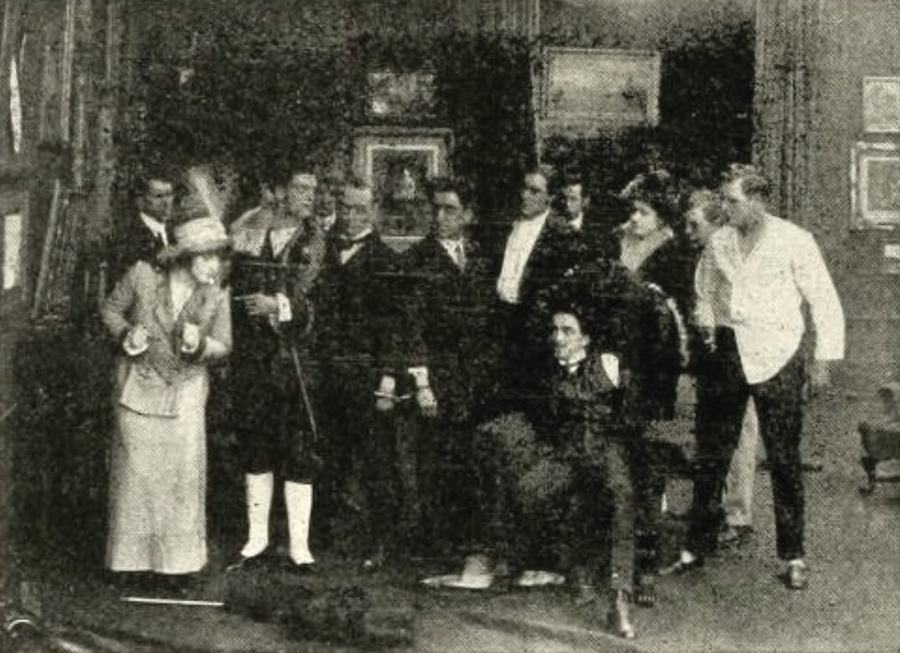
Broke belle becomes social secretary, sabotages heirs’ engagements, framed for theft, kidnapped by art thieves, saved by love. #SilentCinema
Picture 1915: Europe is a powder keg, but on American screens the crisis is cotillion-deep. The Secretary of Frivolous Affairs lands like a champagne saber, slicing through polite society’s carapace to expose the pulp of desperation beneath. Loulie’s arc—from solvency to servitude to self-authored redemption—mirrors a nation tip-toeing on the lip of modernity, where women’s labor is suddenly marketable yet never quite respectable. Directors Tom Ricketts and May Futrelle lace this predicament into every reel: the footmen wear white gloves, but the camera lingers on the calluses beneath.
Shot through with the amber of orthochromatic stock, the film converts drawing rooms into aquariums of light. When Loulie glides across Persian rugs, the grain swallows the crimson, rendering her silhouette a trembling pewter statuette—an accidental metaphor for how society drains women of chromatic agency. Compare this to the ecclesiastical tableaux of Life of Christ or the sooty sweatshops in A Factory Magdalen; here, opulence itself becomes a prison whose walls shimmer like silk.
Louise Linn’s Loulie never begs for pity; instead she weaponizes decorum, letting the faintest tremor of lower eyelid betray panic. Watch her in the kidnapping scene: bound to a Sheraton chair, she flexes wrists not to escape but to retain circulation—an economy of movement that speaks louder than flapper-era histrionics. Opposite her, Harold Lockwood’s Hap converts puppy love into vehicular valor; when he guns that mahogany-hulled speedboat, the camera tilts to swallow horizon, converting nascent masculinity into kinetic iconography.
Every transaction in the film is gendered. Mrs. Hazard’s fortune insulates her from the sexual marketplace, yet she hires Loulie precisely to police her children’s entry fees into wedlock. Natalie, older and divorced, is deemed depreciated currency, while Loulie’s poverty renders her hyperinflated—desired yet suspect. The screenplay flirts with progressivism: Loulie’s final acceptance of Hap is less surrender than IPO launch, a merger where she keeps 51 % of herself.
Objects vanish—diamonds, Renoirs, reputations—but the grand larceny is agency. Winthrop’s framing literalizes how narratives are pilfered from the marginalized; the Duc’s art ring literalizes cultural plunder. Even the motorboat chase pirouettes around property: who owns the waves, the story, the woman’s body? The answer hisses through the final intertitle: ownership is a fugitive craft, forever chased by the undercurrent of truth.
Ricketts’ tonal cocktail—effervescent comedy cut with peril—anticipates the screwball genus later crystallized in Young Romance. Yet where that 1919 confection leans into earnestness, Secretary retains a cynic’s raised eyebrow, closer to the sardonic aftertaste of Simon, the Jester. Meanwhile, its treatment of class anxiety dovetails into The Chorus Lady, though that 1915 release lacks the motorboat adrenaline injection.
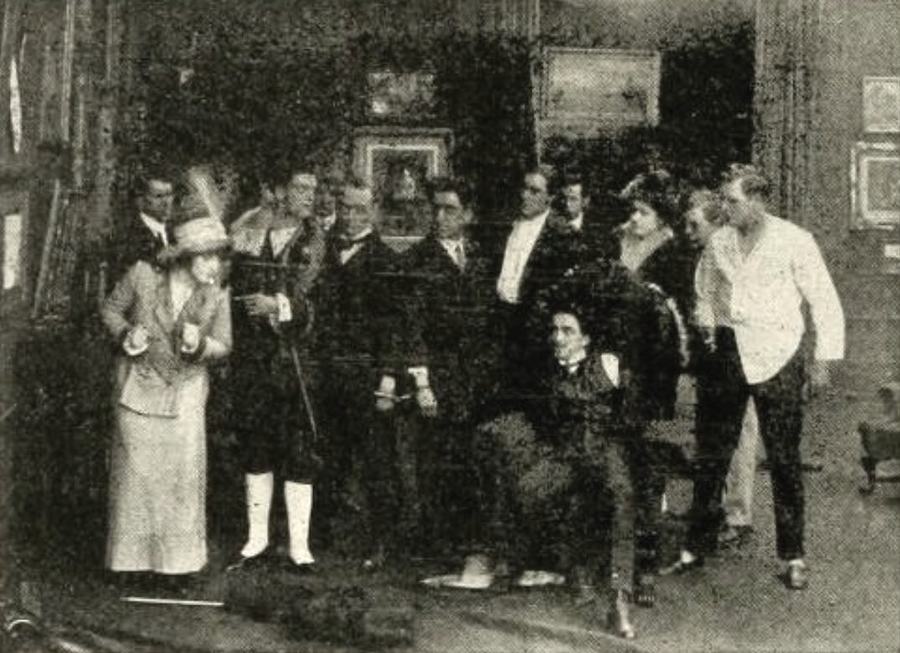
Clocking just shy of five reels, the picture is a hummingbird: every 12 minutes a set piece—garden party sabotage, midnight theft, maritime pursuit, clifftop abduction. Contemporary critics carped about “narrative sprawl,” yet today that restlessness reads as prophetic binge grammar, the ancestor of streaming-era cliffhangers. Note the hard cut from Loulie fainting on the beach to the Duc’s gloved hand slicing canvas: Eisenstein would call it intellectual montage; we call it irresistible.
Hovering at the periphery are artifacts of empire: the Duc de Trouville’s pretended nobility, the Chinese silk in Loulie’s kimona, the Afro-Caribbean cane harvested to fund Mrs. Hazard’s sugar cubes. None are textual, yet their silhouette haunts the negative space. The film declines didacticism, but the modern eye detects the supply chain of luxury shimmering like heat haze beyond the terrace.
No extant cue sheets survive, but exhibitors likely commissioned jaunty rags for soirées, then switched to tremolo strings during abduction. Project it today and try Max Richter’s On The Nature of Daylight beneath the beach rescue—watch how Loulie’s collapse acquires the gravitational heft of a dying star restored by human orbit.
A 4K restoration from a 35mm Dutch export print premiered at Pordenone 2019; the tints—canary for interiors, cyan for seascape—were reconstructed using photochemical analysis. Streaming rights are tangled in the quagmire of Harold Lockwood’s estate, but 8 minutes circulate on the European archive’s YouTube channel, watermarked yet wondrous.
Fast-forward to 1936: Hitchcock’s Sabotage also imprisons its heroine in a cinema, bombs nested in film cans—an echo of Loulie locked among slashed canvases. Zoom to 2020: Portrait of a Lady on Fire reclaims the female gaze from the canvases men buy and sell; Loulie would recognize the transaction.
The Secretary of Frivolous Affairs is a mille-feuille: airy layers of flirtation, sinewed by criminal custard, finished with a dusting of proto-feminist zest. It neither moralizes nor apologizes; instead, it waltzes on the lip of catastrophe, humming a tune that anticipates both jazz-age liberation and noir-era fatalism. Seek it out, whether in archive basement or digital fragment, and savor a time when “frivolous” was merely the password to the most serious game in town.
Score: 8.9/10 — A sparkling artifact whose wit still cuts like crystal, even after a century of chips and cracks.
IMDb 6.9
1923
Community
Log in to comment.