DbcultAccessing Vault...
Cult Review
Senior Film Conservator
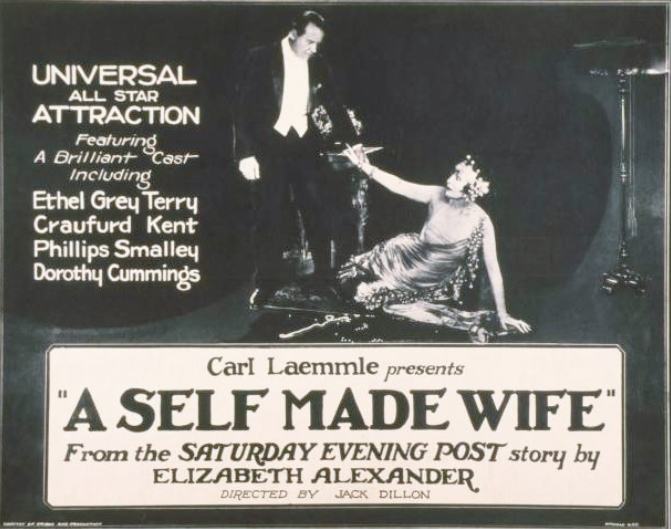
In the cinematic landscape of the early 1920s, few tropes were as resonant as the sudden ascent from destitution to dizzying heights of wealth. The Self-Made Wife, directed with a keen eye for the domestic grotesque, navigates this transition not as a fairy tale, but as a grueling psychological excavation. The film posits a discomforting question: can wealth truly transmute the soul, or does it merely highlight the cracks in our foundation? Unlike the high-octane escapism of Fast and Furious, this narrative is a slow-burn examination of the social ossification that occurs when the bank account outpaces the evolution of the spirit.
Maurice Murphy delivers a performance of restless ambition as Tim Godwin. His transformation from a mud-caked laborer to an oil tycoon is portrayed with a frantic energy that borders on the neurotic. Tim is the quintessential 'self-made' man, but the film subtly critiques that very moniker. Is he self-made, or is he merely the beneficiary of a geological accident? His desperation to belong to the upper echelons of society manifests as a cruel rejection of his past, embodied by his wife, Corrie. Here, the film enters the territory of social horror, where the home—once a sanctuary of shared struggle—becomes a stage for performative embarrassment.
Ethel Grey Terry provides the film’s emotional, if somber, heartbeat. As Corrie, she is a masterclass in stillness and recalcitrance. While the world around her explodes into a kaleidoscope of silk, pearls, and champagne, Corrie remains draped in the drabness of her memories. She is the antithesis of the flapper era, a woman who refuses to participate in the 'Great Gatsby' style reinvention. Her performance captures the profound loneliness of the displaced; she is a stranger in her own mansion, a ghost haunting the hallways of a life she never requested. This thematic exploration of the domestic sphere’s resistance to capitalistic change is reminiscent of the tensions explored in Made in the Kitchen, yet it carries a much heavier weight of tragic inevitability.
The introduction of the 'social secretary'—a role played with a chilling, clinical efficiency—serves as the film’s primary catalyst for conflict. This character is not merely a tutor; she is a sculptor tasked with chiseling away the 'unrefined' edges of Corrie’s personality. The scenes of social instruction are agonizing to witness. They represent the ultimate betrayal of the marital bond: the husband’s attempt to outsource his wife’s identity. This pedagogical intervention highlights the era’s obsession with social climbing, a theme that resonates deeply when compared to the moral complexities found in The Devil's Riddle.
Visually, The Self-Made Wife utilizes a striking contrast in its mise-en-scène. The early scenes in the oil fields are characterized by a gritty, tactile realism—the mud seems to seep through the screen. As the Godwins move into their palatial estate, the cinematography shifts toward a cold, cavernous opulence. The ceilings are too high, the furniture too ornate, and the lighting too harsh. It is a visual synecdoche for the emotional distance growing between Tim and Corrie. The film doesn’t just show us wealth; it shows us the architecture of isolation. This visual storytelling is far more sophisticated than the literal adventures of 20,000 Leagues Under the Sea, focusing instead on the internal pressures of a domestic submarine.
The screenplay by Elizabeth Alexander and Albert Kenyon avoids the simplistic moralizing often found in silent-era dramas. There is no clear villain here, only victims of a social system that demands total assimilation. Tim’s embarrassment is portrayed as a genuine, albeit shallow, suffering. He truly believes that Corrie’s 'failure' to adapt is a threat to their future. This nuance elevates the film above mere melodrama. It becomes a critique of the American Dream itself—a dream that suggests you can leave your past behind, provided you have enough capital to hire someone to bury it for you. The thematic resonance with Wealth is undeniable, yet The Self-Made Wife focuses more on the interpersonal erosion caused by pecuniary abundance.
When we look at contemporary films of the era, such as The Siren's Song, we often see the allure of wealth as a predatory external force. In The Self-Made Wife, the predator is internal. It is the ego of the self-made man who cannot tolerate a mirror of his own humble beginnings. The supporting cast, including Virginia Ainsworth and Crauford Kent, populate the Godwins' new world with a series of masks—characters who represent the 'ideal' socialites Tim so desperately wants to emulate. Their interactions with Corrie provide the film’s most cutting social satire, as they navigate her presence with a mixture of pity and thinly veiled contempt.
The film’s pacing is deliberate, allowing the audience to feel the slow suffocation of Corrie’s spirit. It lacks the frenetic energy of Heart of Twenty, opting instead for a heavy, atmospheric dread. This is a film about the weight of things—the weight of gold, the weight of expectation, and the weight of a past that refuses to be erased. Even the title itself is a bitter irony; Corrie is not 'self-made' in the way Tim is. She is being 'remade' against her will, a passive recipient of a transformation that feels more like a dissection.
The direction manages to capture the subtle nuances of class friction without resorting to grand theatrical gestures. The focus is on the small things: the way Corrie holds a teacup, the way Tim looks away when she speaks, the silence that hangs between them at a dinner table set for twenty. This attention to detail creates a palpable sense of unease. It is a domestic tragedy played out in the brightest of ballrooms. The film’s exploration of the 'social secretary' trope predates the more famous iterations seen in later decades, establishing a blueprint for the 'grooming' narrative that continues to fascinate audiences.
In comparison to the pastoral themes of The Roof Tree, The Self-Made Wife is a decidedly urban and industrial critique. It acknowledges that while the 'roof tree' of the family might be strong, the soil it is planted in—be it oil-rich or dirt-poor—determines its ultimate health. The film also shares a certain thematic DNA with The Spell of the Yukon, in that both deal with the transformative and often destructive power of natural resources on the human psyche. However, the stakes here are not survival against the elements, but survival against the judgment of one’s peers.
As we analyze the final act, the resolution—or lack thereof—leaves a lingering sense of melancholy. The film does not offer easy answers. It doesn't suggest that Tim is wrong for wanting a better life, nor does it suggest that Corrie is right for clinging to the past. Instead, it presents the tragic reality of two people moving at different speeds toward different goals. The 'self-made' moniker becomes a badge of isolation. Tim has made himself, but in doing so, he has unmade his marriage. It is a powerful, if bleak, testament to the cost of the American climb.
Ultimately, The Self-Made Wife stands as a significant work of early social realism. It avoids the easy escapism of many of its contemporaries, choosing instead to dwell in the uncomfortable spaces between classes. It is a film that demands we look at the human cost of the oil gusher, the human cost of the mansion on the hill, and the human cost of the 'social secretary' who promises to make us better than we are. For those interested in the intersections of gender, class, and capital in the early 20th century, this is an essential viewing experience that remains hauntingly relevant in our own era of rapid wealth accumulation and social performance.
Reviewer's Note: The performances of Maurice Murphy and Ethel Grey Terry are particularly noteworthy for their restraint, providing a grounded reality to a story that could easily have devolved into caricature. This film remains a poignant reminder that while money can buy a new life, it cannot always buy a new soul.
IMDb 6
1916
Community
Log in to comment.