DbcultAccessing Vault...
Cult Review
Senior Film Conservator
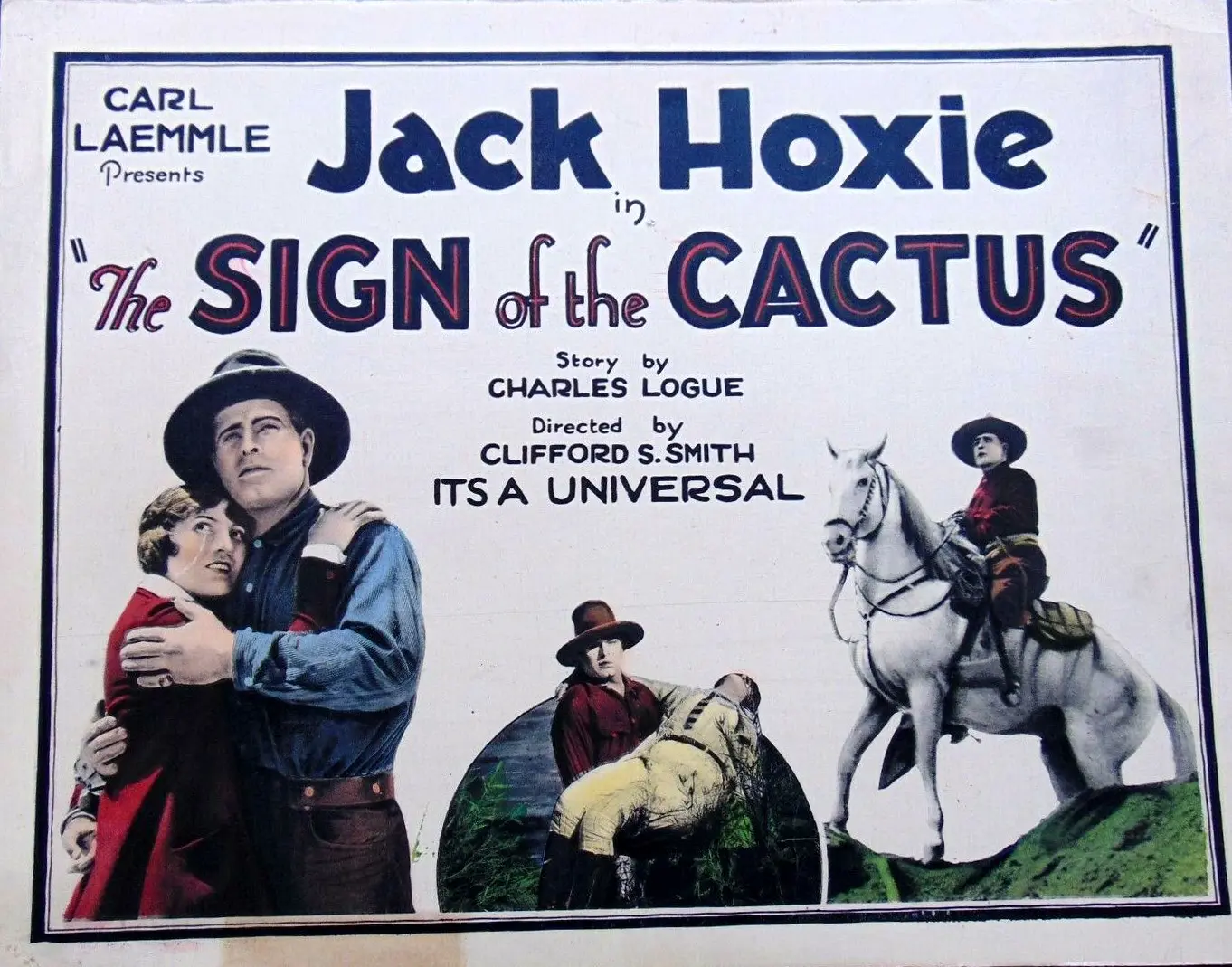
The Sign of the Cactus
is a Western epic that unfolds in the rugged, arid landscapes of the American frontier, a timeless setting where the line between right and wrong is as blurred as the horizon. The film centers on Jack Hayes, a man driven by a vengeful spirit, galloping through the hills on his trusty steed, Whitehorse Cactus, in a quest to rectify the injustices perpetuated by the corrupt water company owned by John Henderton. Jack's father was brutally slain by one of Henderton's gunmen, and this act, more than any other, fuels his relentless pursuit of justice.One fateful day, Jack intervenes when he stops a runaway horse belonging to Henderton's daughter, Belle, who was his childhood sweetheart. Their rekindled relationship is tested when Jack, accused of murdering Henderton, is apprehended by Belle. However, the sheriff reveals to Belle that they have the wrong man, and her trust in Jack is restored. Their bond deepens, and they ultimately find happiness in each other's arms, despite the looming threat of Henderton and his henchmen.
The narrative is intricate and layered, weaving a compelling tale of individual heroism against systemic corruption. Jack Hayes, played with intensity and conviction by Jack Hoxie, embodies the spirit of the outcast hero, a man willing to risk everything to champion the underdog. His journey is a poignant commentary on the cyclical nature of violence in society, a theme that resonates deeply in the context of the film's production era.
The cinematography of 'The Sign of the Cactus' is breathtaking, capturing the vast expanse of the desert and the stark contrast between the opulence of Henderton's estate and the desolation of the ranchers' lives. The use of natural light and shadow creates a haunting atmosphere, underscoring the film's somber tone and the moral dilemmas faced by its characters. The score, composed to enhance the emotional gravity of the story, complements the visuals, adding another layer of depth to the narrative.
Muriel Frances Dana, as Belle, brings a nuanced performance to the role of Henderton's daughter, portraying both her internal conflict and her evolving understanding of Jack. Her chemistry with Jack Hoxie is palpable, and their scenes together are some of the most emotionally resonant in the film. The supporting cast, including Helen Holmes, J. Gordon Russell, and Josef Swickard, all deliver strong performances, contributing to the overall richness of the storytelling.
Comparatively, 'The Sign of the Cactus' aligns more closely with Westerns of its time, such as 'No Parking' and 'Men in the Raw,' which also explore themes of individualism, justice, and the struggle against corruption. However, it stands out for its more nuanced portrayal of character and its emphasis on personal redemption, setting it apart from the more simplistic narratives often found in the genre. The film's blend of action and romance, coupled with a complex moral framework, makes it a standout piece of early 20th-century cinema.
Thematically, 'The Sign of the Cactus' delves into the intricate dynamics of power, justice, and personal accountability. It raises questions about the nature of revenge and the consequences of violence, inviting viewers to reflect on the ethical implications of their actions. The film's exploration of these themes is particularly relevant in today's society, where issues of systemic injustice and individual responsibility continue to shape public discourse.
The performances are a testament to the skill of the cast, with Jack Hoxie's portrayal of Jack Hayes standing out as a powerful, nuanced performance. His journey from a man seeking vengeance to a champion of the oppressed is both inspiring and heartbreaking, making his character a memorable and complex protagonist. Muriel Frances Dana's performance as Belle adds another layer of depth to the story, her character's evolution from a naive and sheltered young woman to a capable and determined partner in Jack's fight against injustice is both moving and compelling.
The film's production design is another highlight, with its attention to detail in recreating the American frontier. From the dusty, desolate landscapes to the opulent interiors of Henderton's estate, every element of the film's visual aesthetics contributes to the overall atmosphere and enhances the storytelling. The use of period-appropriate costumes and sets helps to ground the narrative in a specific time and place, adding authenticity and depth to the film's world.
In conclusion, 'The Sign of the Cactus' is a cinematic achievement that offers a compelling and thought-provoking narrative. It is a film that not only entertains but also challenges its audience to reflect on the complexities of justice, power, and personal responsibility. With its strong performances, intricate storytelling, and striking visuals, it stands as a remarkable entry in the Western genre, a film that continues to resonate with audiences more than a century after its initial release.
IMDb —
1928
Community
Log in to comment.