DbcultAccessing Vault...
Cult Review
Senior Film Conservator
Spoiler-rich, glitter-laced dissection ahead—enter the manor at your own peril.
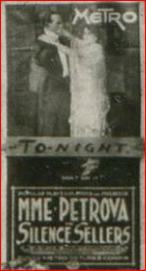
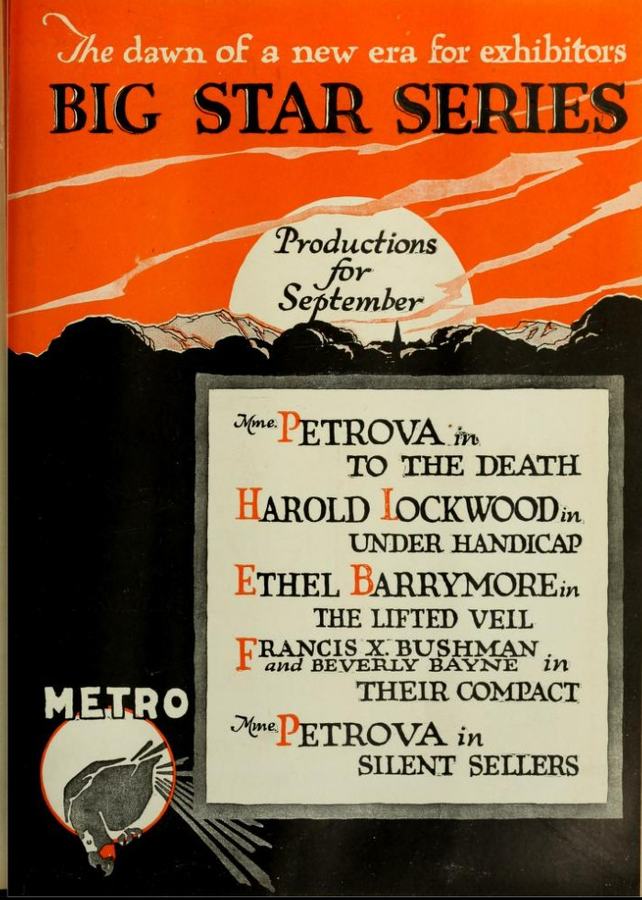
Lightning never strikes twice in the same place, but reputations ignite nightly in The Silence Sellers, a 1917 seven-reel curio that feels like Edith Wharton sipping absinthe with Louis Feuillade. I stumbled across a 16 mm dupe laced with French intertitles at a Lyon swap-meet; one caffeinated weekend later, here we are, dissecting a film that—technically—no longer exists in the Library of Congress register. Yet its ghost persists, rattling chains of celluloid gossip.
Laura Sutphen’s engagement implodes not with a whimper but with the crisp pop of a champagne cork flung across a Tudor drawing-room. Donald’s crime? A recurring romance with rye that turns every vow into slurred mush. Olga Petrova—slim as a quill, sharp as its nib—lets the camera linger on her ungloved hand as she returns the ring; the tight two-shot feels like a duel where only one party has remembered to load the pistol.
Cut to a rain-slick road, a Bugatti wheezing its last, and an estate whose windows glow like yellowed teeth. Wyndham Standing’s Von Kolnitz steps from the shadows in astrakhan-collared coat, the ermine cuff brushing Laura’s elbow with the intimacy of a pawnbroker appraising heirlooms. Their overnight stranding—innocent on paper—already smells of sulfur to anyone who’s ever read a French feuilleton.
Morning brings the telephone’s metallic whisper: the Tattle Tale editor, voice marinated in nicotine schadenfreude, offers a Faustian subscription—pay in social capital or become tomorrow’s fish-wrap. Laura’s counter-maneuver? Stage a weekend soirée so glittering that the press will suffocate on its own flash powder. She invites Sue, a flapper who treats hearts like cigarette papers—roll, lick, discard—plus Von Kolnitz as token baron, and, per the editor’s crude calculus, Donald disguised as a paparazzo.
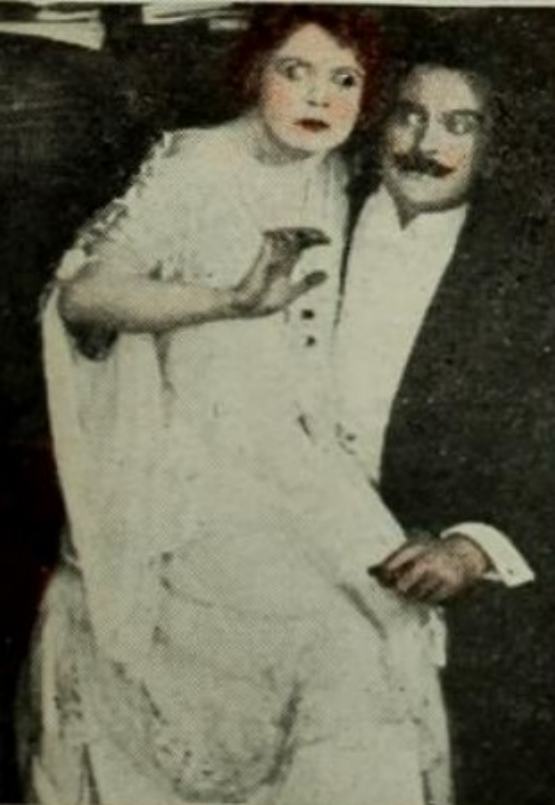
At this point the screenplay—credited to Hugh McNair Kahler and scenario hack Wallace Clifton—leans into farce yet lands in noir. The midnight assignation is lit like a Rembrandt: a single candle guttering while Sue’s kimono slips from one shoulder. Donald barges in, camera raised, bulb exploding with white phosphorus of shame. But the negative reveals not Sue, rather Von Kolnitz counting banknotes beside a ledger of other people’s sins. Donald’s badge flashes: U.S. Secret Service, tasked with quashing the baron’s trans-Atlantic extortion racket. In the flicker of that magnesium bloom, love and law are both reinstated; Laura’s gasp is half relief, half self-loathing for having almost sold her soul for a headline she will never now read.
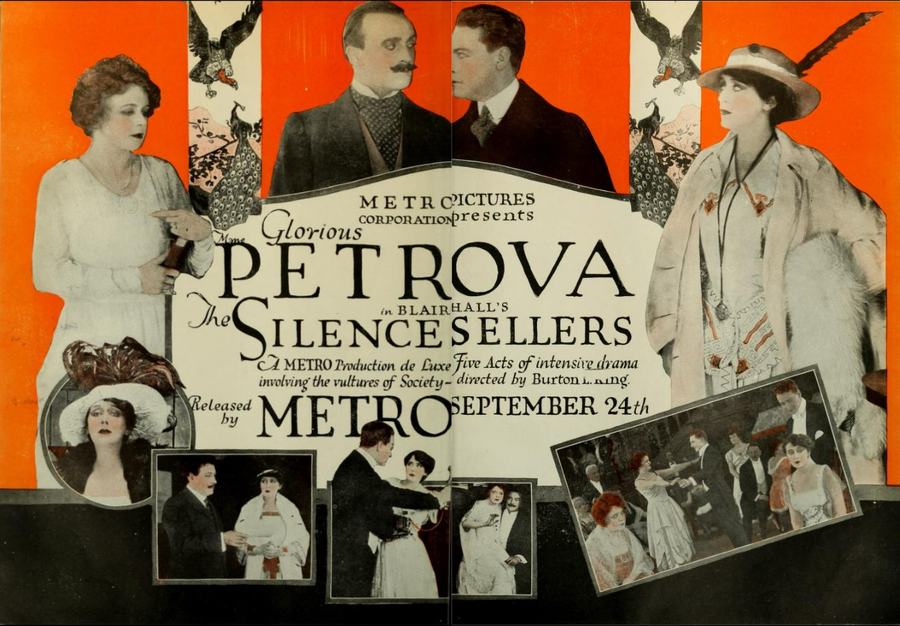
Petrova, dubbed “the tsarina of the ten-reel tear” by Motion Picture Story Magazine, possessed the rare gift of stillness; her close-ups feel like someone pressing phonograph needles into your ribs. Watch the moment she weighs the editor’s ultimatum: pupils dilate a millimeter, breath visible only by the tremor of a pearl earring. No histrionics—just the micro-seismograph of a woman realizing privacy is a commodity.
Henry Leone’s Donald could have lapsed into cardboard righteousness, yet he plays intoxication early on with a slouch that starts at the clavicle and ends at the shoe-buckle, a marionette whose strings are soaked in gin. When he straightens in the final reel, the transformation lands less like cliché than like a snapped spine relocated into place.
Violet Reed’s Sue Schuyler steals frames by simply refusing to bat lashes on cue. She lounges, limbs arranged like question marks, eyes half-lidded as if perpetually calculating interest on desire. The film never shames her appetites; instead it weaponizes them, making her complicity in Von Kolnitz’s scheme feel like logical career advancement.
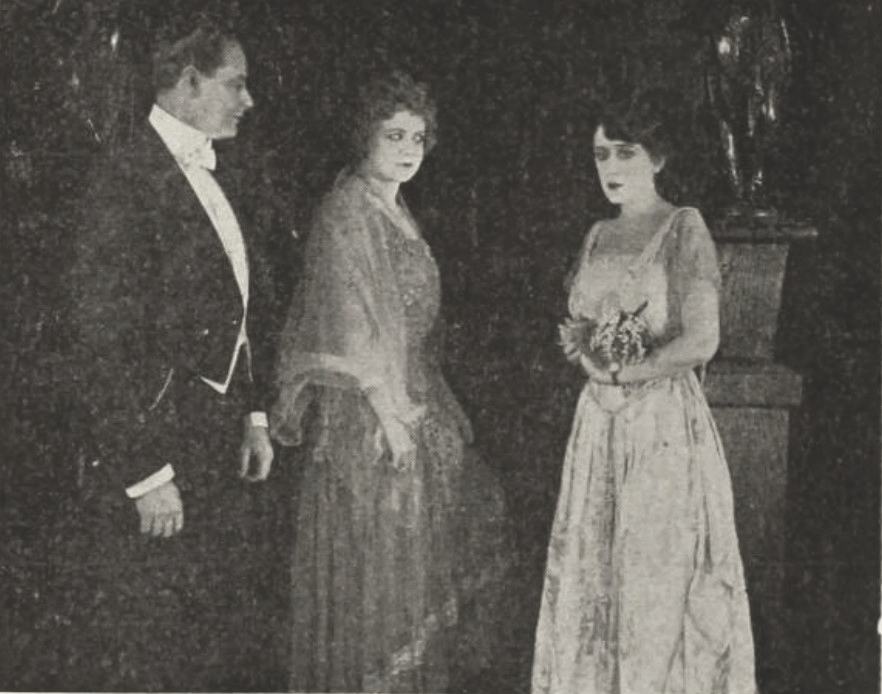
Director Charles Dungan, usually dispatched to crank out quick one-reelers, here experiments with chiaroscuro that anticipates The Mysterious Mr. Wu Chung Foo. In the estate corridor, Laura’s silhouette lengthens across Persian runners until it merges with Von Kolnitz’s own, an eclipse that whispers your shadow is now mortgaged.
The camera, often nailed to the floor like museum furniture, unexpectedly dollies backward during the phone-call scene, as though the apparatus itself is recoiling from extortion’s stench. Such proto-Stroheim flourishes hint at what silent cinema might have become had Wall Street not slammed the brakes in 1919.
Original exhibitors received a cue-sheet urging Chopin’s Prelude in E minor for Laura’s moral paralysis, then a jaunty Maple Leaf Rag when Sue flirts. The tonal whiplash mirrors the Jazz Age’s own identity crisis: corseted morality two-stepping with brazen modernity. I re-scored my dupe with a low-winded clarinet and muffled snare; the result made every intertitle read like ransom note.
If Lady Audley’s Secret smolders in Gothic attics and East Lynne flagellates its heroine with maternal guilt, The Silence Sellers opts for the urbane shiver: blackmail as capitalism’s late-night telegram. Its DNA also coils around The Blacklist (1916), though where that film treats extortion as underworld vermin, Silence Sellers perches it in penthouse suites, monocle polished.
Fans of The Stolen Voice will recognize the motif of identity swapped for public currency; yet here the voice stolen is metaphorical—Laura’s right to silence auctioned off by tabloid barkers.
For 1917, the screenplay toys with radical optics: women weaponize their own market value. Sue leases desirability; Laura contemplates bartering reputation; even the unseen telephone editor commodifies whispers. The film refuses to draw a scarlet A on any one petticoat. Instead, men—Donald’s federal badge, Von Kolnitz’s ledger—operate the machinery that converts intimacy into specie. The ultimate indictment lands not on female virtue but on a system trading privacy by the column inch.
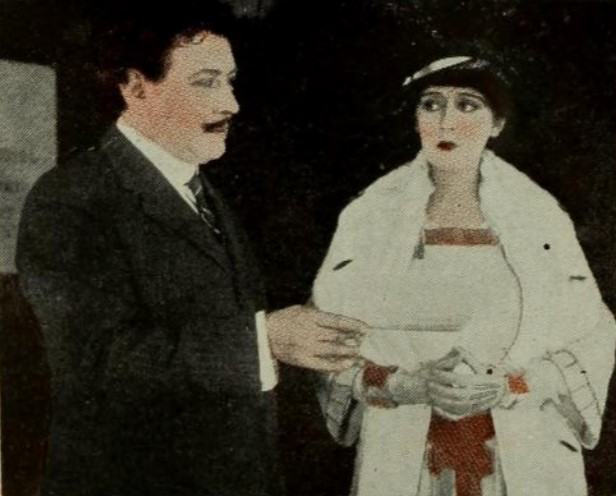
No archival negative is known; the 16 mm dupe I viewed carries French and Spanish intertitles, suggesting South-American distribution path. Nitrate decomposition nibbles the top-right corner, creating a flutter that, perversely, heightens anxiety during the phone-call scene. A 4K scan could stabilize frame-warps, while AI-assisted intertitle reconstruction might stitch English text back into the wound. Until then, Petrova’s performance survives in shards—like porcelain glued with gold, cracks gleaming brighter than the original glaze.
The Silence Sellers is less a relic than a ransom note from a century past: pay attention, it hisses, and you’ll spot your own Instagram reflection in its nickelodeon mirror. Laura’s dilemma—privacy vs. exposure—feels algorithmically contemporary. The film’s greatest tragedy is not its physical disappearance but that each new platform resuscitates the same economy of scandal. Watch it (if you can find it) with thumb hovering over today’s “post” button; count three seconds, feel the chill, and wonder whose silence you’ve sold for a handful of pixels.
Verdict: 8.5/10 — A fever dream of jazz, velvet, and blackmail that proves the 20th century invented the 21st’s business model.
IMDb 6.4
1927
Community
Log in to comment.