DbcultAccessing Vault...
Cult Review
Senior Film Conservator
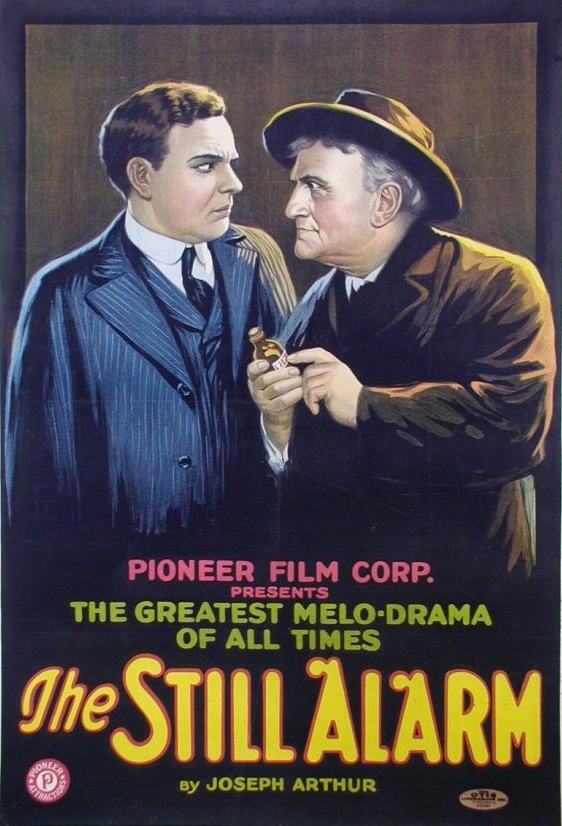
The cinematic landscape of the late 1910s was often defined by its flirtation with the spectacular, yet few films managed to meld the visceral thrill of physical catastrophe with the intimate rot of moral decay as effectively as The Still Alarm. Directed by Colin Campbell and produced under the aegis of the Selig Polyscope Company, this adaptation of Joseph Arthur’s celebrated stage play transcends its theatrical origins to provide a quintessential example of early American melodrama. It is a film that breathes through the soot of its own fires, a narrative engine fueled by the dualities of water and flame, guilt and innocence, and the slow, agonizing crawl of time toward justice.
At the heart of this narrative lies the character of Bird, portrayed with a chilling, understated desperation. Unlike the grandiose villains of some contemporary works like Queen X, Bird is a creature of the shadows, a man whose evil is born not of cosmic ambition but of a petty, suffocating greed. The opening sequences in the drugstore are a masterclass in atmospheric tension. The apothecary shop, usually a place of healing, is subverted into a laboratory of homicide. When Bird poisons the traveler, the camera captures the harrowing simplicity of the act—a gesture that will ripple through the decades. This isn't just a crime; it is an existential pivot point that mirrors the heavy moral consequences found in Maria Magdalena.
The temporal jump in the film is handled with a sophisticated sense of pacing. When Bird returns, squandered and bitter, he is no longer just a thief; he is a parasite. His attempt to blackmail Eleanor Fordham creates a psychological pressure cooker that elevates the film beyond a mere action serial. The juxtaposition of the domestic sphere—Fordham’s home—with the looming threat of the gallows creates a pervasive sense of dread that was quite advanced for its time.
In stark contrast to Bird’s subterranean maneuvering stands Jack Manley, played by the formidable Tom Santschi. Santschi, an actor of immense physical presence, embodies the burgeoning American ideal of the first responder as a secular saint. In an era where urbanization was rapidly increasing the fear of fire, the fireman was a figure of profound cultural resonance. Manley’s investigation into Eleanor’s strange behavior is not merely a romantic pursuit; it is a quest for truth in a world clouded by smoke and deception. While films like America Goes Over focused on the external threats of war, The Still Alarm looks at the internal threats to the community—the arsonist and the liar.
The film’s reliance on the 'old alcoholic' witness is a trope that Campbell manages to invigorate with genuine pathos. This character, a remnant of a forgotten era, serves as the living memory of the drugstore. His redemption, through the act of testifying against Bird, provides a narrative symmetry that is deeply satisfying. It reminds the viewer of the social realism explored in Driftwood, where the marginalized often hold the keys to the salvation of the elite.
The technical prowess of the final act cannot be overstated. When Bird cuts the signal wires—a modern act of sabotage that isolates the victims—the film shifts into a higher gear of suspense. The fire sequence is a triumph of early special effects and stunt work. Unlike the more pastoral struggles in Helene of the North, the fire here is an urban monster, consuming a space that should be safe. The use of real fire engines, the frantic energy of the horses, and the actual combustion of sets provide a level of authenticity that modern CGI often fails to replicate.
The sea blue (#0E7490) of the night sky clashes with the dark orange (#C2410C) of the encroaching flames in the viewer's imagination, as the tinting of the film stock during this era would have likely emphasized these primal contrasts. Eleanor’s desperate telephone call to the station is a pivotal moment of agency, breaking the 'damsel in distress' mold just enough to make her a participant in her own rescue. The rescue of the old drunkard alongside Eleanor is a thematic masterstroke; it suggests that the hero must save the truth (the witness) as well as the heart (the fiancée).
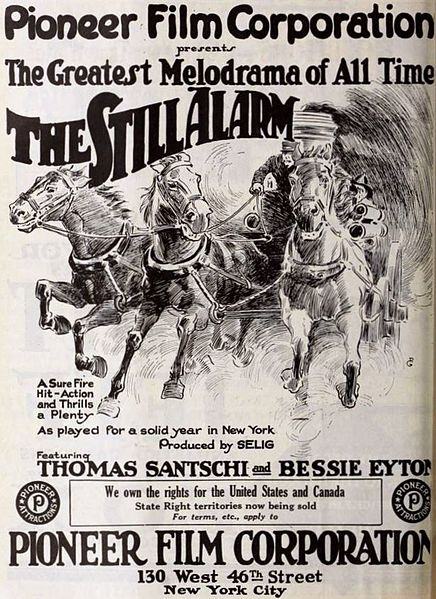
When we look at The Still Alarm alongside other works of the period, its narrative complexity becomes even more apparent. For instance, while Public Opinion deals with the destruction of reputation through gossip, Campbell's film deals with the destruction of life through literal and metaphorical fire. The stakes are higher, more primal. The film lacks the whimsical charm of The Slim Princess or the lightheartedness of The Rainbow Girl, opting instead for a gritty, almost noir-like exploration of the long shadow of crime.
The film also touches on themes of class and redemption similar to Peggy Leads the Way, but it does so through the lens of a thriller. The resolution—Jack and Eleanor riding the fire engine to their wedding—is perhaps one of the most iconic endings in silent cinema. It is a moment of pure, unadulterated triumph, a literal 'ride into the sunset' replaced by a ride on the very machine that facilitated their salvation. It transforms the fire engine from a tool of labor into a chariot of romance.
Fritzi Brunette and Bessie Eyton provide the emotional core of the film. Brunette, in particular, conveys a sense of mounting hysteria that is perfectly calibrated. Her performance avoids the over-the-top gesticulation that sometimes plagued the era, favoring instead a more internalized suffering. This grounded approach makes the threat of Bird feel all the more real. In comparison to the theatricality of Her Triumph, the acting here feels surprisingly modern, leaning into the psychological weight of the blackmail plot.
The cinematography, though limited by the technology of 1918, makes excellent use of depth. The drugstore scenes are cluttered and claustrophobic, reflecting Bird's narrow moral vision, while the exterior fire scenes are expansive and chaotic, reflecting the uncontrollable nature of the consequences he has unleashed. The editing during the fire sequence is particularly noteworthy, utilizing cross-cutting between the burning house, the fire station, and the racing engines to create a rhythmic urgency that would influence the action genre for decades to come.
Ultimately, The Still Alarm is more than a historical curiosity. It is a potent reminder of the power of silent cinema to tell stories that are both grand in scale and intimate in emotion. It navigates the treacherous waters of morality with a steady hand, ensuring that while the fire may be the main attraction, the human drama is what keeps the audience anchored. It shares a certain epic DNA with Valdemar Sejr in its sense of historical inevitability, yet it remains firmly rooted in the anxieties of its contemporary American audience.
As we watch Jack and Eleanor ascend the fire engine, we are witnessing the birth of the modern action hero—a figure who is defined not just by his strength, but by his connection to the community and his ability to extinguish the literal and figurative fires started by the 'Birds' of the world. In the annals of early cinema, this film stands as a towering inferno of creative achievement, a work that refuses to be extinguished by the passage of time. It is a searing indictment of greed and a glowing testament to the enduring power of courage.
Guest Reviewer's Note: For those interested in the evolution of the melodrama, compare the pacing of this film to Addio giovinezza! or the spiritual undertones of The Life of St. Patrick. The Still Alarm represents a crucial bridge between the stage-bound spectacles of the 19th century and the cinematic language of the 20th.
IMDb 7.2
1936
Community
Log in to comment.