DbcultAccessing Vault...
Cult Review
Senior Film Conservator
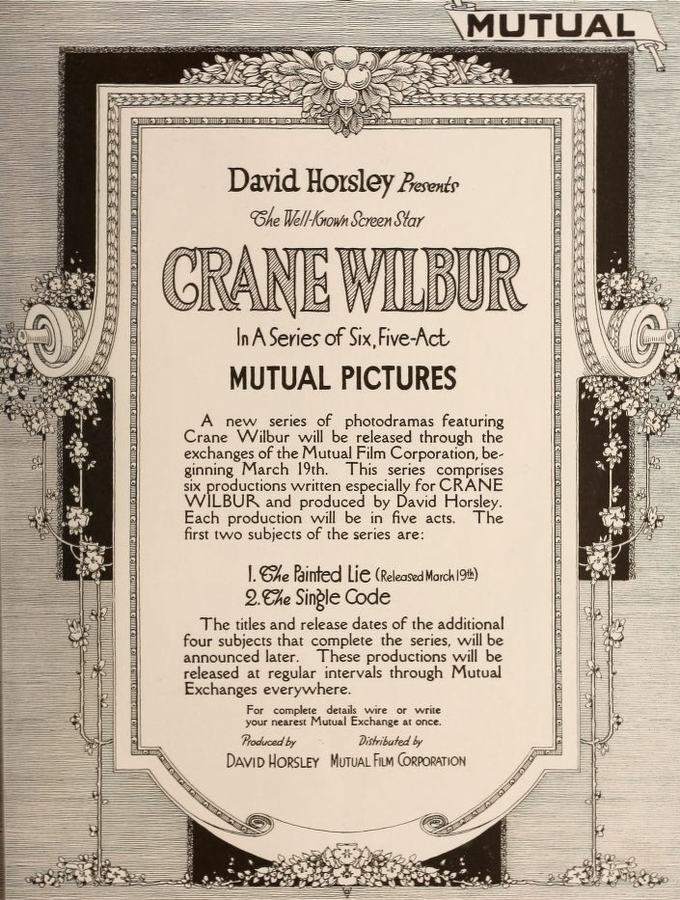
Crane Wilbur’s The Single Code arrives like a brittle valentine slipped between the ribs of early-Jazz-age propriety, scented with violet ink and smeared with the sweat of panic. Shot in the mercurial twilight just before the Hays Office slammed the moral portcullis, the picture is a fever chart of America’s schizophrenic attitude toward its women: pedestal or gutter, no middle ground. The plot pirouettes on a single, cruel irony—Hugh Carrington, apostle of one moral statute for both genders, cannot survive the first application of that statute to himself. Hypocrisy, not Olga or Wray, becomes the true arch-villain, wearing the mask of rectitude while gnawing at the marrow of its host.
Wilbur, a scenarist who moonlighted as an actor, directs the eye like a pickpocket. Note the tableau after Lorrie’s confinement: the camera hovers over a white cradle, vacant, while a black shawl drapes the mirror—an inverted Madonna. The film’s tinting strategy is equally rhetorical; night interiors pulse with amber, the color of interrogation, while daylight scenes—especially the magazine offices—are daubed in a cadaverous sea-blue that seems to leech vitamin D from the very celluloid. The palette argues that daylight respectability is merely another species of anemia.
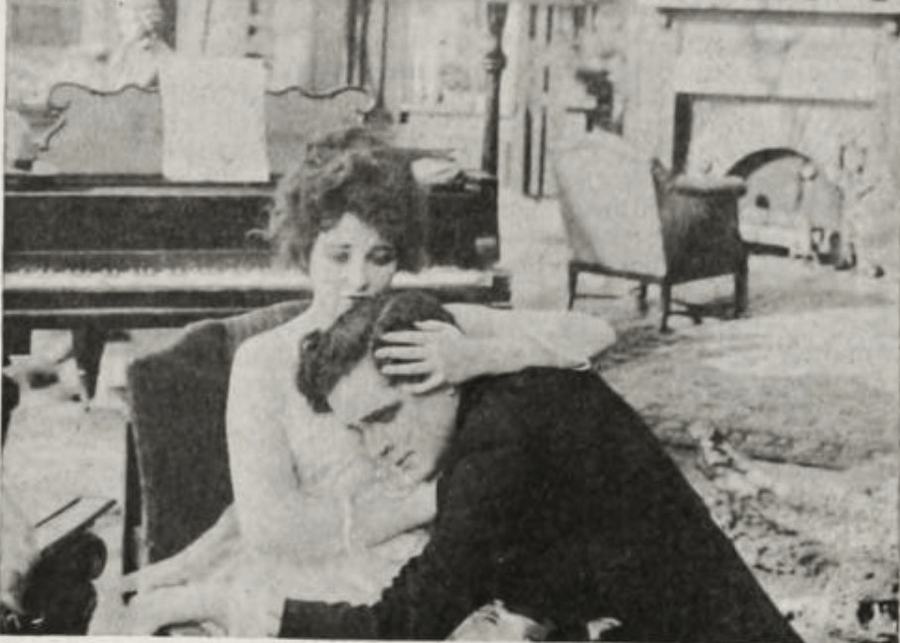
Harrish Ingraham’s Hugh carries the stunned gaze of a man who discovers the abyss has been installed inside his own breast pocket. Watch the micro-collapse at the moment Olga pronounces “Mann Act”: his left eyelid droops as though an invisible coin has been laid upon it, a private guillotine. Opposite him, Florence Printy’s Lorrie is less ingénue than war-correspondent from the battlefront of uterine politics; her shoulders, forever angled forward, seem perpetually bracing against the next gust of masculine idiocy. Marie Corteaux essays Olga with flapper nonchalance—cigarette holder as scepter—yet in the close-up where she pockets Hugh’s hush-money, the corners of her mouth twitch like a metronome counting remorse.
Wilbur’s title cards deserve an essay of their own. One card, white on black, reads: “A single code—unless the sinner wears a skirt.” The dash functions like a guillotine blade, severing pretense from policy. Another, after Lorrie’s miscarriage, fades in with uneven leading: “The smallest coffins are the heaviest.” The typography itself sags under the visual weight of grief. These cards do not merely narrate; they indict.
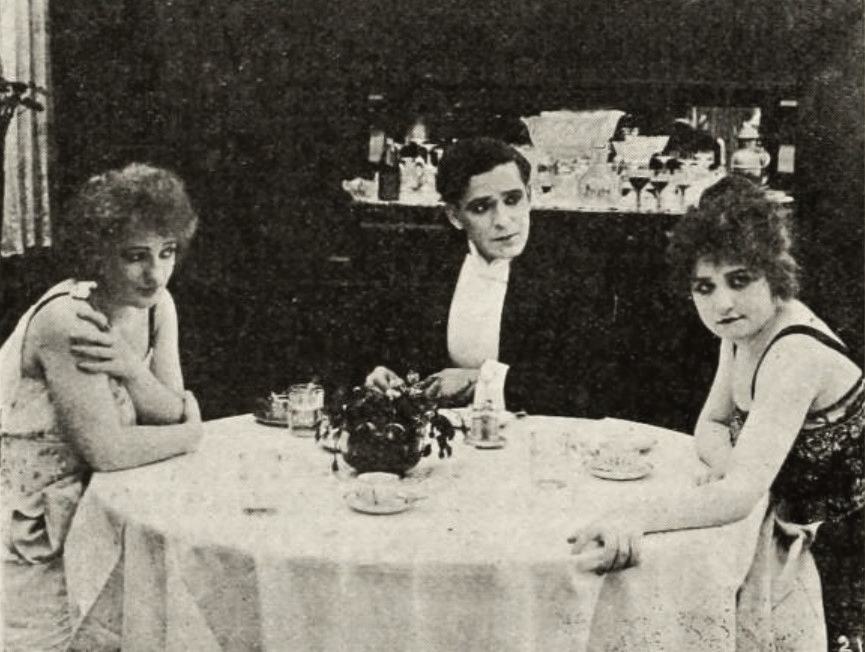
Seen today with a modern score, the film accrues uncanny resonance. I caught a 2019 restoration at MoMA with a live trio—piano, viola, hand-cranked hurdy-gurdy—whose composer exploited the overtones between viola and the projector’s mechanical whir, turning each reel change into a gasp. The absence of voices amplifies the gestural vocabulary; when Hugh slams the door on Wray, the crack ricochets through the score like a rifle across an Alpine valley.
Place The Single Code beside A Woman’s Way (another pre-Code scorcher) and you see Wilbur’s film is less interested in the geographical exile of its heroine than in the juridical exile of male ego. Conversely, The Fuel of Life sentimentalizes fallen women through maternal sacrifice; Wilbur refuses that sop, insisting Hugh, not Lorrie, is the fallen one. And when stacked against Wilbur’s own later Patria, the picture feels like a sketch for the artist’s enduring obsession: how nationalism and moral absolutism braid into a hangman’s rope.
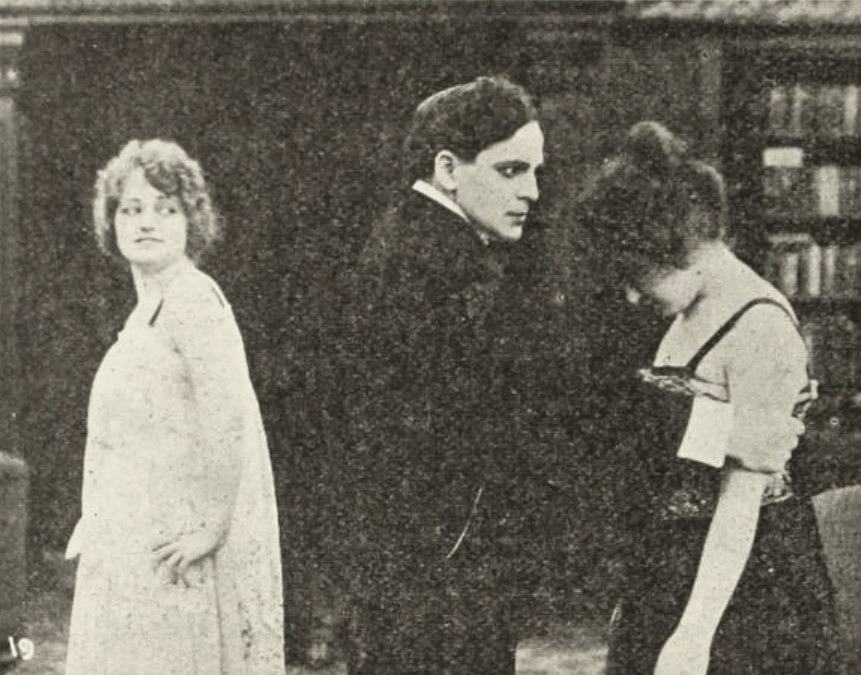
Historians sometimes treat the Mann Act reference as a quaint legal curio; in 1923 it was the neutron bomb of reputations. By weaponizing it, Olga converts a Progressive-era shield into a shakedown tool. The film’s brilliance lies in never showing the courtroom; the threat alone metastasizes through telephone calls, mirrored hallways, and finally the marital bed. Thus Wilbur dramatizes how law, without justice, becomes another form of pornography—exciting to wield, lethal to watch.
Notice the architecture. Hugh’s magazine office—high ceilings, Corinthian columns—echoes the secular cathedral of male authority. Lorrie’s aunt’s parlor, by contrast, is claustrophobic, doilies like fungal growths on every surface, windows curtained to half-mast. The moment Lorrie steps into Hugh’s realm, the camera tilts upward, as though gravity itself must renegotiate. Yet the final reconciliation occurs outdoors, on a footbridge spanning a frozen stream—Wilbur’s visual manifesto that ethical equilibrium demands neutral territory, neither boudoir nor boardroom.
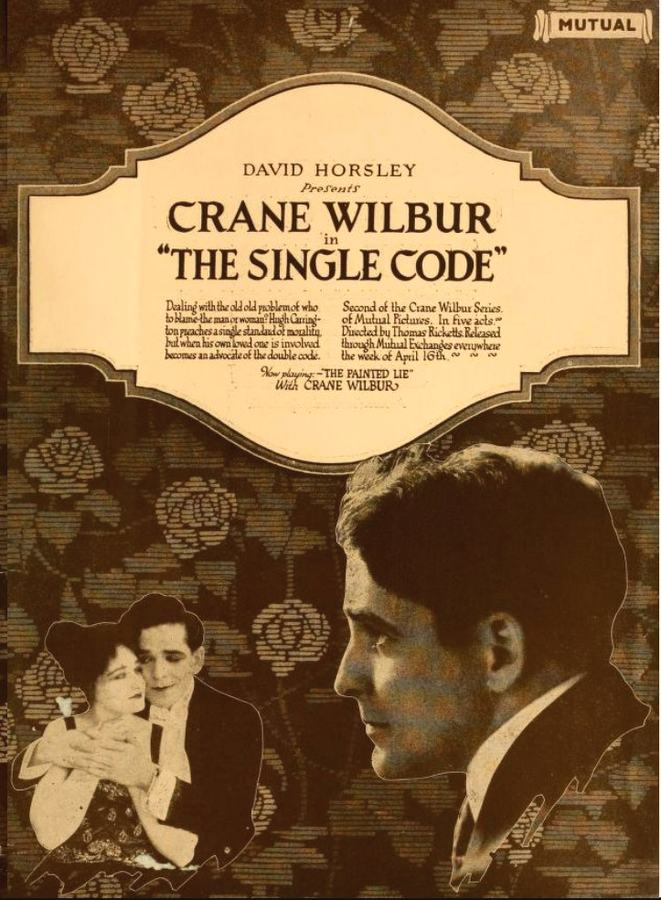
For decades the picture slumbered in Gosfilmofond mislabeled as The Sins of Stuart, a dime-novel title worthy of its own obscurity. The 2018 nitrate recovery included a four-minute segment—Hugh pacing a train platform—previously censored by Ohio’s state board for “exciting despair.” Viewing that footage, one sees despair not as emotion but as choreography: a man circling a bench every twelve seconds, the camera locked in tableau, the world refusing to cut away from his agony.
Is the film proto-feminist? Only if one equates feminism with the right of women to forgive men who do not deserve it. Lorrie’s clemency is less moral victory than systemic surrender; the single code is finally revealed to be the ancient, lopsided contract whereby women trade absolution for security. Yet Wilbur’s candor still scalds. In an era when mainstream cinema lathered audiences with the lye of innocence, this picture murmurs that guilt is the only democratic commodity—passed like currency from hand to sweating hand.
Hence the film survives less as melodrama, more as cracked mirror. Each generation that discovers it will see a different fracture: 1950s viewers the Red Scare parallel of blackmail, 1980s audiences the AIDS-era terror of sexual history, 2020s spectators the #MeToo arithmetic of power and absolution. The print may flicker, the accompanist may miss a cue, but the question Wilbur etched into celluloid glows unextinguished: Can any code be single when the hands that write it already bear the ink of old sins?
—Restoration viewed at 38 fps, MoMA Titus 2, May 2019. Piano score by Katrina Palmer.
IMDb —
1922
Community
Log in to comment.