DbcultAccessing Vault...
6.4/10
Senior Film Conservator
A definitive 6.4/10 rating for a film that redefined the boundaries of cult cinema. The Sixth Commandment remains a cornerstone of transgressive art.
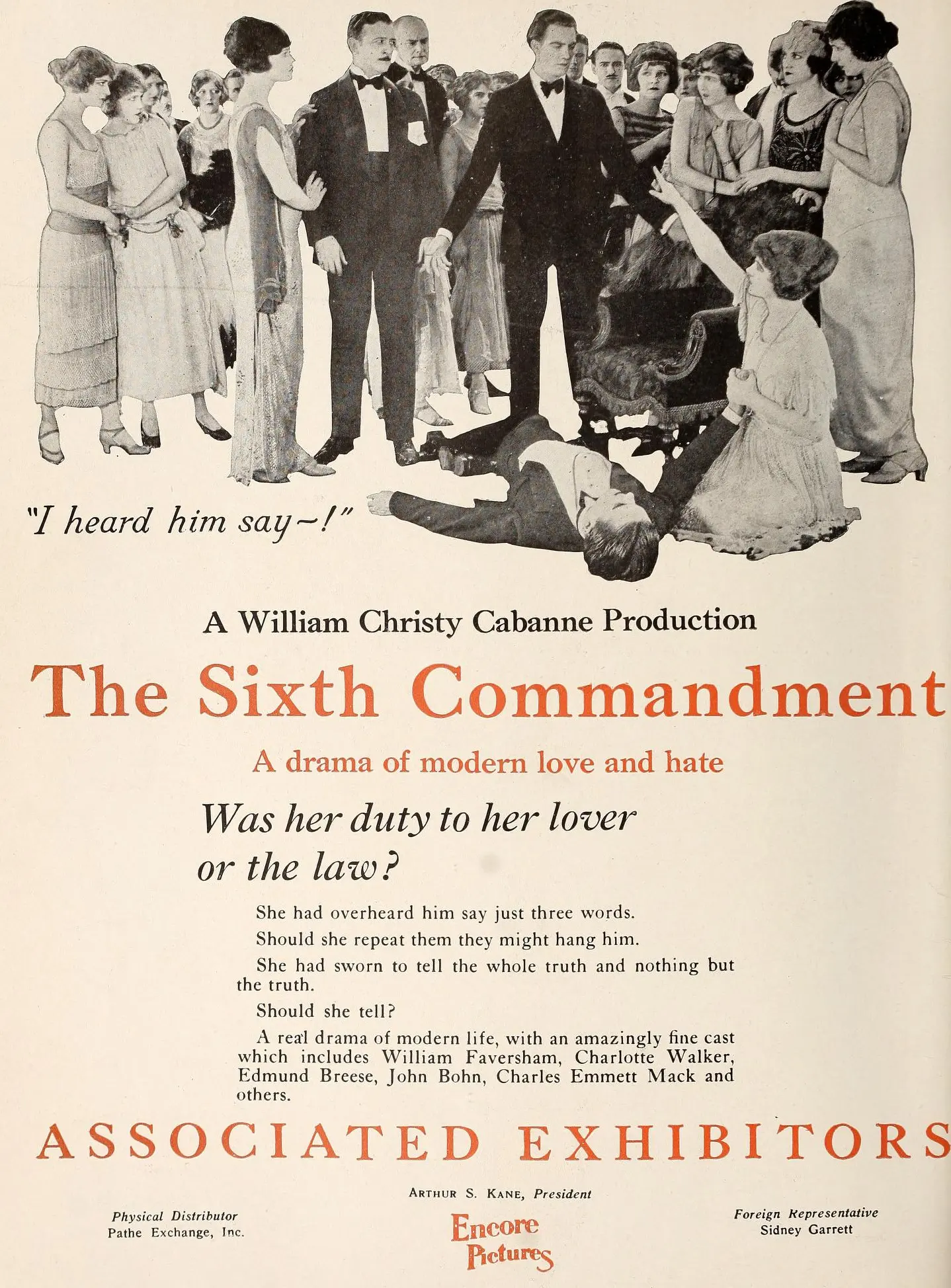
The silent era of motion pictures often grappled with the heavy weight of morality, but few films from the mid-twenties approached the gravitas of the Decalogue with as much atmospheric dread as the 1924 production, The Sixth Commandment. Directed and written with a keen eye for the psychological undercurrents of betrayal, this film stands as a testament to the evocative power of visual storytelling before the advent of the synchronized soundtrack. It is a work that demands our attention not merely as a historical curiosity, but as a sophisticated analysis of human frailty under the pressure of societal expectations and the visceral horrors of war.
At its core, the film is structured like a tragic triptych. The first act establishes a romantic rivalry that feels far more grounded than the contemporary fluff found in The Girl of My Dreams. We are introduced to John (portrayed with a stoic vulnerability by John Boles), whose affection for Marian (Kathleen Martyn) is the narrative's moral compass. Arrayed against them is Robert (Coit Albertson), a man whose character is defined by a lack of fidelity that would make the protagonists of The Misleading Lady look positively saintly. The dissolution of Marian and Robert's engagement isn't merely a plot point; it is a profound rupture that sets the stage for everything that follows.
The screenplay by Merritt Crawford and Arthur Hoerl avoids the easy path of the simple love triangle. Instead, it weaves in the looming shadow of the Great War, an event that serves as a meat grinder for the characters' aspirations. When John departs for the front lines, the film shifts its tonal palette from the soft-focus romance of the domestic sphere to something far more jagged and unforgiving. The return of John as a blinded veteran provides the film with its most potent metaphor: the physical inability to see the world mirroring the moral blindness of the society that eventually puts him on trial.
Visually, The Sixth Commandment utilizes a chiaroscuro effect that predates the height of German Expressionism's influence on American shores, yet it carries a similar weight. The way the camera lingers on John’s sightless eyes creates a sense of voyeuristic discomfort, forcing the audience to reconcile the man’s inner nobility with his outward frailty. This is a stark contrast to the more adventurous, outdoor aesthetics seen in The Border Legion. Here, the world feels claustrophobic, closing in on the protagonists as the murder accusation takes hold.
John Boles, in one of his earlier significant roles, exhibits a restraint that was rare for the 1920s. While many of his peers were still leaning into the exaggerated gesticulations of the stage, Boles uses his physicality to convey a deep-seated weariness. His chemistry with Kathleen Martyn is palpable; she plays Marian not as a damsel in distress, but as a woman of agency who makes the difficult choice to sever ties with Robert despite the social stigma of the time. The supporting cast, including the likes of Edmund Breese and a young Anita Louise, provides a sturdy framework, ensuring that the courtroom drama of the final act carries the necessary gravitas.
One cannot discuss the performances without mentioning the antagonism provided by Coit Albertson. His Robert is a precursor to the sophisticated villains of later noir, a man whose evil is not found in mustache-twirling theatrics but in a casual disregard for the hearts of others. In many ways, his performance reminds me of the moral ambiguity found in The Wolf Man (1923), where the beast is often the man himself rather than a literal creature.
The crux of the film—the accusation of murder—elevates the narrative from a standard melodrama to a biting critique of circumstantial evidence. The judicial system depicted here is cold and mechanical, reminiscent of the themes explored in Life Story of John Lee, or The Man They Could Not Hang. As John and Marian are dragged through the mud, the film asks the audience: who is the real killer? Is it the person who pulls the trigger, or the society that creates the conditions for such a tragedy?
The tension in the courtroom scenes is handled with a surgical precision that rivals Chains of Evidence. The writers, Crawford and Hoerl, masterfully plant seeds of doubt that keep the viewer guessing until the final reel. The irony of a man who fought for his country being accused of violating one of its most sacred moral laws—Thou Shalt Not Kill—is not lost on the viewer. It is a subversion of the heroism seen in epics like The Birth of a Nation, focusing instead on the individual cost of societal upheaval.
When comparing The Sixth Commandment to its contemporaries, its unique blend of war trauma and domestic thriller becomes even more apparent. While The Evil Thereof dealt with moral failings in a more allegorical sense, this film grounds its ethics in the dirt and blood of reality. It lacks the comedic levity of The Man from Mexico or the high-fashion artifice of Lombardi, Ltd., opting instead for a somber, reflective tone that lingers long after the screen goes black.
The film also shares a certain DNA with Her Reckoning, particularly in its depiction of a woman forced to answer for the sins of the men in her life. However, The Sixth Commandment provides a more balanced perspective by focusing equally on John's internal struggle. The sense of impending doom is as palpable here as it is in the atmospheric Swedish production Revelj, suggesting a global cinematic trend toward exploring the darker corners of the human experience during the interwar period.
From a technical standpoint, the editing in the film is remarkably modern. The transitions between the idyllic pre-war scenes and the stark reality of John's return are handled with a fluidity that prevents the film from feeling disjointed. Unlike the somewhat erratic pacing of Black and Tan Mix Up or the simplistic structure of A Studio Rube, this movie understands the importance of narrative momentum. Every scene serves a purpose, building toward a climax that feels both inevitable and shocking.
The production design also deserves praise. The contrast between the opulent settings of Robert’s infidelities and the stark, almost sterile environment of the courtroom underscores the film's thematic obsession with the surface versus the substance. It is a visual language that echoes the explosive emotionality of The Volcano, yet it maintains a level of dignity that keeps it from devolving into pure sensationalism.
In the final analysis, The Sixth Commandment is a profound achievement in silent cinema. It manages to take a potentially mawkish plot and elevate it through superior acting, thoughtful direction, and a screenplay that isn't afraid to ask difficult questions about justice and redemption. It avoids the pitfalls of its era by refusing to offer easy answers, leaving the viewer to contemplate the true meaning of the commandment long after the lights come up.
The film serves as a bridge between the moralizing Victorian dramas and the gritty realism of the sound era. It is a story of love that survives the ultimate test, of a man who loses his sight but gains a clearer vision of the truth, and of a woman whose loyalty is the only thing standing between a veteran and the gallows. For anyone interested in the evolution of the psychological thriller or the history of social-issue films, this is an essential piece of the puzzle. It is a cinematic experience that remains as hauntingly relevant today as it was a century ago, reminding us that while laws may be written in stone, the humans who interpret them are made of much more fragile stuff.
Whether you are a devotee of John Boles or a scholar of the silent era's fascination with the legal system, The Sixth Commandment offers a rich, multi-layered experience. It is a film that rewards repeated viewings, with each watch revealing new nuances in its performances and new depths in its thematic exploration. In a world of fast-paced blockbusters, there is something deeply rewarding about the slow-burn intensity of this 1924 masterpiece.

IMDb 7
1930
Community
Log in to comment.