DbcultAccessing Vault...
5.1/10
Senior Film Conservator
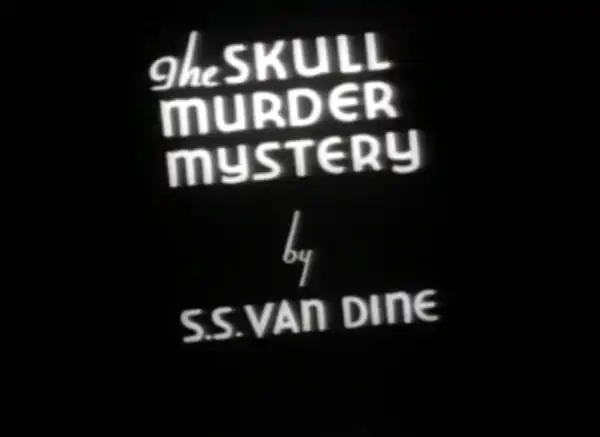
A definitive 5.1/10 rating for a film that redefined the boundaries of cult cinema. The Skull Murder Mystery remains a cornerstone of transgressive art.
If you have twenty minutes to spare and love the smell of dusty old celluloid, The Skull Murder Mystery is absolutely worth your time tonight. 🕵️♂️
But look, if you need sleek CGI or actors who do not talk like they have a mouth full of wet marbles, you are going to absolutely hate this thing.
It is a weird, fast-paced relic from 1932 that feels like someone compressed a whole detective novel into the length of a modern sitcom episode.
The whole plot kicks off when some workers dig up a skeleton in a dark, cramped alleyway.
Naturally, the local cops do not just call a normal coroner.
Instead, they bring in Inspector Carr and a very quirky guy named Dr. Crabtree to poke around the bones.
Dr. Crabtree is played by Donald Meek, and honestly, he is the absolute best part of this whole messy affair.
He spends half his screen time squinting at a literal human skull like it is a difficult crossword puzzle.
There is this amazing moment where he measures the skull's jawline with a pair of metal calipers and just sort of nods to himself.
It makes zero scientific sense, but man, does he look dedicated while doing it.
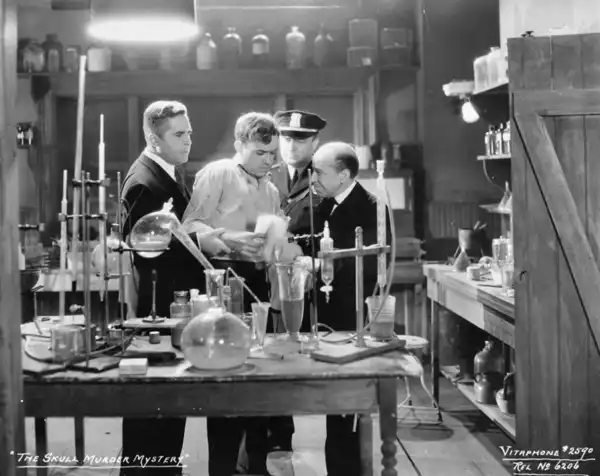
The suspects are a wild bunch, mostly living in this creaky apartment building run by a Chinese merchant played by Lee Tong Foo.
The movie has some of that typical 1930s racial stereotyping, which is always a bit cringey to sit through today.
But Lee Tong Foo actually gets to be more than just a background caricature, which was a nice surprise for a film this old.
The tenants upstairs are completely unhinged in their own ways.
One guy looks like he has not slept since 1928, and another woman keeps clutching her shawl like she is hiding a stolen ham under there.
I kept thinking about how different this is from other shorts of the era, like the silly slapstick in Big Ears.
Or even the dramatic, slow-moving weight of something like The Waif.
Here, it is just pure, unfiltered exposition delivered at breakneck speed.
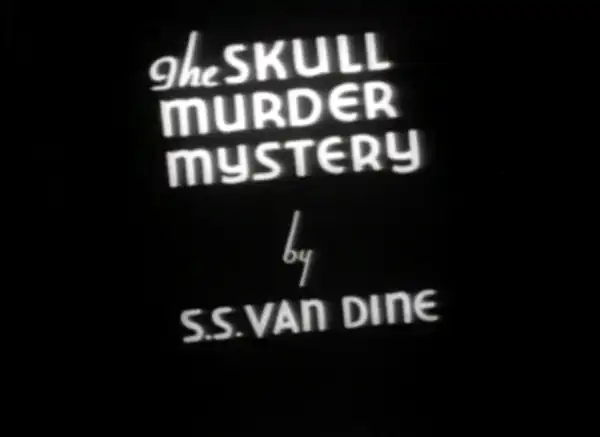
The writers, S.S. Van Dine and Burnet Hershey, clearly had a word count quota they were trying to hit before lunch.
Characters do not really talk to each other; they sort of launch explanations at each other's faces.
At one point, the Inspector explains a whole backstory about a missing heir in about three sentences.
I actually had to rewind it twice because I was distracted by a incredibly loud squeaking sound in the background audio.
It sounded like someone was wheeling a very rusty bicycle past the microphone during the take.
And they just left it in the final cut!
I love that kind of stuff because it reminds you how chaotic early sound films were to make.
The climax of the mystery relies on some bizarre "skull reconstruction" theory that feels like total science fiction for 1932.
It is not exactly a action-packed masterpiece like The Lightning Raider, but it has this greasy, low-budget charm.
The lighting is surprisingly atmospheric though, with lots of heavy shadows on the stairs.
You can tell the hallway set was probably just three painted wooden flats held up by sandbags, but it works.
If you are looking for a tight, logical mystery, you will probably be annoyed by how fast they wrap things up.
The killer basically confesses just because they get nervous looking at a plaster cast of the victim.
But if you want a cozy, weirdly spooky slice of early sound cinema, turn the lights down and give it a spin. 📻
IMDb 5
1917
Community
Log in to comment.