DbcultAccessing Vault...
5.2/10
Senior Film Conservator
A definitive 5.2/10 rating for a film that redefined the boundaries of cult cinema. The Sky Rider remains a cornerstone of transgressive art.
If you have an hour to kill and you don’t mind a plot that hinges entirely on a dog being more observant than every human adult in the room, The Sky Rider is a decent enough time. It’s not exactly high-stakes cinema, but for anyone who likes seeing how 1920s directors tried to make airplanes look exciting with very little budget, it’s worth a look. If you’re looking for something with actual emotional depth, you’re going to be disappointed. This is basically a Saturday matinee flick that somehow survived the last century.
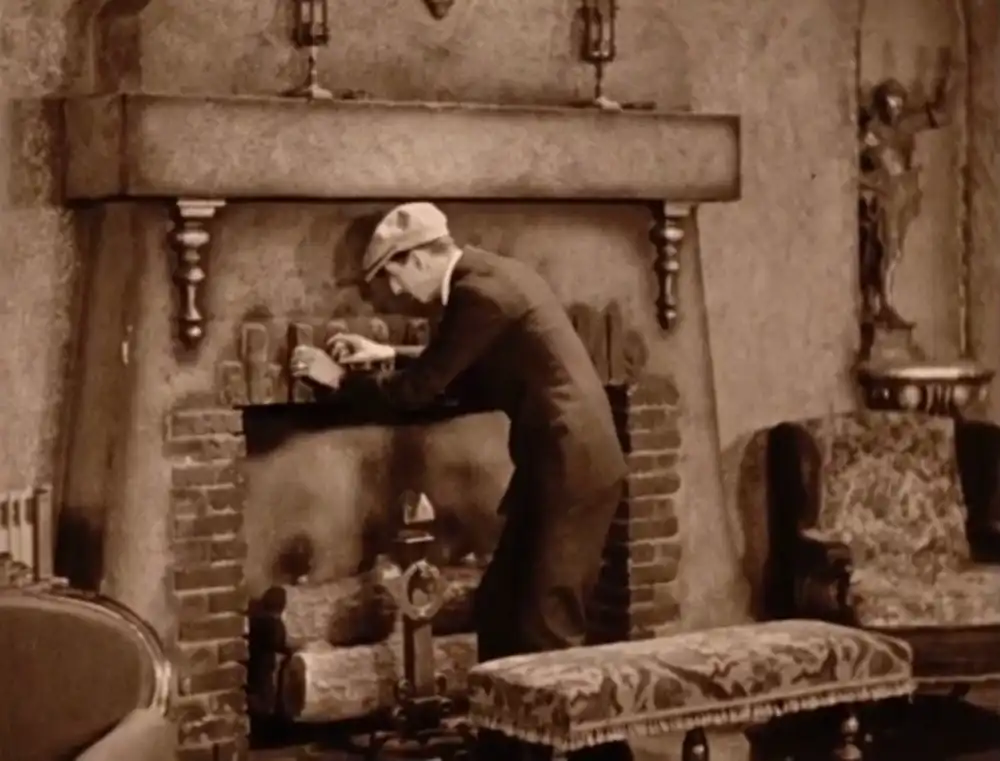
The whole thing kicks off with John Wilson, a guy who is supposed to be incredibly wealthy but lives in a house where the walls look like they might wobble if someone sneezes too hard. He’s disinheriting his nephew, Joe. Sheldon Lewis plays Joe, and he is doing some heavy lifting in the villain department. He doesn’t just look like a bad guy; he looks like he’s trying to win a gold medal in Sneaking. He does this thing with his shoulders when he walks—this sort of hunched-over creep—that makes it impossible to believe anyone would ever leave him alone with a legal document.
Then we have Dick, the son. He’s a pilot. In 1928, being a pilot was the ultimate shortcut for "this is our hero," but John Tansey plays him with a weirdly blank expression most of the time. He seems more interested in his plane than the fact that his cousin is actively trying to ruin his life. There’s a scene early on where Dick is talking to Alice (the adopted daughter), and the chemistry is... well, it’s not there. They stand about three feet apart and gesture vaguely at the horizon. It feels like they were told to look romantic but were actually thinking about what was for lunch.
The real star, and I’m not even being ironic here, is Champion the Dog. I’ve seen a lot of these silent-era animal stars, and Champion has this specific way of looking at the camera that feels like he’s judging the production. There’s a moment where Joe is trying to be sneaky in the hallway—again, with the hunching—and the camera cuts to the dog just sitting there, watching him. It’s the most honest reaction in the movie. The dog knows Joe is a loser before the dad even picks up his pen to change the will.
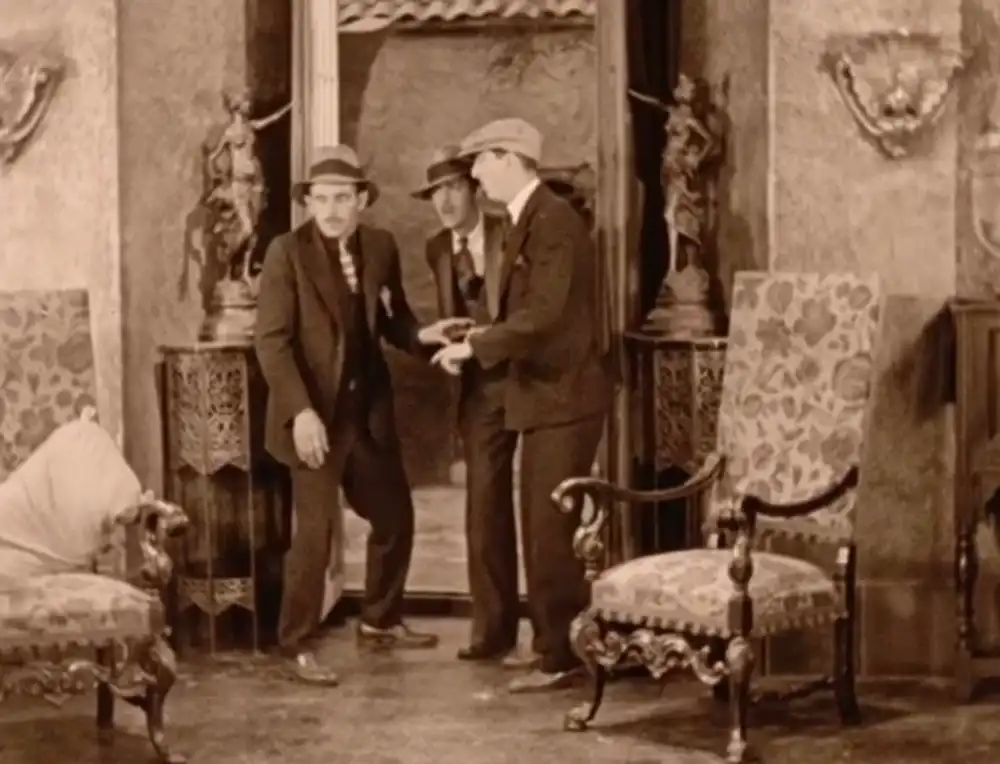
The pacing is a bit of a slog in the middle. It reminds me of The Avenging Trail in the way it feels like it’s just people walking in and out of rooms to discuss things we already know. You get these long stretches where someone is reading a letter, then we see the letter, then we see their reaction to the letter, then they show the letter to someone else. It could have been trimmed by ten minutes easily. It doesn’t have the snap of something like The Talk of the Town, though that’s obviously a different beast entirely.
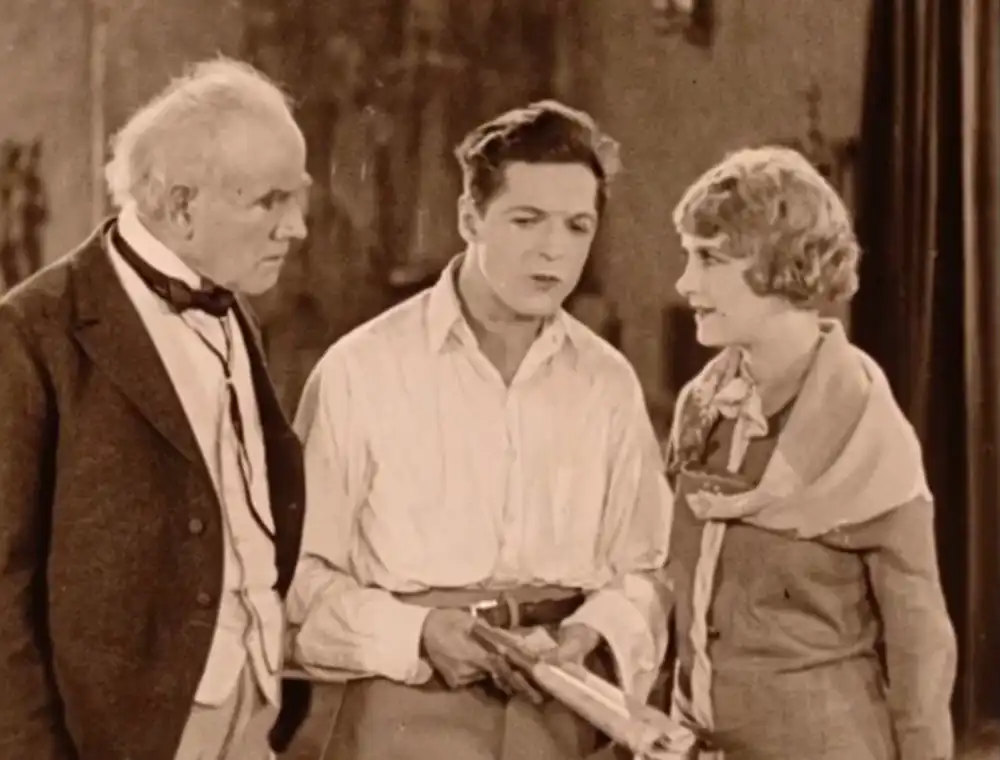
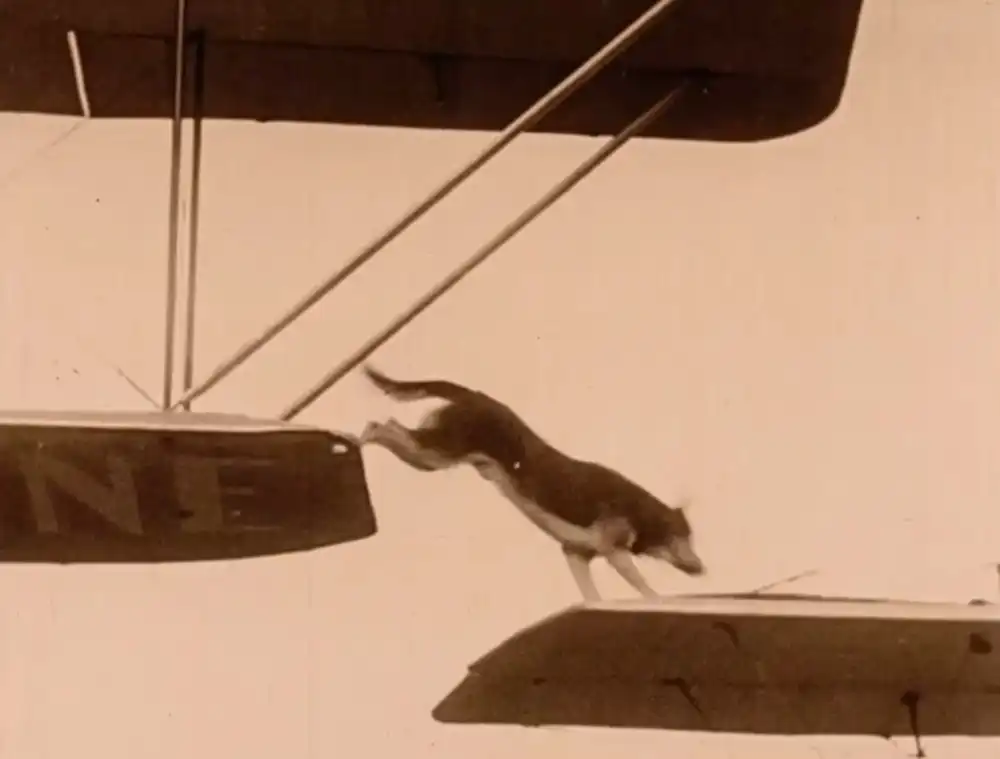
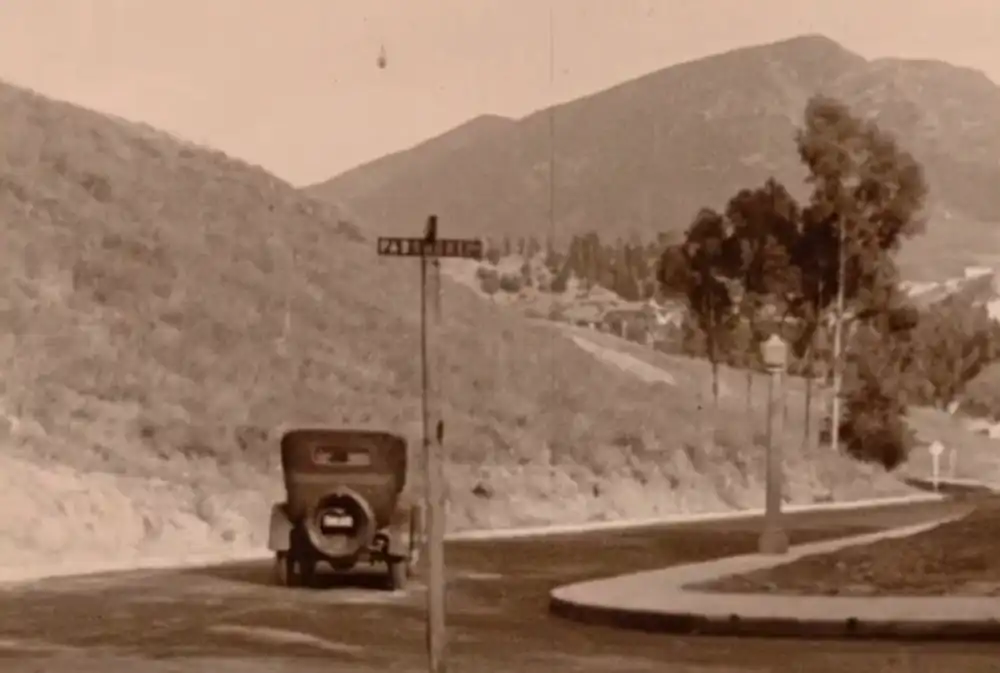
The aviation stuff is where the movie tries to justify its title. The cockpit shots are clearly filmed on the ground with someone shaking the camera and blowing a fan on the actors' scarves. It’s charming in a primitive way. But then you get these actual wide shots of the planes in the air, and they’re genuinely impressive. You can see the actual landscape of 1920s California (or wherever they shot this) and it feels dangerous. There’s a shot where the plane dips low over some trees that made me lean in a bit. It’s the only time the movie feels like it has real stakes.
I have to mention the costume for the villain. Joe wears this hat that is just a little too small for his head. It sits high up and makes him look less like a dangerous criminal and more like a guy who’s about to ask you for a nickel. Every time he’s supposed to be menacing Alice or plotting with his henchmen, I found myself staring at that hat. It’s a weird detail, but in a movie this thin, your eyes wander.
There’s also a strange tonal shift toward the end. It goes from a family inheritance drama—which feels a bit like the stuffy rooms in The Last of the Carnabys—to a full-on action thriller with the dog jumping over things and people dangling out of planes. It’s a bit jarring. One minute they’re arguing about a will, and the next, there’s a kidnapping and an aerial chase. It feels like the director realized they had five minutes of film left and needed to wrap everything up as loudly as possible.
Alice, played by Aline Goodwin, spends most of the movie looking like she’s about to cry or like she’s forgotten where she parked. There’s one shot where she’s staring out a window, and the lighting is so harsh it washes out half her face. It’s a weirdly haunting image in a movie that is otherwise pretty flatly lit. I don't think it was intentional, but it’s the only time she feels like a real person rather than just a "damsel" archetype.
Is it a masterpiece? No. It’s barely a "good" movie. But it’s a fascinating artifact. It’s the kind of film that makes you appreciate how much work went into making even the simplest stories back then. If you like seeing old planes and very good dogs, give it a watch. Just don’t expect the humans to do anything particularly smart. If you want something with a bit more punch in the action department, you might be better off with High Power, but for a lazy afternoon, Champion the Dog is a good enough companion.
The final confrontation is predictably messy. There’s a lot of flailing and the dog doing most of the actual work. It ends so abruptly you might think the film broke, but no, that’s just how they did it. Will signed, bad guy caught, dog happy. Roll credits.
IMDb 4.6
1924
Community
Log in to comment.