DbcultAccessing Vault...
Cult Review
Senior Film Conservator
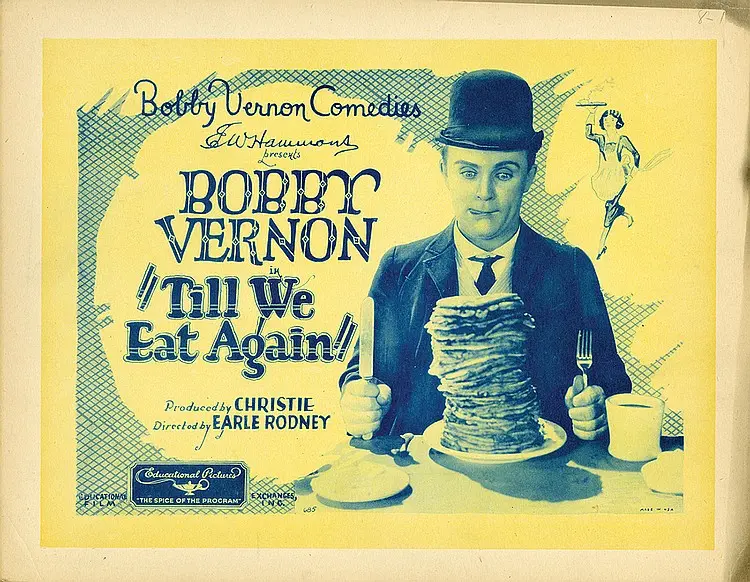
Should you spend twenty minutes watching a nearly century-old short about a man falling onto mattresses? Short answer: yes, but only if you value the kinetic energy of late-period silent slapstick over narrative logic. This film is a playground for those who enjoy the 'thrill comedy' subgenre, but it will likely frustrate viewers seeking character depth or emotional resonance.
This film works because it understands the primal humor of physics; the sight of Bobby Vernon dangling ten stories up remains viscerally effective even without modern CGI. This film fails because the narrative bridge between the eviction and the construction site accident is nonexistent, relying entirely on a 'deus ex machina' hook. You should watch it if you are a student of 1920s physical comedy or if you want to see how the Christie Film Company attempted to compete with the likes of Harold Lloyd.
The opening of Till We Eat Again is surprisingly gritty for a comedy. We find Bobby and his sweetheart (Frances Lee) in a state of genuine economic distress. In 1928, the specter of the Great Depression was looming, and the 'starving artist' trope was less of a cliché and more of a daily reality for many. The film uses this desperation to fuel its first set piece: a botched food theft at a boarding house.
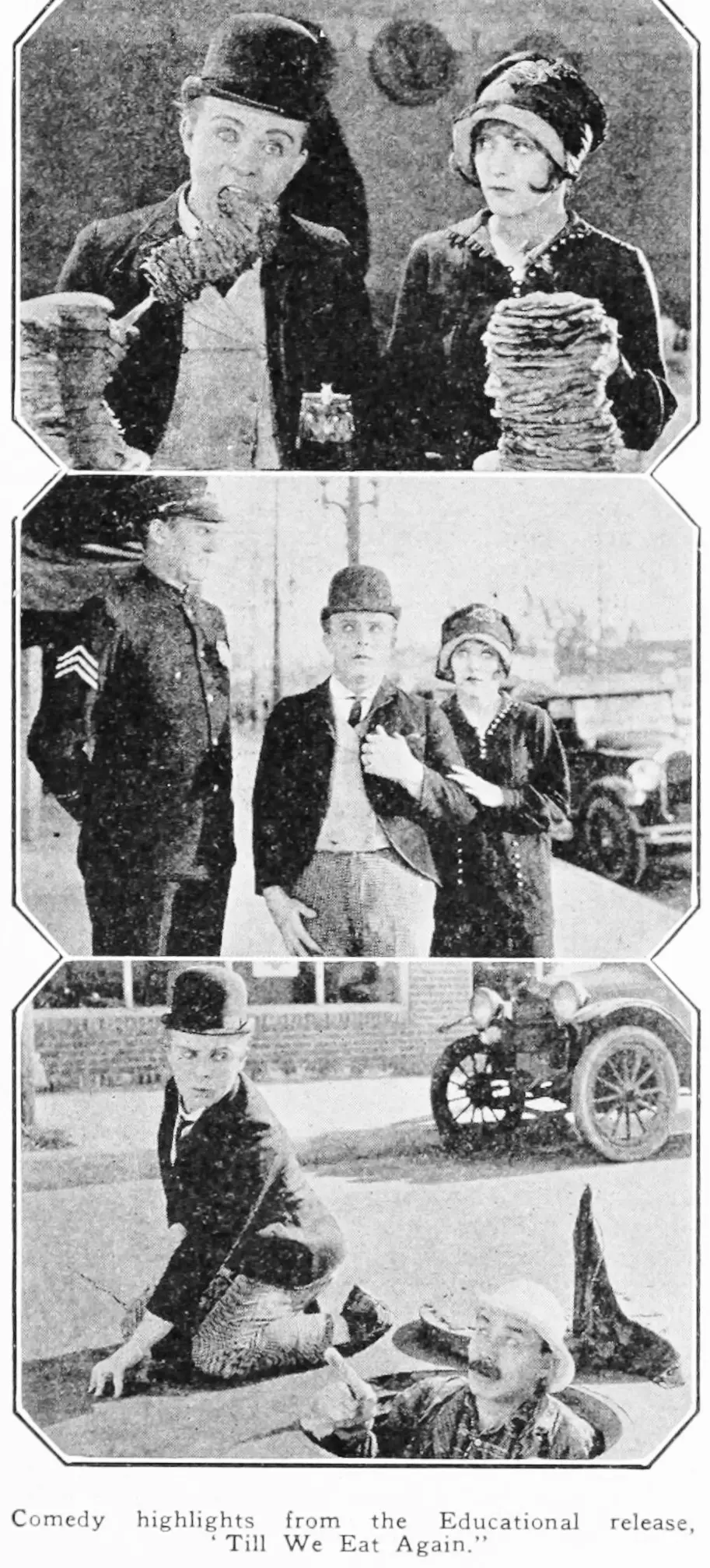
The landlady, played with terrifying efficiency by Maude Truax, isn't just a foil; she is the personification of the cold, uncaring urban environment. When she 'puts the kibosh' on Bobby’s scheme, the choreography of the chase is tight and claustrophobic. Unlike the wide-open spaces seen in The Ropin' Fool, this film thrives on the cramped, vertical architecture of the city.
The centerpiece of the film is undeniably the hook sequence. While Harold Lloyd is the undisputed king of 'thrill comedy,' Bobby Vernon makes a compelling case for his own brand of mid-air panic. The cinematography here is surprisingly sophisticated for a short. We see low-angle shots that emphasize the height of the building, making the ten-story ascent feel genuinely perilous.
There is a specific moment where Bobby’s jacket snags, and he spins helplessly against the backdrop of a bustling street. It is a punchy, terrifying image. It works. But it’s flawed. The transition from the street to the hook happens so fast that the audience barely has time to process how he got there. This is a recurring issue in Sig Herzig’s writing—logic is always sacrificed for the next big gag.
Is Till We Eat Again worth your time today? If you are a fan of silent-era slapstick, the answer is a resounding yes. It offers a pure, unadulterated look at late 1920s physical comedy. However, if you prefer modern narrative structures, you might find the thin plot frustrating. It is a technical curiosity that rewards those who appreciate the evolution of stunt work.
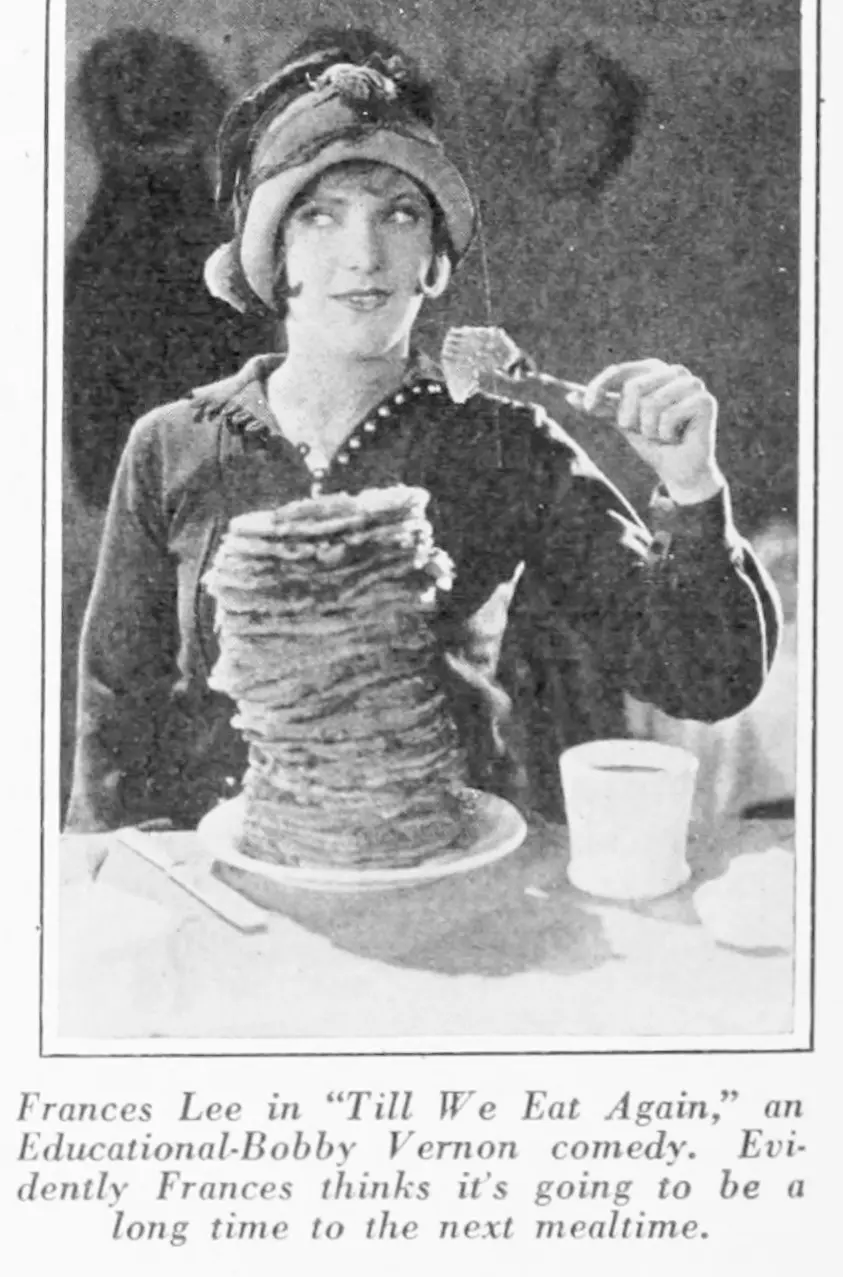
The climax of the film involves Bobby falling onto a pile of mattresses. In a stroke of luck that would make a lottery winner blush, the salesman pays him $50 for the 'demonstration.' In 1928, $50 was a small fortune—roughly equivalent to $800 today. The fact that the couple chooses to spend the entire sum on wheat cakes is the film's most debatable creative choice.
Some critics see this as a joyous celebration of overcoming hunger. I see it as a darkly absurdist commentary on the fleeting nature of wealth. They don't pay rent; they don't buy new clothes. They eat. It is a primal, almost animalistic ending that sets it apart from more sentimental comedies like The White Dove. It’s a bold stance to take: that survival is better than security.
Pros:
Cons:
The pacing of Till We Eat Again is its greatest asset. Unlike the slower, more methodical build-up found in The Midnight Alarm, this film starts at a sprint and never looks back. Sig Herzig’s script is lean, perhaps too lean, but it serves the purpose of keeping the audience engaged in an era where attention spans were already beginning to shorten due to the advent of 'talkies.'
The tone is a strange mix of desperate and whimsical. One moment Bobby is literally facing death on a hook, and the next, he is engaging in a lighthearted negotiation with a salesman. This tonal whiplash is common in Christie Comedies, but here it feels particularly pronounced because of the stakes. It creates a sense of unease that modern viewers might find unintentional, but it adds a layer of complexity to an otherwise simple short.
"Till We Eat Again is less a movie and more a rhythmic exercise in urban chaos, proving that in 1928, a good fall was worth more than a thousand words."
Till We Eat Again is a fascinating artifact. It isn't a 'masterpiece' in the traditional sense, but it is a highly efficient piece of entertainment. Bobby Vernon’s performance is a reminder of why he was a major star of the era, even if he is often overshadowed by the 'Big Three' of silent comedy today. The film’s refusal to provide a traditional 'happy ever after' in favor of a 'full stomach for now' is a refreshingly honest take on the human condition.
If you can get past the creaky plot mechanics, you will find a film that is surprisingly visceral. It is a reminder that cinema started as a way to show us things we couldn't see in our daily lives—like a man dangling from a skyscraper or a $50 pile of pancakes. It’s simple. It’s effective. It’s worth the watch.
IMDb 5.8
1915
Community
Log in to comment.