DbcultAccessing Vault...
Cult Review
Senior Film Conservator
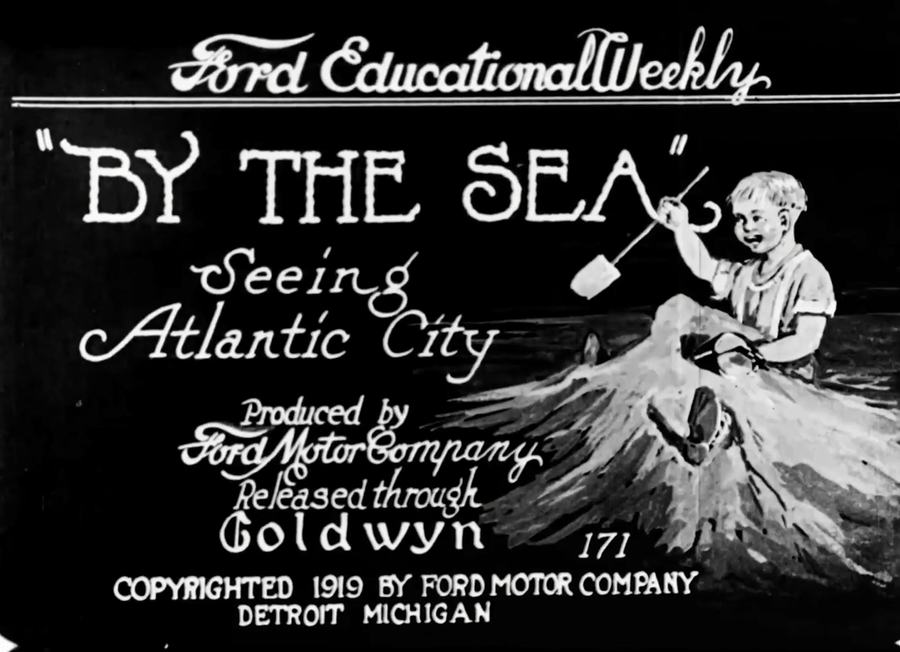
There is a raw, unvarnished vitality to Charlie Chaplin’s 1915 short, By the Sea, that modern blockbusters, with their sterile CGI and over-calculated beats, often fail to replicate. Filmed during the transitional period of his career at Essanay Studios, this one-reeler captures the Tramp in a moment of pure, improvisational brilliance. The location—the windswept Crystal Pier in Santa Monica—isn't just a setting; it's a primary antagonist. The wind acts as a chaotic director, forcing the actors into a jagged, rhythmic dance that feels both hazardous and hilarious. Unlike the interior constraints of Berth Control, which finds humor in the claustrophobia of a train car, By the Sea utilizes the infinite horizon to emphasize the Tramp’s smallness against the vast, indifferent elements.
The film begins not with a plot point, but with a sensation: the wind. We see Chaplin struggling to keep his iconic derby perched upon his head, a struggle that serves as a metaphor for his entire screen persona—the constant effort to maintain dignity in a world determined to strip it away. This isn't the polished, sentimental Chaplin of City Lights; this is the scrappy, somewhat mean-spirited Tramp of the mid-teens, a man who will kick a stranger as soon as tip his hat. The lexical diversity of his movement here is astounding. He doesn't just walk; he skitters, he pivots, he executes a 180-degree turn on a single heel with the precision of a Swiss watchmaker. It is a masterclass in proprioception and comic timing.
The central conceit involving the two hats tied to strings is a stroke of mechanical genius. It transforms a simple physical prop into a source of recurring, geometric comedy. As the wind whips the hats around, the characters become literally and figuratively tied to one another. This structural repetition mirrors the tension and looping narratives found in more dramatic works like The Circular Staircase, though here the "mystery" is replaced by the inevitable impact of a fist or a fall. The way Chaplin uses the string to pull himself back into a fight or to accidentally entangle his rival is a precursor to the complex machinery he would later lampoon in Modern Times.
One cannot discuss By the Sea without addressing the banana peel. While now a cliché of the highest order, in 1915, Chaplin was still refining the physics of the fall. The way he approaches the discarded skin—first with oblivious confidence, then with a sudden, jarring loss of equilibrium—is performed with such athletic grace that it transcends mere slapstick. It becomes a commentary on the precariousness of the human condition. We are all, Chaplin seems to say, just one slippery step away from total humiliation. This sense of impending doom, though played for laughs, shares a certain DNA with the moral weight of The Torch Bearer, where the consequences of one's actions loom large, albeit in a far more somber context.
The film also serves as a fascinating sociological document of the Edwardian-era seaside. The beach was one of the few places where the rigid class structures of the time were momentarily blurred, yet Chaplin highlights the persistent Barriers of Society through the Tramp’s interactions with the middle-class vacationers. He is an interloper in a world of striped suits and parasols. When he attempts to share a bench with two women, his flirtations are both charming and deeply awkward, highlighting his status as a perennial outsider. This theme of social exclusion is handled with more gravity in A Child of God, but in By the Sea, it provides the fuel for the comedic fire.
The conflict with the "Tall Man" (played by the formidable Billy Armstrong) is a classic David vs. Goliath setup. However, unlike the cerebral battles of Sherlock Holmes, where logic and deduction carry the day, the battles here are purely visceral. There is a pugnacious energy to their exchange of blows that feels surprisingly real. The ice cream gag—where a cone is sat upon and subsequently smeared across various surfaces—adds a layer of messy, tactile humor that contrasts sharply with the refined deceptions found in Secret Strings. Here, the "strings" are not metaphorical secrets, but literal tethers that bind the characters to their ridiculous fates.
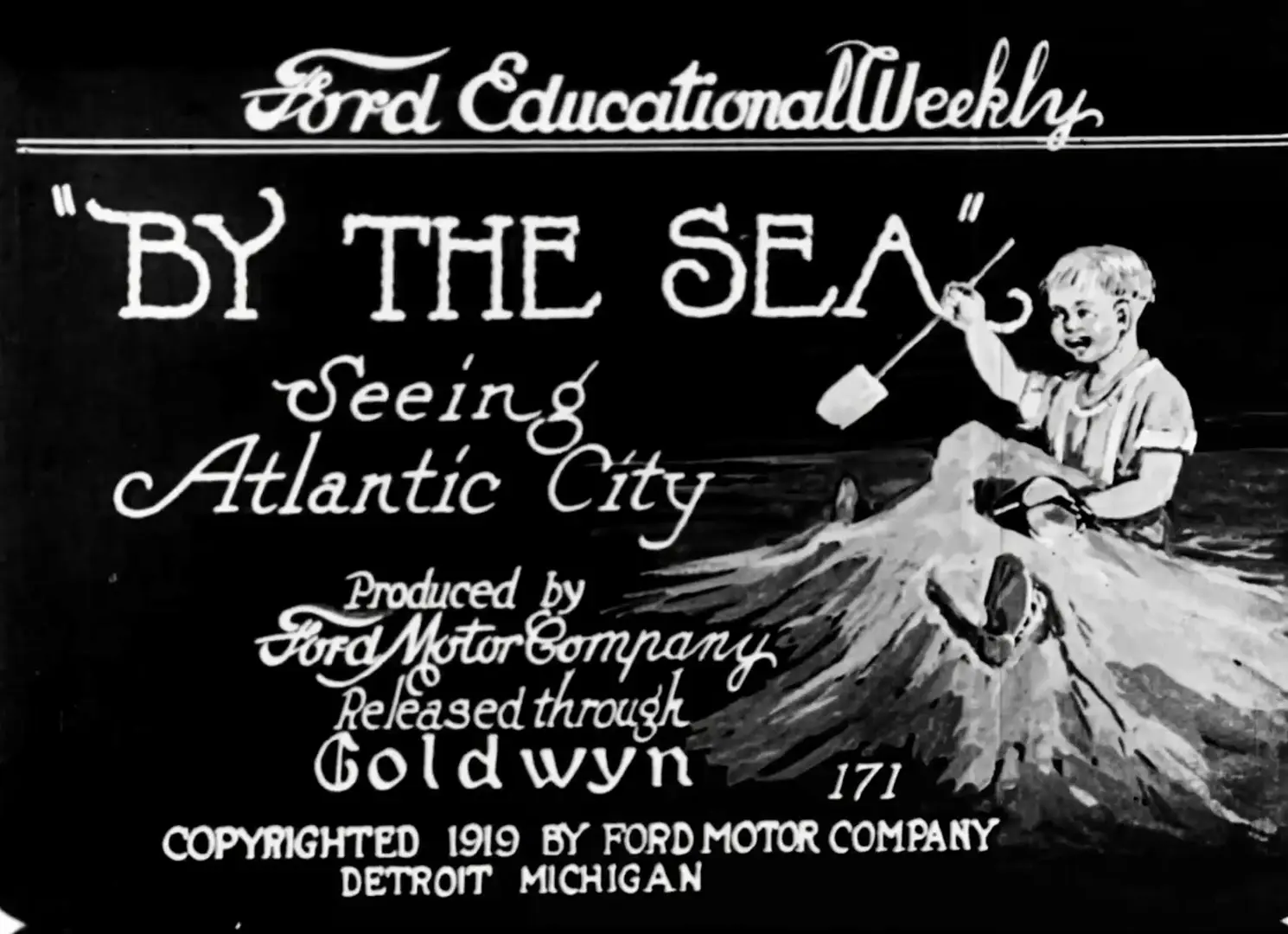
Technically, the film is a marvel of its time. Shooting on location presented significant challenges for early cameras, particularly with the lighting and the aforementioned wind. Yet, the cinematography manages to capture the shimmering quality of the ocean and the stark, sun-bleached wood of the pier. There is a cinematic Witchcraft at play in the editing, where the rhythm of the cuts matches the frantic energy of the performers. While it lacks the global scale of Die Jagd nach der Hundertpfundnote oder Die Reise um die Welt, its localized focus allows for a depth of physical characterization that is often lost in more sprawling narratives.
The improvisational nature of the production is evident in every frame. Legend has it that Chaplin and his crew went to the pier without a script, simply reacting to the environment. This spontaneity is what gives the film its enduring charm. It feels alive in a way that contemporary comedies, burdened by focus groups and script doctors, rarely do. We see the precursors to the "inspirations" discussed in The Inspirations of Harry Larrabee, as Chaplin takes a mundane object like a park bench and turns it into a stage for a three-way battle for dominance. Even the vanity of the characters, mirroring the themes of The Lady of the Photograph, is skewered as the Tramp tries to maintain his "gentlemanly" appearance while his world literally blows away.
While By the Sea is undeniably a comedy, there are moments of profound loneliness that peek through the slapstick. When Chaplin stands alone against the waves, his silhouette small and dark against the white foam, we see the "saints and sorrows" that would define his later work. This inherent melancholy, a staple of Saints and Sorrows, is what elevates Chaplin above his contemporaries. He isn't just a clown; he is a poet of the mundane. The feral, almost animalistic energy of the fight scenes, reminiscent of the raw power in Bjørnetæmmeren, is balanced by these quiet, reflective beats.
The film’s climax, involving a chaotic mix-up of husbands and wives, touches on the domestic anxieties explored in The Marriage Ring, but strips away the melodrama in favor of pure, unadulterated farce. The resolution—or lack thereof—is perfectly in keeping with the Tramp’s character. He doesn't win the girl, he doesn't find a fortune as in A Bid for Fortune; he simply survives to wander another day. He is a man in perpetual motion, a human kinetic sculpture whose only constant is his own resilience.
In the grand tapestry of Chaplin’s filmography, By the Sea is often overlooked as a minor entry. However, to dismiss it is to ignore the foundational elements of his genius. It is a film that celebrates the beauty of the "mistake," the comedy of the unplanned, and the sheer tenacity of the human spirit. The high lexical diversity of his physical language, the sharp social commentary embedded in his interactions, and the innovative use of location all point toward the legend he would become. It is a salt-stained, wind-blown masterpiece that reminds us why we fell in love with the moving image in the first place. If you can look past the flickering frame and the absence of dialogue, you will find a work that is as vibrant and relevant today as it was over a century ago. It is a testament to the fact that while technology changes, the fundamental absurdity of being human remains remarkably constant.
Watching this film is like breathing in the salt air of the 1910s—it’s refreshing, a bit stinging, and utterly invigorating. It stands as a beacon of what can be achieved with a camera, a pier, and a man who knows exactly how to fall. Whether he is dodging a punch or chasing a hat, Chaplin remains the undisputed king of the seaside, a title he earned one banana peel at a time.
IMDb —
1931
Community
Log in to comment.