DbcultAccessing Vault...
Cult Review
Senior Film Conservator
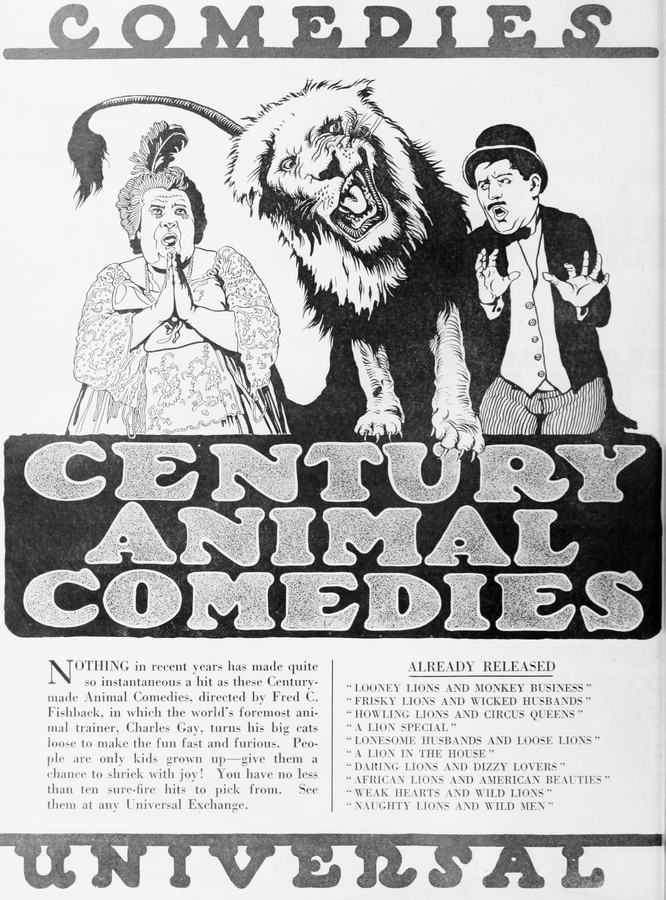
There is a specific, almost tactile electricity that permeates the silent comedies of the mid-twenties, a period where the grammar of visual humor was reaching its zenith. Howling Lions and Circus Queens stands as a testament to this era's audacity. It isn't just a film; it's a frantic, breathless exercise in physical geometry. When we watch Billy Bevan and Dot Farley navigate the treacherous terrain of a circus, we aren't just seeing 'rube' characters; we are witnessing the collision of nineteenth-century pastoralism with the burgeoning spectacle of the twentieth century. This film captures that transition with a ferocity that is quite literally feline.
Billy Bevan, with his signature mustache and a physicality that suggests a man constantly at war with gravity, provides a masterclass in the 'rube' archetype. Unlike the sophisticated urbanites found in Social Hypocrites, Bevan's character is defined by a profound, almost spiritual sincerity. His bewilderment isn't a lack of intelligence but a surplus of wonder. Beside him, Dot Farley acts as the perfect comedic foil. Her expressive range captures the anxiety of the provincial woman suddenly confronted with the 'otherness' of the circus queens. Together, they represent a social class that the cinema of 1925 was beginning to view through a lens of both nostalgia and mockery.
The chemistry between the two is rooted in a shared vulnerability. In a world increasingly dominated by the hard edges of industrial progress—the kind of world explored with more gravity in The Mayor of Filbert—their domestic aspirations seem both quaint and heroic. The circus, with its lions and its artifice, serves as a crucible for their relationship. Every pratfall is a test of their bond, and every narrow escape from a Century Lion is a metaphor for the dangers of the modern world encroaching upon their simple lives.
The inclusion of the Century Lions is not merely a gimmick for cheap thrills. In the context of silent cinema, animals often represented the unvarnished truth of nature, standing in stark contrast to human artifice. While films like The Secret Game dealt with the shadows of espionage and human deceit, Howling Lions and Circus Queens uses the lions as a chaotic neutral force. They don't care about the rubes' romantic entanglements; they simply exist as a looming, snarling threat that forces the protagonists into increasingly absurd displays of survivalism.
The cinematography during the circus sequences possesses a frantic, almost documentary-like quality. One can feel the genuine danger on set—a far cry from the controlled environments of modern CGI. This visceral reality elevates the comedy. It’s hard not to compare this kinetic energy to the psychological tension found in The Devil's Needle, though the stakes here are played for laughs. Yet, the laugh is often caught in the throat as a lion swipes at Bevan's heels. It’s a primitive form of cinema that speaks directly to the limbic system.
The visual language here is dense. The director utilizes the frame not just as a window, but as a trap. The rubes are constantly boxed in—by tents, by cages, by the rigid social expectations of their own background. This sense of enclosure is a recurring theme in silent drama, seen through a different lens in Borrowed Clothes. In the circus, however, the boundaries are fluid. A door that should lead to safety instead opens into a den of beasts. It is a surrealist nightmare played as a farce.
We must also discuss the 'Circus Queens' of the title. These women represent a form of femininity that is performative, dangerous, and utterly alien to Farley’s character. They are the 'other' woman, but without the moralizing baggage often found in films like The Scarlet Road. Here, their danger is professional. They command beasts; they defy gravity. They are the manifestation of urban sophistication and danger, a theme that echoes through the era in works like Women's Weapons.
To truly appreciate the craftsmanship of Howling Lions and Circus Queens, one must look at how it handles the 'comedy of embarrassment.' While a film like He Did and He Didn't relies on the nuances of marital misunderstanding, this film goes for the jugular—often literally. The humor is derived from the total breakdown of dignity. When Bevan is caught in the crosshairs of a circus act gone wrong, his loss of status is absolute. This loss of dignity is a recurring motif in silent cinema, often used to bridge the gap between the audience and the performer.
Furthermore, the film’s pacing is relentless. There is no time for the contemplative silences of The Flower of Faith. Instead, the narrative is a series of staccato bursts. Each scene builds upon the last until the entire structure seems ready to collapse under the weight of its own absurdity. This rhythmic precision is what separates high-tier slapstick from mere tumbling. It is a choreographed dance of disaster, much like the high-stakes drama in Love or Justice, but with a punchline instead of a verdict.
The 'rube' character was a vital component of the 1920s cultural landscape. As the United States shifted from an agrarian society to an urban one, the rube became a vessel for the audience’s own insecurities. In Tony America, we see the immigrant's struggle with identity; in Howling Lions, we see the rural American’s struggle with the modern spectacle. The circus is the perfect proxy for the city—loud, confusing, dangerous, and filled with people who aren't what they seem.
Even in European cinema of the time, such as Die Narbe am Knie, the theme of the outsider struggling against a complex system is prevalent. However, the American slapstick tradition allows for a catharsis that drama often denies. By laughing at Bevan’s terror, the audience conquers its own fear of the unknown. The lions are real, but the rubes survive. There is a profound optimism in that, even if it’s buried under a pile of sawdust and lion fur.
Technically, the film is a marvel of its time. The lighting in the circus tents creates a chiaroscuro effect that is surprisingly sophisticated for a comedy short. It evokes the same sense of dread found in Red Crossed or the atmospheric tension of The Unbeliever. The use of depth of field, particularly in the sequences where lions are visible in the background while the rubes fret in the foreground, shows a director who understands the power of the deep focus long before it became a staple of 'serious' cinema.
The editing is equally sharp. The cross-cutting between the rubes’ domestic squabbles and the mounting chaos of the circus performance creates a parallel narrative that eventually converges in a spectacular finale. It reminds me of the intricate plotting in Hearts or Diamonds?, where every detail matters. In Howling Lions, a misplaced prop or a late entrance doesn't just ruin a scene—it leads to a leonine encounter. This high-wire act of filmmaking is what makes the silent era so endlessly fascinating to the modern critic.
To watch Howling Lions and Circus Queens today is to step into a time machine. It is a window into a world where comedy was a physical endurance sport and the stakes were as real as the claws of the Century Lions. It lacks the cynicism of modern humor, replacing it with a frantic, desperate energy that is both exhausting and exhilarating. Billy Bevan and Dot Farley may play 'rubes,' but their performance is anything but simple. They are the avatars of a humanity that refuses to be crushed by the machinery of the spectacle.
In the grand tapestry of silent film, this short might seem like a minor thread compared to the epic scale of some dramas, but it is a vibrant, essential one. It captures the spirit of an age that was learning how to laugh at its own transformation. Whether it's the roar of the lions or the silent scream of a rube in over his head, the film resonates with a frequency that is timeless. It is a chaotic, beautiful, and slightly dangerous masterpiece of the silent screen.
IMDb —
1916
Community
Log in to comment.